Students, community members participate in Westwood homeless count
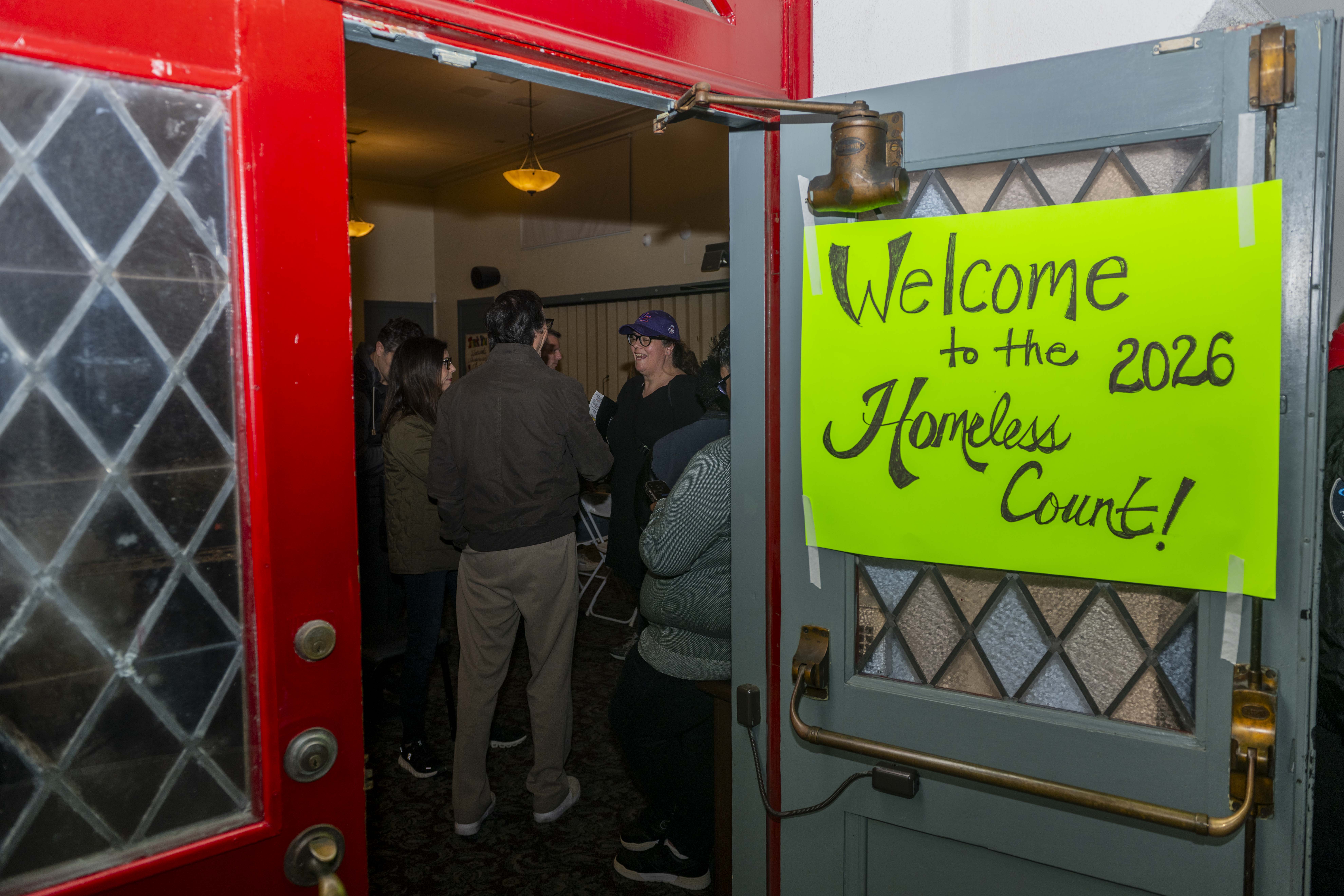
A sign reads, “Welcome to the 2026 Homeless Count!” Volunteers helped document the amount of people experiencing homelessness within different LA communities throughout the annual count. (Andrew Ramiro Diaz/Photo editor)

By Avital Abramov
Jan. 31, 2026 8:18 p.m.
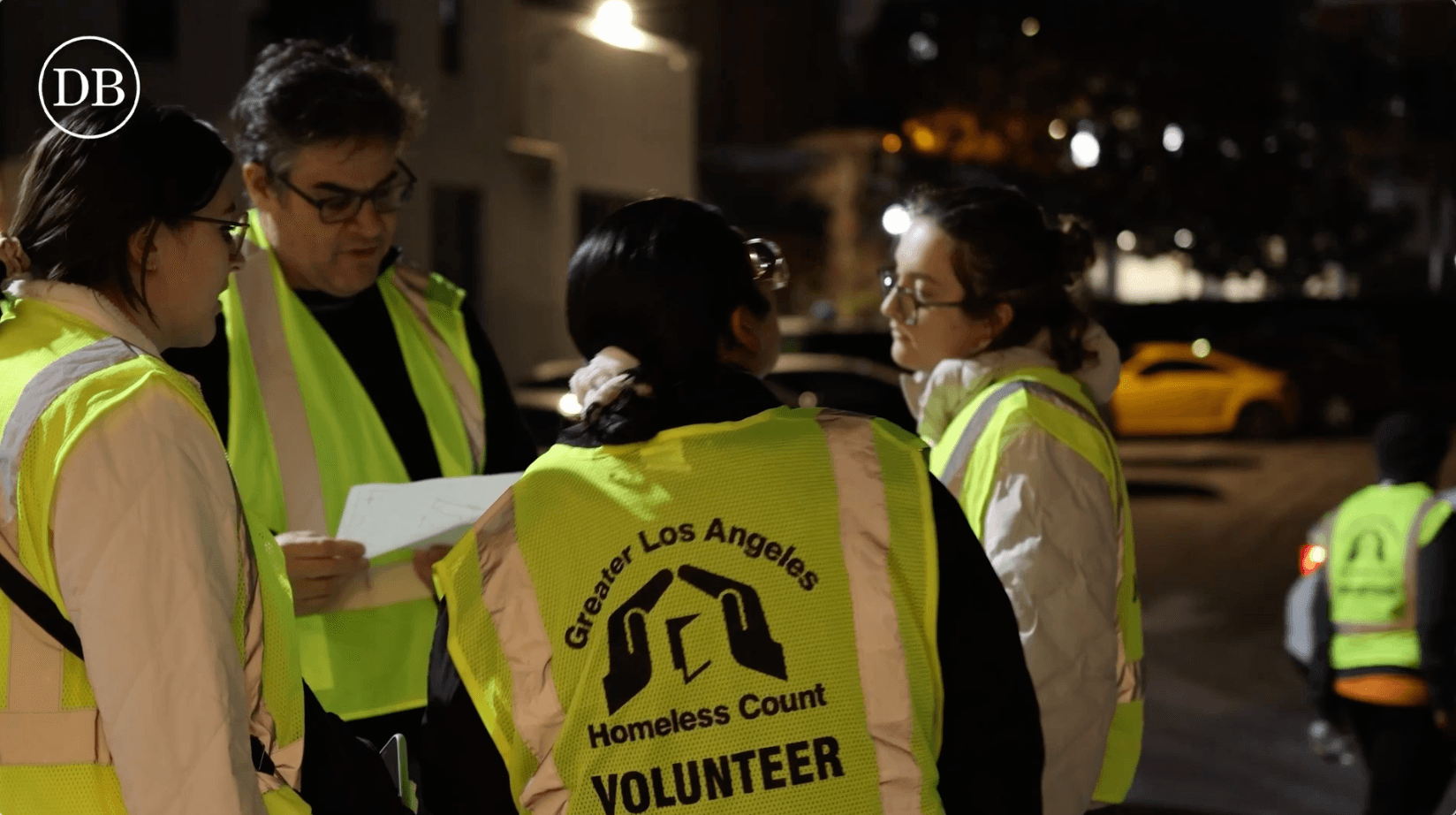
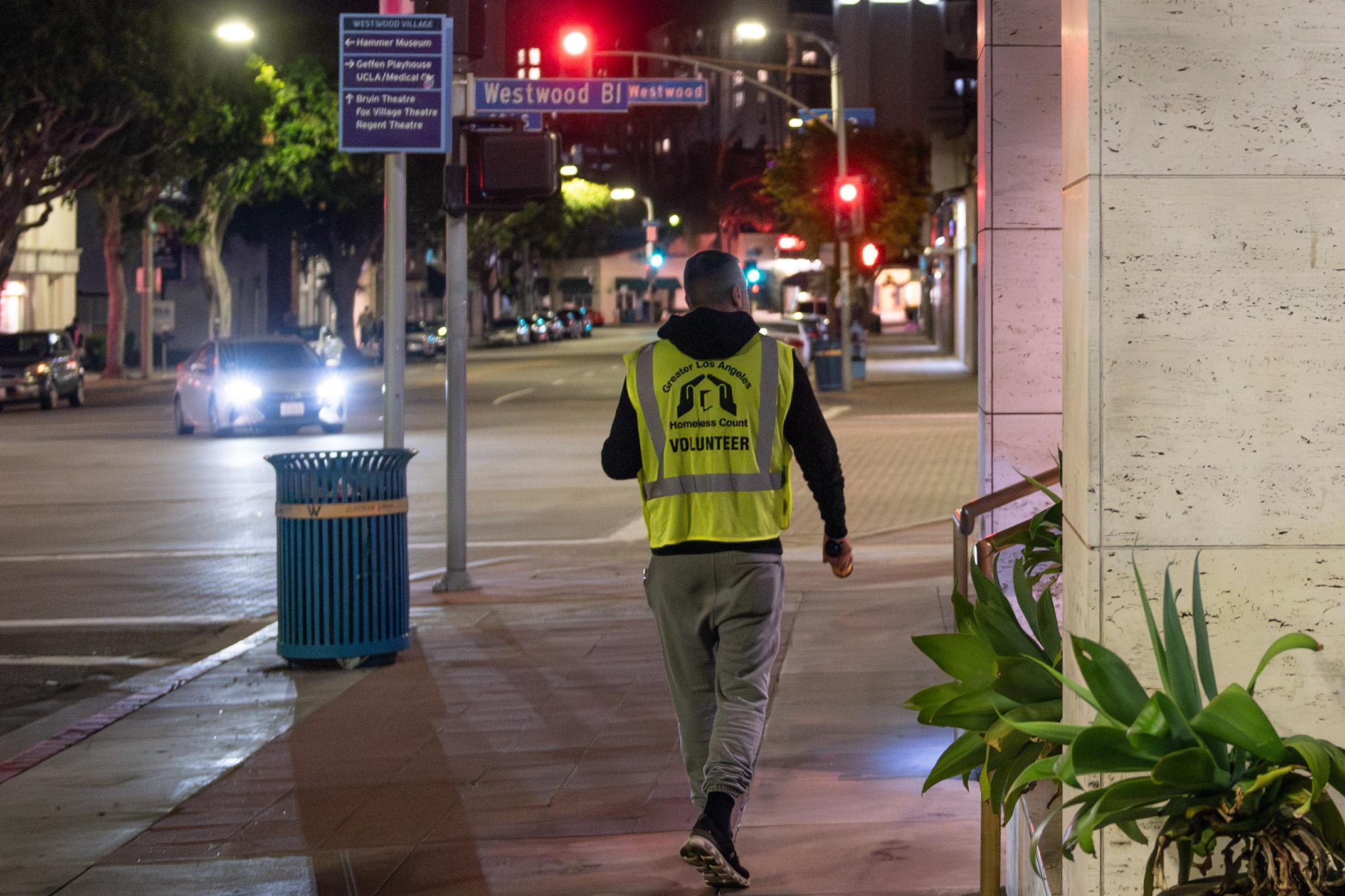
Community members documented the number of people experiencing homelessness in Westwood as part of a larger Los Angeles wide count Jan. 22.
Both first-time volunteers and returners – including UCLA students and faculty – participated in the Greater Los Angeles Homeless Count, an annual three-day count of the amount of people experiencing homelessness within different LA communities.
“This night, this week, this process is a critical step of gathering data that hopefully is going to allow us to make better and more informed decisions,” said Steve Sann, the chair of the Westwood Community Council.
This year is Sann’s 14th time leading the Westwood count.
Administrative Vice Chancellor Michael Beck, who attended the event, said he was encouraged by the amount of students who participated in the count.
“In many ways, the students provide the people power to do these types of activities, but also it’s amazing when you see the heart that our students bring to these particular issues, and you can see that on campus,” Beck said.
Randall Kuhn, a professor in the department of community health sciences, said the local data ends up feeding upward into a nationwide count.
Kuhn said he co-chairs the UCLA unhoused task force, which analyzes the available resources for unhoused people in Westwood.
“What people don’t realize until they’ve been is how powerful it is as a meeting ground to see with your own eyes what’s happening on the streets,” he said.
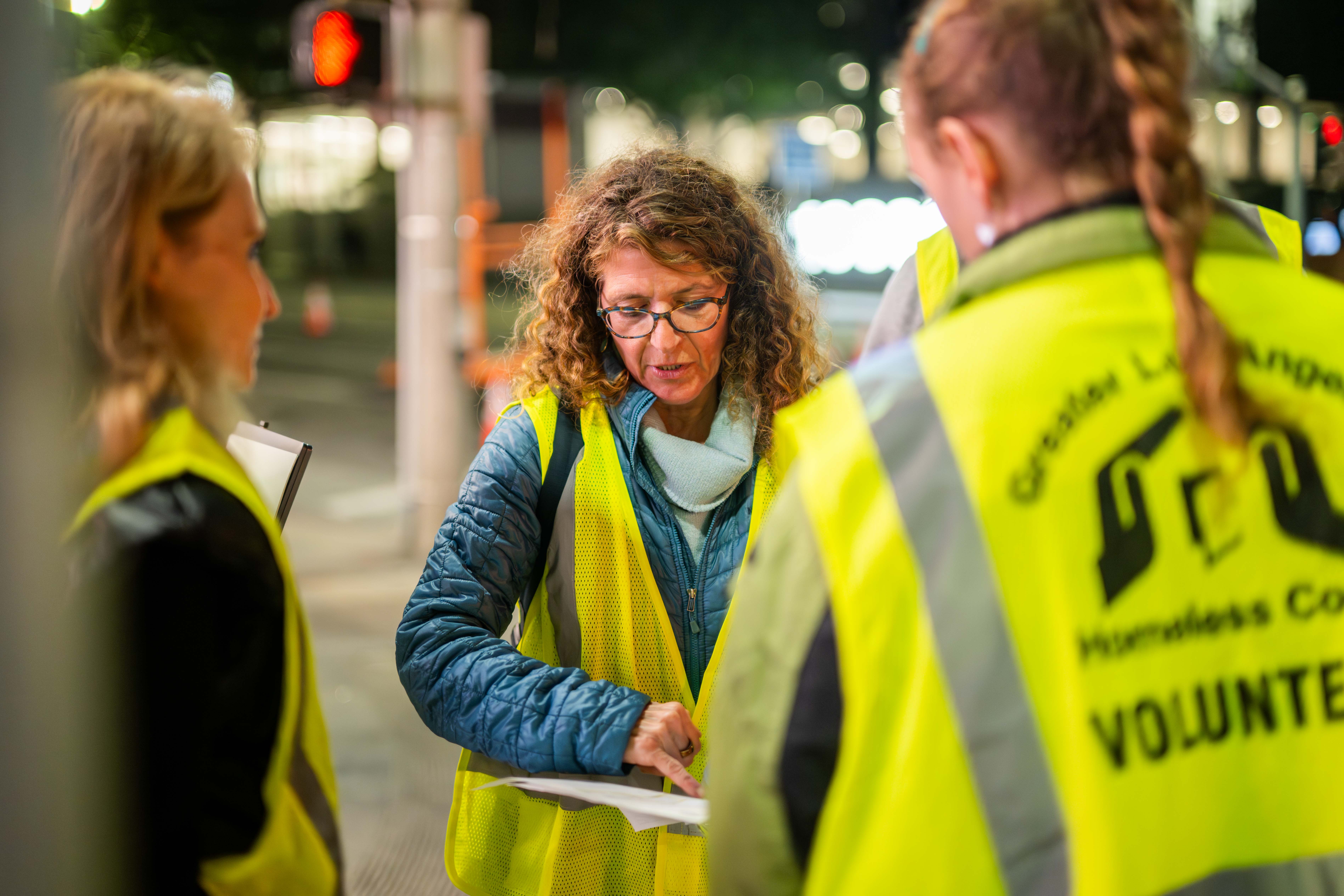
Lindsey Horvath, the supervisor for LA County’s third district, spoke at the count. Horvath said her office is committed to tackling the homelessness crisis, adding that she helped pass a motion that consolidated county services for people experiencing homelessness into a single department.
The LA County Department of Homeless Services and Housing – which focuses on moving people into permanent housing and connecting with basic needs resources – launched earlier this month, she added.
This year, the Continuum of Care, a program that aims to end homelessness and provide permanent housing, is facing federal funding cuts as the Trump administration released a notice called the Fiscal Year 2025 Continuum of Care Notice of Funding Opportunity. This notice attempted to increase the restrictions on federal funding awards, placing nearly 170,000 people at risk of homelessness, according to the National Low Income Housing Coalition.
According to the U.S. Department of Housing and Urban Development, lawsuits against this notice were raised. A 2025 decision by the U.S. District Court for the District of Rhode Island ordered eligible renewals for the funding to be processed using the old guidelines and removed requirements of granting any specific renewals. This decision remains effective until Feb. 9.
“With federal funding cuts and state funding cuts, we’re concerned that it might be worse than it was these past two years,” Horvath said.
Horvath added that events like the homeless count help bring the community together and give the government a clearer sense of what needs to be done to address homelessness.
“I’m grateful to see so many students out here participating and being hands-on – this is not a place where students just go to read books,” she said. “You are learning out in the community, and I couldn’t be prouder to represent the campus and this district.”
Regina Perez, a graduate student in public health, said that participating in Westwood events and understanding what residents are experiencing are important parts of being a UCLA student.
Some UCLA students also face housing and food insecurity, said Felicia Knaul, associate of the chancellor. Knaul added that she encourages people to continue advocating for unhoused people through their studies and events such as the homeless count.
“Those who are not counted and issues that are not measured remain invisible,” Knaul said. “And if they’re invisible, then it’s very difficult to advocate and ensure that those who want to close their eyes have to open them.”