Annual World Languages Day event celebrates linguistic diversity at UCLA
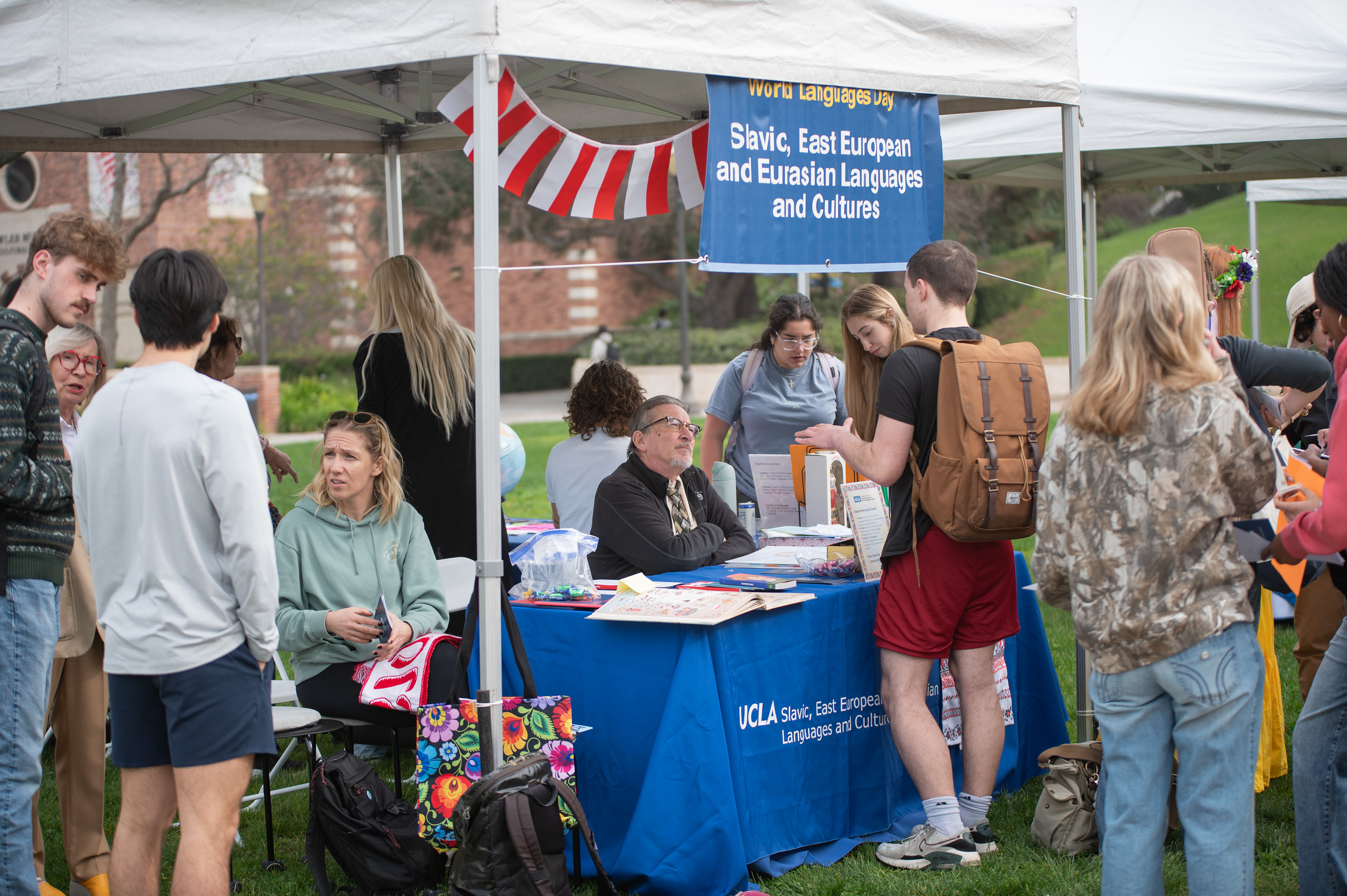
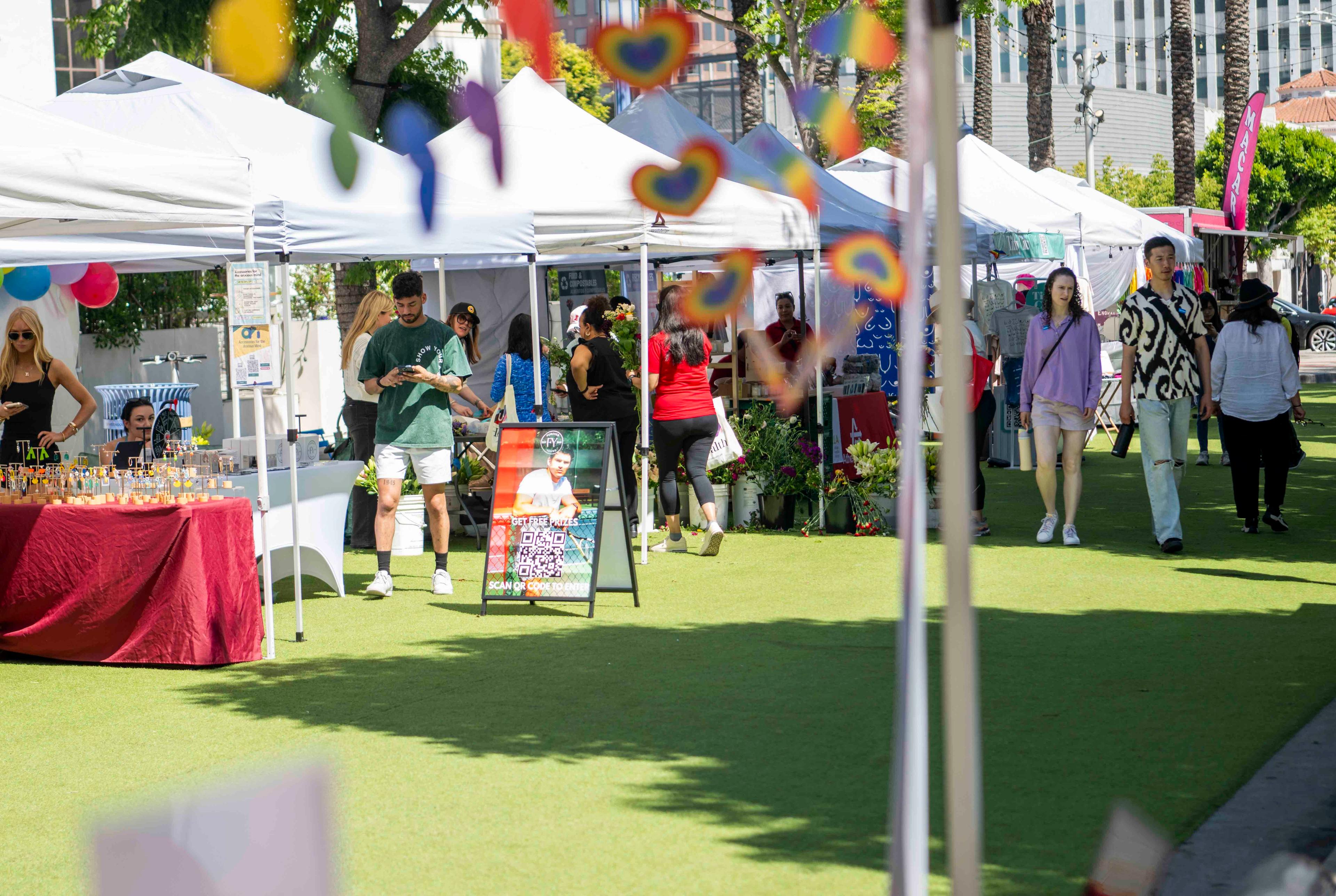
Community members attend UCLA’s World Languages Day event in Wilson Plaza. The annual event highlighted various language programs, study abroad options and post-graduation employment opportunities for multilingual students. (Elle Smith/Daily Bruin)

By Delilah Brumer
Jan. 23, 2026 12:11 a.m.
More than 100 people gathered Wednesday in Wilson Plaza to eat Persian food, practice Chinese calligraphy and watch traditional performances as part of World Languages Day.
The event highlighted UCLA’s language programs, study abroad options and post-graduation employment opportunities for multilingual students. UCLA offers courses in more than 40 languages, many of which were featured at the event – including Arabic, Armenian, Russian, Spanish and Vietnamese.
The event, which lasted from 10 a.m. to 2 p.m., included musical performances spotlighting German, Italian, Korean and Turkish cultures. Students could also win prizes by gathering signatures from various booths at the event on mock passports.
Nina Bjekovic, the event’s organizer, said she enjoyed showcasing UCLA’s linguistic diversity.
“Sharing ideas, sharing strategies, sharing insight with one another and learning from each other is very important,” said Bjekovic, the director of language programs in the Department of European Languages and Transcultural Studies. “In this modern era where technology is quickly advancing, it’s important to talk about why languages still matter and why cultural studies also matter, because the two are interlaced.”
World Languages Day was revived last year after the annual event was temporarily paused because of the COVID-19 pandemic, Bjekovic added.
Alexandra Minna Stern, the dean of the UCLA Division of Humanities, said in a speech that UCLA provides many language course offerings, including in-person, online and hybrid options.
“Exploring languages is a vital part of the Bruin experience,” she said. “Every undergraduate should meet the foreign language requirement, and you can do it with our incredible instructors that we have at UCLA.”
Several schools at UCLA, such as the College of Letters and Science, School of Arts and Architecture and School of Education and Information Studies, require that students demonstrate foreign language proficiency in a level 3 language course.
Janice Nam, a fourth-year ethnomusicology student, performed traditional Korean music on a kayagum – a large, wooden, 12-string instrument. Nam said she has been involved in traditional Korean performance since she was in third grade.
“In Korean music, K-pop is the thing,” she said. “But I really hope that Korean traditional music can start to make its way into mainstream Korean music.”
Julia Bojanowski, a second-year chemistry student, said she attended the event to support the Slavic, East European and Eurasian languages and cultures department. Bojanowski, who has Polish and Chinese heritage, added that strengthening her Polish speaking skills at UCLA has helped her communicate with her grandparents.
“It’s a language instead of STEM classes,” she said. “It’s more of a mental break from all the math and stuff and chemistry.”
Marcella Price, a third-year human biology and society student, said she attended the event to advertise UCLA’s American Sign Language course offerings.
Price said she grew up in Vacaville, California, which has a small community of Deaf people. She started taking online ASL classes in middle school after struggling to communicate with a friend who is deaf, she added.
Price then attended one of the few California high schools with a four-year ASL program. When she worked at a retail store in high school, knowing ASL allowed her to communicate with deaf customers, she added.
“I want to be a dentist one day, and I feel like more health care professionals should know sign language, so they can communicate with their patients and make sure their patients feel like they’re having a one-on-one experience with their health care provider,” Price said.
Price added that she hopes UCLA students take the opportunity to learn about Deaf culture.
“We have the best deaf professors here at UCLA, and they talk to us about their culture and their community,” she said. “It’s just a great thing to be involved in.”