Opinion: UCLA must be transparent about safety measures, promote active shooter protocols
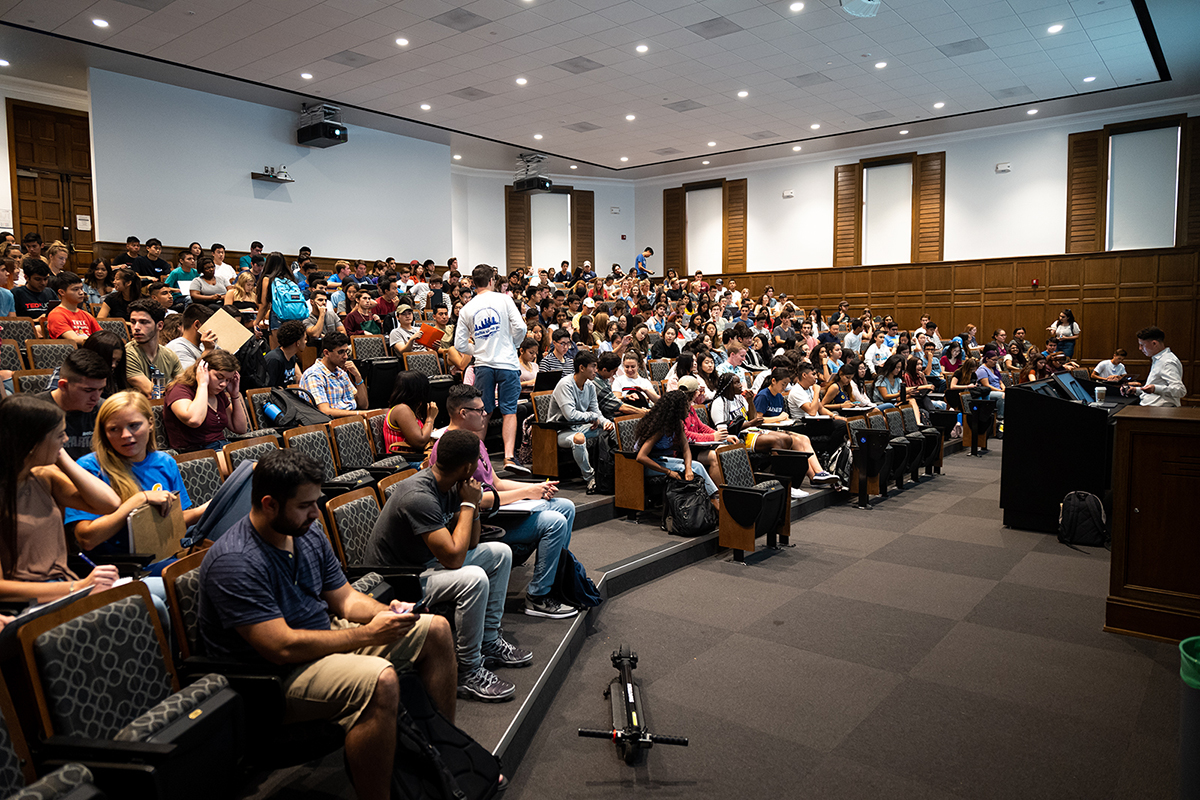
A crowded lecture hall is pictured above. Columnist Lily Rubalcava argues that UCLA must make its active shooter protocols more widely known. (Daily Bruin file photo)

By Lily Rubalcava
Jan. 21, 2026 4:38 p.m.
This post was updated Feb. 3 at 8:10 p.m.
The last thing university students should be thinking about during finals week is gun violence.
But in December 2025, a gunman killed two people and injured nine after opening fire at Brown University. The tragedy sparked renewed conversations around gun control, gun violence and university campus safety in America.
Children from grades K-12 practice where they would hide, how they would barricade the classroom door or what they would tell their parents if an armed assailant entered their school. Yet, at the university level, students are often left unaware of protocols and resources surrounding gun violence.
UCLA is not isolated from the threat. In February 2022, Matthew Harris, a former philosophy lecturer, was taken into custody after sending implied shooting threats to students and staff via email. The community’s concern soared following Harris’ arrest, particularly whether UCLA is doing enough to ensure safety.
To increase education and encourage preparedness, UCLA must widely promote its life-saving resources rather than relying on students to seek them out. Additionally, the university should increase transparency around the safety measures it takes to protect students on its open campus.
UCLA’s active shooter safety protocol is to run from the situation, hide from the shooter or fight them if they come face-to-face.
An Office of Campus and Community Safety spokesperson wrote in an emailed statement that the university provides virtual safety trainings through UCPD, offline emergency procedures and real-time safety resources through the Bruin Safe App, Bruins Safe Online and more resources across multiple other platforms.
But students are not always aware these trainings and resources exist.
“Nobody has a specific plan. It’s going to cause more chaos, which would cause more issues if it happens,” said Vincent Davis, a first-year applied mathematics student.
This is unfortunately a common experience. Davis, along with several other students, said they had never heard of UCLA’s active shooter policies.
Still, the most effective change comes from federal laws.
Forty-six states currently allow open carry, where firearms can be carried around in open view – some without needing a permit. Congress is considering passing a federal mandate that would end state-by-state prohibitions on concealed carry. This would allow citizens in any state to walk around with their firearms.
Even though California might be proactive in keeping guns out of dangerous hands, such weapons can still enter our state – and our school – when people come from states that are not strictly regulating firearms.
These current events show why UCLA must emphasize its policies and spread awareness.
“Guns have legs,” said Mark Kaplan, a research professor of social welfare at the Luskin School of Public Affairs. “They will enter places, interstates, through some of those weak points.”
Kaplan, who teaches a public affairs class on firearm violence, said active shooter training is limited for faculty. If neither students nor faculty are prepared for an active shooter emergency, it’s difficult to keep one another safe.
While training and vigilance can protect students and faculty, increased security would be more effective in preventing a potential tragedy, Kaplan said. UCLA’s security precautions must be made more transparent to students so we know what the university is doing to keep campus safe.
“Since it’s an open campus, anyone could come on, and there’s not really a way to regulate what they’re bringing,” said Grace Saunders, a second-year physiological science student.
Some may argue the presence of security unsettles students or causes alarm. But UCLA increasing communication about why this security is present can relieve some of that stress.
“It’s not about trying to limit people’s freedom of speech on campus, the right to protest peacefully – that’s not what it’s about,” Kaplan said. “I’m talking about a possible risk involving firearms or other risks.”
Gun violence can seem like an insurmountable problem.
But by prioritizing education, maintaining transparency about security measures and spreading resources and protocol, UCLA can take a small but important step toward ensuring the safety of all Bruins.