Former UCLA football players recount excitement, intensity of Bruin-Trojan rivalry
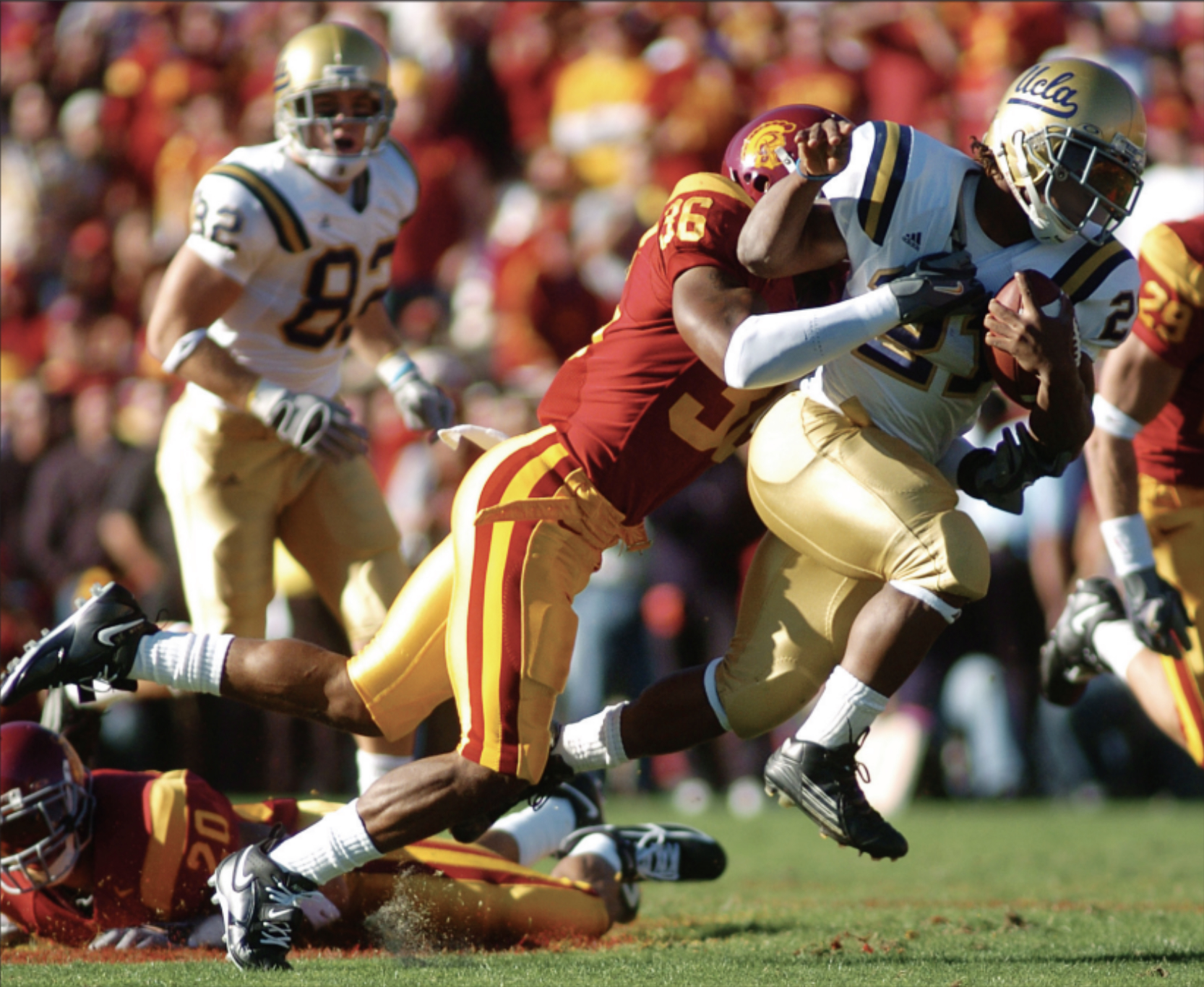
Former Bruin running back Maurice Jones-Drew runs on the field at the Coliseum while a Trojan defender tackles him. (Daily Bruin file photo)

By Connor Dullinger
Nov. 23, 2025 11:01 p.m.
The hatred was palpable.
Houses were divided.
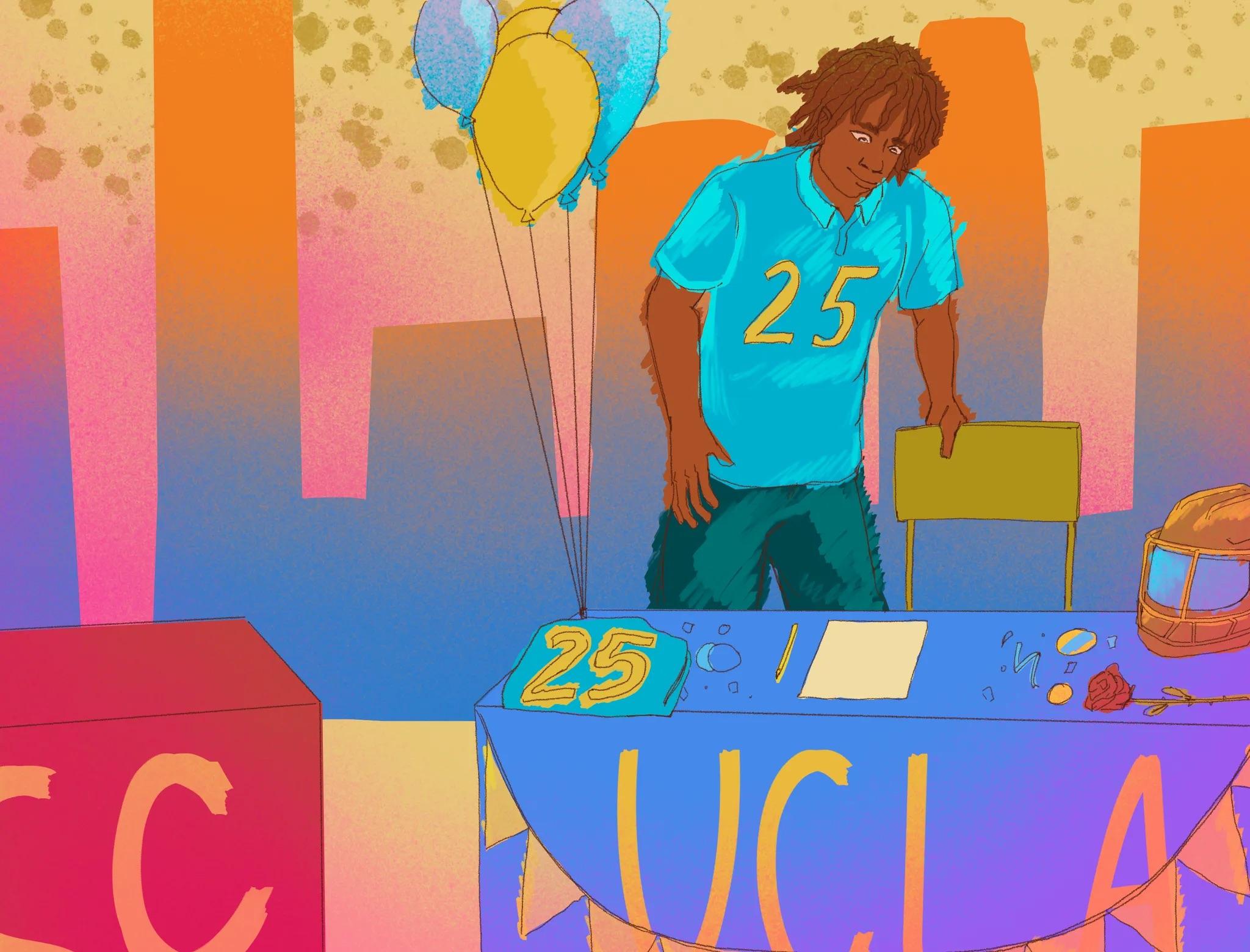
The city was separated into blue and yellow and cardinal and gold. Statues were covered in bubble wrap, and wooden boxes enclosed them. Campuses reverberated with the sound of unfamiliar and adversarial fight songs.
Winless or undefeated – it didn’t matter.
“I remember my senior year, the 2006 Rose Bowl Senior Day. We come out of the tunnel. My parents met us at the 50 (yard line) or on the sideline, and my mom just tells a story, ‘You had this look in your eye that I had never seen before,’” said former Bruin defensive end Justin Hickman. “I told her, ‘I might kill somebody today.’ The game just takes you to a different place. It could have been if we were both winless; we were going to have the same energy.”
That is what the Battle for Los Angeles is – or at least was for Hickman, former Bruin safety Chris Horton, and former Bruin running back Maurice Jones-Drew – a group of players who played together in Westwood from 2004 until 2005.
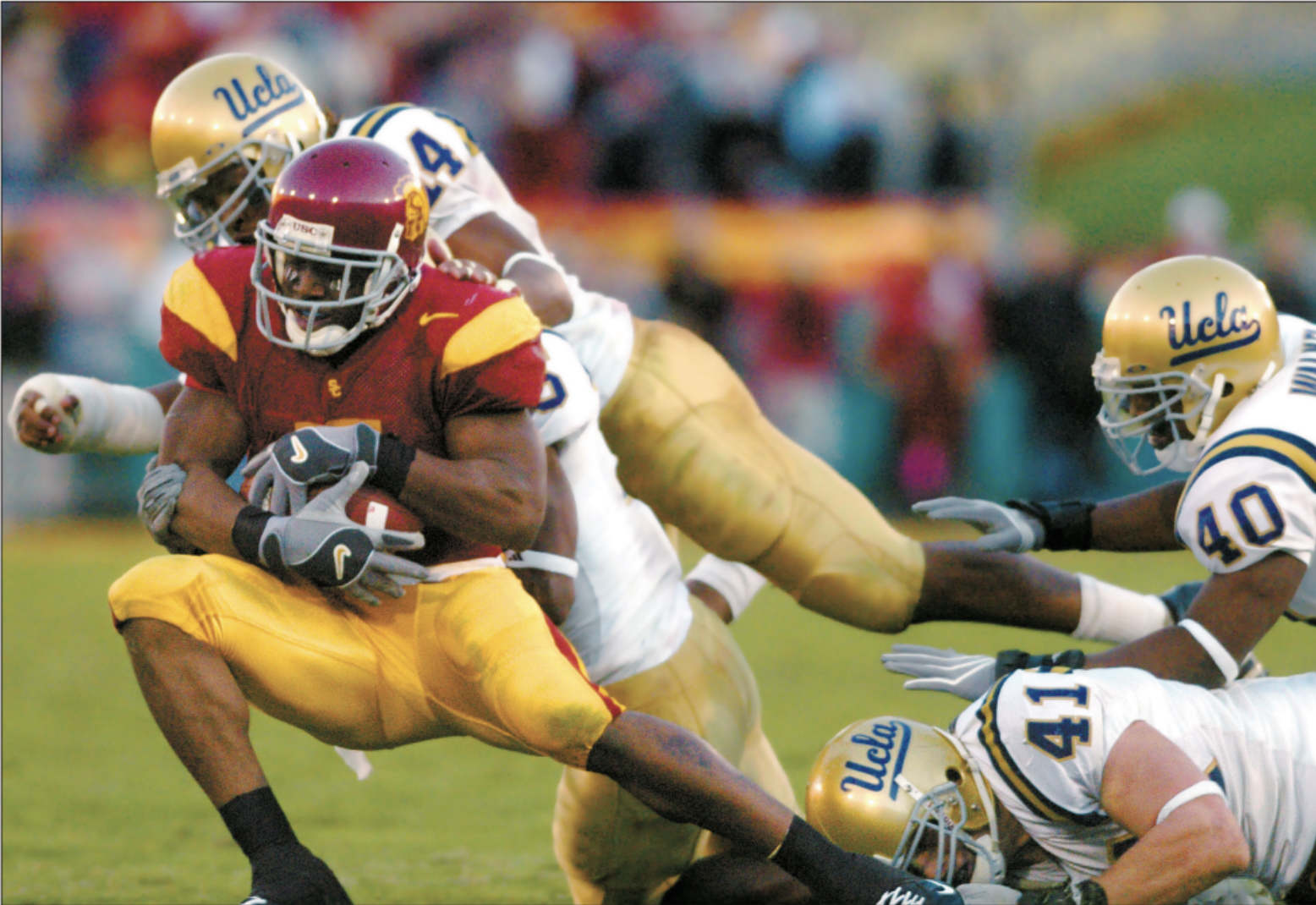
The crosstown rivalry was not just any other game.
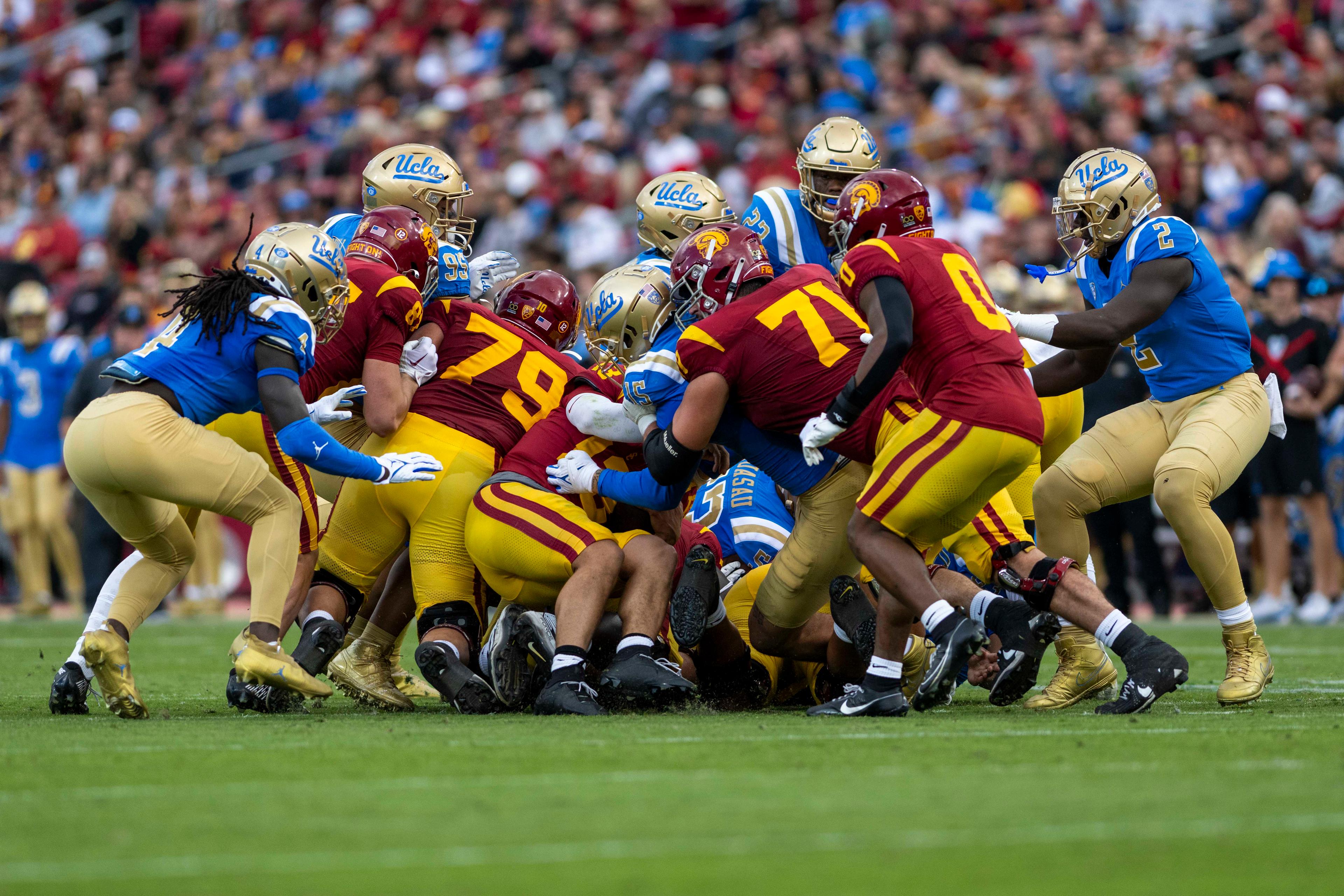
“The records didn’t matter, the stats didn’t matter, the players that were on the teams didn’t matter. This rivalry was such a heated rivalry, and that’s why it was always one of the best in college football because of that reason,” Horton said. “The fans knew that regardless of what the rosters and the rankings and the stats looked like, when UCLA and USC play, it was going to be a bloodbath, and the fans felt that.”
It wasn’t even a game to them.
It was a duel, a battle and a bloodbath. The winner laid claim to the city and painted the victory bell Bruin blue or Trojan red.
One locker room – desolate and dismal.
The other – full of jubilation.
A win could wipe away a winless season. It could turn a good season into a great one or a bad season into a miserable one. The score didn’t dictate the game. It decided the year, let alone the football season.
It was a feeling that couldn’t even be put into words, almost 20 years later.
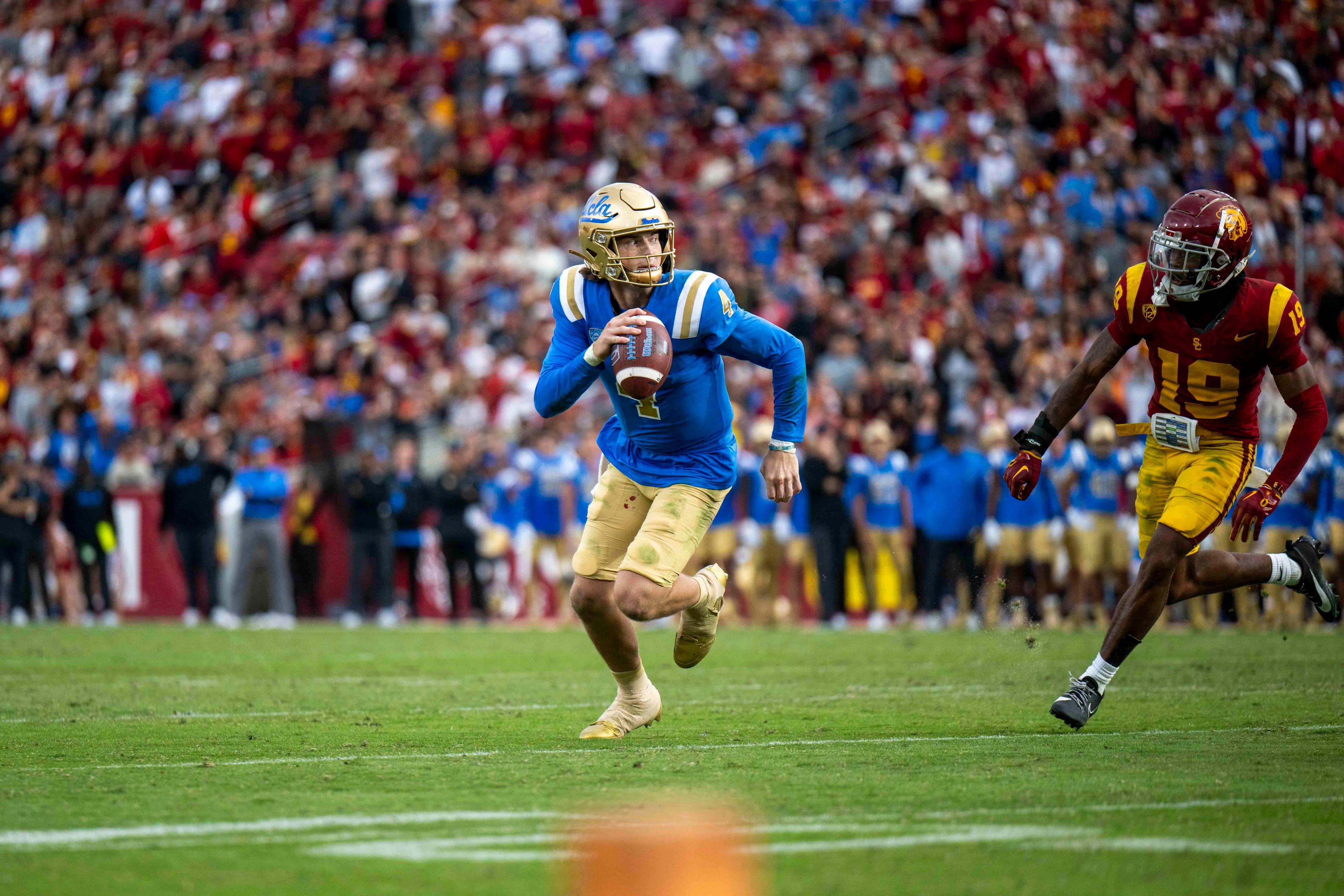
“You show up at the Rose Bowl or the Coliseum, you know it’s 100,000-plus (people) when you come out the tunnel. The energy, the juice level, playing the ‘SC fight song at practice, just to get the juices flowing,” Hickman said. “It’s kind of unexplainable. I’m getting chills right now, just thinking about it. It’s kind of hard to put into words. You were going to give everything you had.”
The Bruins and Trojans faced off 13 times between 1999 and 2011.
Twelve of those contests ended with “Fight On” chants, red and yellow confetti, and the deafening chants of the “Tribute to Troy.”
But UCLA broke the narrative in 2006.
UCLA defeated then-No. 2 USC 13-9 at the Rose Bowl in a defensive battle on Senior Day, preventing the Trojans from scoring a touchdown and stopping them from capturing a second consecutive national championship.
And to Hickman, who logged 18 combined sacks between the 2005 and 2006 seasons and played three seasons in the NFL with the Indianapolis Colts and the then-Washington Redskins, beating the Bruins’ biggest rival was a feat that paled in comparison to even the biggest individual accolades.
“That was the highlight of my college career, regardless of being named a consensus First Team All-American,” Hickman said. “The highlight of my career is being able to bust their ass. Dec. 2, 2006, best day of my college career.”
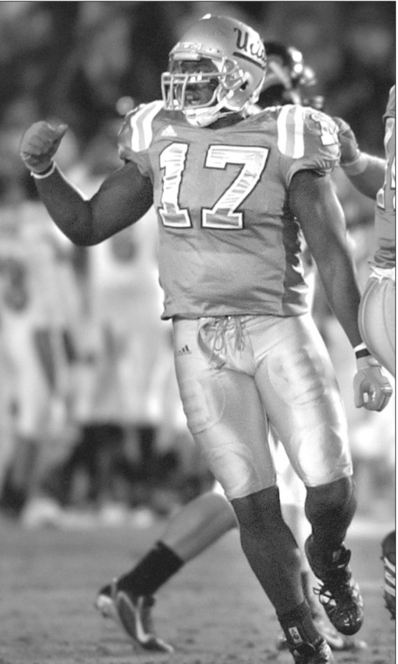
Although UCLA’s lone victory against USC in more than 12 years was the pinnacle of Hickman’s collegiate career, it was a gap in Jones-Drew’s Bruin resume. The former running back was selected in the second round of the 2006 NFL Draft, following a junior campaign where he earned First Team All-Pac 10 and unanimous All-American selections.
And failing to beat the Trojans remains one of the former running back’s biggest regrets, despite garnering more than 3,300 all-purpose yards and 39 touchdowns throughout his collegiate career.
“My last year, when we lost, I knew I was leaving, and I cried. I couldn’t talk because I knew one of my goals in going to UCLA was to help change the program – but part of changing the program was beating ‘SC, and I didn’t accomplish that, and I knew I was never going to be able to accomplish it,” Jones-Drew said. “And that was one of the hardest decisions I’ve ever made in my life, leaving UCLA and not beating ‘SC. I almost went back to beat them. That was one of the things that I will always regret. I hate that I was never able to beat that team.”
The tailback’s frustration with failing to color the Victory Bell stems from his inability to play in the rivalry duel his sophomore season – a contest the Bruins lost by just five points at the Rose Bowl despite having two Heisman winners in quarterback Matt Leinart and running back Reggie Bush leading the Trojans.
Jones-Drew got an ankle injury one to two weeks before the rivalry duel, which held the UCLA Athletics Hall of Fame running back essentially out of the game, playing at a level he defines as 30% of what he was capable of.
And a Bush fumble that the Bruins scooped and scored, which was ultimately ruled down by contact, only rubbed salt in the wound.
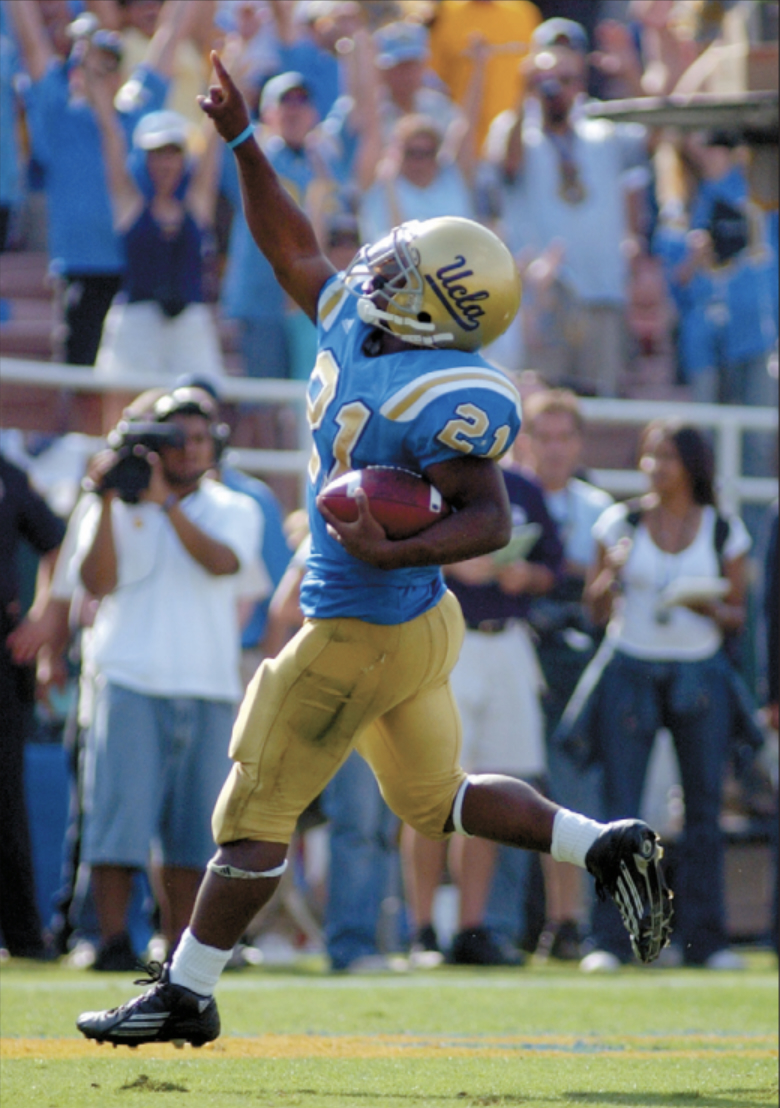
“I actually remember crying to (then-UCLA running backs coach Eric) Bieniemy on the sidelines, ‘I worked my butt off, you’ve got to put me in the game and let me do something,’” Jones-Drew said. “I really took that loss to heart because I felt like if I could have been healthy, we would have probably won that game. ”
Jones-Drew’s frustration from not playing in or winning the rivalry contest at the Rose Bowl only lit a fire that left him burning heading into the 2005 crosstown affair.
And when the running back’s belief in his team’s ability to face the Trojans was questioned, he responded with authority.
“My last year, I truly believe that we had a great team. There was a reporter. He literally came to me at the media day my junior year and goes, ‘How big is the gap between USC and UCLA?’ And I was ready to punch him,” Jones-Drew said. “He doesn’t know what we went through to get to this point. He didn’t understand all the stuff that we did. I was like, ‘There ain’t no gap. I don’t believe there’s a gap. I think we’re better.’ And I probably shouldn’t have said it, but I’m a very confident guy. I think we’re better, and I think we’re going to beat them.”
Horton, who was born in LA but raised in Louisiana, had no regional ties to either school but joined in the hatred – fighting for, with and alongside his brothers – even if he didn’t know a single player in red.
“I love football so much that those guys knew that if they didn’t like somebody on another team, then I was first up. I was going to lead the way because I had so much respect for those guys, for my brothers. The game was so much bigger than me,” Horton said. “I wanted to not let any of those guys down, and I know how much it meant to them to go out and beat up on guys that they played against throughout high school, so for me it was, ‘What can I do?’”
That’s just how much the rivalry meant.