Yu Huang first faculty, woman to win Global Energy Prize in non-traditional energy
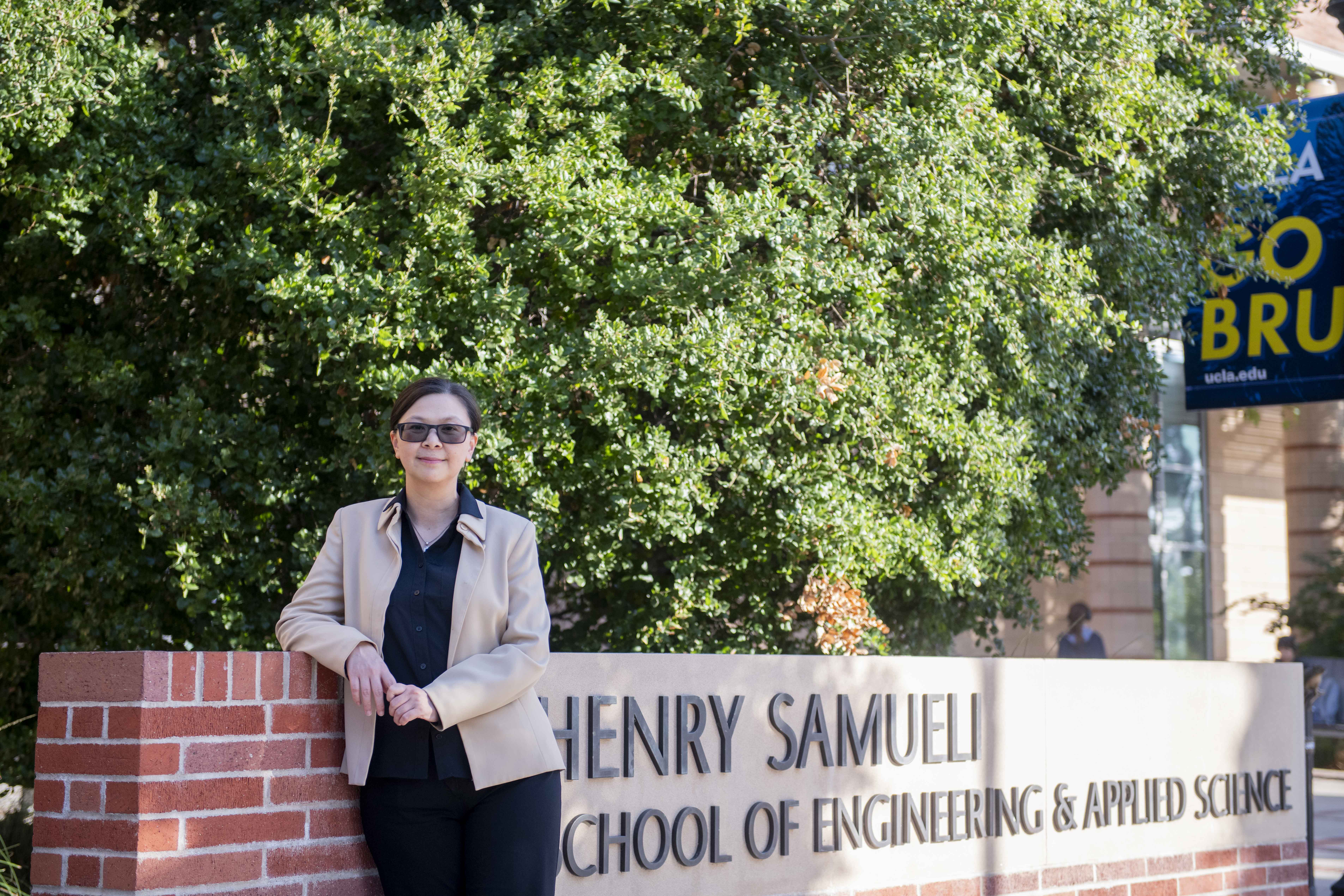
Yu Huang is pictured in front of the Henry Samueli School of Engineering and Applied Science. The UCLA materials science and engineering professor, became the first woman to win the Global Energy Prize for non-traditional energy research in July (Max Zhang/Daily Bruin staff).

By Charlie Hamilton
Oct. 27, 2025 11:27 p.m.
This post was updated Oct. 28 at 11:31 p.m.
Yu Huang, a UCLA materials science and engineering professor, became the first woman to win the Global Energy Prize in July for her non-traditional energy research.
The prize, which honors important achievements in scientific and technical energy research, is given to a maximum of three people each year. Huang received the 2025 award for designing a durable fuel cell catalyst, which speeds up reactions that convert fuel cells into usable energy.
Non-traditional energy refers to renewable and hydrogen energy, as opposed to traditional energy sources such as fossil fuels, which generate harmful greenhouse gas emissions, Huang said. As climate change worsens, finding an alternative clean energy source like hydrogen is paramount, she said.
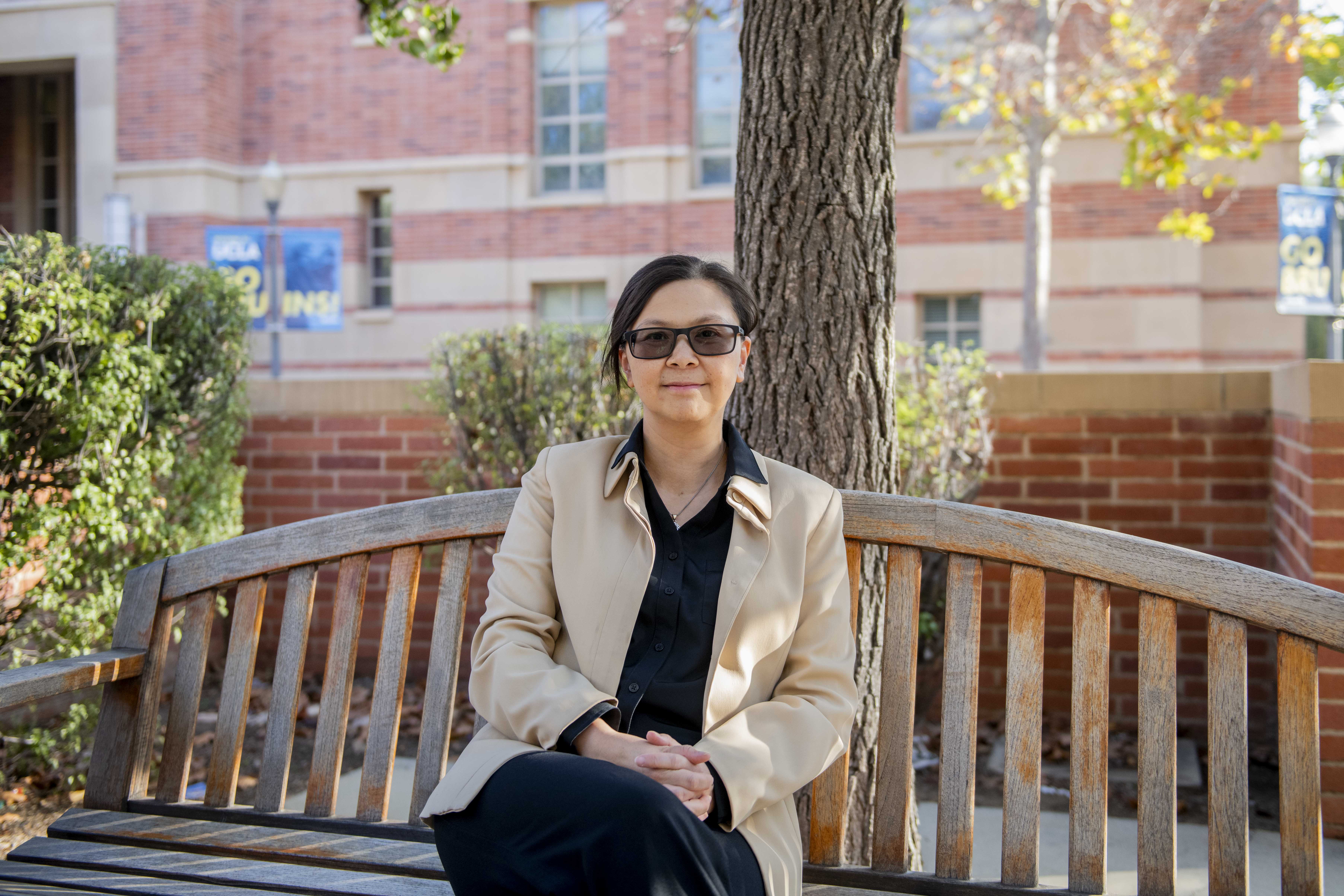
Fuel cells create energy from hydrogen through a chemical reaction, said Enbo Zhu, a former postdoctoral scholar in the Huang Group – Huang’s lab at UCLA.
“Instead of using the heat, they (fuel cells) transfer energy directly into electricity,” he said. “We can get clean energy and with high efficiency.”
Catalysts are substances that speed up reactions by lowering their activation energy – the energy required to start a reaction, Zhu said. Huang and her lab improved the durability and efficiency of fuel cell catalysts, he added, which allows them to extract more energy from the fuel cell with a quicker reaction.
Ao Zhang, another postdoctoral scholar and researcher in the Huang Group, said their lab has worked on the project for over a decade.
“We are working on zero-emission technology,” he added. “The hydrogen fuel cell, it does not emission (emit) any CO2 during the whole process.”
The fuel cell catalyst accounts for more than half of the cost of the whole energy system, Zhang said, adding that by developing longer-lasting catalysts, their team will greatly reduce costs and help commercialize fuel cells.
Huang – the first woman to receive the prize in non-traditional energy – said she focused solely on her lab in her early career but now sees the importance of speaking out about her work to encourage other women pursuing science.
Huang said women in STEM face additional challenges to balance both their careers and families, making it more difficult to achieve the same results and recognition as their male counterparts. She added that in the past few decades, women have become increasingly represented in STEM fields but said there still needs to be more improvement.
Even though Huang’s lab did not directly have its grants suspended, she said she is concerned about the reliability of their funding following the federal government’s freeze of $584 million of UCLA’s research funding. A federal judge temporarily reinstated UCLA’s frozen National Science Foundation and National Institutes of Health grants Aug. 12 and Sept. 22, respectively, but the decision will only hold while the suit – brought by UC researchers – plays out in court.
[Related: Federal Funding Cuts to UCLA]
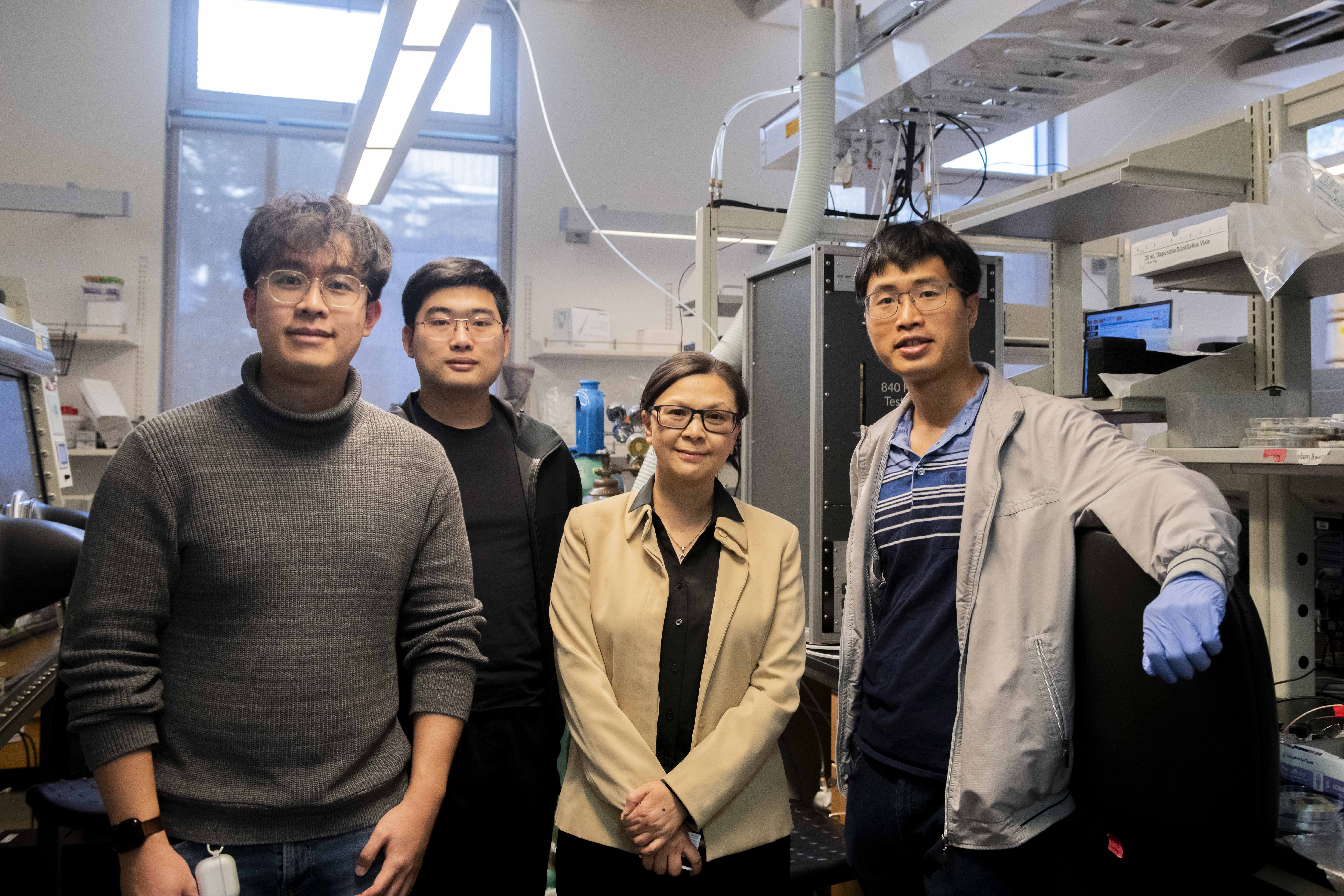
Zhu said while the threat of funding cuts has forced many labs to focus only on the major direction for their research, Huang still encourages her lab to explore new areas and ideas they are interested in.
“I think she’s definitely beyond average for supporting (her lab),” he said. “I had some troubles in my own personal life – it’s not related to research, not related to her – but when she knows, she’s also trying to help.”
Zhang said Huang supports everyone in her lab and that his colleagues often gather at Huang’s home to celebrate. He added that as an international student from China, he appreciated Huang’s kindness, especially at a time when political tensions have made him – and other Chinese researchers – feel less supported at work.
Boxuan Zhou – a doctoral candidate in the department of materials science and engineering – said all lab members have the freedom to choose what they research they conduct and can switch directions at any time, which allows them to allocate more time and effort to topics they are passionate about.
He added that their group emphasizes multidisciplinary collaboration, and by combining different areas of science and energy development, they have made groundbreaking discoveries such as the improved fuel cell catalyst.
“Our group has the ability to combine totally different areas across semiconductor, nanomaterial and energy studies,” Zhou said. “That’s, I would say, the secret to our success.”
Huang said she believes that interdisciplinary and unconventional thinking will be necessary as she continues her research. The emergence of new energy needs for projects like rapidly expanding AI data centers have made finding better ways to produce energy crucial, she added.
“The current trend seems that the demand for energy is growing multifolds faster than how we can generate them,” Huang said. “We probably need something transformative or destructive in order to catch up without exploding our planet Earth.”