Five Things: UCLA football vs. Indiana
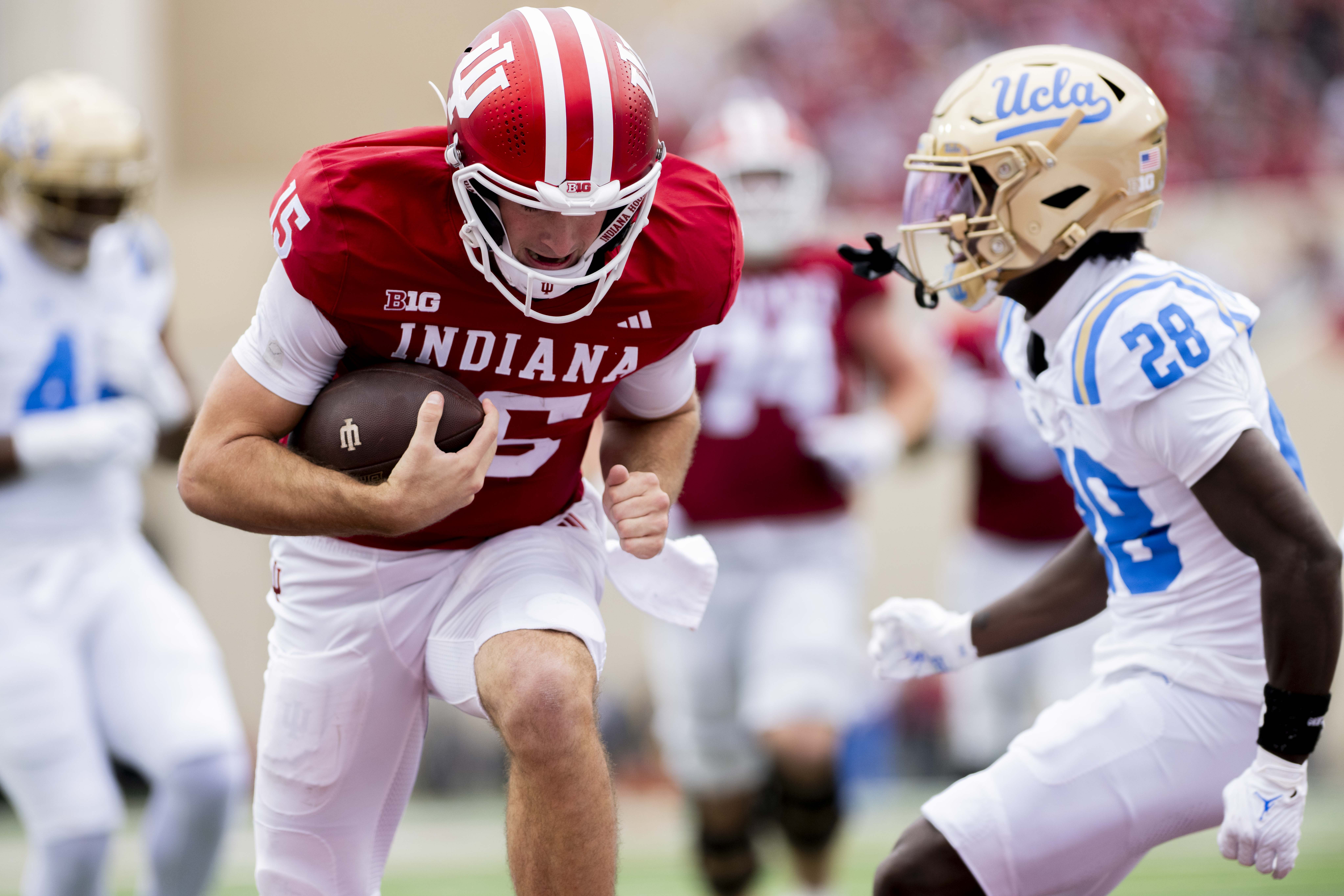
Indiana quarterback Fernando Mendoza tucks the ball under his arm and runs downfield. (Zimo Li/Daily Bruin senior staff)

By Una O'Farrell
Oct. 26, 2025 7:45 p.m.
This post was updated Oct. 26 at 11:12 p.m.
UCLA football (3-5, 3-2 Big Ten) saw its three-game win streak end in crushing fashion in a 56-6 battering to No. 2 Indiana (8-0, 5-0) on Saturday at Memorial Stadium in Bloomington, Indiana. The blowout loss also marked the first time the Bruins failed to score a touchdown all season, and was their first loss since the first game of the season to the Utes. Daily Bruin Sports senior staffer Una O’Farrell gives her five takeaways from the Bruins’ first defeat since Sep. 27.
Early collapse
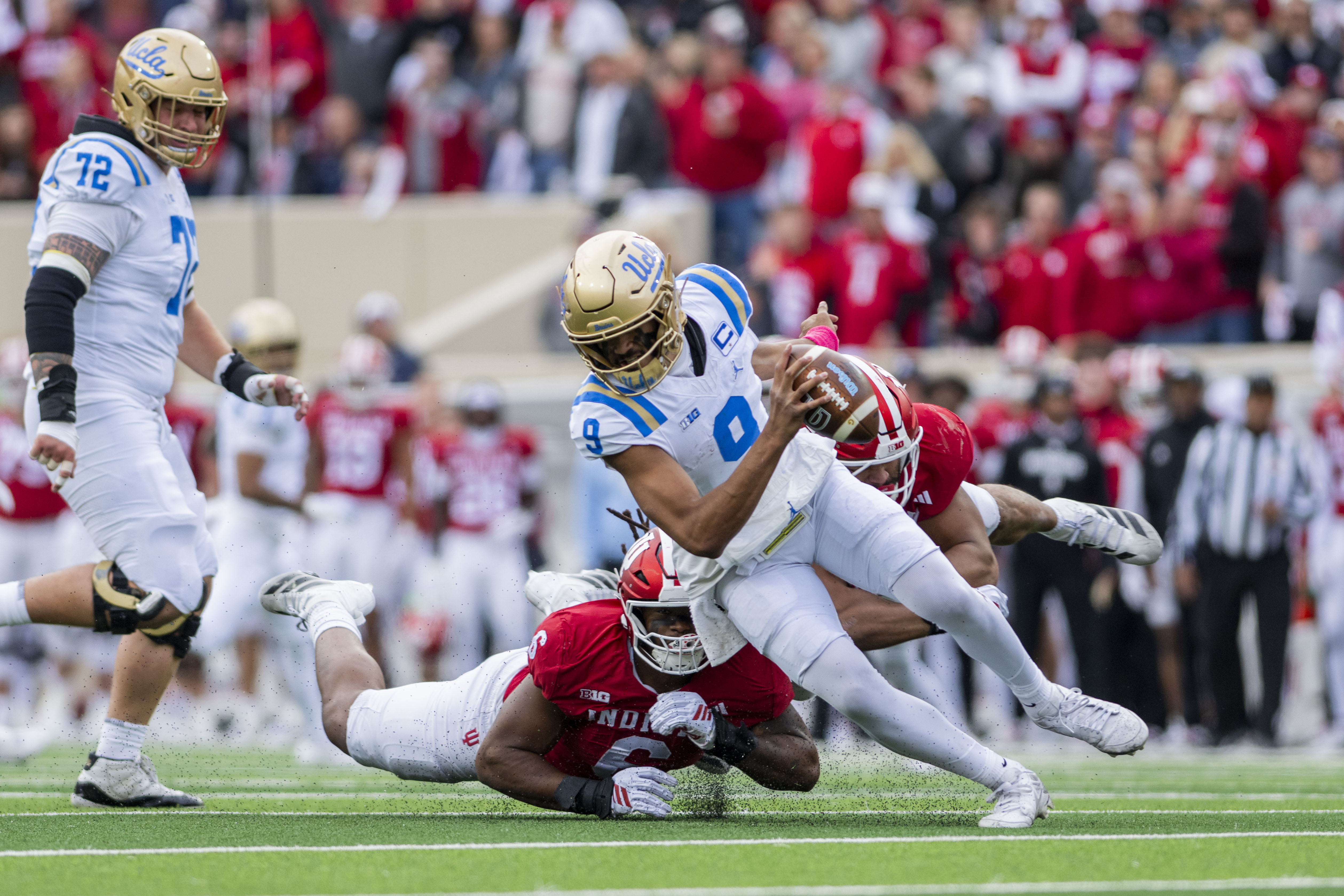
From the start of the season, UCLA football always preached starting fast.
The Bruins even attributed their early-season struggles to their inability to start out on the right foot and get on the board early.
Saturday marked the first time in three weeks that the Bruins reverted to their old habits.
On the second snap of the game, the team delivered a crushing, self-inflicted blow. Just one minute into the game, redshirt sophomore quarterback Nico Iamaleava threw an interception that Indiana linebacker Aiden Fisher returned 25 yards for a touchdown, giving the Hoosiers a 7-0 lead on the game’s opening drive.
By the end of the first quarter, the Hoosiers led 14-0. The Bruins faced a deficit that only widened as the game progressed.
UCLA’s game plan was not simply disrupted – it was grounded before it ever lifted off the runway. The pick-six forced the Bruins into chase mode. Everything unraveled from there.
The Hoosiers out-gained the Bruins 475-201 by the game’s end, controlling possession for longer than 35 minutes – over 10 minutes more than the Bruins.
To add insult to injury, UCLA managed just one third-down conversion all game, failing to extend drives or flip momentum. By the time they could piece together a drive that crossed midfield, the deficit had already ballooned beyond reach.
The game’s tone was set within the first 57 seconds. And it never changed.
Trenches torn apart
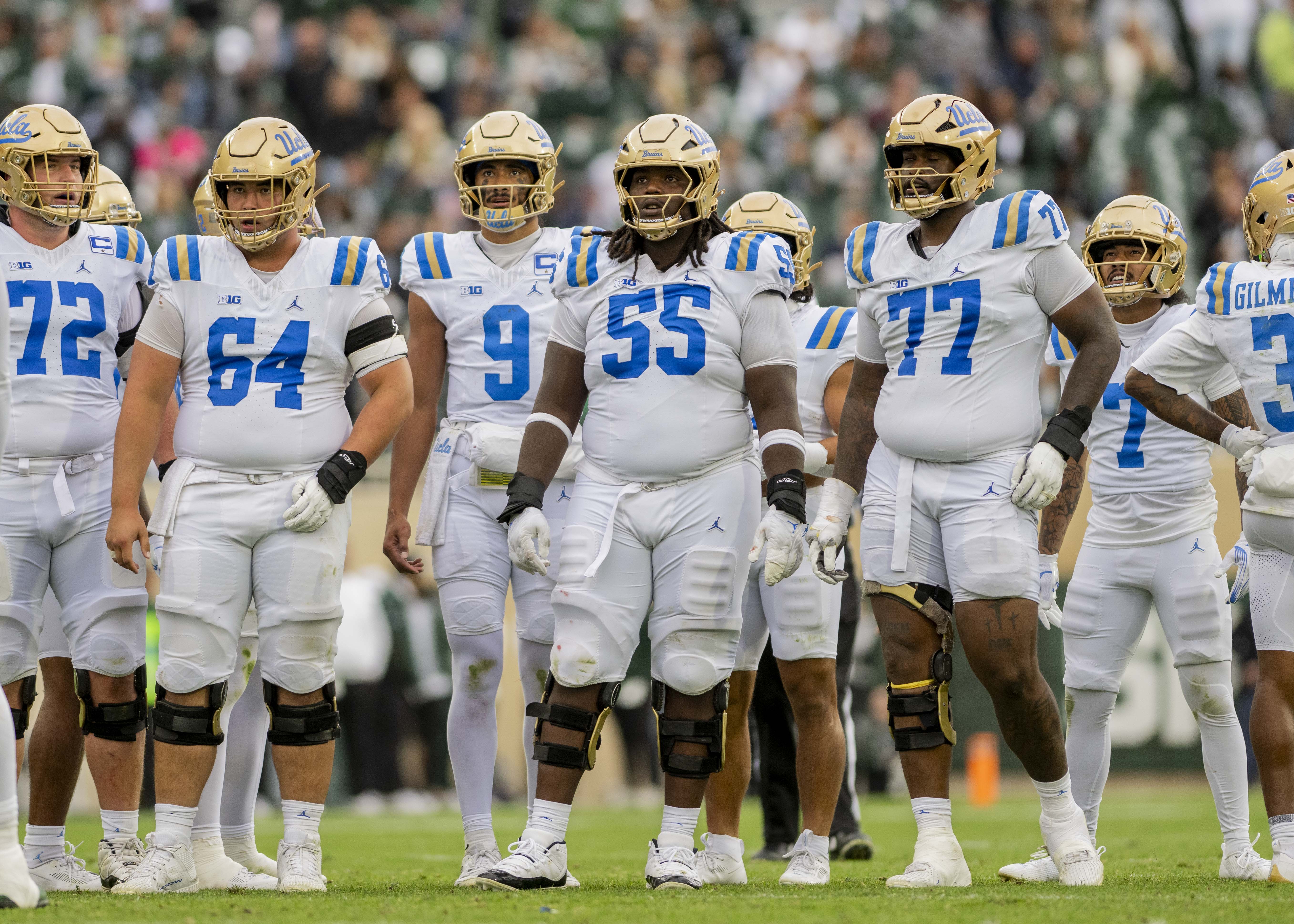
Indiana controlled the line of scrimmage on both sides of the ball.
And there’s no debate about it
The Hoosiers rushed for 262 yards at an efficient 5.6 yards per carry, while the Bruins mustered just 88 yards at a 3.5 clip. The 88-yard output was the Bruins’ worst since their blowout loss in the first game of the season, when they mustered just 84 ground yards. The split dictated the day’s tempo long before the scoreboard did.
UCLA’s defensive front had no answer for Indiana’s interior push. By the second quarter, Indiana was averaging over five yards per rush – a number that continued to climb as the game wore on.
Additionally, Indiana’s three-headed beast – the running back room – was led by Roman Hemby, who led the tailbacks with 81 yards and two scores, including a touchdown on fourth and one.
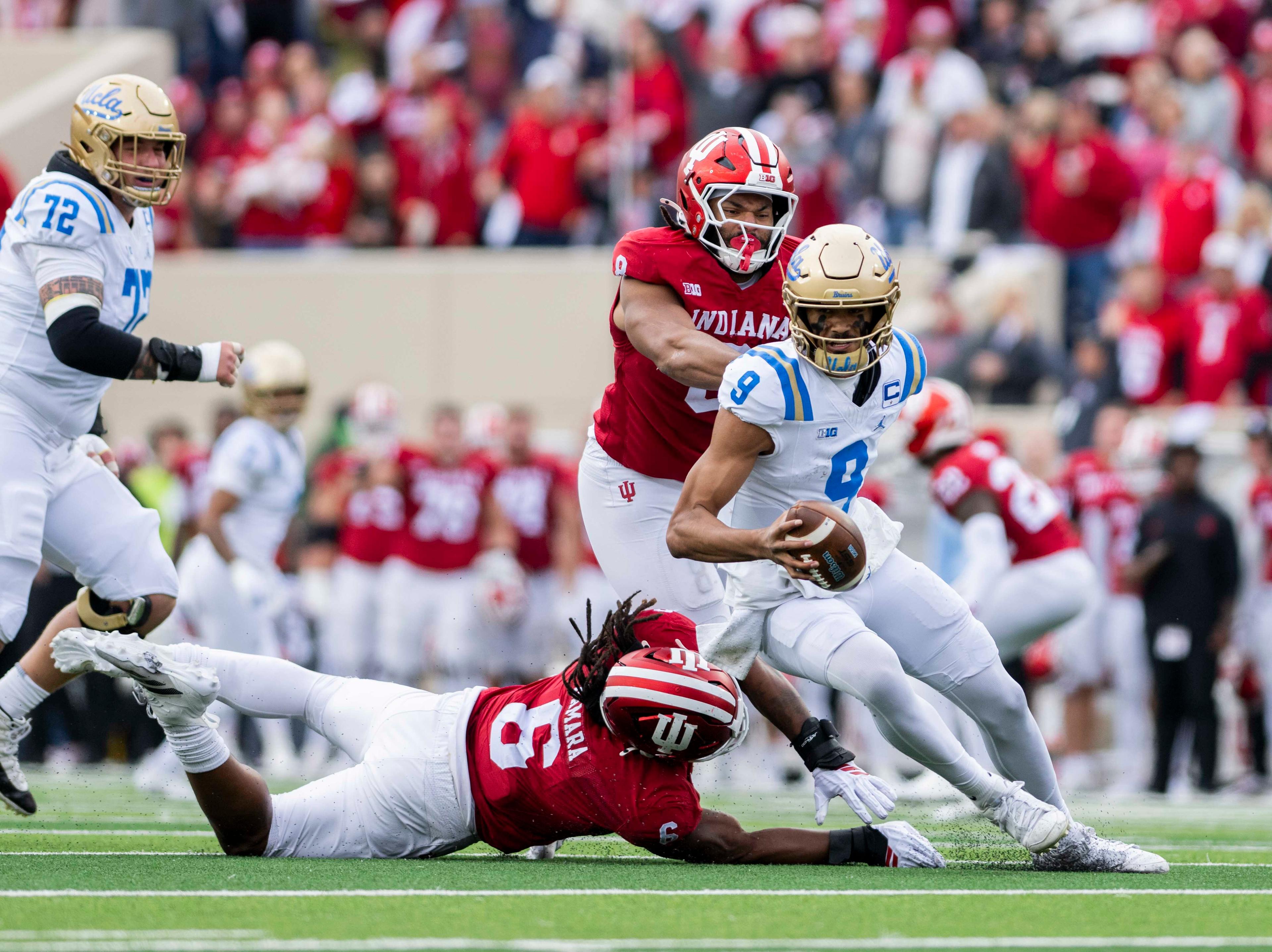
With no defensive penetration, the Hoosiers faced almost no disruption in their backfield, allowing quarterback, potential Heisman winner and NFL Draft first-round pick Fernando Mendoza to escape the contest without a single sack.
Meanwhile, the Bruin offensive line offered little resistance to a dominant front seven. Iamaleava was pressured on nearly every third down, and the running lanes, which fueled recent wins, disappeared. The lack of time in the pocket not only forced Iamaleava into two interceptions but also led to errant throws on the run.
Physicality was supposed to be UCLA’s foundation under interim head coach Tim Skipper. Instead, Indiana took away the Bruins’ calling card – making a 50-point gap look inevitable.
Offense out of sync
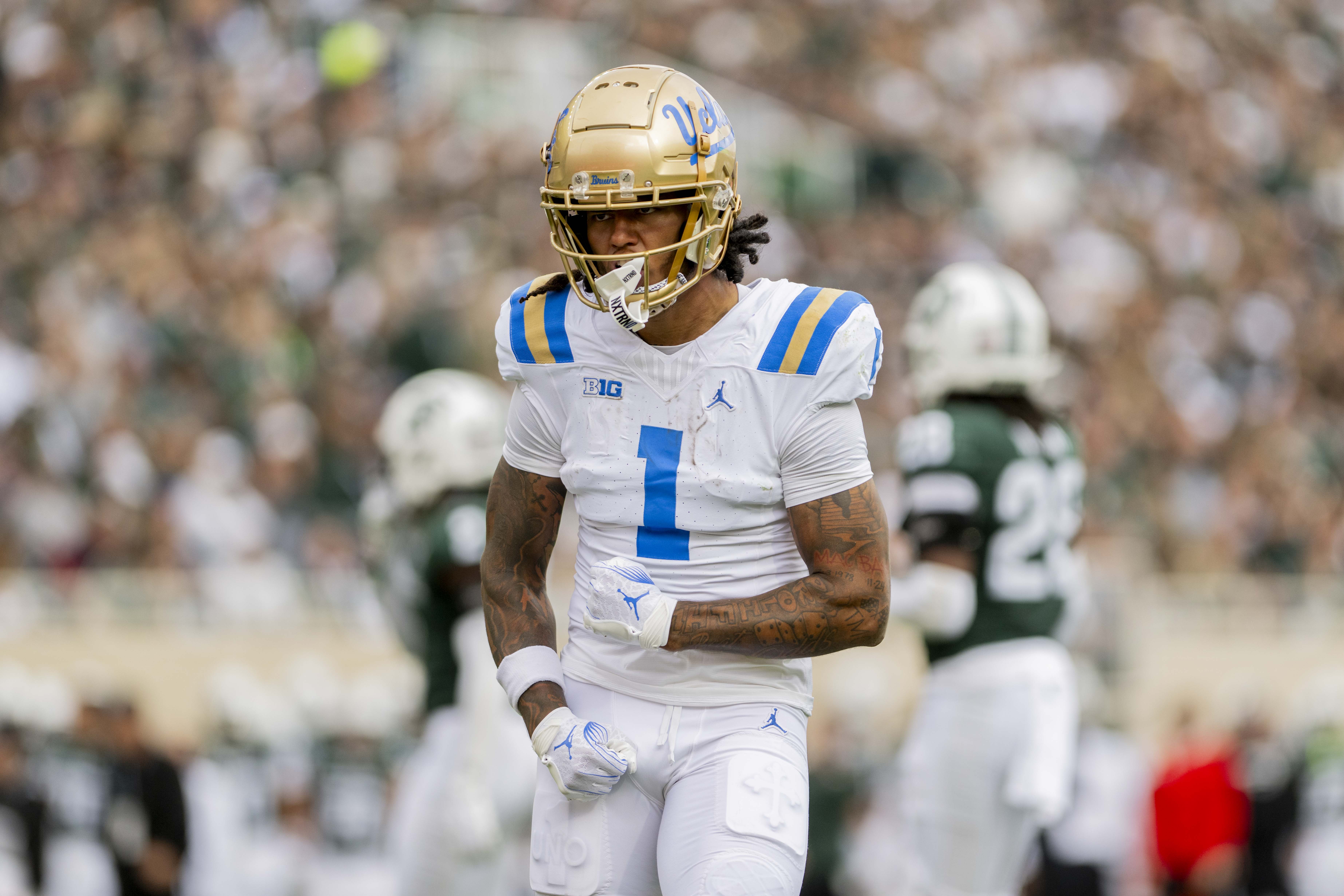
Whatever rhythm UCLA found during its midseason turnaround vanished in Bloomington.
The Bruins finished with 201 total offensive yards – their lowest tally this season. Nothing came easy. The squad failed to reach the end zone for the first time this season, resulting in a 50-point deficit.
Iamaleava, similarly, had an underwhelming afternoon. He only completed 13 of his 27 passes for 113 yards and two interceptions. The passing attack didn’t have the chance to develop, and every short route died in coverage.
Encapsulating the Bruins’ abysmal air attack was UCLA’s leading receivers outside of redshirt sophomore Rico Flores Jr, who finished with four receptions for 50 yards. No other pass catcher finished with at least 20 yards or three receptions.
UCLA averaged just 4.2 passing yards per play, putting itself behind before drives could ever build momentum.
The Bruins’ longest possession – a 10-play, 64-yard drive in the third quarter – ended with a 30-yard field goal by junior kicker Mateen Bhaghani. It was his second of the game, and he was the sole contributor to UCLA’s scoreboard.
For a team who leaned on balance and depth during its win streak, Saturday’s performance was the exact opposite.
The run-pass vanished. The rhythm disappeared. Options dwindled as the clock ran down.
Defensive breakdowns
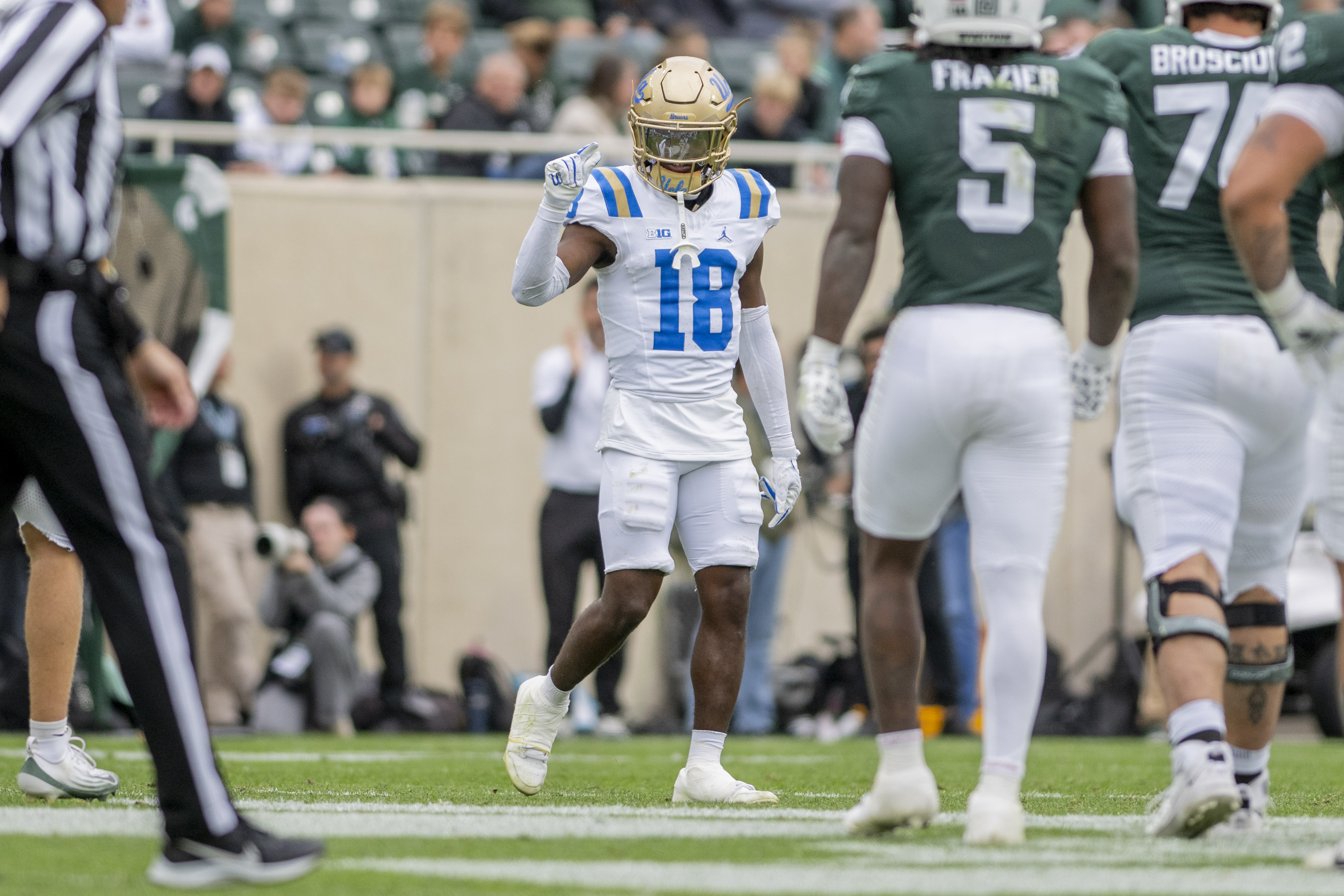
Indiana did not figure out UCLA’s defense – it exposed and exploited it.
What once looked like a revived unit in recent weeks unraveled under the weight of a top-five opponent. The UCLA defense gave up 475 total yards and seven touchdowns – the highest totals allowed this season.
Mendoza picked apart the secondary, completing 15 of 22 passes for 168 yards and three touchdowns before exiting in the third quarter.
Even after Mendoza left in the third quarter’s twilight, his younger brother, Alberto Mendoza, continued his brother’s work and took advantage of the UCLA defense – throwing for 45 yards and rushing for a touchdown.
And Indiana’s ground game did the rest.
The Hoosier offense reached the red zone seven times, scoring touchdowns on every trip. Indiana’s kicker did not even attempt a field goal, instead kicking in eight PATs. Missed assignments on the Bruins’ edge gave their opponent open lanes across the entire affair.
The game represented the first major breakdown of senior defensive analyst Kevin Coyle’s system since taking over midseason. His 3-4 scheme struggled to disguise coverage or contain Indiana’s quick reads.
A system that previously thrived on communication and discipline broke down on Saturday, with the front seven struggling to reset after early scores.
Against an Indiana team that did not need help finding the end zone, UCLA gave it up anyway.
Reality check
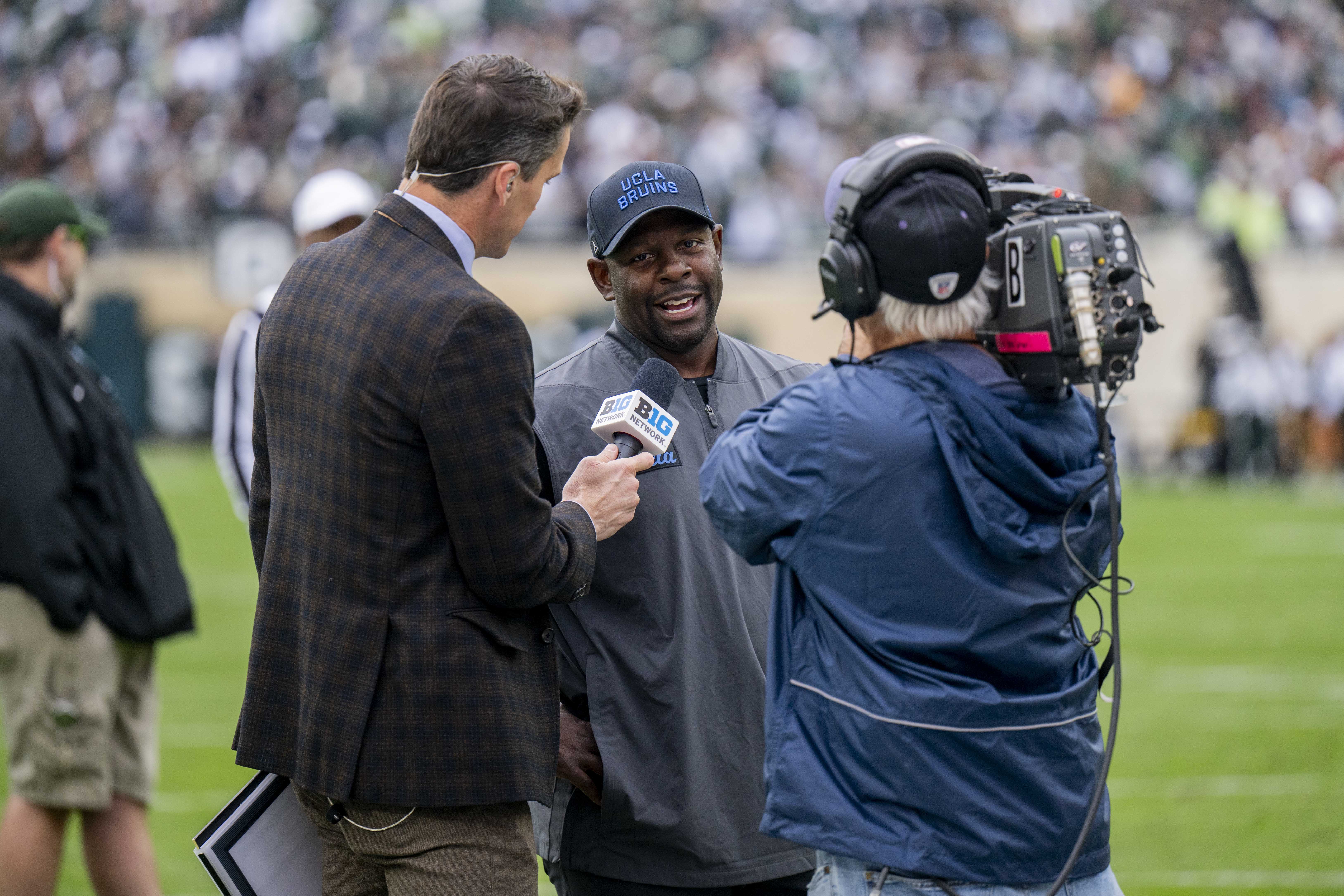
Confidence had been building.
Three straight wins had seemingly revived UCLA’s season, each one chipping away at the doubt that followed an 0-4 start. Under Skipper’s tutelage, the Bruins looked composed, physical and – for the first time all year – cohesive.
That confidence broke in Bloomington.
Indiana did not simply end UCLA’s streak. It dismantled the version of the Bruins that had started to believe again. The 50-point loss stripped away the stability Skipper’s team had spent the last month rebuilding.
Against Penn State, Michigan State and Maryland, UCLA executed under pressure.
Against Indiana, every early mistake multiplied. The urgency that had fueled their turnaround evaporated.
Skipper’s leadership – supported by the leadership of assistant head coach and tight ends coach Jerry Neuheisel – changed the tone of a season starting out on a dismal note. His message of accountability and energy turned a lost season into one with hope.
But Saturday reminded the Bruins that effort alone cannot close the gap between wins and losses.