Opinion: Jane Goodall’s legacy should inspire Bruins to make positive change in the world
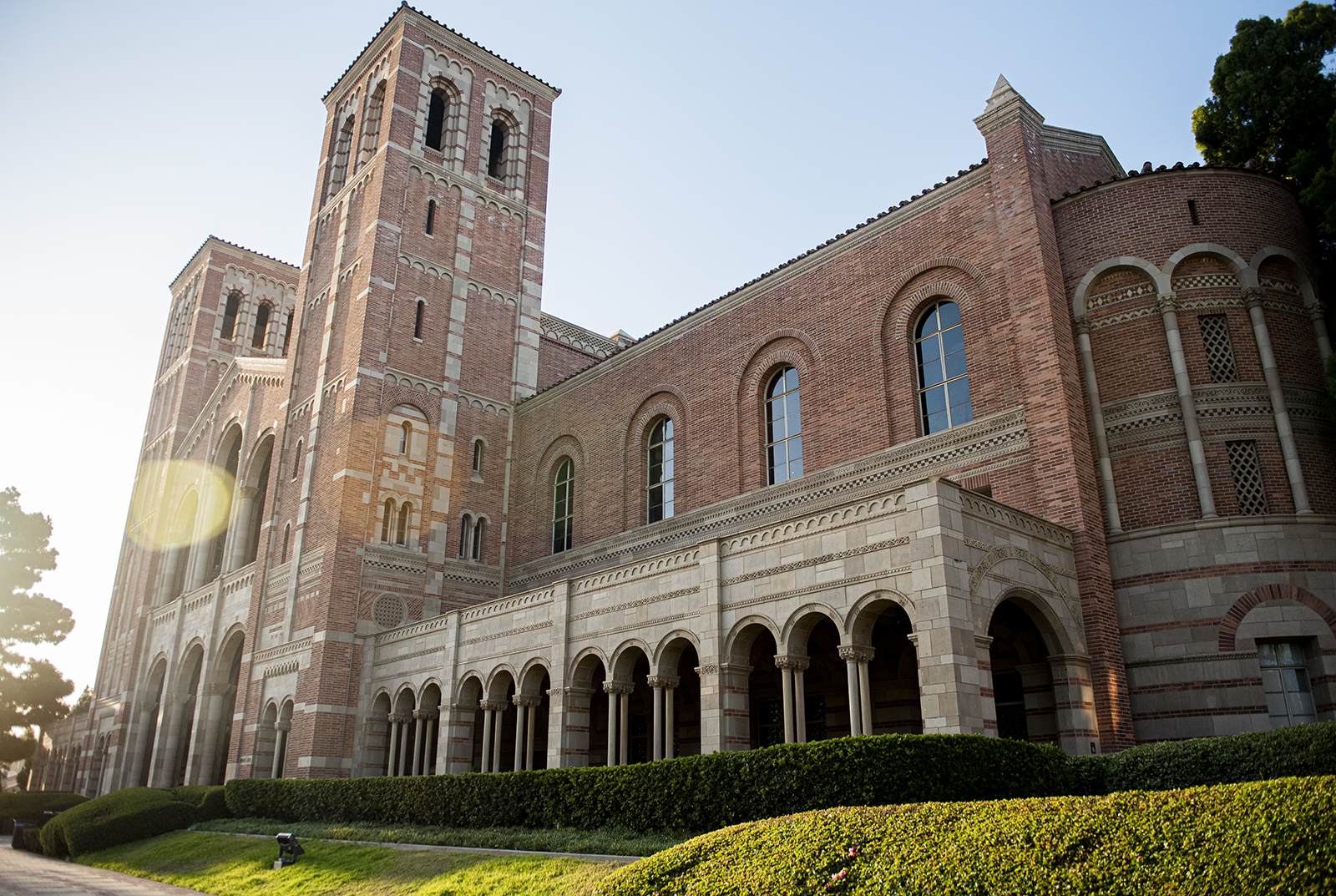
Royce Hall, where Goodall was scheduled to speak Oct. 3, is pictured. Bruins need to preserve Goodall’s legacy through their actions, columnist Reid Sperisen argues. (Daily Bruin file photo)

By Reid Sperisen
Oct. 19, 2025 1:48 p.m.
The post was updated Oct. 19 at 7:05 p.m.
Encapsulating the legacy and influence of Jane Goodall is no small task.
After a life dedicated to pioneering scientific research and globe-spanning environmental advocacy, the world-renowned primatologist and ethologist died Oct. 1 at the age of 91.
From the groundbreaking discoveries she made about chimpanzee behavior in the 1960s to the educational exposure she offered to millions of people until the end of her life, Goodall changed the world as we know it. She inspired multiple generations to embrace a more holistic perspective on animal social lives while simultaneously pushing us to care more deeply about the preservation of nature.
Now, in her absence, an enduring lesson every Bruin needs to remember from Goodall is simple but easy to forget: consistent, driven hard work must always take precedence over complacency and pessimism.
For many Bruins, this idea probably sounds intuitive. After all, we would not have made it to one of the nation’s top universities without working incredibly hard in our academic and extracurricular pursuits.
But too often, the global problems we sought to solve by going to college can seem insurmountable. The more knowledge we obtain, the more perilous the future of the environment or our governments can seem.
It is a familiar experience to feel despair, hopelessness and even apathy when it seems that our world is not oriented toward the progress we seek. When such pessimism trickles into our psyche, it is easy to give up on the goals of change we had envisioned while developing a passive cynicism and indifference.
Goodall illustrated until her final day just how crucial it is to remain driven and steadfast in our pursuit of positive change.
Even at 91 years old, Goodall was regularly traveling more than 300 days a year to speak to people around the world about environmental causes.
The Jane Goodall Institute’s Roots & Shoots program, designed to educate children about the environment, steadily grew to instill curricula across more than 75 countries.
And that’s not to mention the ongoing research on chimpanzees in Tanzania’s Gombe Stream National Park or the more than two dozen books Goodall wrote during her lifetime.
To say that Goodall was determined and passionately committed to her work would be an understatement. That passion reveals another pillar of the philosophy that helped Goodall become so successful – one we all must learn from.
It is imperative that we remember to hold on to, cherish and promote our childhood dreams. It was Goodall’s father who first gave her the plush monkey toy she named Jubilee.
Goodall knew from a young age that she loved animals and wanted to study wildlife in its natural habitat. Even when her pursuits were unconventional – she was a then-unmarried woman without a college education – she remained steadfast in chasing the dreams she had held as a child.
Here at UCLA, it is easy to forget the childhood interests that initially propelled us to pursue higher education.
Whether it be external voices discouraging us from our passions or the fact that some of our interests might not cover the bills in these uncertain economic times, it is all too common to eschew passion for a career path that seems more socially acceptable and financially secure.
But Goodall exemplifies the value in never abandoning the life one wants to live. If Goodall had given up on her dreams – when she was one of the few woman scientists in the room or when the going got tough in the Tanzanian rainforest – the world might look very different today.
Somehow, Goodall’s spirited passion helped keep her on the path she was meant to pursue. We owe it to ourselves to do the same. Without holding onto the vitality and ambition of our childhood dreams, we might never find out just how much we can change the world for the better.
The bright-eyed innocence and idealism of our childhood dreams is exactly what makes them so priceless. Goodall proved that going against the grain can be life-changing.
Admittedly, keeping one’s childhood dreams alive is impossible without another facet of Goodall’s wisdom: rejecting cynicism and embracing optimism as much as is humanly possible.
One of the through lines mentioned in many obituaries for Goodall was her eternal optimism and positive attitude.
On one level, Goodall’s indomitable cheerfulness propelled her to international recognition through the enduring popularity of her vividly written books and countless appearances in broadcast media worldwide.
But more importantly, her glass-half-full outlook allowed her to remain motivated and confident in her ability to change the world.
Even in a final interview that aired on Netflix following her death, Goodall maintained impressive hope for our society, trusting that humankind can actually prioritize environmental preservation as we mark the first quarter of the 21st century.
Of course, Goodall is still quite different from us. Her incredible achievements – such as the doctorate she received from the University of Cambridge and the Presidential Medal of Freedom she was awarded by former President Biden earlier this year – put her in a class of her own.
But at her core, Goodall represents the humanity of one woman who became a legendary environmentalist icon.
Even if she did not get to visit UCLA in her final days – she was scheduled to speak at Royce Hall on Oct. 3 – the wisdom she collected in her long life is more relevant to Bruins than ever before.
Just as Goodall helped us realize that chimpanzees use tools, we can use some of her tools to better our world. The best way to honor Goodall’s legacy is to make good on our childhood aspirations, take each day as it comes with positivity and strive to make an impact, no matter how impossible it seems.