Five Things: UCLA football vs. Michigan State
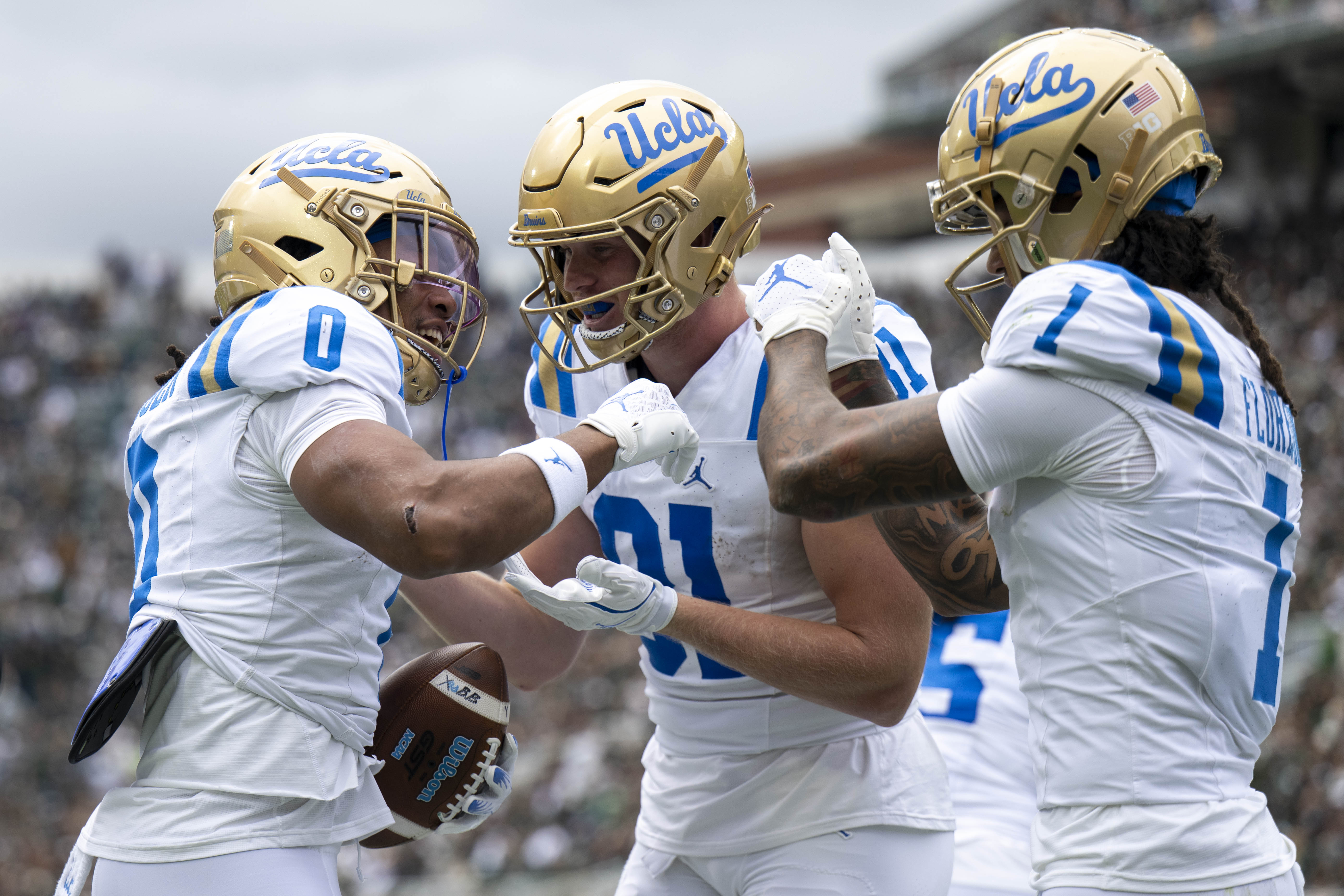
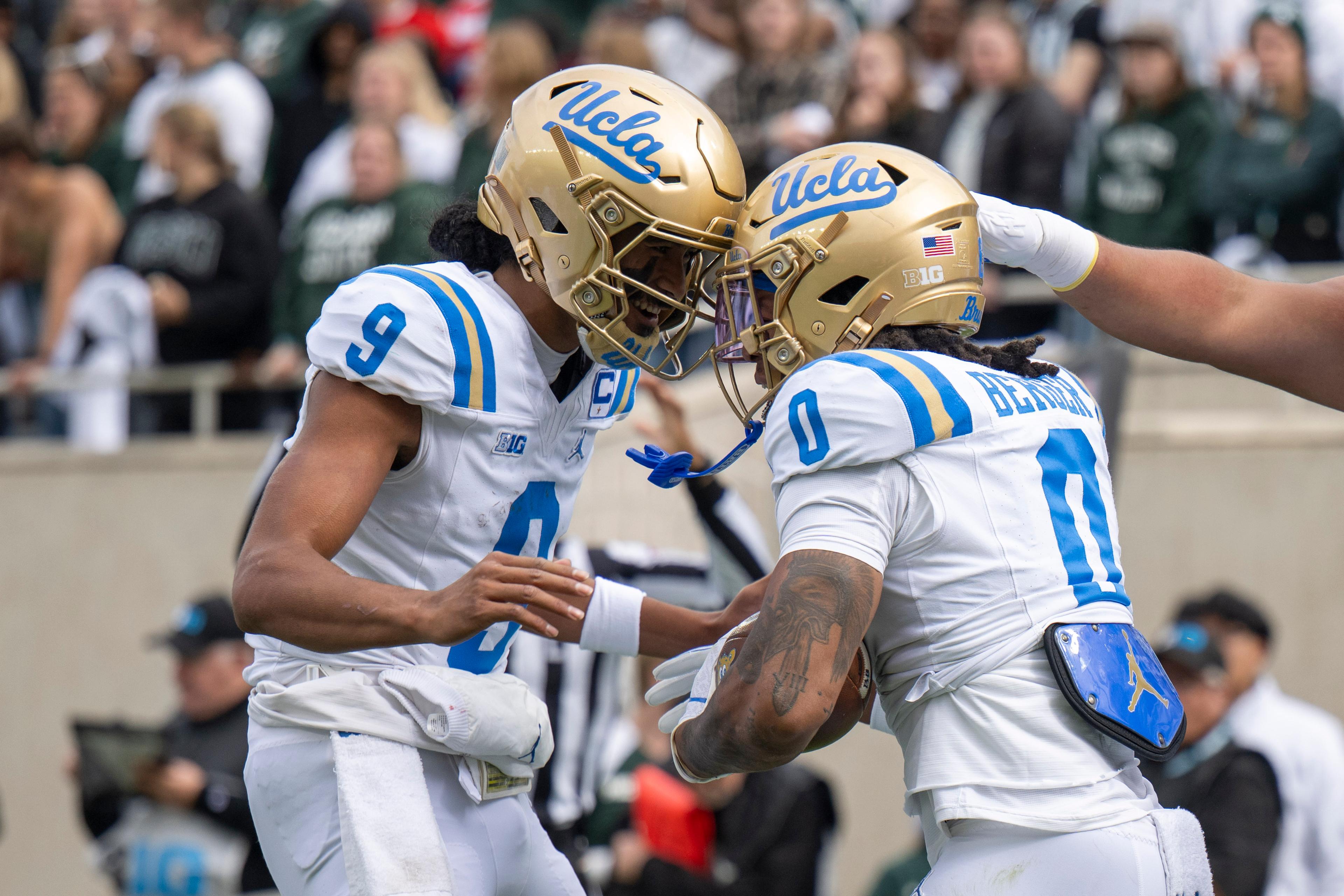
Redshirt senior running back Jalen Berger (left) celebrates with his teammates after scoring a touchdown. (Aidan Sun/Assistant Photo editor)


UCLA football (2-4, 2-1 Big Ten) built off its defeat of then-No. 7 Penn State, beating Michigan State (3-3, 0-3) 38-13 at Spartan Stadium in East Lansing, Michigan. The win not only established that the Bruins are not one-hit wonders but a squad that will challenge teams going forward. Daily Bruin Sports editor Connor Dullinger and senior staffer Kai Dizon give their five takeaways from the Bruins’ second consecutive win of the season.
Running circles
Former head coach DeShaun Foster gained confidence after his team rushed for 139 yards – UCLA’s first triple-digit rushing total last season – in a 27-20 win against Nebraska on Nov. 2.
“Martin (athletic director Martin Jarmond) hired the right guy,” Foster said.
Jarmond would fire him less than a year later.
The very next week on Nov. 8, Foster took a moment during his postgame press conference to read out “211” – his team’s rushing total in a 20-17 victory over Iowa.
Foster’s team would average just 100.5 yards over his final six games at UCLA’s helm.
I may forever be puzzled how two former NFL running backs – in Foster and former associate head coach and offensive coordinator Eric Bieniemy – boasted the third-worst rushing offense in the nation in 2024.
Even in 2025 – with a new offensive line coach, offensive coordinator, running backs coach and a completely revamped running back room – Foster’s team averaged just 122 yards on the ground through the squad’s first three games.
UCLA rushed for 131 yards in interim head coach Tim Skipper’s first game at the helm.
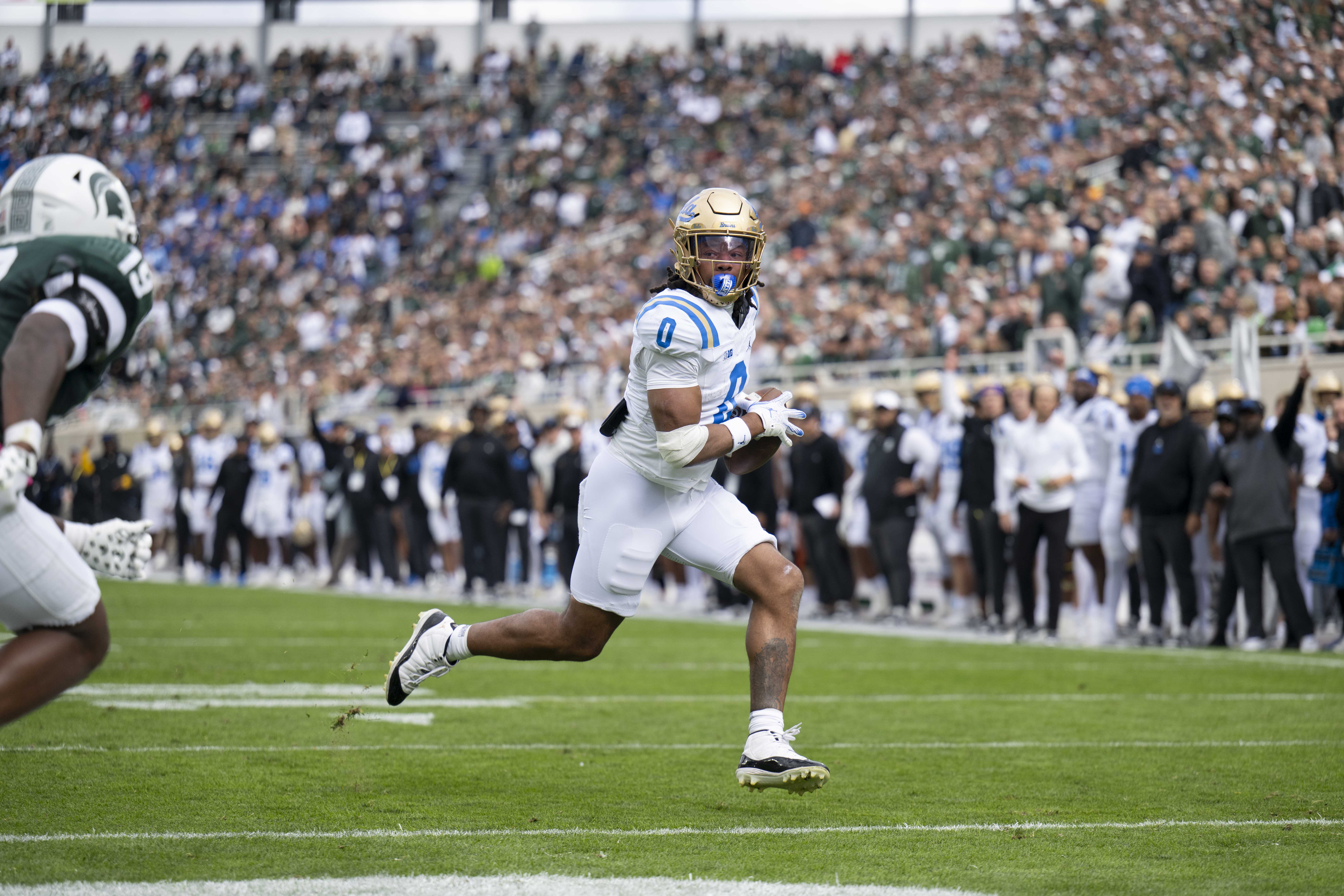
And UCLA has rushed for 269 yards against then-No. 7 Penn State on Oct. 4 and 238 yards against Michigan State on Saturday since promoting assistant head coach and tight ends coach Jerry Neuheisel to offensive playcaller Sept. 30.
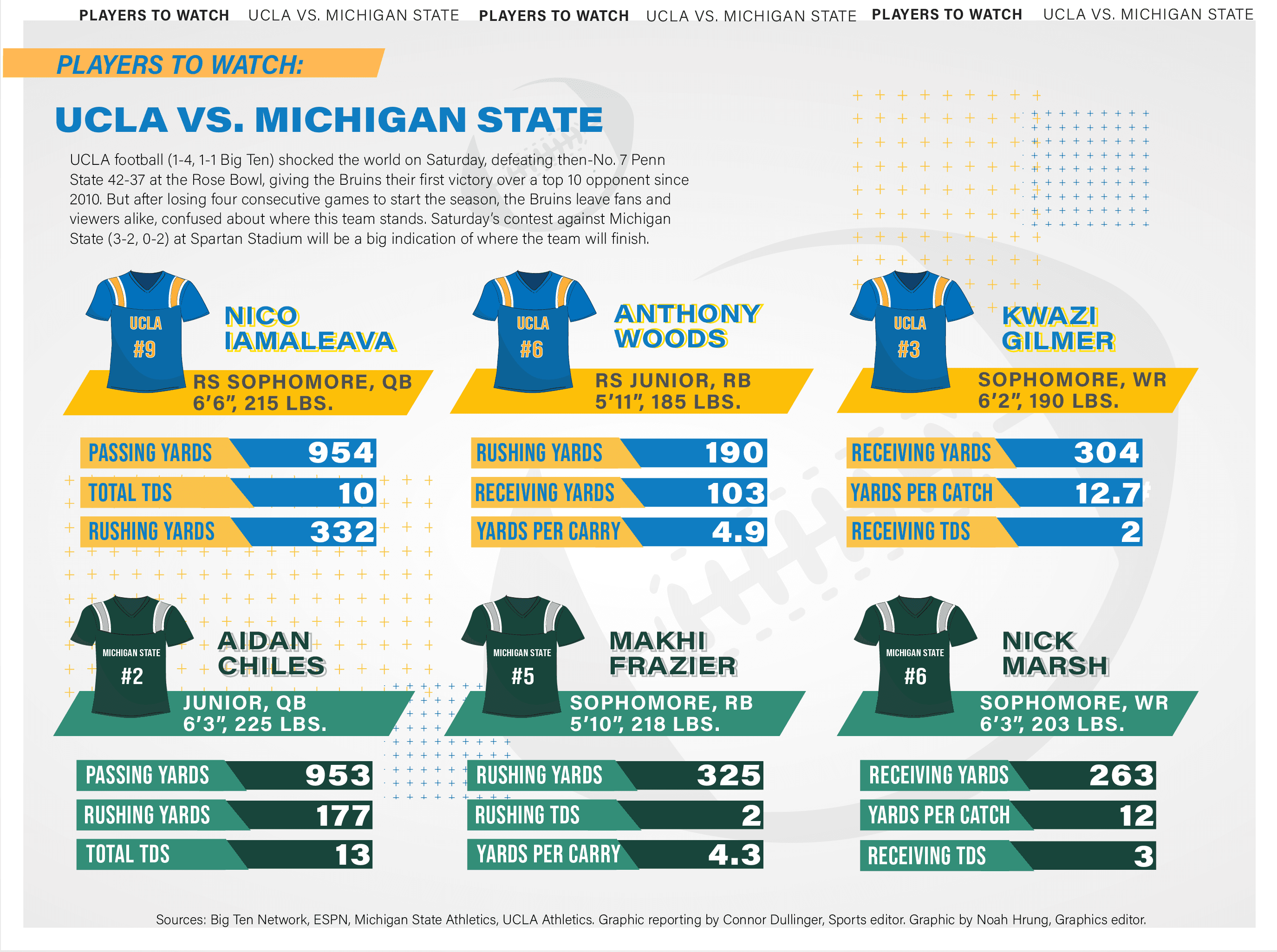
Former Spartan and redshirt senior Jalen Berger had arguably his best game since 2022, rushing for 89 yards, catching three passes for 24 yards and totaling three touchdowns Saturday – all Bruin career bests.
Junior running back Jaivian Thomas has seen his usage more than double under Neuheisel, going from an average of 5.5 carries per game across his first four performances to 16 carries against Penn State and 12 carries against Michigan State.
Although redshirt sophomore quarterback Nico Iamaleava’s career-best 128-rushing-yard-performance fueled the Bruins’ Oct. 4 rushing gauntlet, he had just three rushing yards Saturday.
The Bruins’ offense is capable of being more than a one-man show.
Flag on the play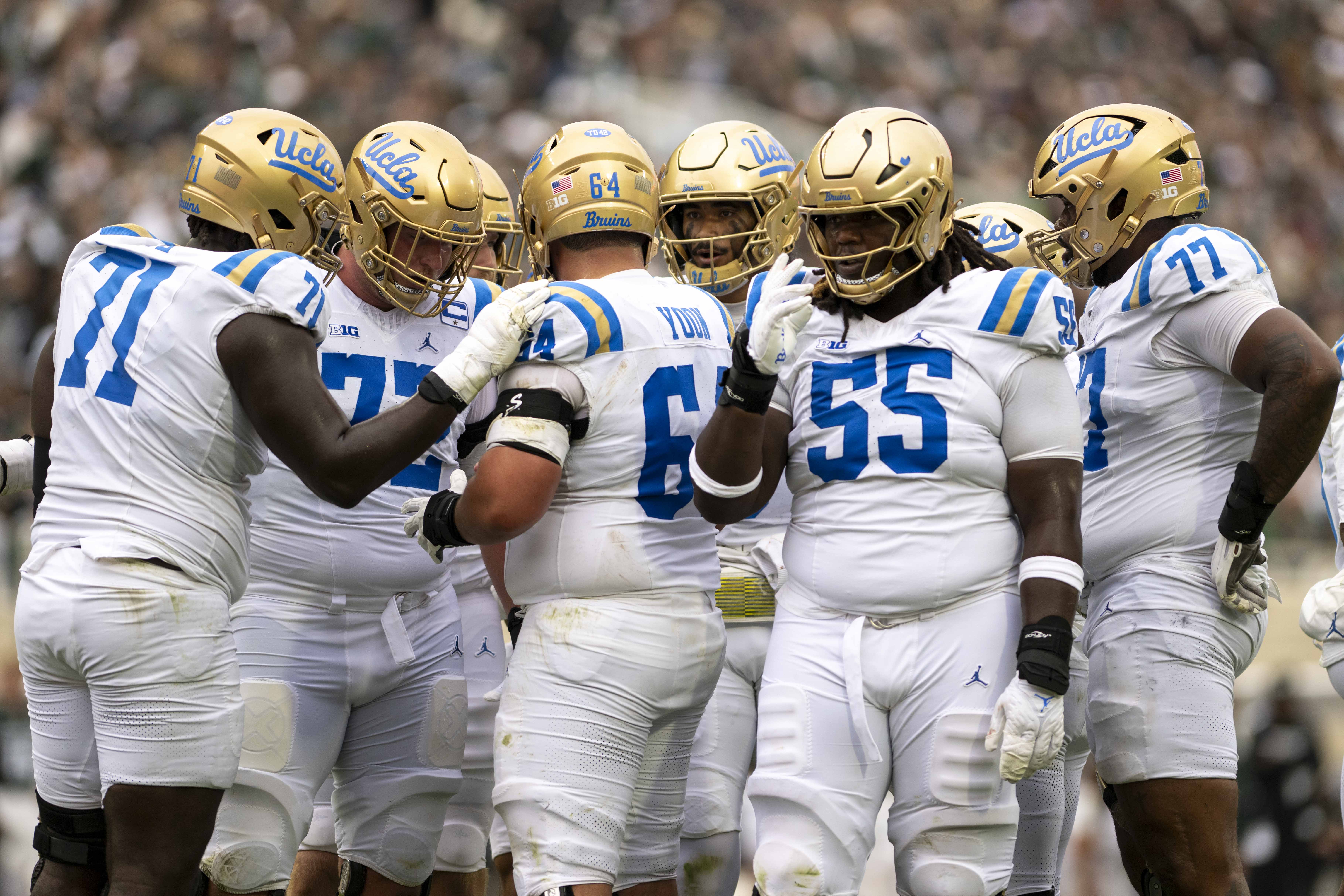
Only 15 of the 136 FBS teams commit more penalties than the Bruins.
UCLA, which averages 8.2 penalties per game, posted another eight against Michigan State on Saturday, totaling 60 penalty yards.
The Spartans had just two for 14 yards.
But the Bruins have improved their discipline. The squad is averaging 6.33 penalties per game under Skipper after being called for 10 per game under Foster.
Senior defensive analyst and acting defensive playcaller Kevin Coyle’s defense has gone from 3.67 penalties per game with former defensive coordinator Ikaika Malloe at the helm to a 1.33 clip.
And it is not just the free yardage the Bruins are giving up. Iamaleava has repeatedly called penalties momentum killers.
Of the Bruins’ 49 penalties, 18 have been false starts, which is more than half the team’s total offensive penalties.
While a new leader manning the offense could explain some of the timing and alignment struggles, you’d assume a unit working with the same quarterback all season would be able to solve what seems like a simple issue.
It’s not just one player that has caused the offensive mishaps.
Eight different Bruins have been called for a false start – including four different offensive linemen.
Although penalties haven’t haunted UCLA in its past two wins – largely because Penn State had six penalties of its own for 43 yards and because Michigan State put up just 13 points – shooting themselves in the foot could hurt the Bruins when it matters most.
Sure, Foster may be gone, and there aren’t any D.R.E. signs at Spaulding Field anymore, but the Bruins may need to embrace their former coach’s pillar of discipline before it costs them again
D-Fence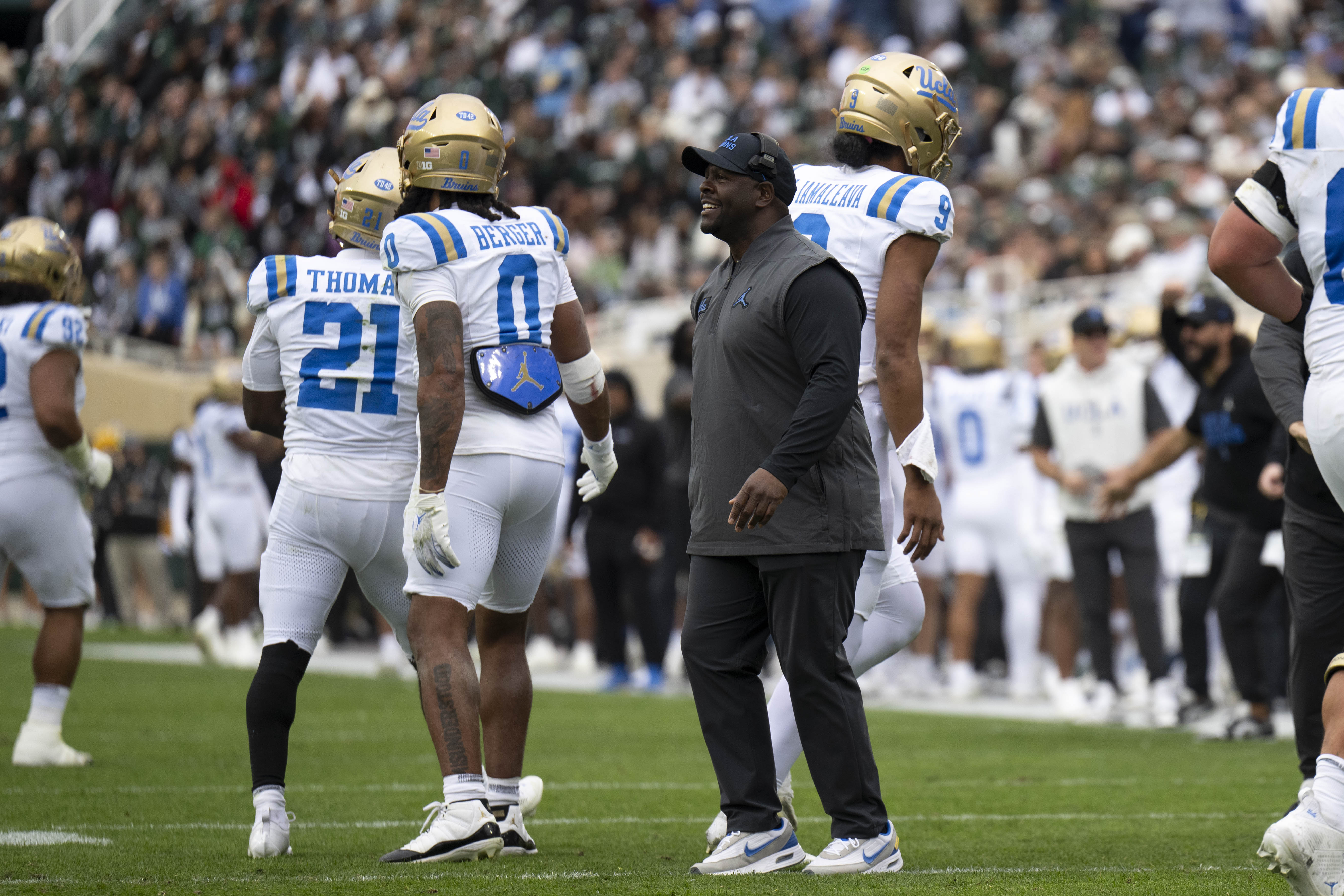
With all the praise Neuheisel and Skipper are getting – and rightfully so – the efforts of Coyle have largely gone unnoticed.
The Bruins surrendered 431 yards per game under Malloe – including 351 yards to UNLV and 450 to New Mexico.
Coyle’s unit is giving up 308 yards per game through three contests, all against Big Ten foes.
UCLA held its opponent scoreless for the final 30 minutes – forcing three punts and blocking a field goal – after a rocky first half against Northwestern on Sept. 27.
Sure, the Nittany Lions ultimately made Oct. 4 a one-score game after the Bruins once led by four scores, but Coyle’s unit ultimately stopped Penn State on its final two drives to secure the win.
Michigan State just could not find its footing Saturday.
Quarterback Aidan Chiles was benched after an 8-for-17 performance – where he passed for just 66 yards and never completed more than two passes in a row – before redshirt freshman Alessio Milivojevic was thrown into the fire.
Milivojevic didn’t fare much better, going 8-for-18.
Additionally, the Bruins had just two sacks and five tackles for loss with Malloe. Those numbers have ballooned to four and 17, respectively, with Coyle.
Although UCLA’s high-octane offense has been hard to ignore the past two games, the defense has been just as key to the midseason turnaround – even if Coyle lacks Neuheisel’s hair.
Special teams, special players, special plays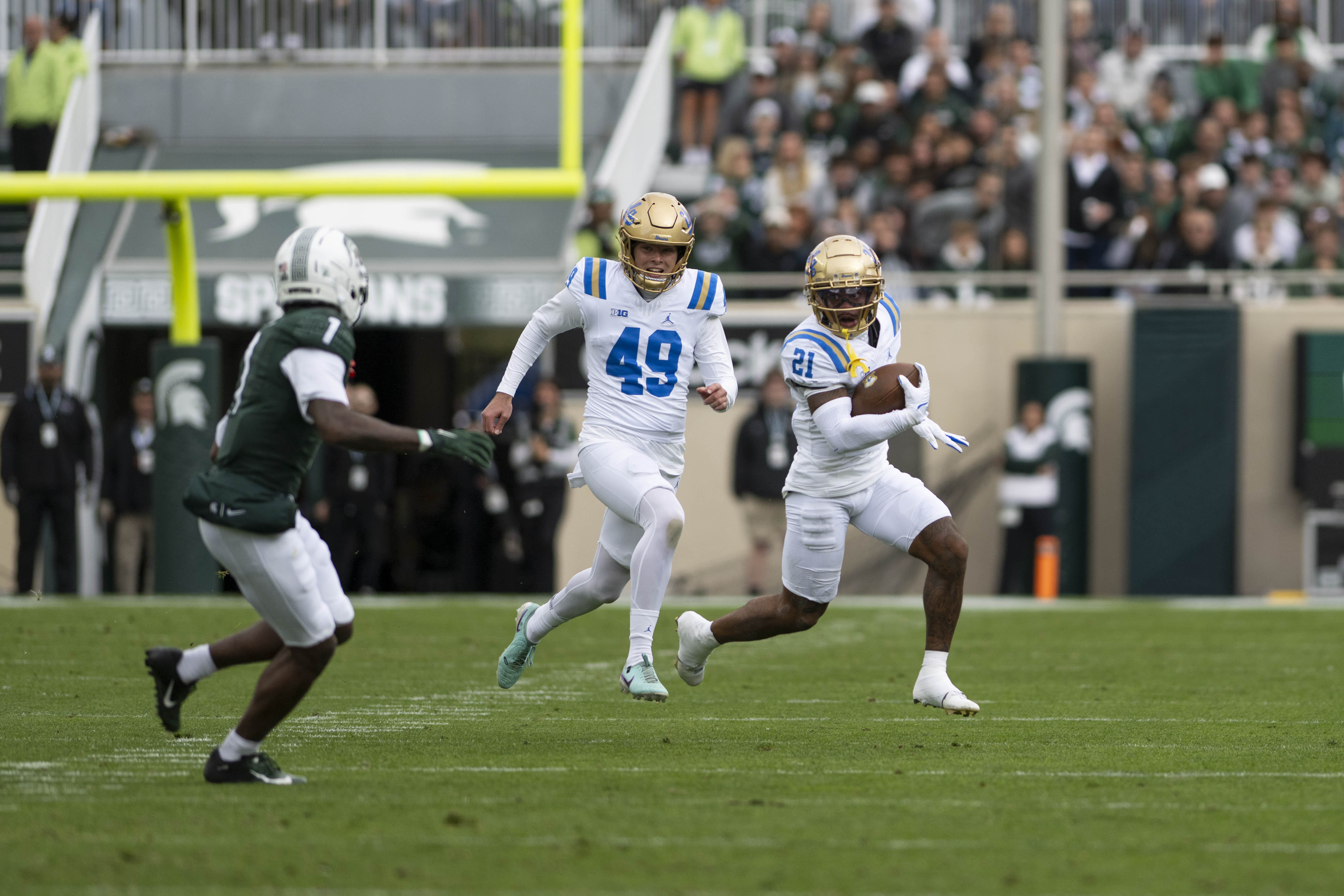
The worst team to play is one that has nothing to lose.
Whether it is going for it on fourth-and-long, fake punts or gutsy play calls, teams that are 0-4 – like the Bruins were two weeks ago – will do anything and everything to take opponents down.
The then-No. 7 Nittany Lions experienced it firsthand.
Junior Mateen Bhaghani launched the ball 19 yards for a successful onside kick on the Bruins’ first kickoff.
UCLA’s advantageous special teams decision was based on two years of film analysis, where the team noticed that one of Penn State’s outside blockers always moved early to help protect for the return.
The Bruins’ decision gave them a 10-point lead before the Nittany Lions’ first offensive play, setting the stage for their eventual collapse.
UCLA followed up its daring special teams decision against Penn State with a successful fake punt Saturday against Michigan State. Redshirt sophomore defensive back Cole Martin took the direct snap off the punt formation and rushed for 20 yards on fourth-and-two from the Bruins’ own 45-yard line.
The same play with Martin was run two weeks prior against Northwestern in Evanston, Illinois. The successful fourth-down conversion led to a touchdown, putting the Bruins up 10 in the second quarter.
With UCLA having to win four out of its last six games to clinch a bowl game, more special team craziness may be expected as the season progresses.
Start fast, finish strong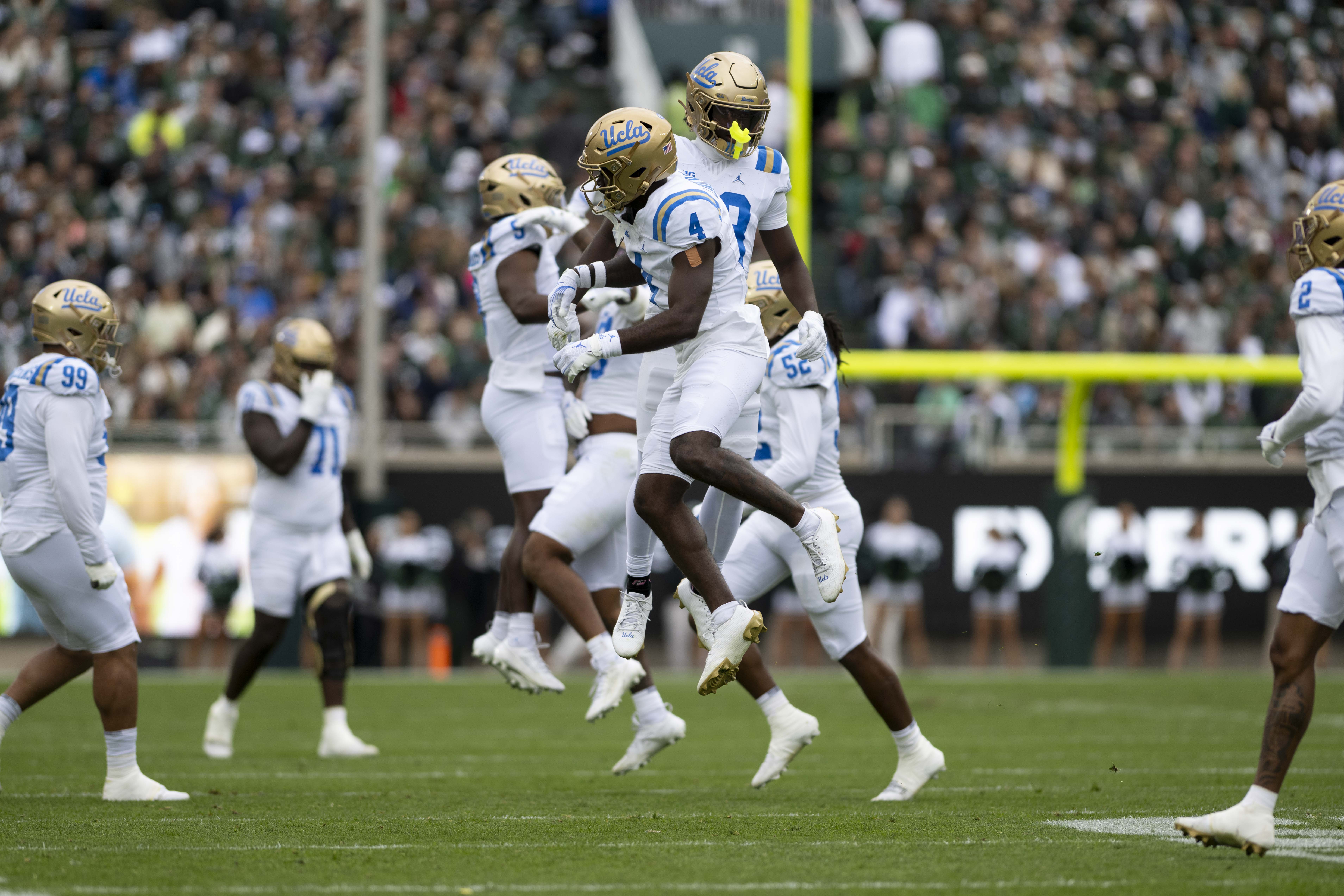
The Bruins had not held a single lead all season until Oct. 4.
Week after week, players and coaches alike emphasized that they were starting out flat – alongside self-inflicted wounds – that led to their 0-4 demise.
And although many thought the team’s slow starts helped cause its inferior performance, few believed it was an overarching factor that led many to label UCLA as one of college football’s worst programs.
But since the Bruins came out guns blazing against Penn State, this mentality has defined the team’s winning formula.
UCLA’s first drives against Michigan State – an offensive possession that resulted in a penalty and two errant throws along with a defensive possession where the Spartans carved through the Bruin front seven – made me think that Penn State was just a miracle.
But I was proven wrong very quickly.
UCLA scored on its subsequent four first-half possessions after the initial punt and would have scored on all five if Bhaghani’s field goal had not rebounded off the left upright. The squad went into halftime with a 24-7 lead.
The lead was never relinquished, and the Spartans looked like they had given up once they reached the third quarter.
While some may have denied the impact that starting fast had on the squad, it is clear now that when the Bruins come out fast, opposing teams cannot do much to stop the ball from rolling.