Opinion: Art creates an imbalance of power, using storytelling to reclaim the narrative
(Desiree Gonzalez/Daily Bruin Staff)

By Evelyn Baran
Sept. 30, 2025 3:35 p.m.
Making art has always been about asserting power. To write, paint or film someone is to claim authority over their image.
But what happens when you find yourself as the subject instead of the artist?
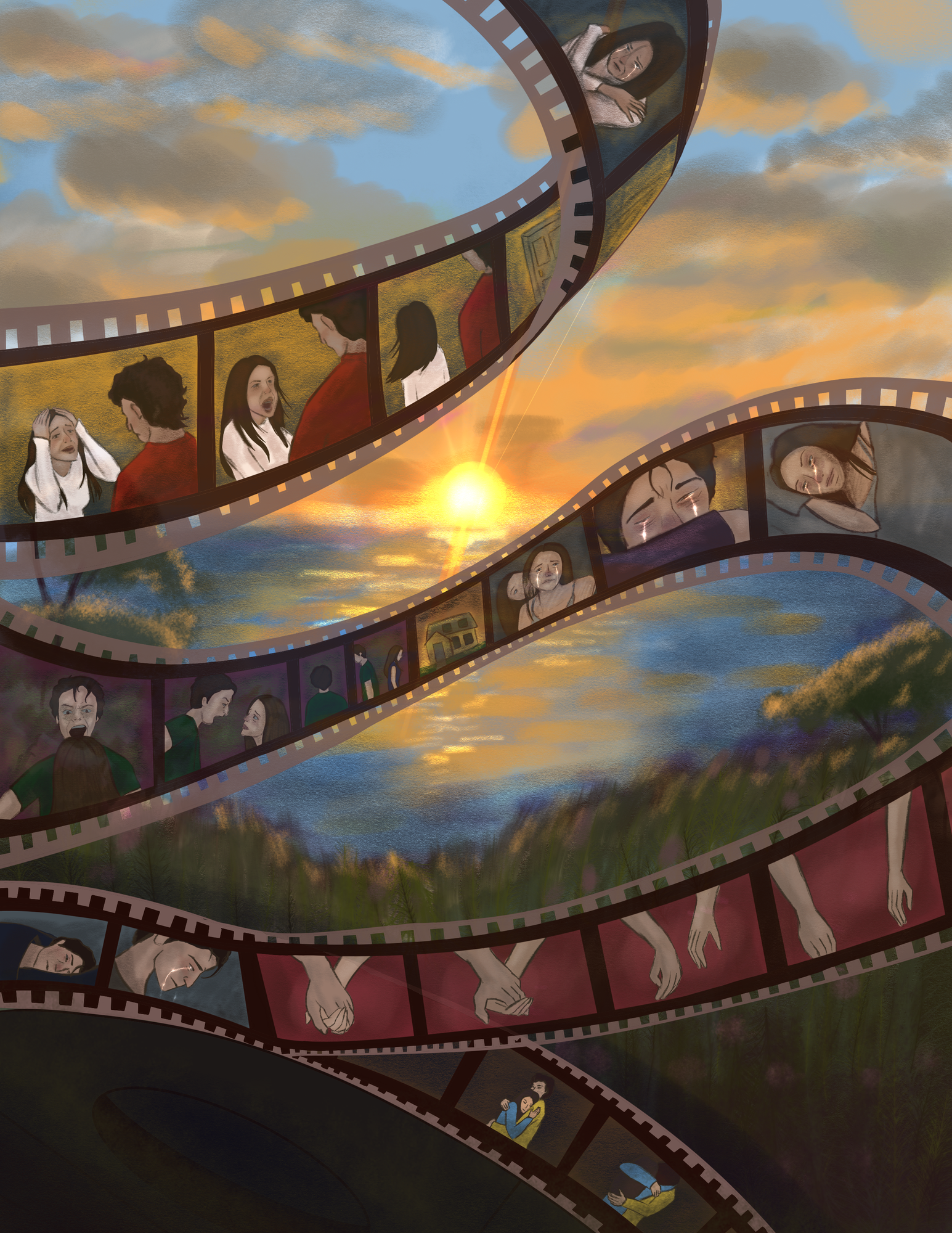
While I was seeing someone for six months, he wrote two separate short films about me.
In one of them, a character shared my name. In the other, he drew inspiration from real-life scenes for the plot and characters. He recalled our first date at the beach and how we used to clink our burritos together as if they were glassware.
In the film, the main character who shared my name was pregnant with a daughter who had the same name he had chosen for his actual future daughter. The character was paralyzed after a fight with her older husband, who put a necklace reminiscent of a collar around her neck and dragged her through the desert.
When I saw these films, I felt a sense of powerlessness over myself and my depiction.
I felt horrifyingly close to that character as I read and reread those stories after we ended things: powerless and alone.
During the relationship, I was so wrapped up in the idea of the person he could be that nothing could sway my opinion. I would often call my best friend sobbing after reading his scripts, feeling that loss of control over the image that he made. My best friend would softly give me advice to end things, and yet I still felt tied to him and his affection.
By analyzing my own perception of our relationship through writing, I have been able to unknot this tie.
Something I said to him stuck with me as I have mused over our relationship. Once, I told him, “I am a writer too, you know,” because he would often gloss over my writing when I sent it to him.
I am a writer too, you know.
I began to think of famous duos that used art as a means of conversation or communication, such as Joan Baez and Bob Dylan, or Sofia Coppola and Spike Jonze.
I wonder if the sense of injustice I felt after being written about also sparked conversations between these artists – a sense of sharing a side, or simply responding to the initial remark.
Why do people make art if not to share their feelings and perspectives? Is it not the call of art to transcend such realities into multiple forms of media?
The first time I saw him after our relationship ended, I did not subject myself to awkward small talk to appease his guilt or embarrassment. Instead, I simply left the conversation. It felt good to own that power – to finally have the upper hand in the conversation that I had always allowed him to take.
In the aftermath of our relationship, I always wanted to scream my side of the story – the side that had been written for me. I tried to list everything he did to me out loud, so I could process the full extent of my fury and sadness.
But I am not a vengeful person. I am merely a writer.
I wanted to be loved so badly that I let myself be treated and talked to in a million horrible ways. But that first time I saw him since the breakup, it felt like something blossomed inside my chest.
I was truly free from what he thought of me. I no longer needed to use his opinion as a measuring stick for myself. I realized he took all of my good qualities – my kindness and my heart – and vilified those traits in his depiction.
And finally, I began to write about him. I thought about the multiple projects he had sent over to me to edit. Our writing had become entangled and complicated, much like our relationship and our perceptions of each other. I became angrier in the face of that sense of narrative injustice, an ugly step in the process of healing that I had to consider.
The writer inside of me demanded to be seen, to share my feelings and perspective.
Writing is a form of reclamation that has compelled me to confront an important question: who gets to tell my story?
For so long, I thought he alone had that power and wielded it over me.
But the honest truth is that he only wrote his version. I am allowed to write mine.
Art created about others will always create an imbalance of power, whether in songs, poems or film. However, there is also power in an artistic response.
To write about someone is to fix them in your gaze. To write back is to refuse to stay fixed.
That is how I survived being written about; I wrote myself back into the story. My old partner may have tried to define me, but my words are my refusal to stay trapped in his narrative.
To reclaim my voice is to reclaim my life.
After all, no one else gets the final word on who I am.