Opinion: We must escape doomscrolling to reclaim control over our lives
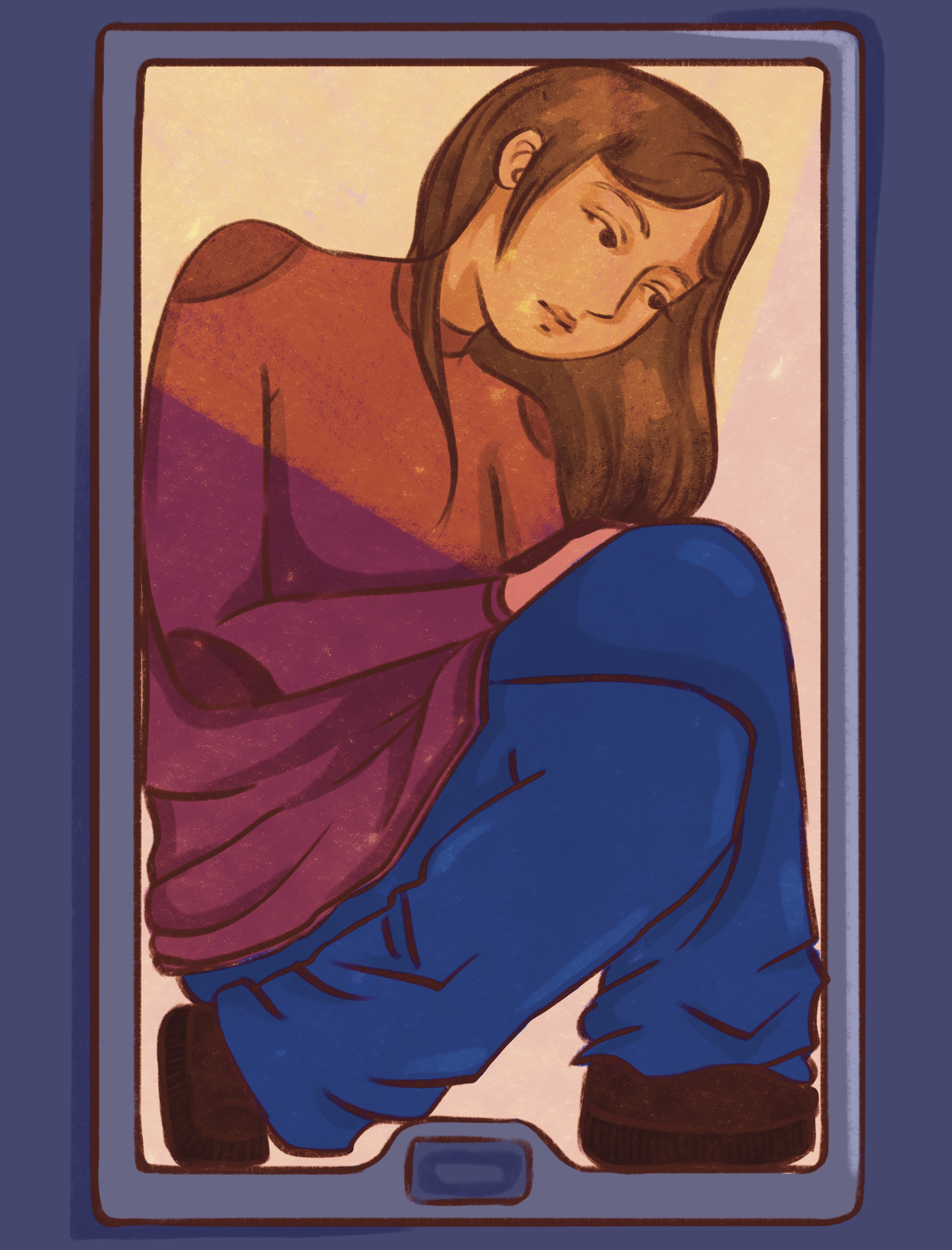
(Susanne Soroushian/Daily Bruin staff)

By Janice Lee
Sept. 29, 2025 7:38 a.m.
This post was updated Sept. 30 at 10:22 p.m.
I covered my tired eyes to block out the morning sun. Almost immediately, regret from scrolling deep into the night seeped in, along with a throbbing headache.
Still, I mindlessly grabbed at the phone above my head to check my notifications. Before I knew it, I had let out a slight chuckle at a video that amused me, then quickly swiped to see another chuckle-worthy joke.
Soon enough, I got a notification that read, “You’ve reached your time limit on Instagram.”
As I pressed the small “ignore limit” button, I realized that last night’s conviction to live out today differently was only a dream.
Doomscrolling, a term that first became popular during the COVID-19 pandemic, is now all too personal for so many people. Merriam-Webster Dictionary defines it as “to spend excessive time online scrolling through news or other content that makes one feel sad, anxious, angry, etc.” Unfortunately, most summers, it became a part of my daily routine.
But this summer was different.
I had the special opportunity to spend 30 days on a mission trip without a phone or access to the internet alongside other college students in Nicaragua. I fundraised with my Christian club, Kristos Campus Missions, to volunteer in Nicaragua this July in the fields of education, medical service and evangelism.
I discovered three important things: When I didn’t have my phone, I felt less stressed, I talked a lot more with those around me and I had more time in the day.
Victoria Choi, a fourth-year computer science student, said she is not immune to the phenomenon of doomscrolling.
“Especially now that the algorithms are so good at predicting what you’ll watch and what keeps you so focused, it’s too easy to keep watching,” Choi said.
The precision of the algorithm seems to know exactly what viewers want to see, and while that might be unsettling at times from our perspective, it is a job well done on the engineers’ part.
Eunice Jun, an assistant professor of computer science at UCLA, leads a class on human-computer interaction, where she teaches students how to design platforms that make certain actions, such as liking and commenting on a post, easier for users.
This past school year, Jun started her course by inviting students to reflect on and consider the impacts of social media usage on their lives.
“I thought students would be really eager to talk about this topic, since it’s such an integral part of how we socialize, especially on a college campus,” Jun said. “I was really surprised at how students were really reticent to talking about it. … I think it’s this collective sense of maybe shame, guilt, embarrassment, whatnot that I hadn’t necessarily anticipated.”
It’s no surprise that mentions of social media usage sparked a negative reaction among my peers: No one likes feeling unproductive. Yet we are no strangers to wasting the opportunity to spend our time meaningfully because we are busy scrolling instead.
Many times this summer, I found myself frustrated and hopelessly stuck in this state. I was in gridlock, utterly incompetent because of the addictive cycle of scrolling for hours on end, mindlessly. Rather than the content I consumed contributing to this guilt, it was the action of doomscrolling itself that made me feel ashamed of my poor work ethic.
But while it was our choice to join these platforms, staying hooked is not our singular fault.
We are up against a rigorous computer system created by talented engineers to keep us diligently engaged. Our inability to put the phone down is not simply because we lack willpower.
It’s in human biology – or more precisely, in the way it’s being altered.
“Media consumption has a direct impact on our brain circuitry,” Harvard professor Dr. Aditi Nerurkar said in an interview with Mel Robbins earlier this year.
“It’s hard to engage with the real world, which moves at a much slower pace,” she said in a Harvard Health Publishing article from Harvard Medical School.
According to the article, doomscrolling gives us “popcorn brain,” which is a biological occurrence where people experience difficulty concentrating resulting from overstimulation on the internet.
My personal experience can attest to this. Long-form video content and even lectures on two-times speed feel slow now. It’s scary how my finger habitually presses skip every time there is a pause in sound or the way I instinctually press down on the side of my screen to make a 20-second video pass by even faster.
We have to slow down and ask ourselves: What’s the rush?
The National Library of Medicine reports that individuals who participate in a digital detox may experience a reduction in depressive symptoms, likely due to disconnecting from the stressors of negative social comparisons, cyberbullying or information overload that underlie the digital world.
Being away from my phone for the entire month of July in Nicaragua encouraged dialogue that went beyond small talk and fostered genuine connection. We relied on one another for counsel and pursued intentional, often uncomfortable conversation – something our generation has grown accustomed to avoiding in person.
Siobhan Nelson, a third-year psychology student, said she felt displaced by technology when her friend who had recently gone through a breakup turned to the My AI Snapchat chatbot to ask for advice.
Nelson said she has noticed diminishing social skills and a growth in laziness due to AI usage.
While this might be a novel experience, it is not a new perspective. We are no stranger to the fact that social media has diminished interpersonal relationships and our ability to interact in fundamental ways.
Nonetheless, I noticed how long my days could be when I stopped doomscrolling. I could, in fact, accomplish a lot.
Doomscrolling is a detrimental form of escapism that keeps us trapped behind a screen and hides us from reality – and we are addicted.
Every time we choose to mindlessly scroll without end, we are actively forgoing our control over reality. It is undeniably comfortable to stay scrolling, but this illusion of comfort and control is steering us away from our power to effectively carry out our real lives.
No one likes feeling like a failure before even climbing out of bed. I know I sure don’t. It’s time to put our phones down while we still remember what we can achieve, or perhaps protect, by doing so.