Topanga State Park, Will Rogers State Historic Park make progress in fire recovery
(Mabel Neyyan/Daily Bruin)

By Maggie Konecky
Sept. 18, 2025 9:41 p.m.
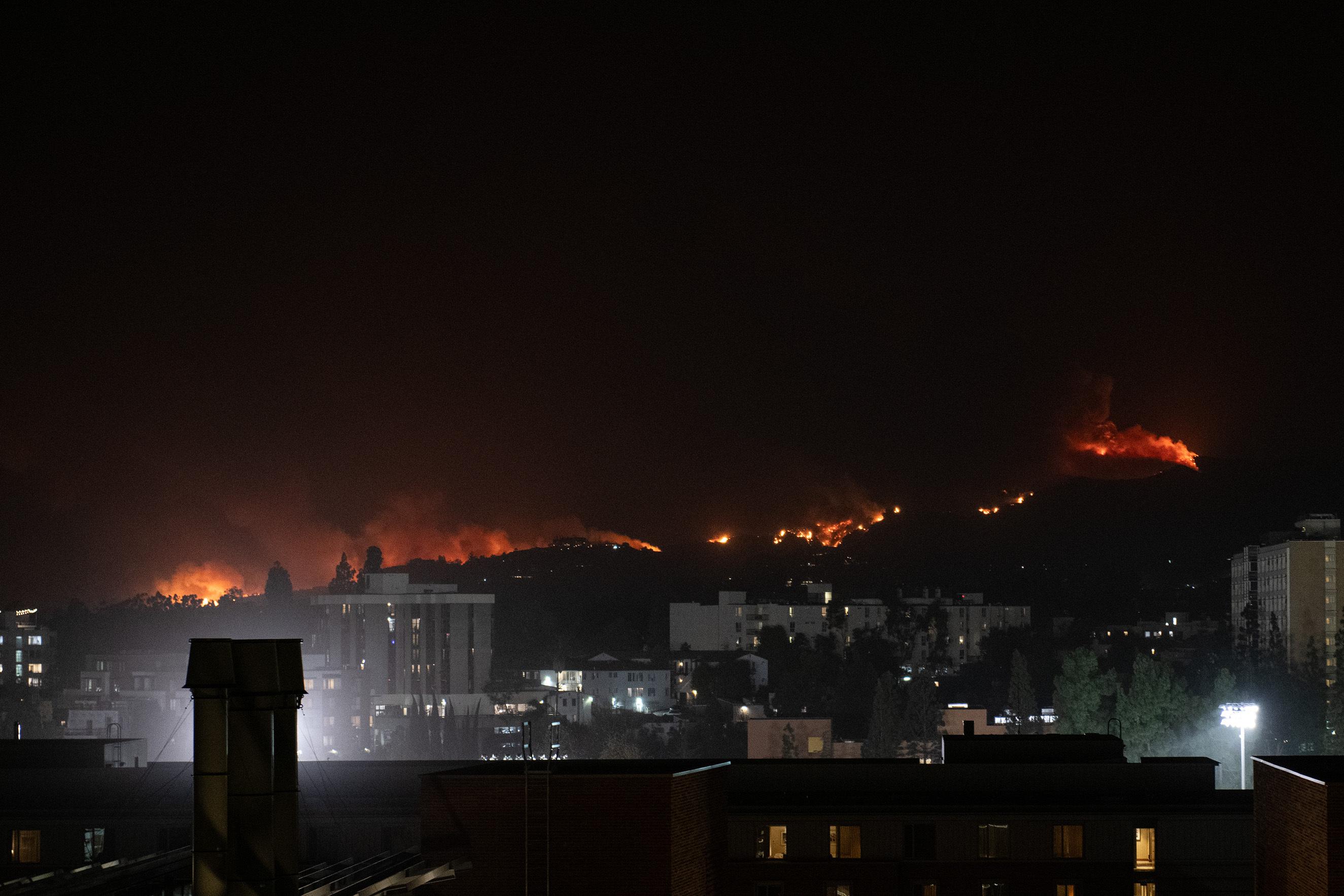
Eight months after the Palisades fire burned parts of Topanga State Park and Will Rogers State Historic Park, both areas are reaching new stages of recovery.
The parks – which are located next to each other and around four miles west of UCLA – have been recreation destinations for students for over five decades. Both were shut down during the January fires, and, while the majority of Topanga reopened afterward, Will Rogers remained closed to the public as rebuilding progressed.
A series of fires in early January burned more than 40,000 acres around Los Angeles County. The Palisades fire burned more than 20,000 acres in the Santa Monica Mountains, destroying homes and infrastructure in the nearby Pacific Palisades community.
[Related: The Bruin’s full coverage of the LA County fires]
Richard Fink II, the Angeles district superintendent for California State Parks, said the recovery process has been a new and unfamiliar experience for many park employees.
“We haven’t had to go through large-scale disaster of this nature that took out an entire community’s infrastructure,” Fink said. “All those questions around debris removal were very challenging and new to us, but we learned an incredible amount of information as we went along.”
The historic structures housed at Will Rogers – including a stable and ranch house – meant debris was carefully searched for surviving artifacts and building pieces, he added.
Fink also said the United States Army Corps of Engineers was given a permit to use Will Rogers as a staging ground for the recovery of the entire Pacific Palisades community, in addition to the recovery of the park itself. More than 1 million tons of debris – including property and trees – were cleared from impacted neighborhoods during the operation, Fink added.
A USACE spokesperson said in a written statement that it also processed more than 100,000 tons of material in an area of the park established to sort fire debris for recycling and disposal. They added in the statement that USACE is focused on restoring the land and plans to hand full control of the park back to the state later in September.
Fink said California State Parks plans to reopen Will Rogers for public use in early November. He added that the organization hopes to get local residents thinking about how park projects can benefit communities, such as through replacing invasive species with fire-resistant native plants and using the space for education and outdoor activities.
“You’re part of a bigger community here that’s had a tragedy,” Fink said. “While you might want to reopen the park immediately and get to work on your own facility, you have to understand that you’re part of the bigger network and the bigger community, and you have to wait your turn and play your role.”
Noa Rishe Khalili, a natural resources program manager for California State Parks, said the fire was more severe in Topanga Creek due to an abundance of invasive arundo plants – a tall, matted reed that blanketed the ground and burned intensely. Mudslides then occurred because the slopes were bare of vegetation, Rishe Khalili added, filling parts of the creek with sediment and requiring more than 1,000 endangered fish to be relocated from the area.
Unlike Will Rogers, Topanga is located farther from neighborhoods and is most often used for remote activities such as hiking and camping. The chaparral landscape covering much of the park naturally experiences fires around every 30 years, Rishe Khalili said, and will now need time to recover.
“Early on in the fire, I had a lot of folks reaching out saying they wanted to help, they wanted to help reseed and replant,” Rishe Khalili added. “Sometimes after a disaster like this, you have to take a step back and hold off and see what comes in on its own.”
Rishe Khalili also said California State Parks is collaborating with other agencies – including the National Park Service and California Conservation Corps – to aid the restoration of the local ecosystem and species. California State Parks plans to remove the remaining arundo root structures and is also working alongside the NPS to track the movement of local animals, Rishe Khalili added.
Among the changes, Rishe Khalili said, there are also signs of resilience.
A bear wandered back and forth between the Santa Monica Mountains and Angeles National Forest throughout last fall, Rishe Khalili added, before denning for winter at the edge of where the fire would later reach. In the spring, it reemerged into the mountains – this time with three new cubs in tow.
“We haven’t had bears in the Santa Monica Mountains for a very long time. Now, there’s four,” Rishe Khalili said. “It just shows the power of nature, the resilience of nature.”