Five things: UCLA vs. Utah
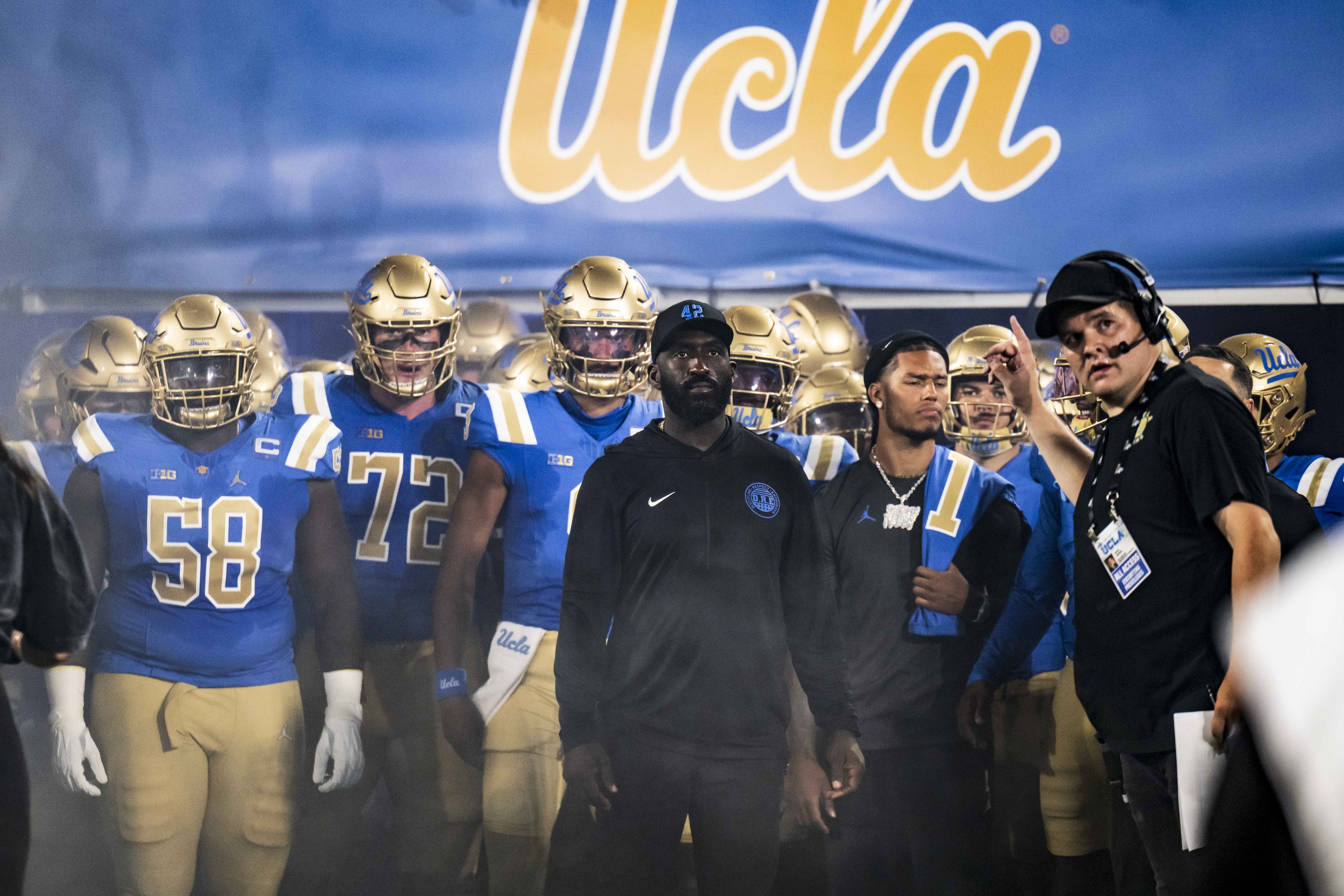
UCLA football head coach DeShaun Foster stands in front of the team as they wait to run onto the field at the Rose Bowl. (Aidan Sun/Assistant Photo editor)

By Connor Dullinger
Aug. 31, 2025 10:37 p.m.
This post was updated Sept. 1 at 12:25 a.m.
UCLA football’s (0-1) potential 2025 breakout was sidelined after a 43-10 blowout to former Pac-12 adversary Utah on Saturday at the Rose Bowl. Sports editor Connor Dullinger gives his five main takeaways from the Bruins’ duel with the Utes.
A hot knife through butter
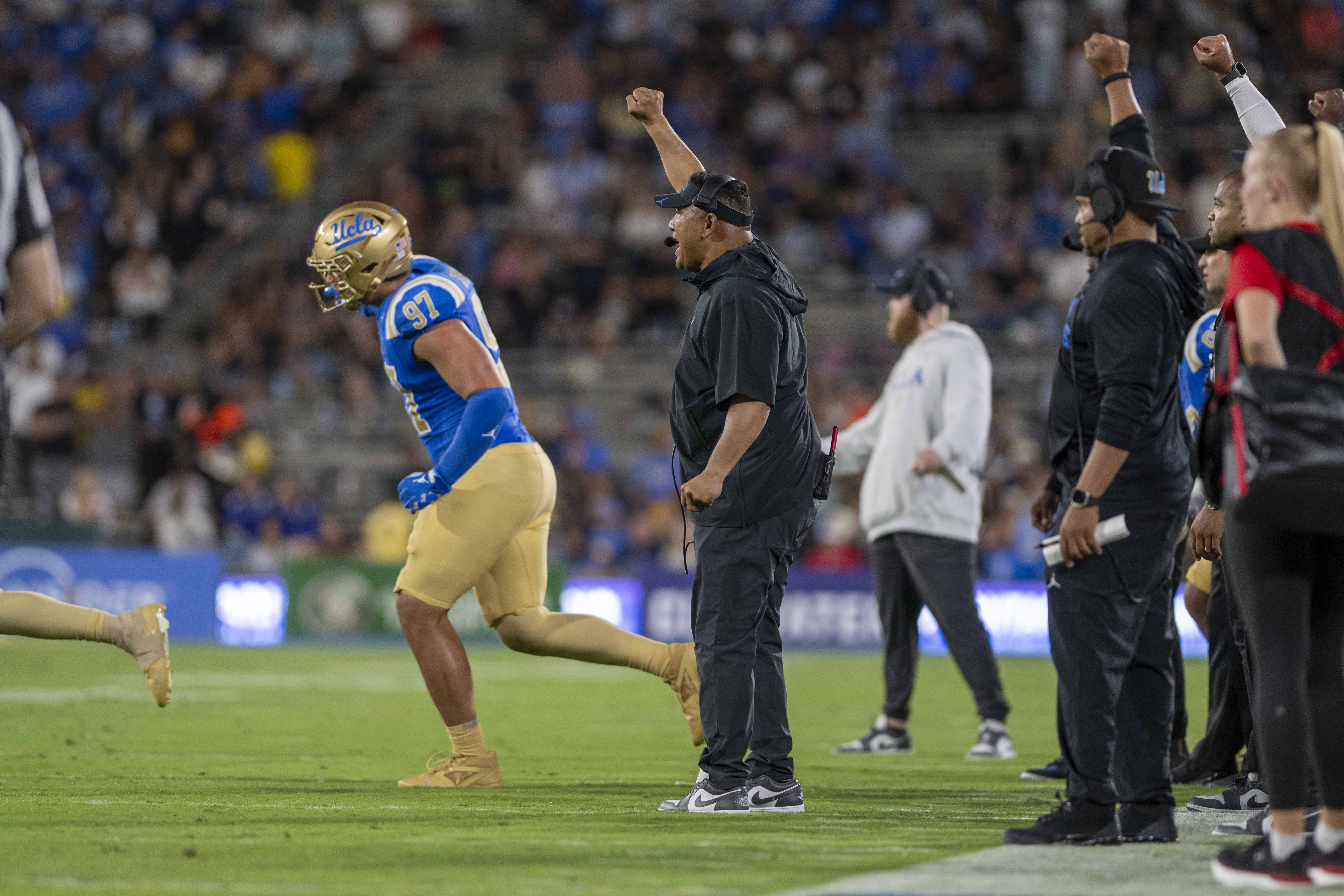
The Bruin defense had seemingly no answer for Utah’s offense.
Every possession was long, every third down was converted and every drive – except two – saw a Utes score.
And Utah quarterback Devon Dampier could have made breakfast in the pocket.
The pass rush was nonexistent, failing to record a single sack and posing further questions about whether the Bruins’ unit had regressed from an already dismal 2024 season. And the run defense was even worse, allowing chunk play after chunk play for Utah’s 5.3 rushing yards per carry.
What seemed like a negative play always became positive – potentially because the Bruin defenders struggled to tackle, or because Dampier had the time and space to do whatever he wanted.
Defensive coordinator Ikaika Malloe and his personnel looked lost.
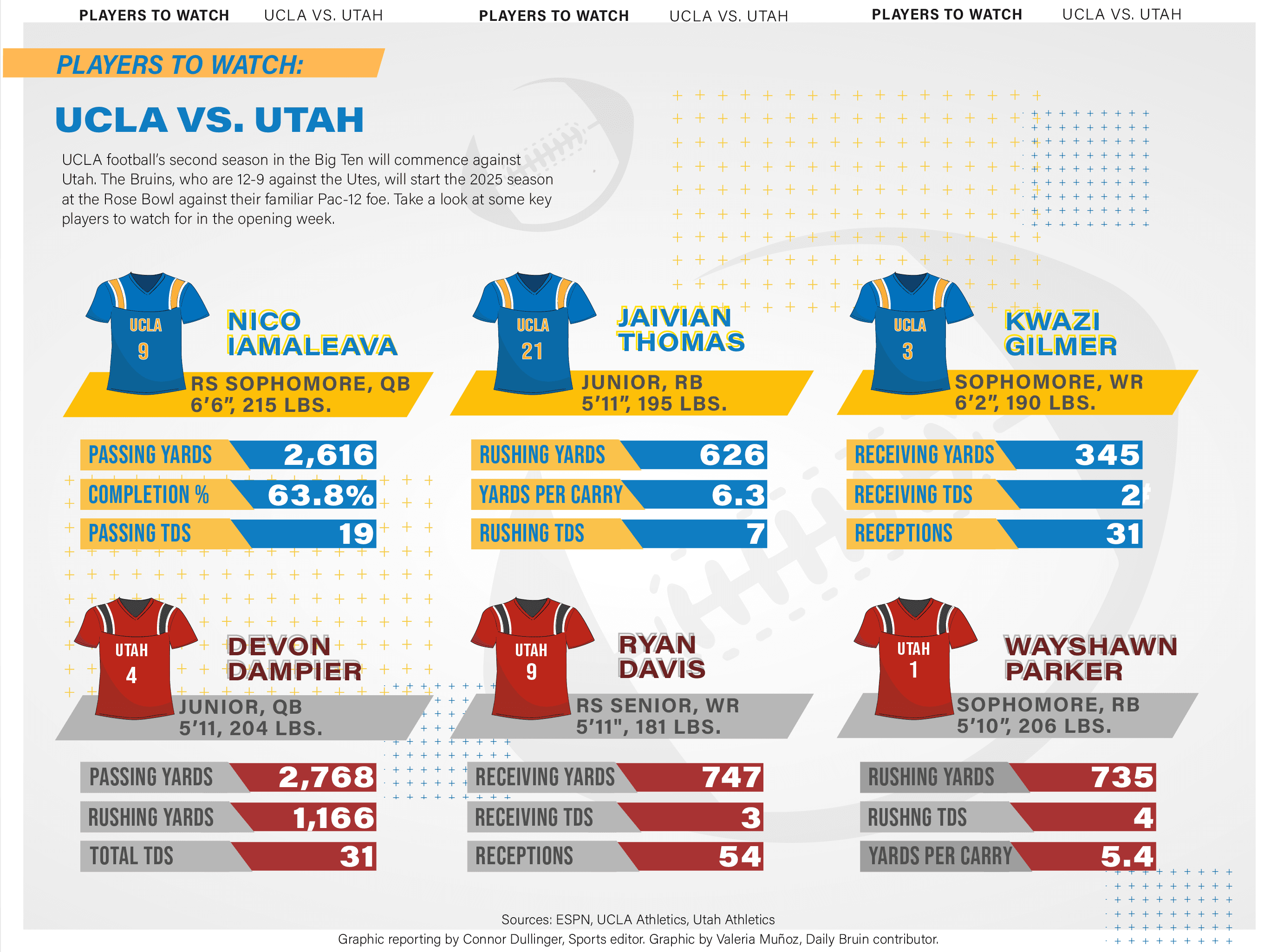
Coming into the game, it was well known that the Utes returned their entire starting offensive line, which includes two projected first-round tackles. They added a dual-threat quarterback who ran for more than 1,100 yards and 19 touchdowns last season.
It did not take a lot of research to know what Utah would do come Saturday night.
Which means that either Malloe did not prepare his defense, or the Bruin defense is just plain bad.
I’m leaning towards the former – hopefully.
Misfires and miscalculations.
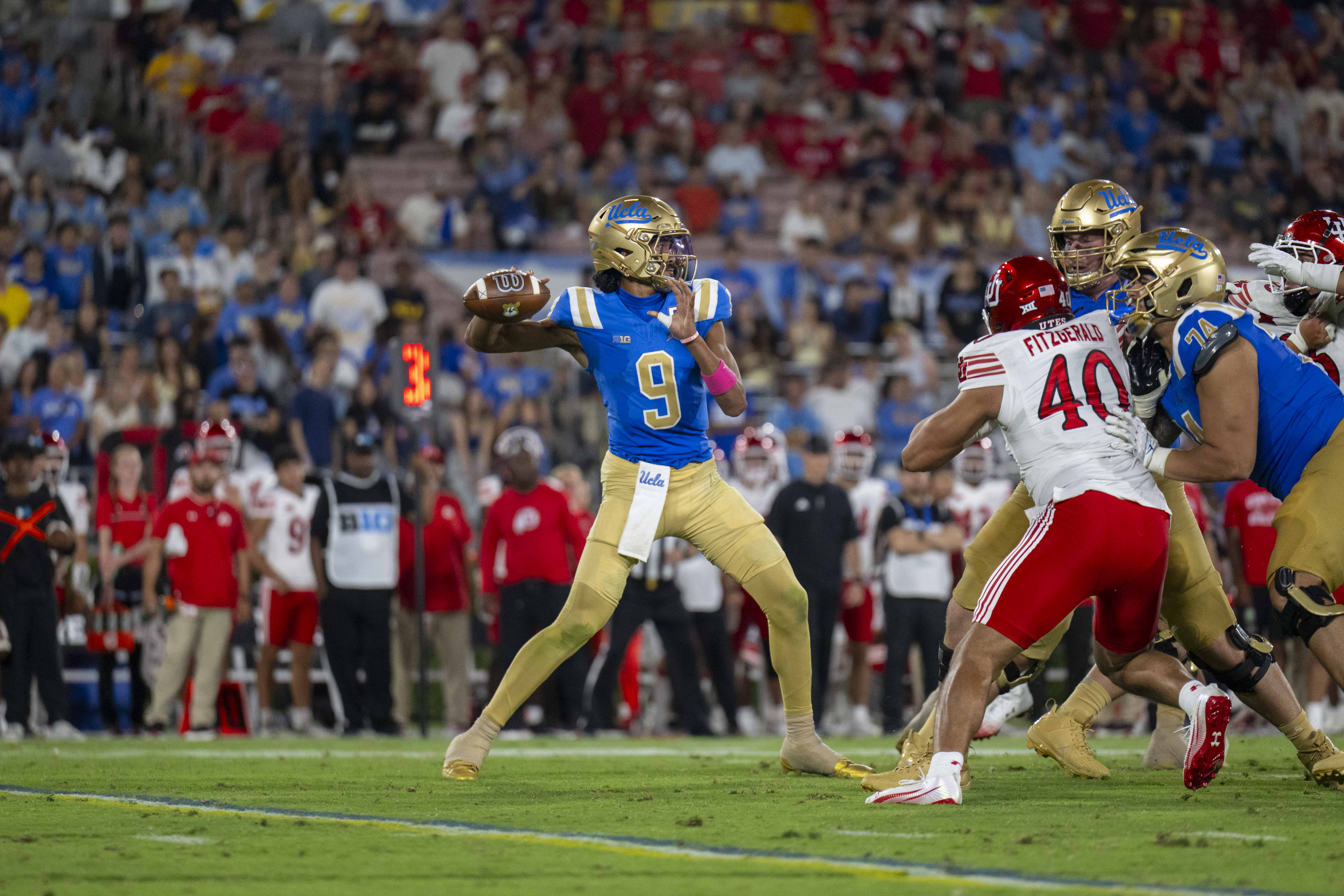
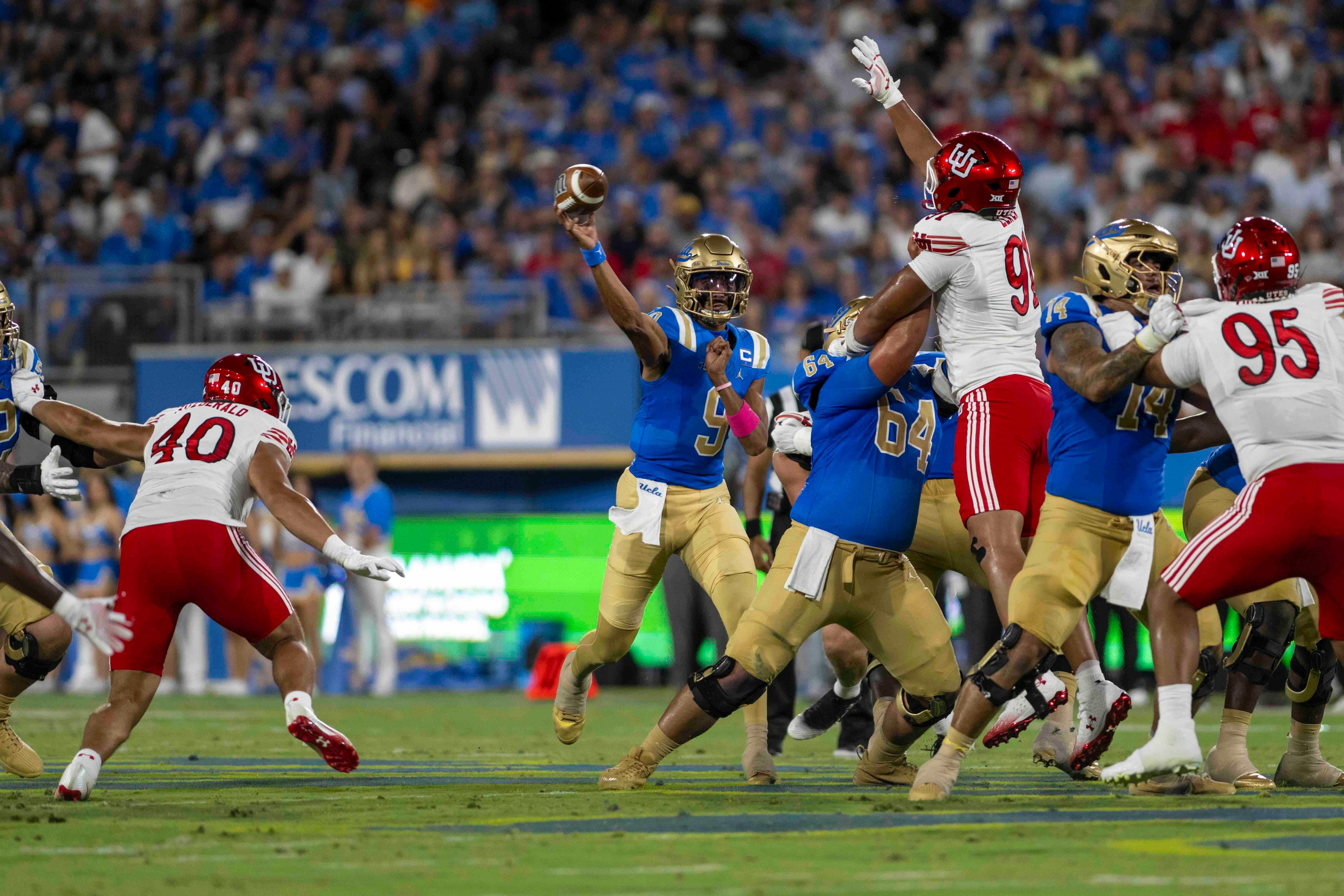
Nico Iamaleava’s long-anticipated debut was the opposite of what both he and the Bruin faithful hoped for.
The redshirt sophomore signal caller finished the season opener with 136 passing yards, a touchdown and an interception. He showcased his arm strength early and often, throwing deep balls down the seam or on the outside and rifling bullets over the middle of the field.
It looked, however, as if he were out of sync with his primary targets at pass catcher – the wide receiver tandem of junior Mikey Matthews and sophomore Kwazi Gilmer.
Matthews finished with just two catches for 22 yards, getting overthrown on a handful of open opportunities – particularly on a route down the left side of the field during the Bruins’ first drive.
Similarly, Gilmer finished with just three receptions for 31 yards – all of which came on the first drive out of halftime. Like Matthews, Iamaleava missed Gilmer on a couple of throws, but he also dropped some key balls.
The third receiver in the pack – redshirt senior Titus Mokiao-Atimalala – finished the contest with zeros across the board.
Although Iamaleava’s late entry could have caused UCLA’s passing struggles, offensive coordinator Tino Sunseri’s offense lacked firepower and synergy in its first appearance at the Rose Bowl.
An invisible line
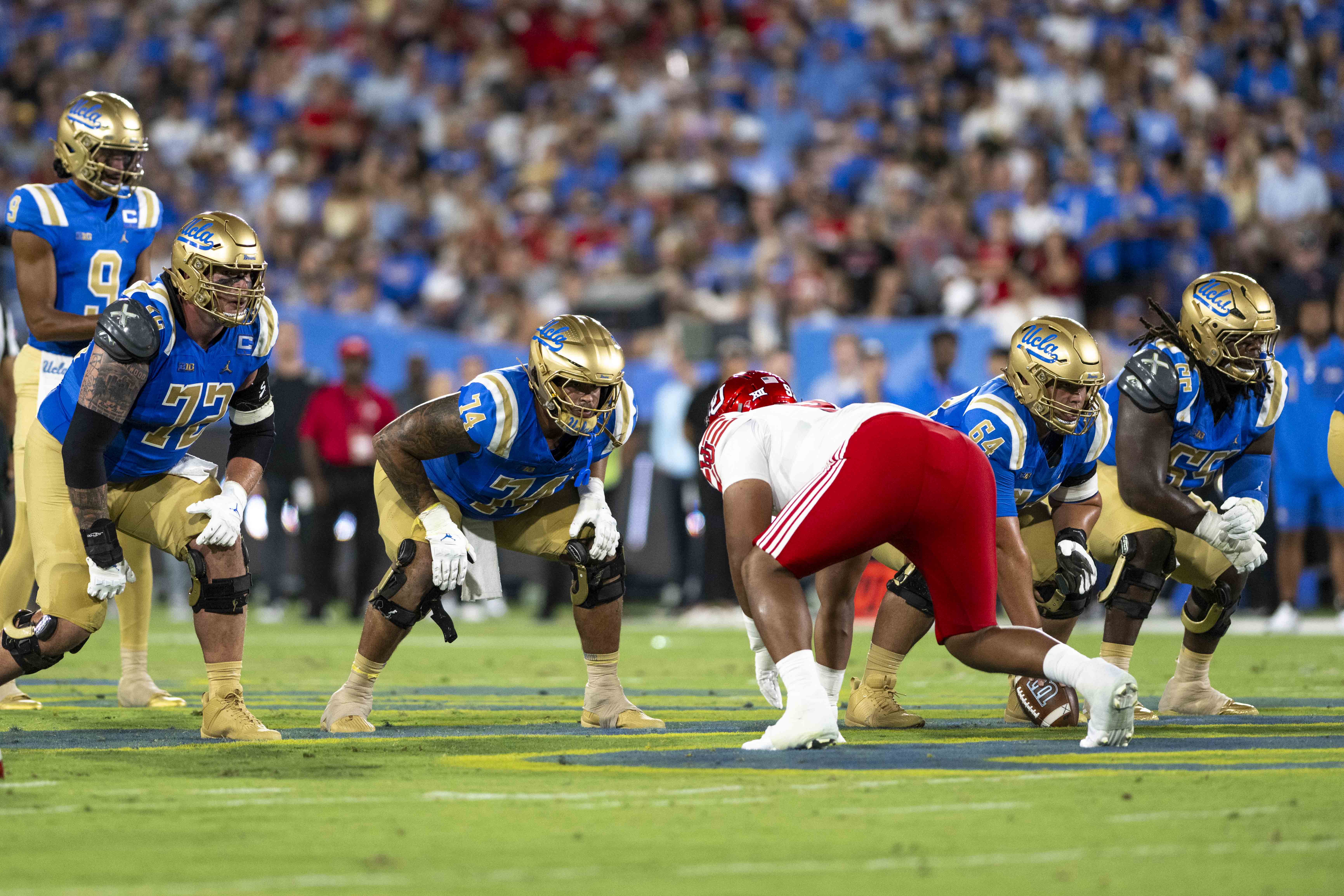
Football is often won in the trenches.
And when the defensive line is nowhere to be found, the offensive line must step up. It seemed, however, like the Bruins’ offensive front regressed.
The pass protection was terrible, allowing four sacks and forcing Iamaleava to scramble. This, in turn, prevented him from gaining stability and time to ignite the offense.
And – somehow – the unit’s run protection was even worse.
Defenders seemed to appear in the backfield before the tailbacks even got the ball. Junior running back Jaivian Thomas concluded with seven carries for 17 yards, and redshirt senior Jalen Berger notched seven yards on five carries – good for 2.4 and 1.4 yards per carry, respectively.
Berger’s power seemed limited by the several linemen who met him behind the line of scrimmage, and Thomas’ efficient 6.3 yards per carry at California seemed to dissipate.
Utah’s tenacious defensive front seven may be one of the best in the Big 12.
But when you play in the Big Ten, Utah is just the first of many trench battles – and it could only go down from here for the Bruins’ fronts.
Bad all around
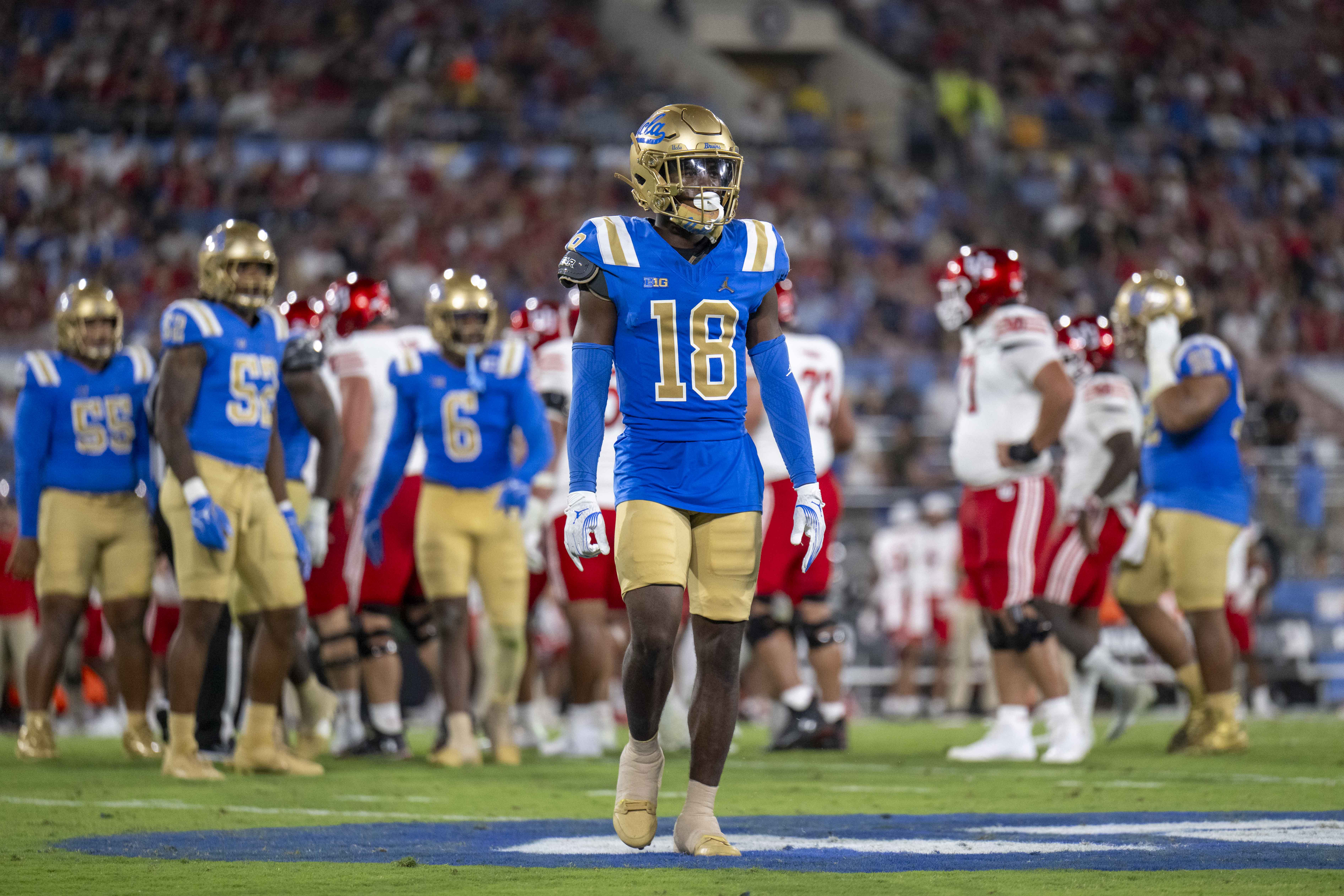
Do not let the Bruins’ abysmal run defense lead you to think the air defense was any better.
Dampier still threw for 206 yards and two touchdowns. His leading receiver was cornerback Smith Snowden, who finished the night with six receptions for 51 yards, 15 rushing yards and a score. Moreover, the secondary allowed linebacker Lander Barton to reach pay dirt.
The Bruins’ pass defense is not the crux of why they lost, but it definitely did not excel.
On crucial second- and third-and-long plays, it felt as if Utah receivers were wide open down the field. Even Dampier – who is widely regarded for his rushing ability – looked good throwing the ball, primarily because he had ample time in the pocket.
A costly pass interference penalty from junior cornerback Andre Jordan Jr. in the second quarter gave the Utes a first down on what otherwise looked like a dead play. Utah wide receiver Tobias Merriweather’s 36-yard reception put the nail in the coffin, creating a 36-10 lead.
When a ground attack is unstoppable, it is natural for the defense to neglect pass catchers. But when the Bruin rush defense turns in that kind of performance, you cannot allow the air defense to follow suit.
And it did in the worst of ways.
A singular bright spot
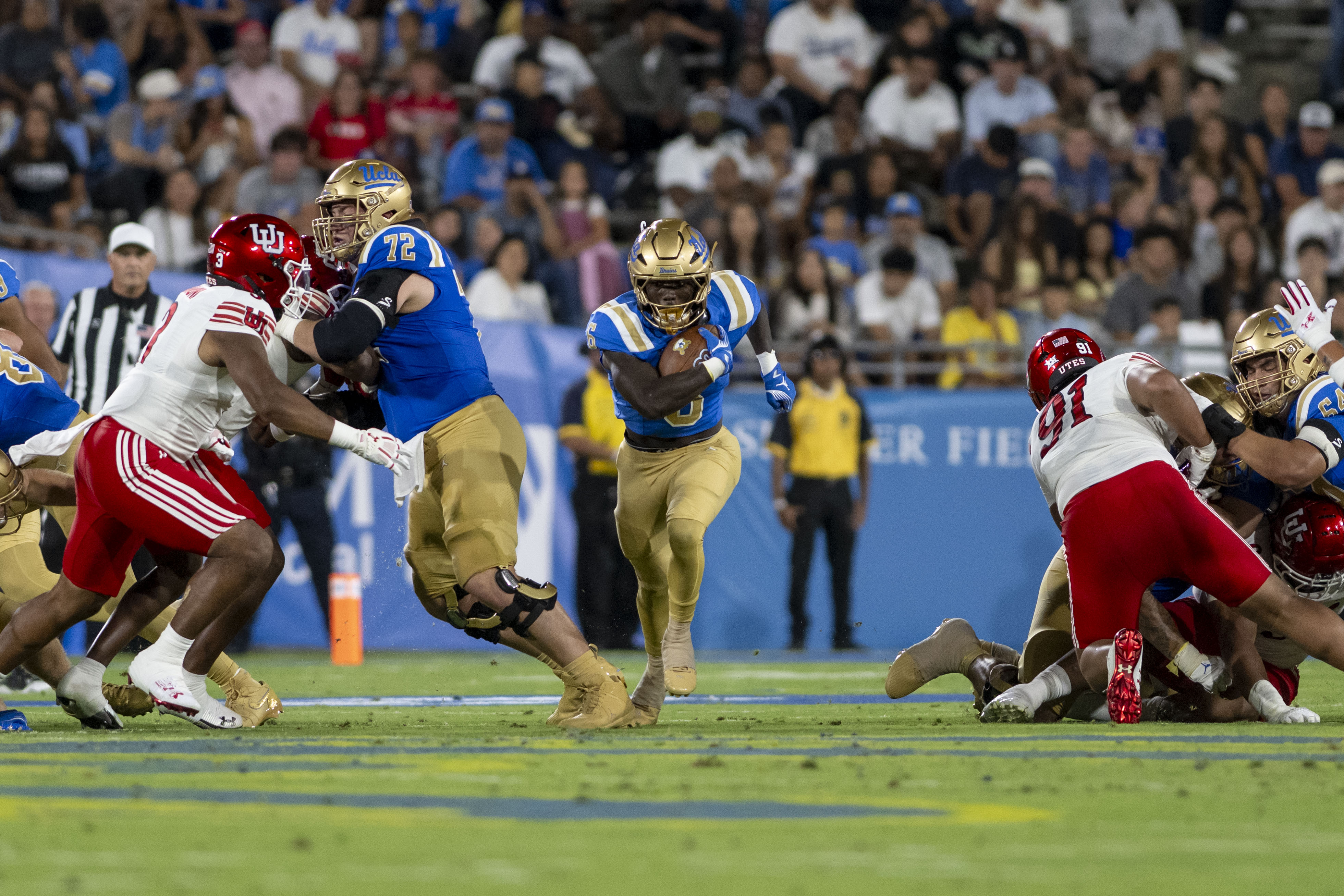
It did not seem like there was anything to be happy about as a Bruin.
But Anthony Woods was the one bright spot.
The redshirt junior running back seemed to be the Bruins’ only explosive factor. In his first appearance in over a year, Woods led the receiving department with three catches and 48 yards, including a 19-yard touchdown.
Woods also flashed some ground efficiency, recording three carries for 13 yards – good for 4.3 yards per carry.
The former Ute did not garner a large sample against his previous team, as he split time with Berger and Thomas. But when he did play, his contributions were felt – not just with his play, but with his energy and demeanor too.
Iamaleava’s mobility was another silver lining. Although a poor offensive line and his receivers’ inability to get open downfield may have induced scrambles, he had a productive day with his legs, logging 47 yards on 13 attempts.
There was not much that garnered optimism, but Woods and Iamaleava’s legs presented glimmers of hope.