Q&A: Andrew Lewis and Elizabeth Brady talk North Westwood Neighborhood Council
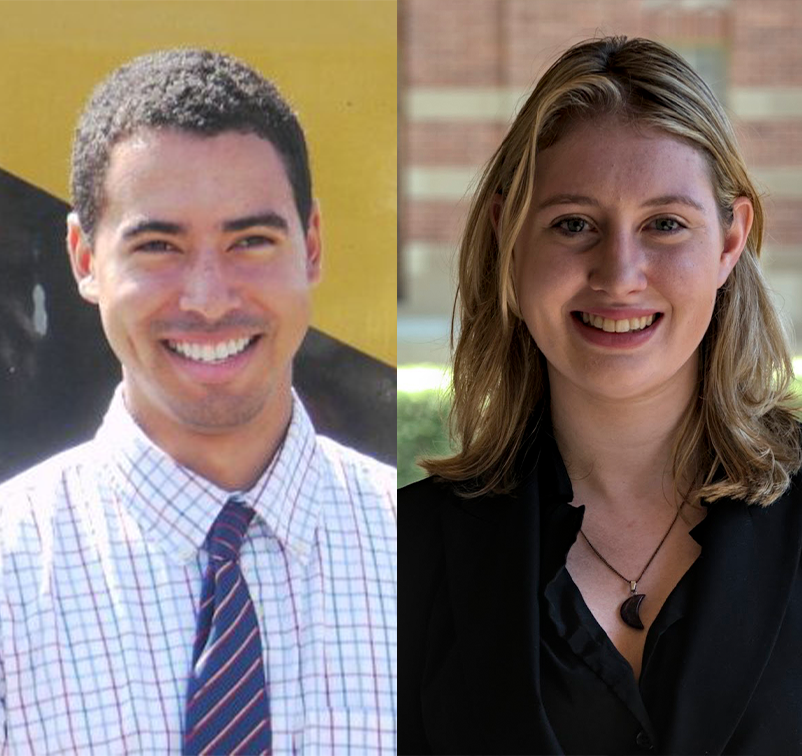
Andrew Lewis (left) and Elizabeth Brady (right), two members of the North Westwood Neighborhood Council, are pictured. The two UCLA alumni spoke to the Daily Bruin about their goals for the council in the upcoming year. (Left to right: courtesy of Andrew Lewis and courtesy of Elizabeth Brady)

By Maggie Konecky
Aug. 28, 2025 6:34 p.m.
Andrew Lewis and Elizabeth Brady, two UCLA alumni, were reelected to the North Westwood Neighborhood Council in March and began their two-year terms in July.
Lewis is the council’s vice president and chairs the community health, homelessness and safety committee. Brady, a former Daily Bruin Opinion columnist, is the council’s treasurer and chairs the budget and finance committee.
Lewis and Brady sat down with Daily Bruin Metro Editor Maggie Konecky to discuss their goals for North Westwood in the upcoming year.
This interview has been edited for length and clarity.
Daily Bruin: Both of you were recently reelected to the NWWNC. What were your reactions when you learned you had won a second term?
Andrew Lewis: I was glad to be reelected. I had previously served on the council and am coming into what likely will be my last term. For me, personally, a lot of what we do doesn’t fit into clear timelines of one year, two year, per se. A lot of it is multi-year processes and projects. Actually, all of our biggest projects take considerable time to pull off, and to do and push forward.
I was glad to continue to be part of this and also try to see through some of our visions we’ve had over the past couple years and hopefully get those up and going – get us in preparations for some of the larger events, things we have coming to the village like the Summer Olympics.
Elizabeth Brady: I believe, for me at least, my first term was learning everything about the council and learning how I can contribute to it. Now, I’m really excited for the second term because I get to really put into action what I’ve learned and what my new visions are for the council and North Westwood in general. I’m really excited to continue doing all the great work that we do.
DB: What are the biggest challenges facing Westwood currently, and how do you plan to face them as council members this year?
EB: There are a lot of challenges currently facing North Westwood. A lot of them are continual challenges that have always been an issue in Westwood, like increased housing prices, closure in businesses and just in general, the atmosphere of Westwood not really abiding toward student interest.
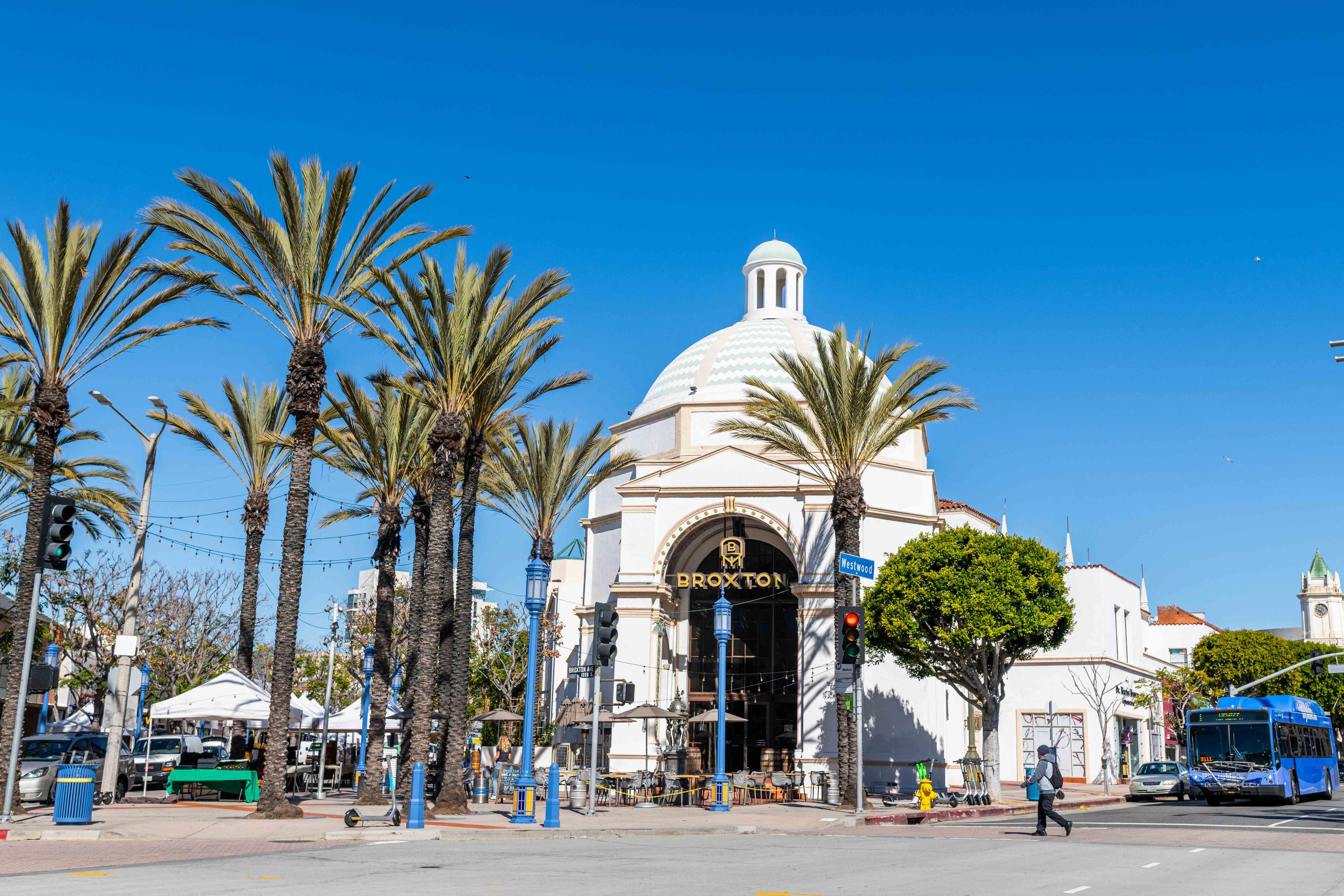
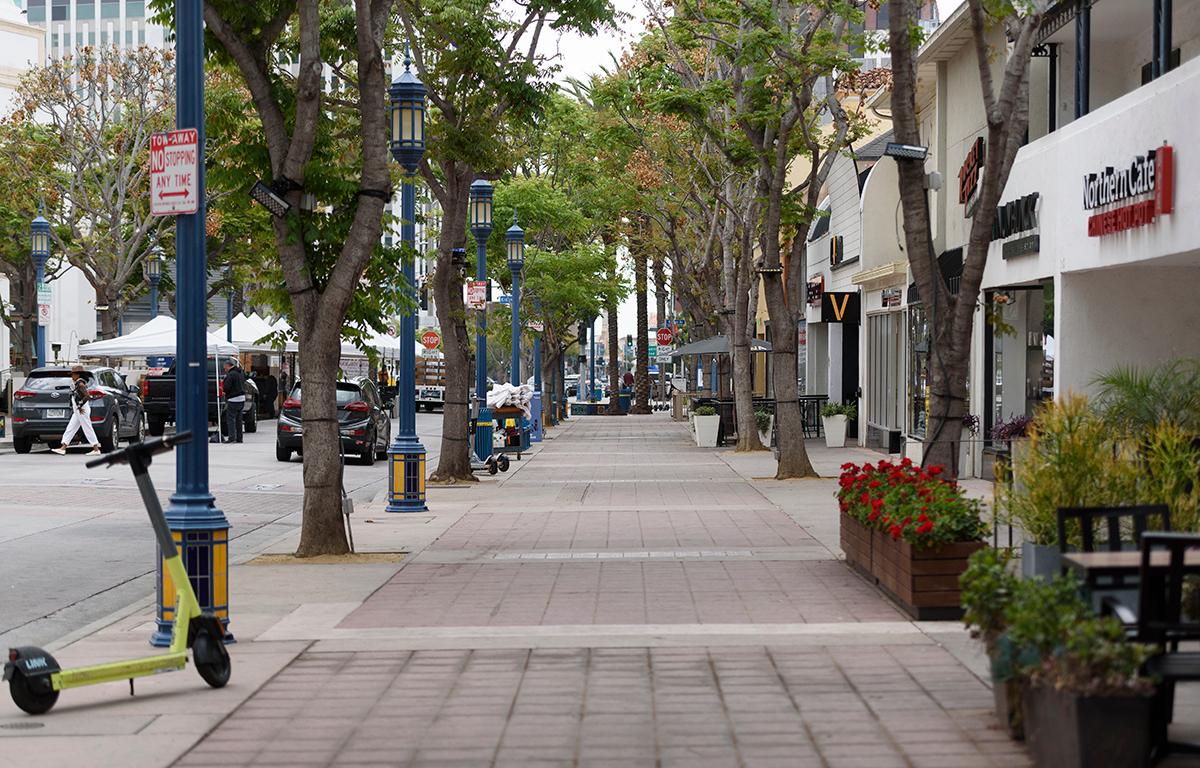
These are some of the things we’ll be working on as a council to bring in new businesses, as well as really allow Westwood to be for the students. Our biggest accomplishment so far has been helping contribute to the Broxton Plaza walking space opening and so we want to continue that adventure, to both expand Broxton Plaza as a walking space, but also as an entertainment zone. Free drink alcohol space for students and that whole atmosphere bringing in entertainment for students, so students don’t have to leave Westwood to get the spaces they’re looking for, but to bring those spaces back to Westwood.
[Related: Westwood unveils pedestrian hub Broxton Plaza in hopes of revitalizing community]
AL: One that continues to be with us, and I think the pandemic certainly exacerbated, is our storefront closures in Westwood and continuing to fill vacancies. A lot of progress has been made in the past couple years and I do think our council has played a role in that. We’ve had a good number that have made their way into Westwood. Continuing to welcome especially student-friendly businesses, so they can thrive and also so students have an opportunity to shop and enjoy restaurants or food or coffee – that’s an ongoing challenge and definitely something that’s not easy to do.
As Elizabeth also mentioned, we have successfully opened Broxton Plaza. There’s other areas that could be utilized in similar ways. If not permanently shutting down spaces to cars, then maybe temporary pop-up activation spaces of parklets. Something that was popular during the pandemic were outdoor dining spaces that restaurants utilized and did quite well.
Getting ready for the Summer ‘28 Olympics is a challenge. Getting Westwood ready for that will be something that we’ll have a hand in and we’ll work on. Another thing that’s affecting greater Los Angeles, California, the country, is helping our unhoused population in getting them housing. I would like the Village to do more on that front, I think we can provide them more services. A lot of them are former vets I think are due more help and services, maybe from the VA (West LA Veterans Affairs Medical Center) or maybe from our partners in the federal government.
DB: You both are UCLA alumni – how did your time at the university factor into your decision to serve on the neighborhood council?
EB: I found it as an opportunity to grow as a leader. I joined the neighborhood council when I was a sophomore in college, so it allowed me an opportunity to find my place in both the UCLA community, but also the North Westwood Community in general. I remember my first speech; I discussed how I didn’t find my place at UCLA until I joined the council. I’ve grown significantly as a leader by becoming more confident in how I present myself and more confident in what I’m doing. I get to actually make meaningful change that impacts my community, and that is something that gives me purpose in life.
AL: When I was an undergraduate, we would go into Westwood, and it was a very different Westwood, but it didn’t necessarily feel like it was ours, per se. It didn’t feel as connected or as relevant a place for the UCLA community. You know, there were more upscale dining restaurants in Westwood that didn’t necessarily cater to students – I believe at the time there were more restrictive, like, ordinances and hours on the bars that we had in Westwood. We obviously didn’t have a plaza; we didn’t have a council. There was no real way to voice our ideas, what we wanted, our support for things. In fact, I would occasionally just go to the other neighborhood council and try to speak up and quickly realize that we really didn’t have a place in the neighborhood council system for that. So, I think it showed me what could be possible.
I studied political science – it gave me a lot of training, and I worked with a lot of great professors who gave me a groundwork for public policy like that. And also, as Elizabeth said, the confidence to be able to go and swing for the fences and do a lot of what we do.
DB: Do you have any advice for incoming Bruins who want to get involved in the Westwood community and may not know how?
AL: I’m not going to shortchange it – there’s a lot to know. There’s a learning curve. It took me a while, but I will say it is very possible to get involved. A good starting place is to come to our monthly meetings – they’re open to the public on the first Wednesday of every month at seven o’clock. You can speak on any of our agenda items, and you can speak on literally anything. We have space for non-agenda item comment time.
I should shout out, we do have a Friends of the North Westwood Neighborhood Council student group, which is new. We really hope to get that going in terms of having a pipeline of ideas and information and student voices from the campus to what we vote on and talk about.
EB: What students can do for Westwood is be a student, grow as an individual. This is their first time being independent, first time living a life of their own. I think what students should really be focusing on for themselves in their own career and their trajectory of life, is to grow as an individual and do well at school and become who they want to be.
In terms of how they can influence Westwood is if you want to do policy, if you want to make a difference in your community, there is more than one way to do that. One of those ways is joining our council and becoming involved with that, but it could be as small as joining the volunteer center and doing community cleanups. Spending money in Westwood and the businesses will help grow Westwood to be what it will be. Enjoying the time, enjoying the space in Westwood and occupying it. Being a student that thinks Westwood is theirs, who wants to make, who wants to join, enjoy and live and do all those lovely things. Those are some ways you know, beyond being a civil servant.
DB: These past few months have been intense for LA as a whole, and although Westwood was relatively quiet, people here have still been impacted. Border Patrol was on Wilshire Avenue, the National Guard and Marines were stationed nearby. What should incoming students know about how the NWWNC supported the community through these times?
AL: It’s definitely been a tumultuous time in LA as a whole, that’s without a doubt. Westwood isn’t spared from some of that for sure. I’d want them to know that our council has been like a strong voice in terms of standing up for what we consider Bruin values. And our values as a council, which are inclusivity and civil rights, and protecting people’s autonomy as they see fit. We voted on motions and submitted community impact statements against the presence of ICE (U.S. Immigration and Customs Enforcement) in LA, certainly in the Westwood UCLA area. We have also voted on past prior motions from the city council on protecting our undocumented community that we have at UCLA in Westwood – including students, staff and faculty.
I’d want them to know that our council definitely tries to be a voice in protecting all of our community members and also standing with, standing up for all of our incoming students, all of our Bruins, regardless of their status or background. We try to do as much as we can.
EB: Us, as a council, has historically supported motions regarding ICE discrimination, but also in terms of little things like cameras doing traffic stops or cameras patrolling speed on streets. We have always had our undocumented friends in our minds when we make these decisions – we’ve always had a voice, always advocating for those communities. Every single decision we make can influence the undocumented community. Your voice is heard, and we do take that into account with every question we make, in every community impact statement as well.
We definitely would like to support (undocumented students) and oppose what the federal government is doing regarding ICE, and I think students should not be scared. We have the National Guard right on our corner or the Marines at the federal building, but that is just a fear tactic, and we know that. Students should not be afraid to go live their life as a student. UCLA is protecting them as much as they can.
[Related: ‘This shouldn’t be happening’: Students react to troops, ICE raids in LA]
DB: What will success look like to you at the end of your terms?
AL: Success would just look like us giving a whole lot of our time, our energy, our passion to the council, which I know I do. Showing up to our meetings, which usually do go for hours on end. Looking back and knowing that we have created substantive change in the village in terms of bringing in businesses, creating the plaza, getting us ready for the Olympics.
Things that kind of go under the radar are the dozens of neighborhood purpose grants that we give out, the impact that’s created through those organizations and projects. Also just having been a hand in helping create the council. I’d want my legacy or an achievement to just be that it exists and it’s a place for future Bruins indefinitely, for the future to utilize for what they see fit. In 20, 30 years – how they want to shape the village, or what resources they want to put forth.
EB: Successes for me would be continuing the status quo. When I say status quo, it is all the great things we do as a council and more. I’m personally responsible for distributing our neighborhood purpose grants, which gives up to $5,000 to many nonprofits in Westwood. Supporting organizations that help our unhoused population, supporting organizations that help students at UCLA and helping support organizations that help our continued pursuit of education through our libraries and community spaces, such as concerts and events and Broxton Plaza. Spreading money to organizations that need it is something I found very valuable, and I think is a continuing success, even with the challenges of the budget decrease we’ve gotten from the City of LA.
Other sorts of fiscal donations to nonprofits would be keeping the community clean, but also keeping the community safe for both our unhoused neighbors and our housed neighbors alike. I think that is something we continue to do and it is very vital toward the health of Westwood in general. Helping support our new businesses that are opening, but also encouraging students to go to those businesses to help the community thrive.
Success for me would just be contributing to all those efforts and helping sustain the NWWNC as an independent organization, one that is necessary and needed. I do a lot of the internal work, so helping continue both our outreach and our internal hierarchies and internal stability. I think my impact or my legacy for the council would be just keeping North Westwood on its two feet and helping to continue to make an impact within Westwood.