Q&A: Dr. Paul Lukac discusses new role as chief AI officer at UCLA Health, future of AI
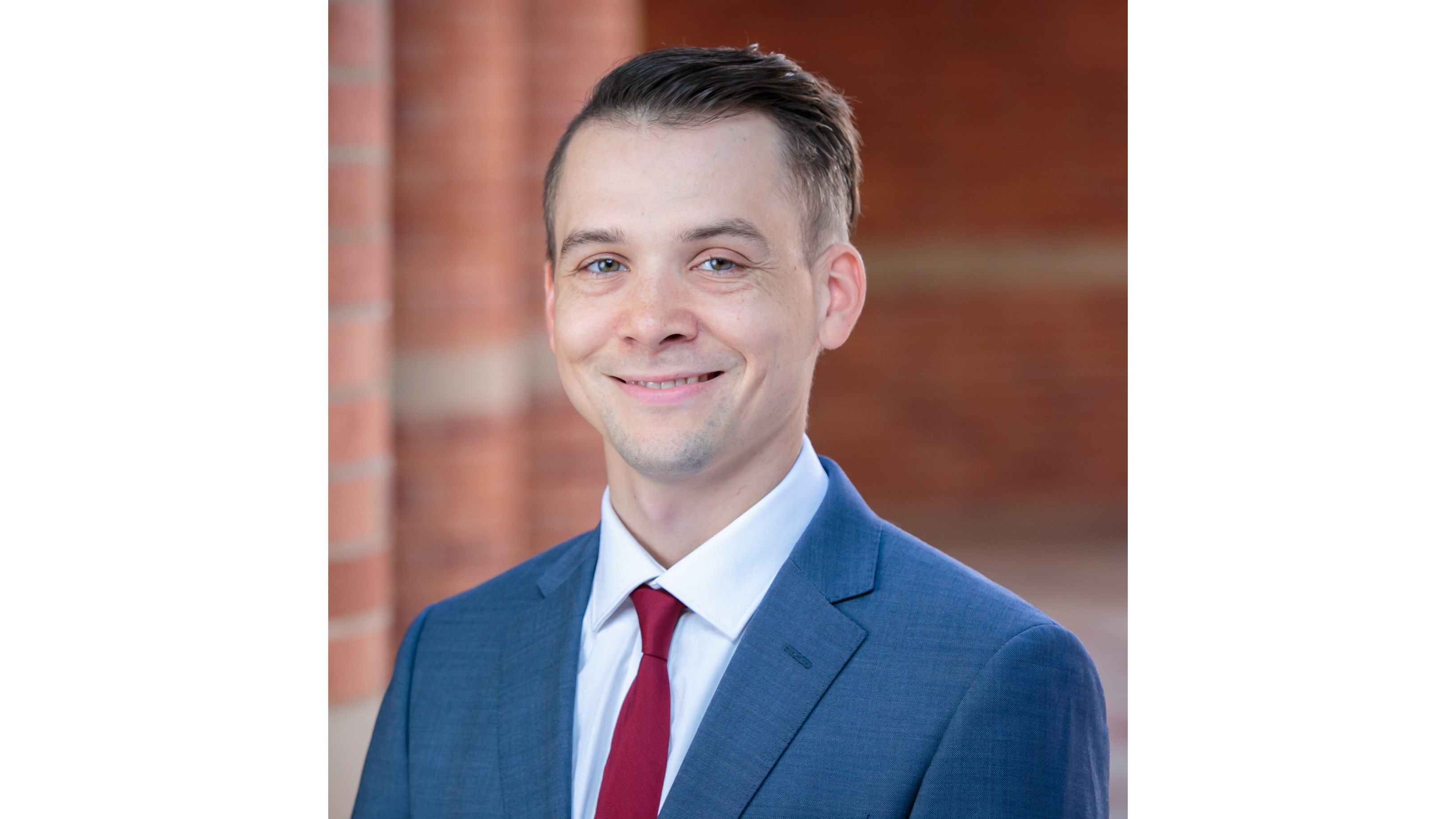
Dr. Lukac, the inaugural chief artificial intelligence officer at UCLA Health, is pictured. (Courtesy of Paul Lukac)

By Shaun Thomas
Aug. 25, 2025 6:41 p.m.
Dr. Paul Lukac, the inaugural chief artificial intelligence officer at UCLA Health, sat down with Daily Bruin science and health editor Shaun Thomas to discuss how UCLA Health is leveraging AI to improve scheduling and organization and how it is preparing its workforce for an increasingly digital future.
Lukac, an assistant clinical professor in pediatrics, was appointed to the position in May. He graduated from the UCLA Anderson School of Management in 2020 and received a master’s degree through UCLA’s clinical informatics fellowship in 2022.
This interview has been edited for length and clarity.
Daily Bruin: What drew you to the intersection of clinical medicine and AI?
Paul Lukac: I was always very into logic and math as my second-favorite thing after science, specifically chemistry, which was my undergrad major. I was a hospitalist for a few years at a children’s hospital in Chicago that was associated with Northwestern. I started getting into the field of informatics, which is turning patient data into knowledge, essentially, and working with our electronic health record and creating things like clinical decision support or best practices within the electronic health record that can help the physician make the right decisions. That really refocused my career path because I wanted to do more of that specifically.
I got hooked at UCLA, and I ended up ultimately doing this fellowship in medicine that’s called clinical informatics – that’s specifically a two-year fellowship where you focus on this field of informatics and data analytics. That field is becoming more of a breeding ground for physician AI leaders where if you’re a physician and you want to really specialize in analytics – and increasingly more AI – you would consider a fellowship like that.
DB: What are three of your top priorities for this next year?
PL: It’s hard to predict the future in this space when you’re basically looking at an exponential curve, which is how quickly things are changing.
One is patient focus. So, working on things that improve patient access and coordination of care. We are actively looking at AI use cases that will help with that. Specifically, one that we’re working on is a large language model driven chat bot that will be on our website, and it should be a lot better than just a typical chat bot that answers very basic questions and maybe not well. It’ll be a lot more intuitive, and it may help people schedule appointments and better ask some of their questions.
The second is clinical focus because, ultimately, we want to help our physicians and our nurses and all of our faculty and staff. We want to help them operate to the top of their abilities.
One thing that electronic health records introduced when it became widespread about 15 years ago was that it lead to burnout. It led to exhaustion from charting. You can go through 10 tabs within the electronic health record before you find the piece of information you need. So what this new technology is very good at is things like summarizing the chart for a physician or a nurse. One particularly exciting use that we have been using now for about nine months is something called “ambient listening technology.” This is a technology where the physician will have their phone on when they’re in the room with the patient, and they conduct their encounter as they normally would, and the phone, meanwhile, is listening, and it is creating a draft of a note for that visit. So the wonderful aspect of this technology is it really cuts into that time, and it restores the time you have to look at your patient rather than look at the computer the whole time. It’s been quite phenomenal.
The third is really capitalizing on what UCLA Health is already great at. UCLA, as a campus, is great at advancing research. We have a lot of talented physicians who are working on novel technologies.
DB: How do you define success for AI implementation within a large health system like UCLA Health?
PL: It all comes down to outcomes. A traditional AI model that might predict one thing. Historically, the way we would look at those models is we would test them. We would train them on this big data set of existing patient data, and then we would test them also on a data set. So none of that is real world, right? You’re looking in a very static environment. So, outcomes is actually seeing how it functions in the real world. There are a lot of other elements that come into place when it’s used in the real world like human decision making and human input. We need to consider not just that training, testing aspect. We also need to continue to follow it in the real world and to make sure we’re actually seeing the outcomes that we expect and that it’s working the same on all of our subgroups of patients, whether by age or race.
DB: How does UCLA Health approach AI governance to ensure safety, transparency and accountability?
PL: That is a core of our thinking to every AI tool that will be employed, whether it be in a clinical space or an operational space, or in revenue cycle management. We apply our concepts of responsible AI in all of those realms. In governance, we have had a Health AI Council in place now for three years, and that council specifically is tasked to evaluate the performance of these models – but especially to evaluate the ethical use of it and any risks that it might present, whether it be privacy or security or any biases. We look at that very closely and go over with a fine tooth comb. We do this for every single model that is going to enter real world use. What comes out of those reviews is usually some recommendations or some mitigation measures to the stakeholder team if we identify anything that’s concerning, and we have the ability to approve or decommission models based on our review.
DB: What advice would you give to medical students or pre-medical students interested in AI or informatics?
PL: When I wake up and go to my inbox, I see so many messages on new concepts every day. I would just say to be very curious and be a very active reader. I’m looking at those in the morning to see what’s popping up – maybe on a federal regulation level – or what other health systems are doing and what results they’ve seen. There’s plenty of AI and health care podcasts out there, so it really is a lot of reading and information consumption.
It’s a unique and exciting time because you can gain an expertise in any of these areas, since it’s evolving so rapidly, and it really, truly, is very, very new. It’s a time that we need physician leaders to emerge, and not just physicians, but other clinicians, nursing leaders, to emerge and lead us forth in the future of AI and health care.