Q&A: Dr. Arun Singh balances care for sarcoma patients, conducting clinical trials
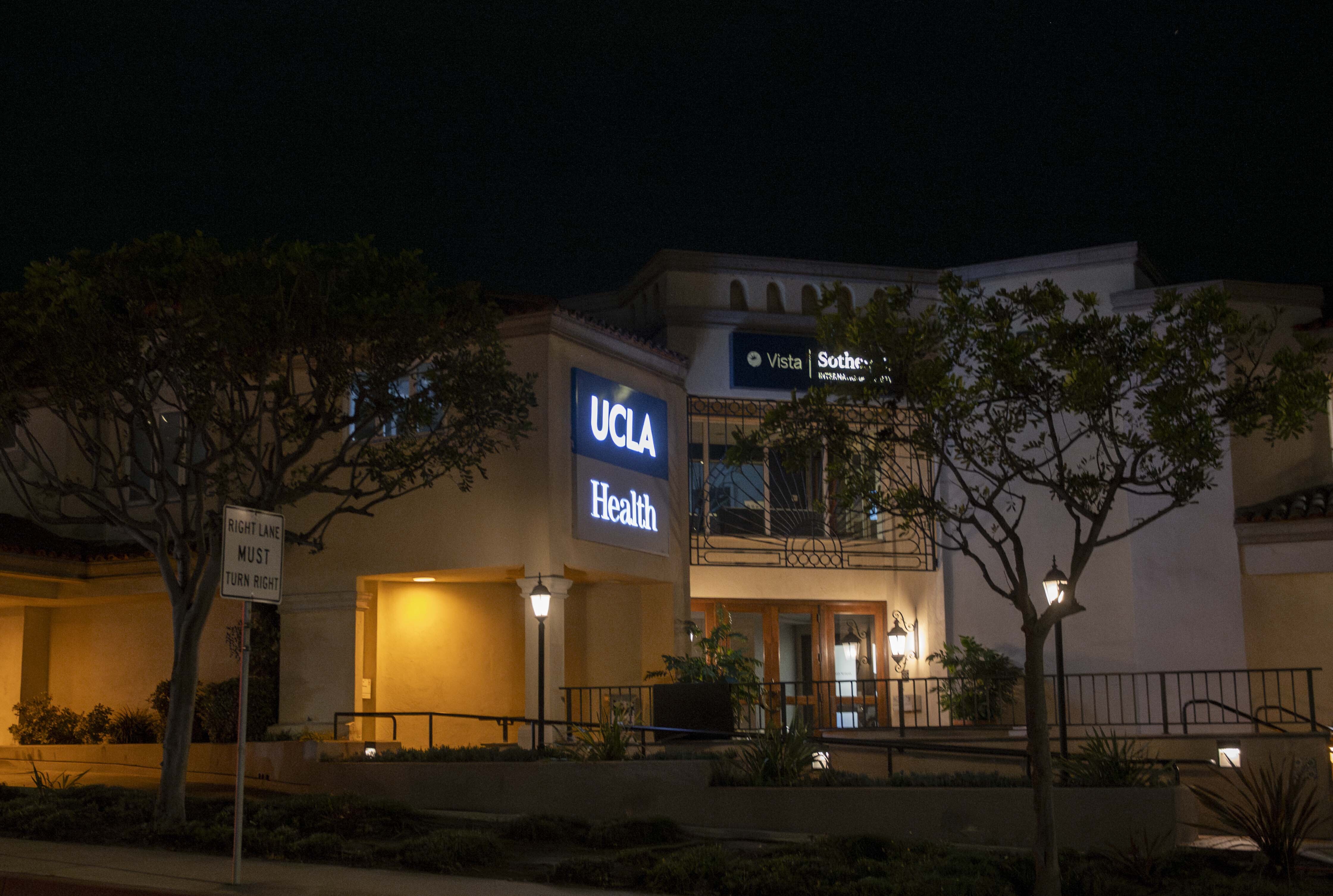
A UCLA Health clinic is pictured. (Leydi Cris Cobo Cordon/Daily Bruin senior staff)

By Donya Hassanshahi
Aug. 1, 2025 3:01 p.m.
Dr. Arun Singh, the director of the UCLA sarcoma medical oncology program, sat down with Daily Bruin contributor Donya Hassanshahi during Sarcoma Awareness Month to discuss his role in managing patient care for those with sarcomas and conducting clinical trials.
Singh, who has been at UCLA Health for 18 years and faculty since 2011, received his medical degree from Rutgers Medical School in 2005 and completed his fellowship at UCLA in 2011.
This interview has been edited for length and clarity.
Daily Bruin: What is a sarcoma?
Arun Singh: Sarcomas are a rare and heterogenous group of bone and soft tissue cancers. They occur in kids and in adults. They’re all very rare diseases.
DB: In your role, being a director and interacting with patients, what ways do you support or contribute to the sarcoma community?
AS: For individual patients, my role is not as their only source of treatment. I work with a large multidisciplinary team. I work with a large team of surgeons, oncologists, radiologists (and) pathologists to come up with a plan. There’s a lot of communication, a lot of cross-disciplinary care that goes into managing each one of these patients. Because sarcomas are so rare, there’s not as much data for how to manage each patient. There’s not large clinical trials to guide us in terms of how we take care of these patients. We have a tumor board where we get expertise from a wide variety of sources to help come up with a bespoke plan for each patient.
I usually help them manage their symptoms, immunotherapy, targeted therapy – all the systemic treatments is really my main job. I also do clinical trials. We bring brand new drugs from different sources, mostly from pharmaceutical companies, to try to improve the overall quality of sarcoma treatment.
DB: Do you ever interact with undergraduate students, graduate students or residents – and do they help with research or patients?
AS: Teaching is one of the core principles at UCLA. I work with residents and fellows in our inpatient and teaching services. There, we teach patients, residents and fellows some didactic teaching. More recently, I also had fellows in my clinic, so we have situations where they come to learn about sarcomas, how all of that is done in the inpatient setting.
DB: Are there some risk factors to account for, or are sarcomas primarily genetic?
AS: Why do people get sarcomas? It’s a big question, and most of the time we don’t know why people get sarcomas. For instance, people who have been exposed to radiation or people who had radiation for breast cancer sometimes can develop radiation in the field and that’s a known issue. It’s actually very rare, but it happens from time to time – and any radiation, for that matter, is a risk factor.
Sometimes we’ve seen some of the veterans who have been exposed to Agent Orange. We’ve seen those veterans develop sarcomas, but most of the time we unfortunately don’t know why people get sarcomas. There are some genetic predisposition syndromes – such as Li-Fraumeni syndrome, retinoblastoma syndrome, neurofibromatosis.
DB: What is the significant thing about sarcomas that the UCLA community should be aware of, or just to educate people who are not as aware of this type of cancer?
AS: I think in any situation where you have a lump or a bump that you’re not sure what it is, it should be evaluated by your doctor. It should either be biopsied or have some imaging to determine if you have a lump or bump. That’s something to really consider.
DB: Why did you want to pursue this speciality in oncology?
AS: I was interested in oncology because my grandmother had breast cancer. I was always fascinated with the development of cancer – ‘why does it happen?’ and the biology of this process. I became interested in sarcomas because they have a very interesting biology – there’s many different types – so seeing a variety of these types of tumors really appealed to me and I really do enjoy working with the large multidisciplinary team at UCLA. We just have a fantastic group of people that I enjoy working with. It’s been really rewarding to have something that I do find fascinating and get to work with people I like to get up and go to work and interact with.
DB: Do you have anything else you want to add? Any insight that you have, or things that you would like people to know?
AS: UCLA has been a pioneer in sarcoma in many ways. Eilber and Dr. Eckardt helped pioneer some things called limb salvage. In the old days, they used to do a lot of amputations on people and these were surgeons here at UCLA who helped try to figure out ways to do limb salvage, which just means that you don’t amputate everyone with a sarcoma in the extremities.
Surgeons were some of the first people who started giving chemotherapy to patients with sarcomas here at UCLA – they helped guide the way to developing chemotherapy for sarcomas. We’ve done a lot of innovative clinical trials with using immunotherapy here at UCLA for sarcomas. We’ve also made innovations in radiation oncology into radiation. We’ve helped shrink down the amount of radiation that patients get for sarcomas, so there’s been a lot of things that have been done at UCLA.