






Associate Professor David Delgado Shorter awarded 2010 Chicago Folklore Prize for work with Yaqui, a Native American tribe
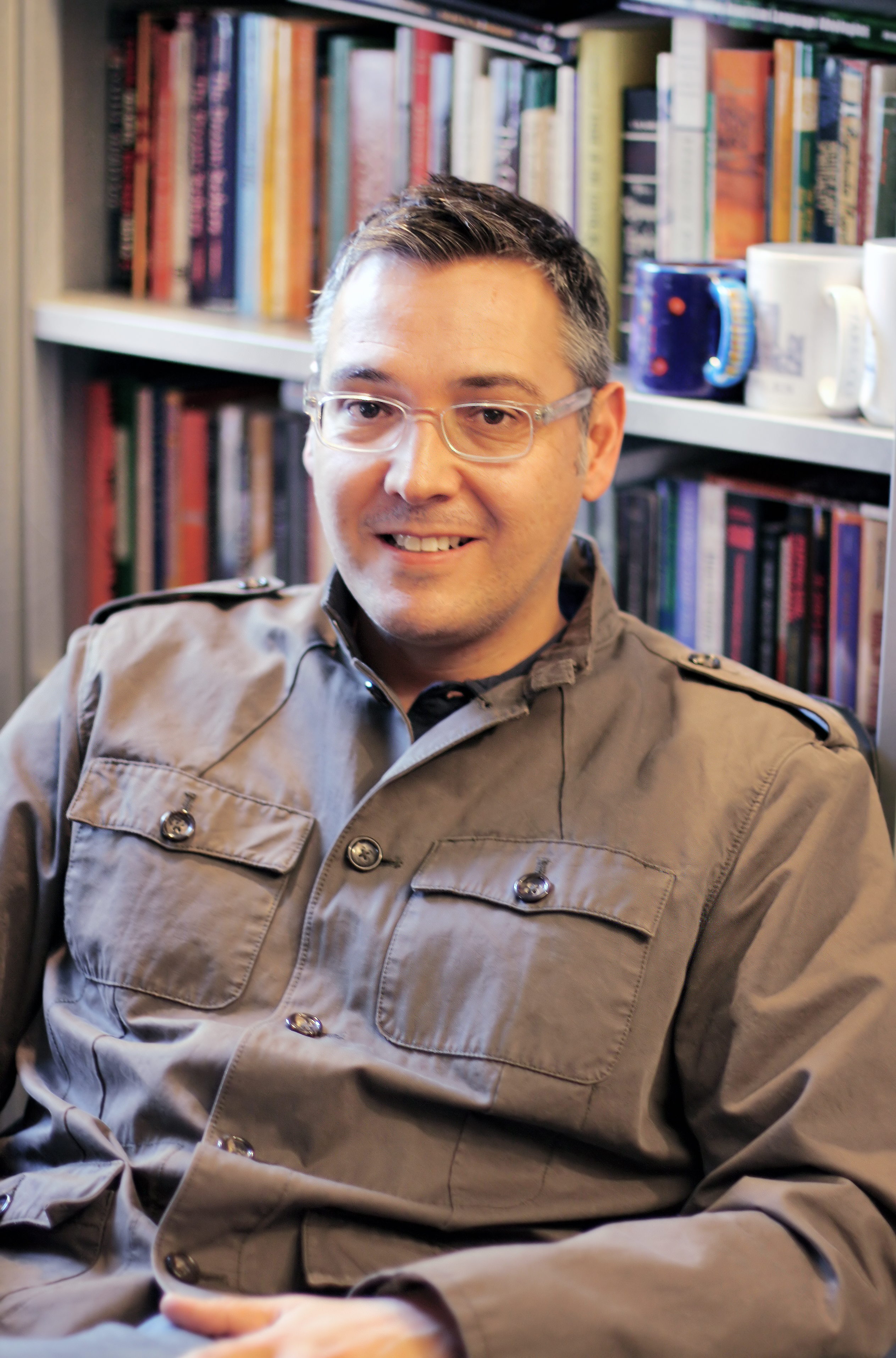
Associate Professor David Delgado Shorter received the 2010 Chicago Folklore Prize.

By Niran Somasundaram
Nov. 2, 2010 2:17 a.m.
World arts and cultures associate professor David Delgado Shorter’s office looks the way one would imagine a native studies scholar’s office would look. The walls are lined with Native American artifacts and bookshelves crammed with books dedicated to theories of culture and identity ““ one of them is his own.
Shorter’s first book, “We Will Dance Our Truth: Yaqui History in Yoeme Performances,” published in 2009, was recently awarded the 2010 Chicago Folklore Prize.
Shorter has been an associate professor in the world arts and culture department since the fall of 2008.
“For graduate students, he’s the type of professor who is able to take a graduate seminar that allows for every single student to access the material in different ways. For undergraduate students, I’ve never seen a professor motivate his students so well,” said Cesar Garcia, a second-year culture and performance doctoral student who has taken Shorter’s graduate courses and a current teaching assistant for Shorter’s undergraduate courses.
Shorter said he is honored to have received the 2010 Chicago Folklore Prize, presented jointly by the University of Chicago and the American Folklore Society.
“One of my friends and colleagues, who is also a folklorist, has called it “˜The Nobel Prize of Folklore,'” said Shorter. “That sounds hyperbolic, yet for those people who do folklore, the Chicago prize is the one prize one hopes to win in their lifetime.”
Shorter’s thick, 400-page volume is a study of the Yaqui, or Yoeme, people, a Native American tribe indigenous to the Sonoran desert region, which today encompasses Arizona and parts of Mexico. The book proposes that the history and self-representation of the Yaqui people is embodied in their ritual and oral tradition.
“He takes on everything, from Yaqui ideas of time and space, to Yaqui ideas of cultural expression, especially through dance, to political organization,” said assistant professor Mishuana Goeman, a colleague of Shorter’s who teaches native women’s studies at UCLA. “It’s really a pretty comprehensive ethnographic studies of the Yaquis.”
What makes Shorter’s book stand out is the manner in which he conducted his research. Before attempting to begin any research, Shorter developed close ties of friendship with the leaders of the Yaqui community because he is a strong proponent of what he describes as “ethical ethnography.”
“Oftentimes we think about research expanding from universities as research on native people,” Shorter said. “I have been advocating research with these people, which is bridging the goals and the missions of an academic study, with the goals and the missions of the community that you’re working with, and developing your theory with that group.”
Shorter has always been critical of the role that written language has played in the oppression of indigenous cultures. He knew he was producing a work that many members of the native community would not be able to read, but he also knew the only way to present his views to the academic community was writing a book.
“I am a big proponent of utilizing the tools of a system to be critical or deconstruct the existing system,” Shorter said. “We’re a writing-based culture, and writing always plays a role in the colonization of people, so in order for me to engage with how writing affects the representations of people, I needed to write a book.”
Shorter claimed that his favorite part of writing the book was finding himself invited into a community with which he had no ethnic relation.
“In the Yaqui community, there is a sense that your identity is less important than your labor,” Shorter said. “They have never had an issue with me not being Yaqui. They don’t care whether I classify myself as Mexican, or Spanish, or mixed, or white or anything. What’s important is whether you show up and whether you can do the work that is necessary for their ceremonies.”
Shorter said he hopes the Chicago Folklore Prize will lead to an increased audience for his book and his ideas.
“I want readers to walk away from my book being more mindful of the way that writing has been used to misrepresent and categorize native people,” Shorter said. “But I also want them to think that there are ways that writing can be used to reverse that process and work against that violent history.”


