






Jerry Brown for governor: State’s former executive has the experience, passion for education Californians need
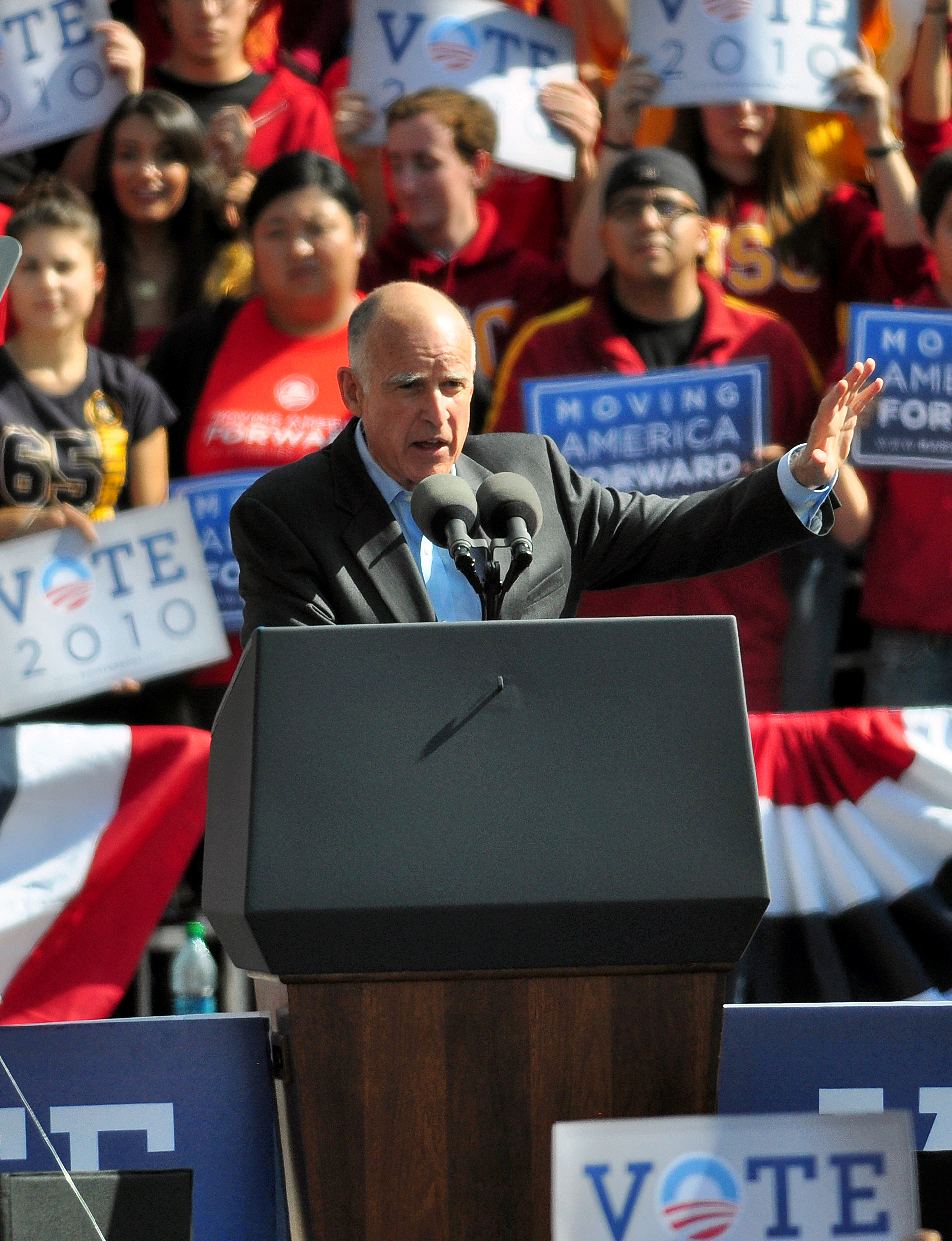
Jerry Brown campaigns at the Moving America Forward Rally at USC.
Courtesy of DIEUWERTJE KAST/daily trojan
Barbara Boxer for senator: Supportive actions for education make incumbent the ideal choice for students
Gavin Newsom for lieutenant governor: San Francisco mayor's achievements in education prove that he can help California
Henry Waxman for representative: House veteran must continue his efforts toward helping students
No on proposition 19: Prop. 19 is vague, poorly written; it would do more harm than good to the legalization debate
Yes on proposition 20: Taking away partisan power to redistrict will make re-elections fair, not based on bias
No on prop. 23: This initiative has all the wrong ideas for helping California's environment and financial situation
Yes on proposition 25: A two-thirds majority to pass state's budget causes delays; a simple majority will prevent this
No on Proposition 27: This measure will revert an already suspect redistricting system back to full corruption

By Editorial Board
Nov. 1, 2010 12:51 a.m.
Selecting California’s next governor is perhaps the most important task voters face Tuesday. Thankfully, the choice is clear for University of California students, who should look no further than Democratic candidate Jerry Brown.
Simply put, Brown has a long, trackable history of prioritizing public education ““ something this state has failed to do, particularly over the past four years.
The UC’s budget more than doubled during Brown’s last tenure as governor, from 1979 to 1983, and he increased funding for critical Cal Grants by 50 percent.
Of course the state enjoyed greater economic prosperity more than 25 years ago, but Brown’s eight-page platform on education indicates that he is also cognizant of the complex issues that have thrust the UC system into a free fall.
Brown sees how we have departed from the Master Plan. His pledge to overhaul state testing and target community colleges for improvement demonstrates his ability to pinpoint two of the state’s biggest areas of concern. And his promise to improve teacher effectiveness without waging war on the profession suggests that he understands that public education isn’t a complete disaster.
We are disturbed by Republican Meg Whitman’s choice to largely ignore education issues altogether. Her three hollow paragraphs on education view it from an economic perspective and advocate simplistically for a reallocation of state spending.
The last thing we need is another economist running our state’s great civic institutions.


