
Malia Otuhiva received an abysmal welcome to UCLA.
During her first week in Westwood, a new acquaintance asked her where she was from. Otuhiva, now a rising fourth-year psychology student, told him she was Tongan, but he didn’t know what Tonga was. When she clarified that Tonga was a Pacific island – like Hawaii – another new acquaintance interjected with an uncomfortable sentiment.
"I wouldn’t visit Hawaii because Native Hawaiians are so lazy."
The blatant intolerance of her classmate’s remark remained with Otuhiva long afterward. "Did I choose the wrong school?" she thought as she reflected on the incident.
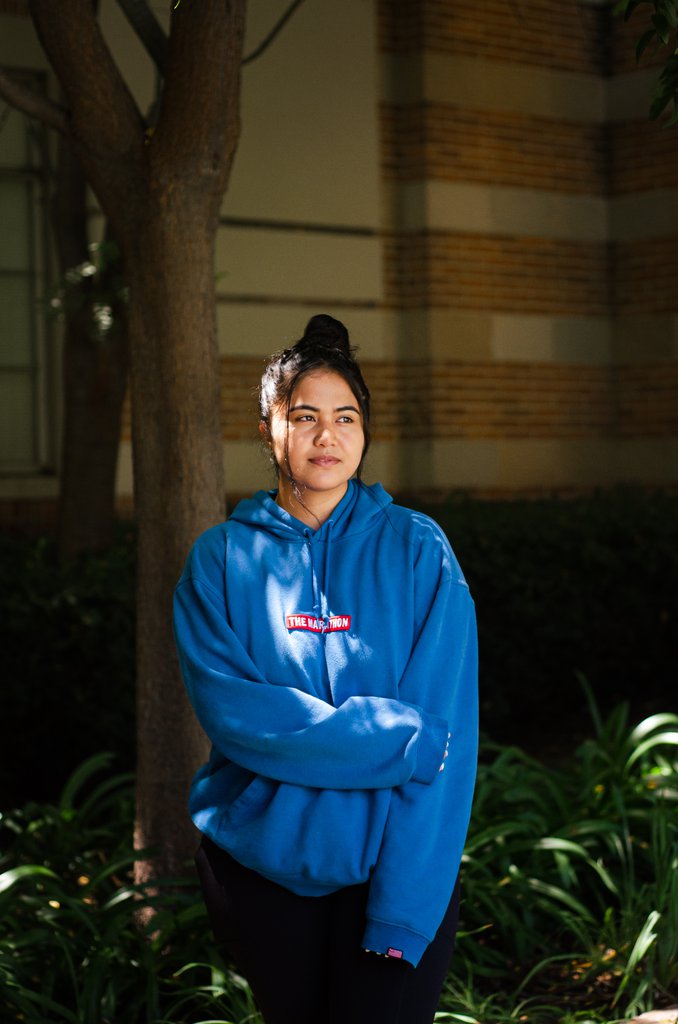
Otuhiva, the current internal vice president of the Pacific Islands’ Student Association, was just one of 74 Pacific Islander undergraduate students at UCLA in fall 2021, the most recent period for which data was available. Pacific Islanders make up 0.9% of California’s total population. That quarter, they represented just 0.23% of the UCLA undergraduate student body.
University data shows that graduation rates for PI students fall significantly below the school’s average, which has raised concerns about UCLA's ability to recruit and retain an already underrepresented group. Among freshman admits for the 2015-2016 school year, 82.6% of all students graduated in four years, while only 70% of PI students did the same. Transfer students tend to fare better: Among 2017 transfer admits, 92.4% of all students and 90.9% of PI students graduated in four years.
PI students believe these disappointing numbers reflect UCLA’s unaccommodating approach to the PI community. Many feel that higher education was not designed for PI people, whose traditions and responsibilities often don’t align with the obligations placed upon them by universities. But they’re determined to make that change.
PI students often face conflicts between their roles as a student and in their homes. Otuhiva explained that family is central in many PI cultures – some of her cousins gave up their college dreams to provide necessary income for their households. When balancing a plethora of obligations throughout college, family simply comes first, Otuhiva said.
"Many Pacific Islander students here at UCLA have to put their obligations here on hold to make sure that their family is okay," Otuhiva said.
This often manifests itself as a financial obligation, even for full-time students. Papu Togafau, an alumnus who is Samoan, said that almost every PI student he knows works an on-campus job to pay for college. Identifying the limited hours offered by on-campus jobs, some students instead pursue off-campus jobs, clocking in enough hours to be full-time workers, Togafau added.
"Students who are PI at UCLA aren't just students – they have so many other things that they need to take care of and do," Togafau said. "And because of those different responsibilities, being a student gets put on the backburner."
Looking for a place to come together and advocate for their community, students formed PISA in 1986. While PISA serves UCLA’s PI student community, it also offers support to the broader Los Angeles PI community. Through the Pacific Islander Education and Retention program, UCLA students tutor and counsel local PI high school students. Former participants have thanked Togafau – PIER’s project coordinator – for helping them graduate high school and achieve their career goals.
But where PIER has succeeded in helping high school students reach their full potential, PI students at UCLA have historically found themselves with few support systems.
PI students only began receiving culturally-specific academic counseling services around 2005, when they were incorporated into Retention of American Indians Now!, project coordinator Josh Lyda said. This program was initially created for American Indian students, but PI students were included after identifying their need for retention services.
American Indian students remain the focus of RAIN!, which usually hires only one PI peer counselor out of four total student counselors. He believes that a separate retention program, which could dedicate more resources to the specific needs of PI students, would support them more than the current combined program.
At the same time, RAIN! is not an entirely unwelcome collaboration. Members of the American Indian Student Association have become close with students in PISA, supporting each other’s community programs and goals. Many students incorporate members of both groups into their academic and social lives, said Lyda, an alumnus and former president of AISA.
"If I hadn't had the support from both AISA and PISA as a student, I don't know if I would have been able to finish even just two years as a student," Lyda said.
Recently, UCLA administrators have been forced to reckon with this intense camaraderie. The 2021-22 school year saw PI and American Indian students work together to develop a Living Learning Community in the dorms. The LLC, which opens this fall, will bring interested students together on a floor in Dykstra Hall, creating a unique space to immerse themselves in the indigenous student community.
The LLC will also connect students with faculty-in-residence Desi Small-Rodriguez, an assistant professor of sociology and American Indian studies, said. While no PI faculty member will serve as faculty-in-residence, Keith Camacho, a Chamorro Asian American studies professor and vice-chair of the Asian American studies department, will serve as a faculty connection for the LLC, said Abigail Johnson, interim assistant director for academics and first-year experience at UCLA Residential Life.
Although students believe AISA and PISA’s combined efforts are effective, they don’t see them as ideal. Lance Bello, an African-American studies graduate student, who is Samoan, characterized this collaboration as a result of UCLA’s indifference towards the two groups. American Indian and PI students are forced to stick together because the university simply would not listen to them otherwise, he said.
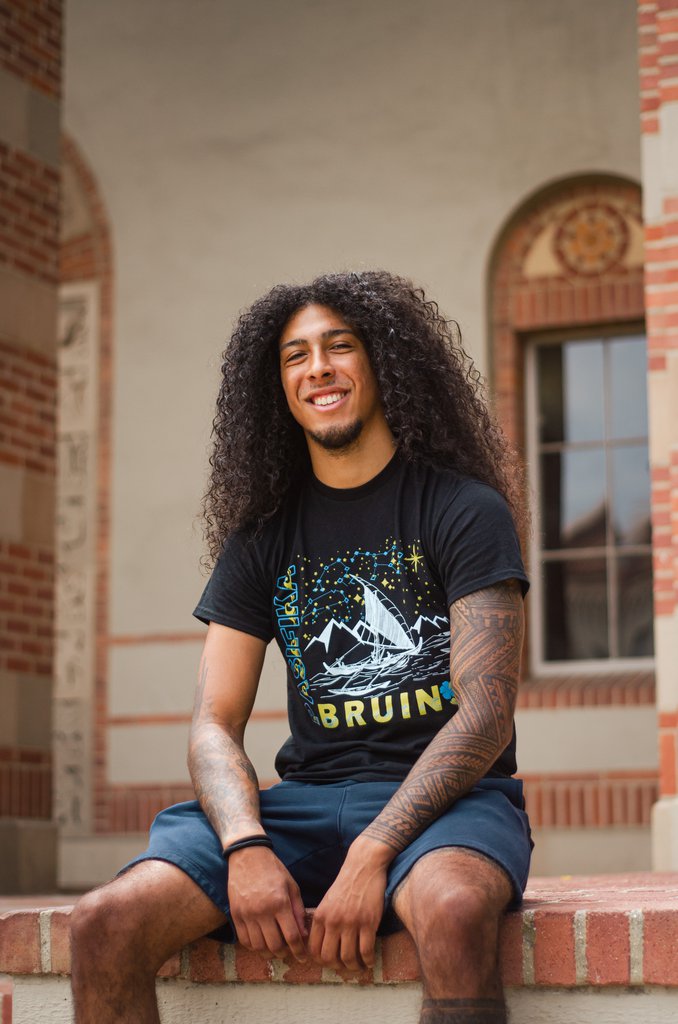
"It should be because we want to, not because we have to to get our voices heard – which, unfortunately, is still the case," Bello said.
Melody Satele, an alumnus and the 2021-2022 PISA president, believes this overgeneralization harms the PI community. The unique challenges of the PI community are overlooked when the discussion focuses on all indigenous students – or the even more general Asian American and Pacific Islander label, said Satele.
In February 2022, numerous student organizations coordinated a sit-in at Murphy Hall. Among them was the Mother Organizations coalition, which includes PISA and other groups representing marginalized students. The coalition secured a meeting with UCLA Chancellor Gene Block and asked PISA if they had any discussion points for the session, Satele said.
Rather than sit back and generally support the coalition’s goals, Satele asked that PISA speak directly with the Chancellor to make their demands. Satele characterized this as a new step for PISA, which had often participated in administrative meetings solely to support the general activism of the Mother Organizations coalition. When the coalition agreed to Satele’s request, she did not waste the opportunity.
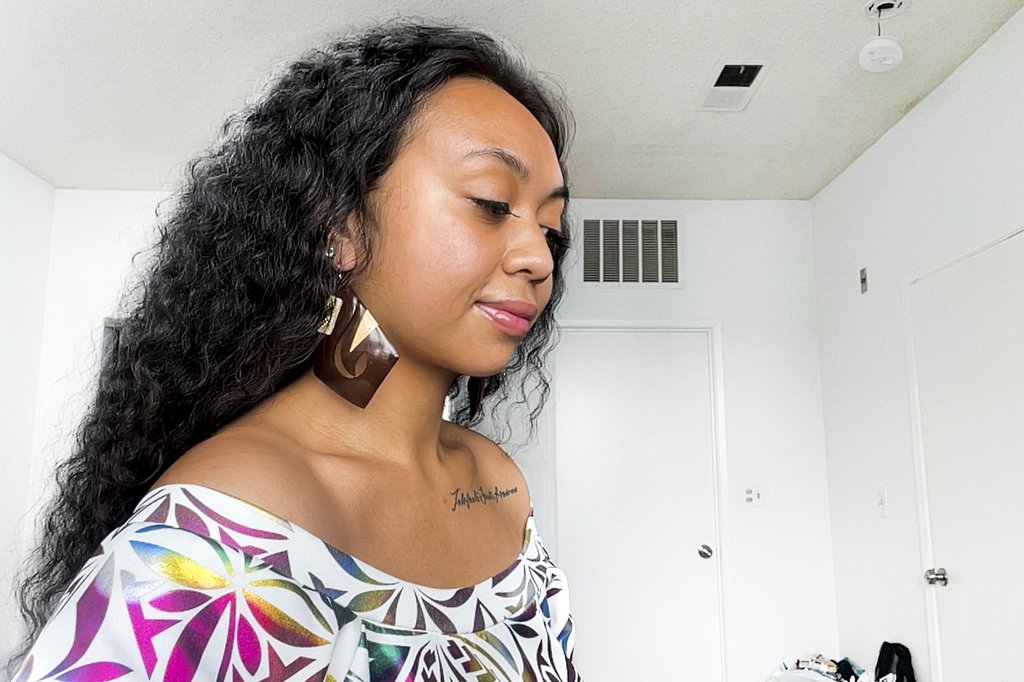
"It was just such a passionate moment for me, and I think that was something that really needed to happen," Satele said. "I don't think we would have gotten as much progress as we did if we didn't ask to be in that meeting with them."
Following the February meeting, PISA quickly arranged monthly meetings with Monroe Gorden, UCLA’s vice chancellor for student affairs. Students fought for the demands raised in their meeting with Block, ranging from a PI retention project in the CPO to the recruitment of 10 additional PI faculty members.
These meetings have generated unprecedented support from administrators, Satele said. For example, the university has sourced funding for a PI-specific retention project, which will commence operations this fall. With this new project, PI students will be able to leave the umbrella of RAIN! once and for all – a change that both Lyda and Satele see as a positive.
Satele noted that PISA also received around $20,000 in additional funding for their spring 2022 cultural programming, allowing them to host several events that might not have otherwise gotten off the ground. In addition, the meetings resulted in the American Indian and Pacific Islander LLC’s creation, according to an official university statement.
With these accomplishments under the organization’s belt, Satele feels this has been PISA’s most successful year so far.
"This has been a really big year for PISA," Satele said. "Overall, I don't think we've ever done this much work within such a short amount of time."
With other goals, however, PISA has faced more resistance. In February, UCLA flatly denied the request to recruit 10 additional PI faculty members for the Asian American Studies department. The request was designed to improve PI faculty visibility, Satele said, as PI faculty are even more underrepresented at UCLA than PI students. UCLA employed three Pacific Islander professors during the 2021-22 school year, who make up just 0.04% of the university’s faculty, according to a UCLA statement.
After further meetings, UCLA directed a subgroup of its Faculty Forward Initiative – which aims to increase diversity in faculty recruitment, hiring and retention – to work with PISA on potential curriculum and faculty additions, according to a university statement. PISA requested a seat within the initiative, deciding to focus on other goals as the subgroup is developed, Satele said.
Faculty representation is a crucial issue for PI students. For many, PI professors can be life-changing role models, Bello said.
"I think we often forget about the inspirational impact that faculty members have, even in just a representational capacity," Bello said. "To experience the guidance, mentorship and instruction of someone from within your own community – the impact that that has can't be understated."
Beyond their status as role models, students believe PI faculty would help create more PI-focused courses. According to Satele, PI students receive few opportunities to study their culture within UCLA’s curriculum, with calls for more courses focusing on Pacific island history and culture. Many PI students are now advocating for the creation of a Pacific Islander studies department, as it would fulfill their academic interests while also necessitating the employment of more PI faculty.
Some also believe that a Pacific Islander studies department would attract more PI students to UCLA.
"When they can see that a university is offering Pacific Islander studies as a discipline, that in itself creates an extra incentive for students to become excited and motivated from within our communities," Bello said.
Satele is not yet disheartened about the faculty issue, and she hopes that the Faculty Forward initiative will help PISA achieve this high-priority goal. But some community members question the sincerity of UCLA’s more ambiguous commitments, fearing that any promises not captured in writing will be left unfulfilled.
PISA may have already seen this firsthand, Satele said. She described how initial negotiations indicated UCLA could hire one PI recruiter, which already halved PISA’s request for two. But a couple months later, the university further reduced its commitment, promising help from a generic diversity coordinator designed to work with all marginalized groups, Satele said. This was deeply disappointing to Satele, who felt that a PI recruiter would have substantially increased UCLA’s PI student population.
In an emailed statement, UCLA referenced a February 2022 letter in which Chancellor Block stated the school would hire a diversity coordinator. Starting Fall 2022, the coordinator will work with all marginalized student groups, including PISA and PIER, to recruit students from underrepresented groups, the statement said.
Satele noted how during certain discussions, she felt as though PI students understood the gravity of a request more than administrators. It was difficult to hear administrators dismiss certain demands, such as the hiring of PI recruiters, Satele said.
"For us it is a really emotional thing too, because we're the ones who are experiencing this; we’re the ones being impacted by the lack of access to higher education," Satele said.
As a PISA board member in 2022-23, Otuhiva will continue to advocate for the changes UCLA has yet to make. And although she had a disappointing welcome into Westwood, she has found immense comfort in the school’s PI community, developing strong friendships and immersing herself in the community’s activism. Whether she is volunteering for PIER or campaigning with fellow PISA board members, Otuhiva has totally committed herself to advocating for causes important to PI students. All she asks is to be seen.
"We are present here at UCLA," Otuhiva said. "We exist here. We may not be in every classroom, but Pacific Islanders are UCLA students, UCLA staff – and many of us fought a whole lot to get here."