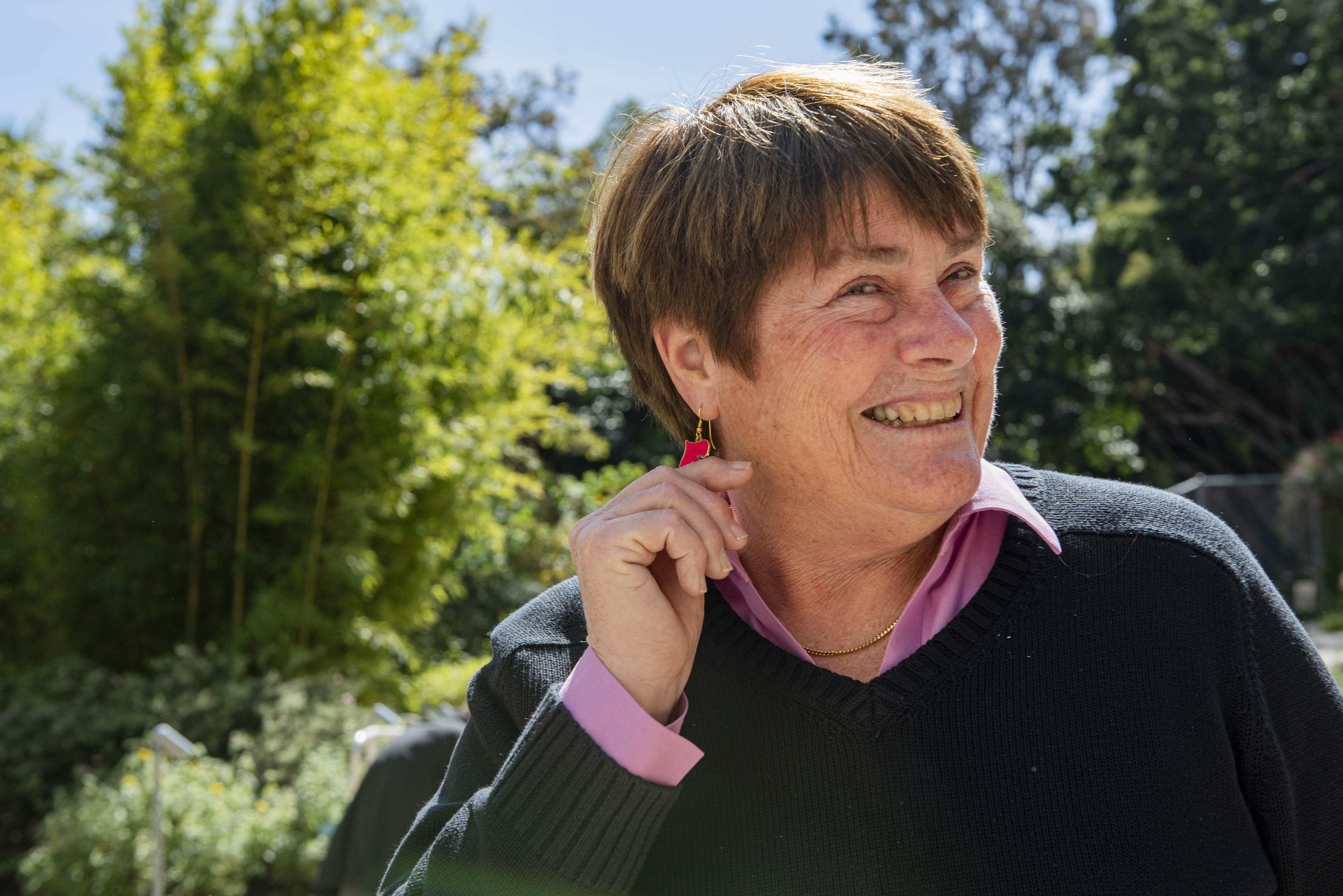
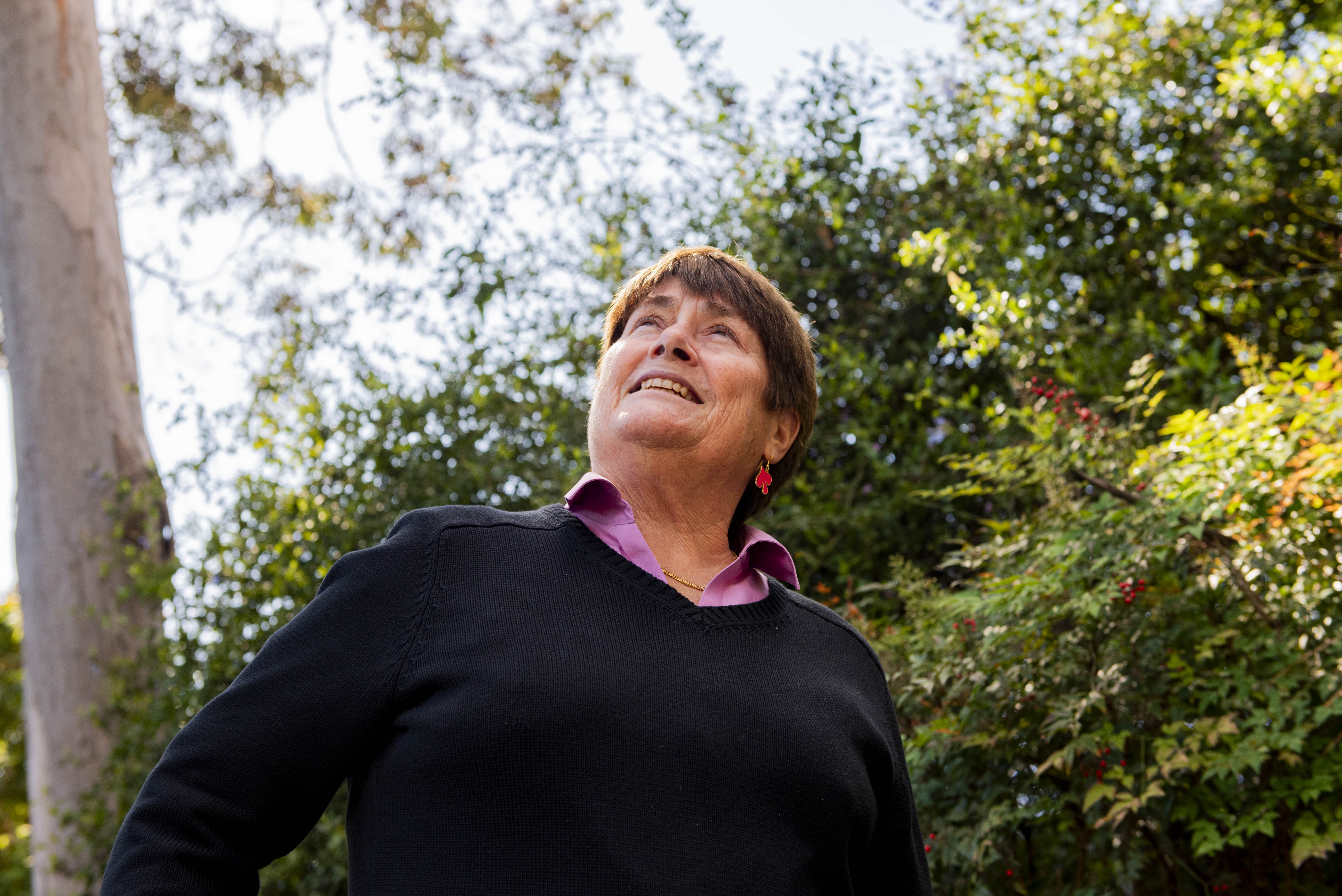
Victoria Sork, the director of the Mildred E. Mathias Botanical Garden, smiles. Staff members at the garden work to keep its 7.5 acres clean and safe. (Leydi Cris Cobo Cordon/Daily Bruin senior staff)
By Alisha Hassanali
March 6, 2026 at 12:50 p.m.
This post was updated March 8 at 9:55 p.m.
Most UCLA students dread taking 8 a.m. lectures – the earliest courses UCLA offers.
But by 7:30 a.m., John Cluff – the manager of the Mildred E. Mathias Botanical Garden – is already working.
From cleaning debris after rainstorms to clearing hillsides of Algerian Ivy, Cluff and 36 volunteers keep the garden’s 7.5 acres clean and safe. The botanical garden, founded in 1929, is a living museum and teaching resource for UCLA community members, featuring over 1,600 plant species.
“The volunteers kind of have an idea that they’re going to come in and pot plants and things – but no, you’re out there swinging an axe, digging ditches, planting holes,” Cluff said.
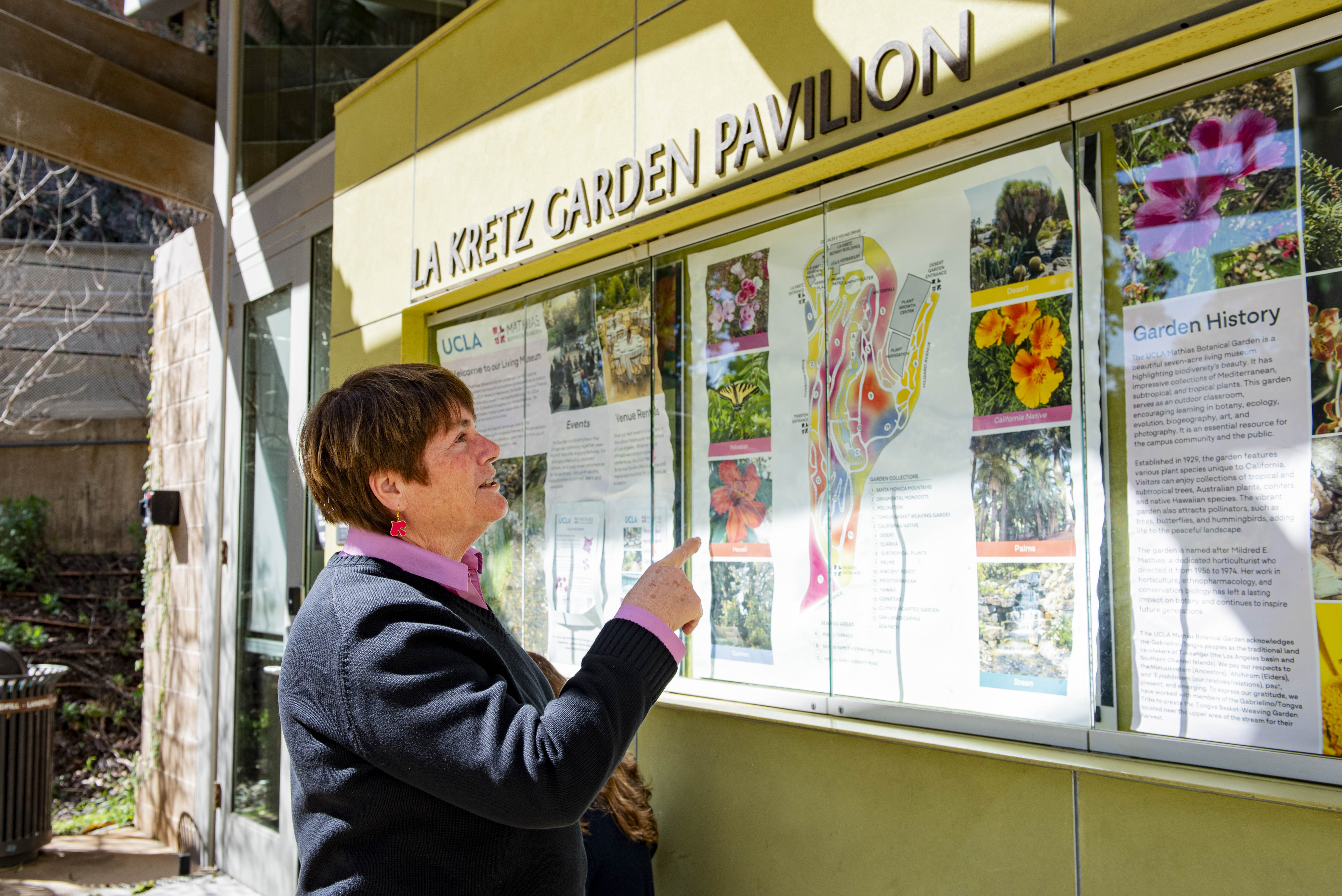
Cluff said his normal workday starts at 7:30 a.m. with monitoring the botanical garden’s email inbox. He then begins his daily duties, which include watering plants, picking up debris from wind and using blowers to keep signs clean of dust and bird droppings, he added.
Victoria Sork, the director of the botanical garden, said her favorite section is the Tongva basket weaving garden.
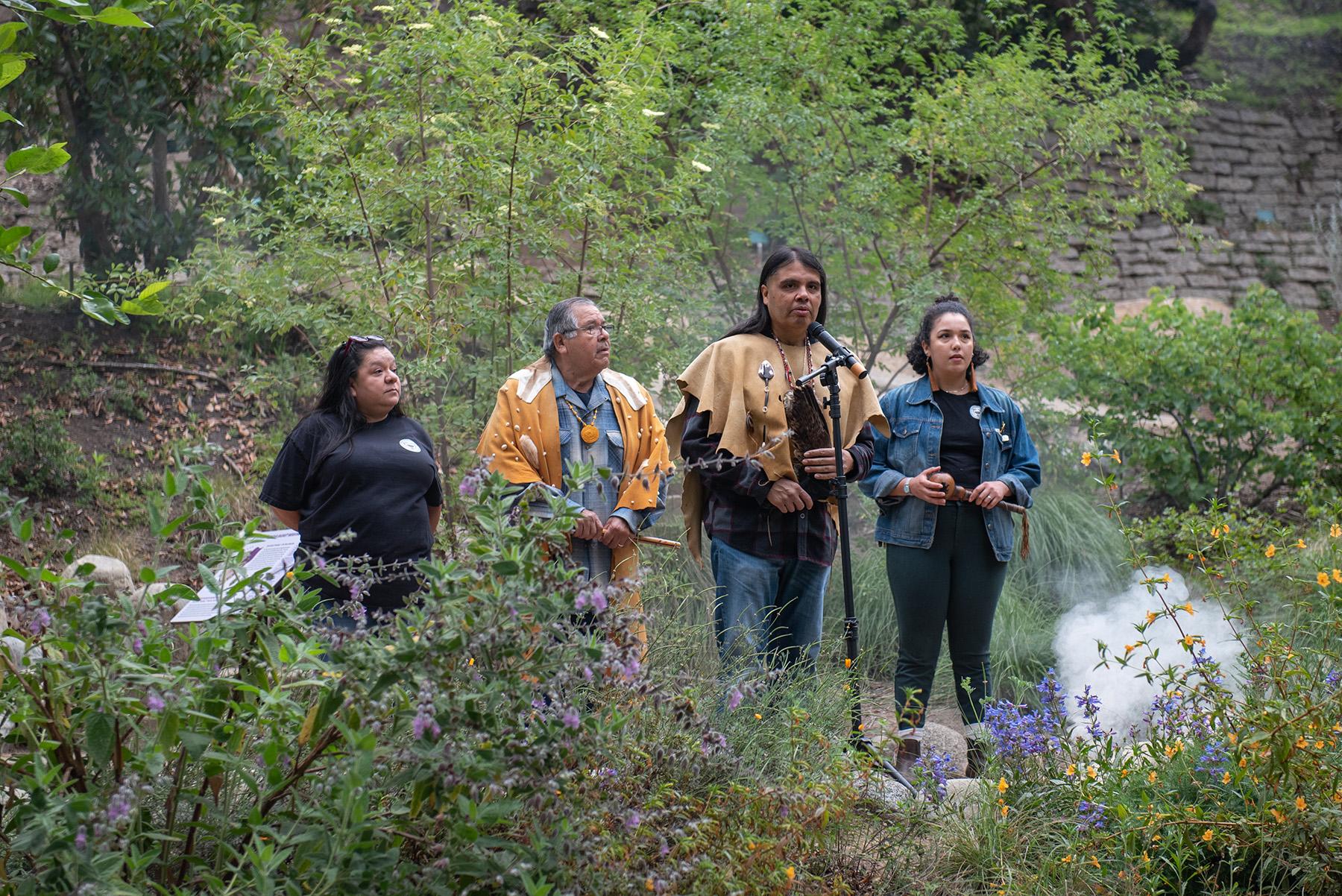
Members of the Tongva tribe selected the plants and deer grass, which are harvested to create handmade baskets, Sork said. She added that each sign in the garden has both the Chumash and Tongva names for the plants to honor the indigenous Gabrielino/Tongva lands UCLA is built on.
The botanical garden also hosts the Next Step program – which helps children who attend schools that have a high percentage of students from low-income backgrounds – to experiment with science projects and attend garden tours. The program introduces students to UCLA’s campus and exposes them to science at an early age, she added.
“I’m really proud of that because I feel like it’s a way of inviting the community into our campus,” Sork said.
Recently, Sork said the staff has been maintaining the clarkia plant – a pink and purple flower with grooved petals native to California – in preparation for the May 16 Clarkia Flower Festival.
The event will feature garden tours, food trucks, live music and tabling from environmental groups, Sork said. The botanical garden’s logo contains petals from four different species of clarkia, Sork said.
The botanical garden’s staff also maintains the Rodriguez-Feo Meditation Meadow – a quiet space within the garden for practicing mindfulness – said Allison Keeney, the garden’s assistant director. The Meditation Meadow includes benches for people to meditate in nature without distraction.
“It really feels like I’m in a different world,” Keeney said.
People in urban areas can sometimes become detached from nature, Keeney said, recalling a story in which she met a young boy who was scared there would be snakes in the garden. The garden plays an important role in keeping people connected to nature, she added.
Keeney added that she asks visitors to be mindful of their impact on the environment, specifically by keeping children and dogs out of the stream and staying off the garden’s hillsides.
“I want people to know it’s here,” she said. “I want people to come and enjoy, but I also want them to be respectful.”
Cluff said the most difficult part of his job is retaining staff. There have been high turnover rates among staff and volunteers over the last four years, which Cluff said he believes is because of the rising costs of living.
Training new staff members takes additional time and resources, Cluff said.
“It’s economic,” he said. “It’s very expensive to live here and so as soon as they see a job that pays more, they’re gone.”
Cluff said his dog, Helena, kept him company amid staff turnover. Helena often rode in a milk crate placed inside a cart and accompanied Cluff in his maintenance work, he added.
Helena is buried by an oak tree next to the Plant Growth Center, Cluff said.
Sork said she appreciates how the garden provides a place for people to come together, from students studying for exams to international visitors.
“It’s an honor to be the director of a garden that not only teaches people, but gives people a place to go and get a respite,” she said. “It makes me feel good when I see people in the garden enjoying it.”