
Josiah Beharry is a student who supported increasing tuition.
"It was really a data-informed decision," he said. "It was a necessary decision."
In November 2024, the UC Board of Regents voted to hike nonresident tuition by $3,402. The increase, recommended by a UC Regents committee Beharry sat on – and later approved by the full board – faced condemnation from student groups. The UCLA Undergraduate Students Association Council and Out of State Student Association both later expressed their opposition to the measure.
Beharry was a member of the UC Board of Regents from 2024-25. The board governs the University; it hires campus chancellors and is responsible for setting UC policies, from systemwide tuition rates for the University’s nearly 300,000 students to guidelines about how the 10 UC campuses can operate.
Beharry was not one of the 18 regents – often high-ranking businesspeople or community leaders – appointed by the governor of California, nor was he a public official serving on the board in an ex officio capacity.
He was the UC student regent.
"I actually didn’t even know about the UC regents or the Board of Regents," Beharry, a doctoral student at UC Merced, said. "I had no background knowledge of the UC system governance structure, but I got into it because a friend sent it to me."
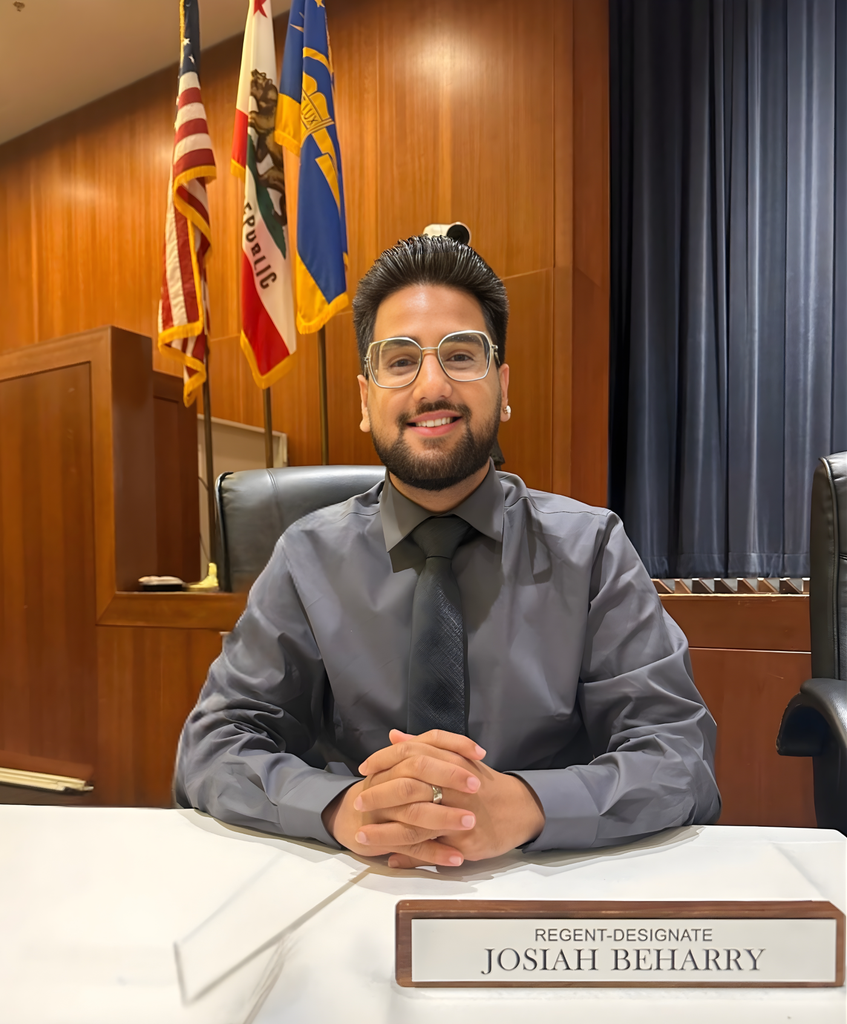
The application process begins more than a year before the eventual student regent assumes the role, with the selected student serving as student regent-designate for a year to prepare. Any UC student who will still be student for two years following their application is eligible to apply to be the student regent, and the job isn’t without its perks; the UC waives tuition and mandatory fees for both the student regent and regent-designate.
The position was established by a 1974 statewide ballot proposition that reformed the board. Of the 51 people who have held the position, at least 15 have been UCLA students, including the current student regent, Sonya Brooks.
For Brooks, the job has also involved building personal connections with her colleagues, something she enjoys. One of these colleagues is Richard Leib, the board’s former chair who is also the president and CEO of the consulting firm Dunleer Strategies.
"I know his family. He knows mine," she said. "It’s really an interesting dynamic to be put into this position where I’m meeting people who are very well-known in not only their industries but nationally – and even some worldwide – that I would have never had the opportunity to meet had I not been in this position."
While the doctoral student in education said she has valued the opportunity to interact with "people that you never thought that you would have the opportunity to meet," she added that, for her, there’s another side to the coin.
"It’s letting them into my world, not only as a student but as a graduate student, as a mom, as a scholar, as a researcher, as an advocate – as all of these different things and people and intersections that they may not necessarily have had an opportunity to meet before," Brooks said.
Brooks, who was the 2023-24 vice president for external affairs of the UCLA Graduate Student Association, said someone suggested she apply for the role because she had been involved in UC-level advocacy.
Applying to the position is hardly a guarantee for getting it. In 2019, 113 students applied for the position, according to the Daily Nexus, and only six to eight become finalists for the position each year, with only one student ultimately being selected as student regent-designate.
"I was like, ‘Absolutely not. I’m not applying for that. I’m not going to get it,’" she said. "I don’t like rejection."
Brooks said she ended up submitting her application just a minute before the deadline. From there, the months-long application process progresses to interviews with members of the UC Student Association and UC Graduate and Professional Council before the regents ultimately nominate and confirm the student regent.
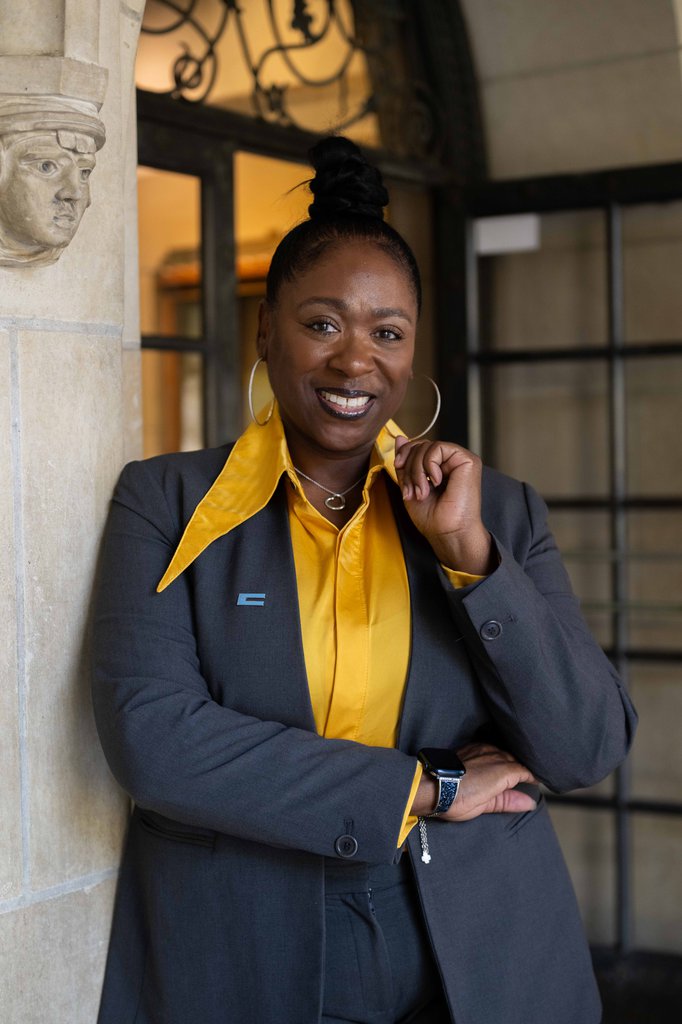
After going through this process, Brooks became the first Black woman to hold the position.
The pathway from student government to the student regent position is not a rare one. Avi Rejwan was the 2013-14 USAC internal vice president. Though he enjoyed working with different groups of people across campus, he said he wanted a change from student government.
"I thought that student government at the time was rewarding, but it was also super political," Rejwan said.
After a year on the council, the then-third-year economics student applied to be the 2015-16 student regent, hoping to find a less political channel for advocacy. However, Rejwan said he soon discovered that the student regent position was more political – with a controversy from his campaign for student government surfacing over a year after the fact.
After his nomination by a Regents committee, Rejwan, who is Jewish, faced allegations that, when he ran to be USAC IVP, he did not properly disclose a donation from Adam Milstein, a member of and donor to several pro-Israel organizations. Hundreds of students signed a petition calling on the board to delay Rejwan’s appointment, and the UC Student Association held an emergency meeting.
Rejwan said he felt the issue at hand was that he had accepted money from a Jewish donor. The situation and controversy left him disappointed, he said.
"It was a devastating time for me," he said. "I felt very betrayed and misrepresented."
USAC candidates were not required to disclose donation sources, a student government advisor said at the time, and the regents ultimately confirmed Rejwan.
Rejwan wanted the regents to get even more student input, successfully pushing for a nonvoting adviser to be added.
"They (the regents) just thought that there’s already two students on the board, the board is already big, and they didn’t really understand a lot of the purpose behind it," he said. "At that point, that’s when I learned that relationship building was key to this."
Rejwan said he had conversations with individual regents, eventually convincing them to support the initiative. Though the adviser seat was nixed in 2019, Rejwan said the process of lobbying for the position was informative, though he added that he wished the position hadn’t come with a sunset provision.
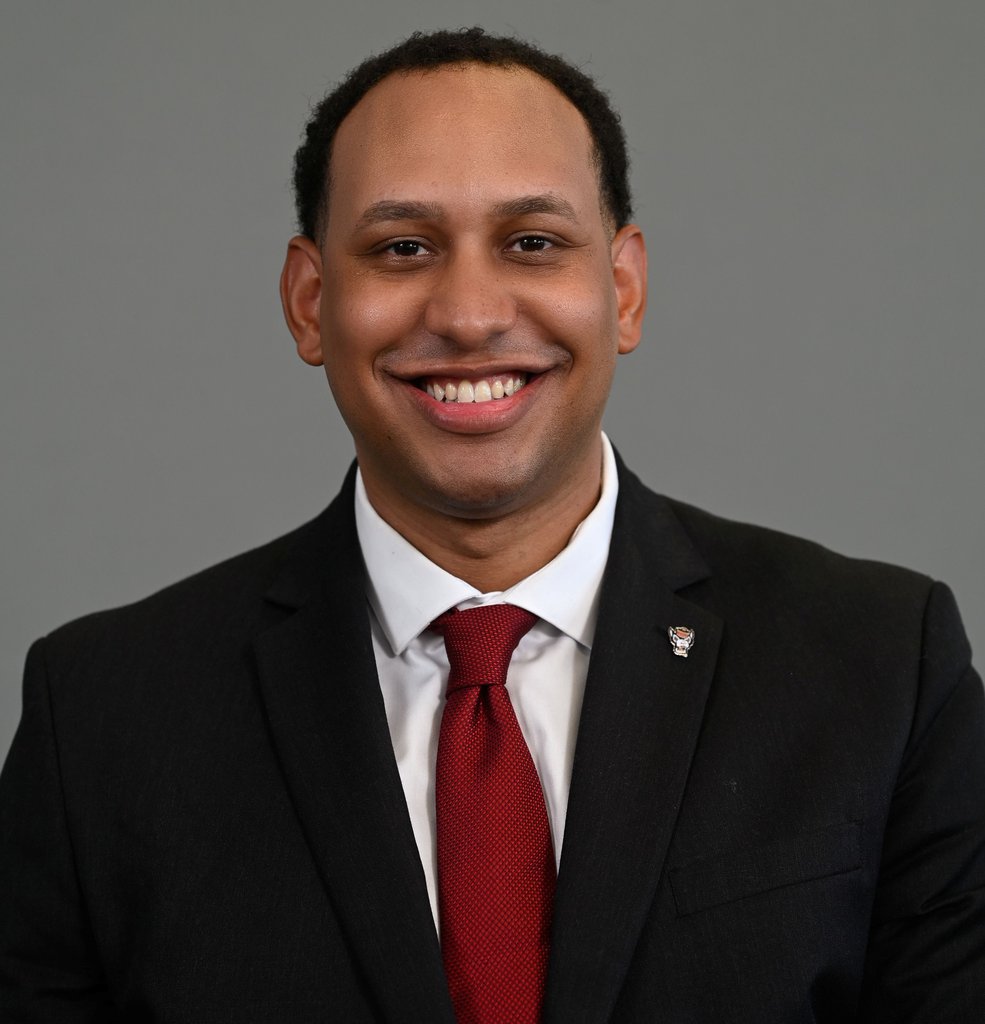
Devon Graves, a then-doctoral student in higher education and organizational change at UCLA, was the student regent three years after Rejwan. Graves said it can be easy to get lost in the novelty of the role, but he added that, just like the rest of the board’s members, the student regent has a vote when it comes to making decisions for the University.
There are eight standing committees and two special committees of the Regents, each tasked with strategizing different areas of the University’s operations such as finances and academics. Graves, the first student to chair any Regents committee, said he was proud that his board voted to reduce tuition for in-state students – the first time in nearly 20 years the regents had done so.
The board’s actions are not always as popular. It’s far from uncommon to see protesters with banners and megaphones marching outside the board’s meetings, criticizing the regents and the University. During the 2024-25 academic year, when Beharry was student regent and Brooks was regent-designate, students and community members protested against the UC both inside and outside meetings, calling on the University to divest from companies associated with the Israeli military.
"I definitely understand where the students are coming from," Brooks said. "If I wasn’t in this position, I would be right there with them."
She added, however, that the decisions made by the regents are complex and must take into consideration the academic, institutional and business needs of the UC. Brooks added she wants to help students better understand why the board makes the decisions it makes.
"It was a difficult time to be there because you’re trying to do right by the students who feel passionate about this," Beharry said. "You’re trying to do right by the university and the institution. You’re trying to do right by the law. You’re trying to do right by the California taxpayer."
In addition to the regents’ meetings, pro-Palestine demonstrators also protested outside the Brentwood, California, home of UC Regent Jay Sures – who is Jewish – in February, leaving red handprints on his garage door.
Brooks said she was stunned by the protest, which she felt had gone too far. Still – though she disagrees with their actions – she empathizes with where the protesters are coming from.
"I understand that when you feel as if you’ve talked, and you’ve pleaded, and you’ve begged, and nothing is really happening, what more can you do?" Brooks said. "What more can you do to show the level of sincerity and the passion that you have behind these issues?"
Brooks added that being a student regent felt isolating because she had access to information that most students did not.
"I want to say, ‘Hey, y’all, guess what?" Brooks said. "I want to, but I know that it will cause more havoc than help."
Amid all of this, the student regent must also be a student.
Graves said it was difficult balancing his commitments as a graduate student – such as being a teaching assistant and working on his dissertation – as well as a regent. Brooks, a parenting student, said the student regent must be "an expert in time management" and "an exquisite planner." She said, however, that the regents understand she has responsibilities as a student.
Regardless of which campus the student regent hails from, the position comes with travel requirements. In recent years, the regents have generally split their bimonthly meetings between Los Angeles and San Francisco. During one meeting, Rejwan had a final exam for a UCLA economics class while the regents met in San Francisco. After finishing the exam, Rejwan had to immediately return downstairs where the regents were meeting.
Rejwan added that, during the final, he encountered a confusing question, spending about 20 minutes trying to understand its wording. Since he wasn’t in class, he wasn’t able to simply ask the professor for clarification and instead had to communicate through a proctor. But Rejwan said the role helped him develop his communication and advocacy skills, something he still uses today as a litigator.
Beharry said, in hindsight, he does not know how he balanced being a graduate student and a regent.
I asked Rejwan, Graves, Beharry and Brooks if they’d do the job again.
"Is there anyone who said ‘no?’" Beharry asked me.
There wasn’t.