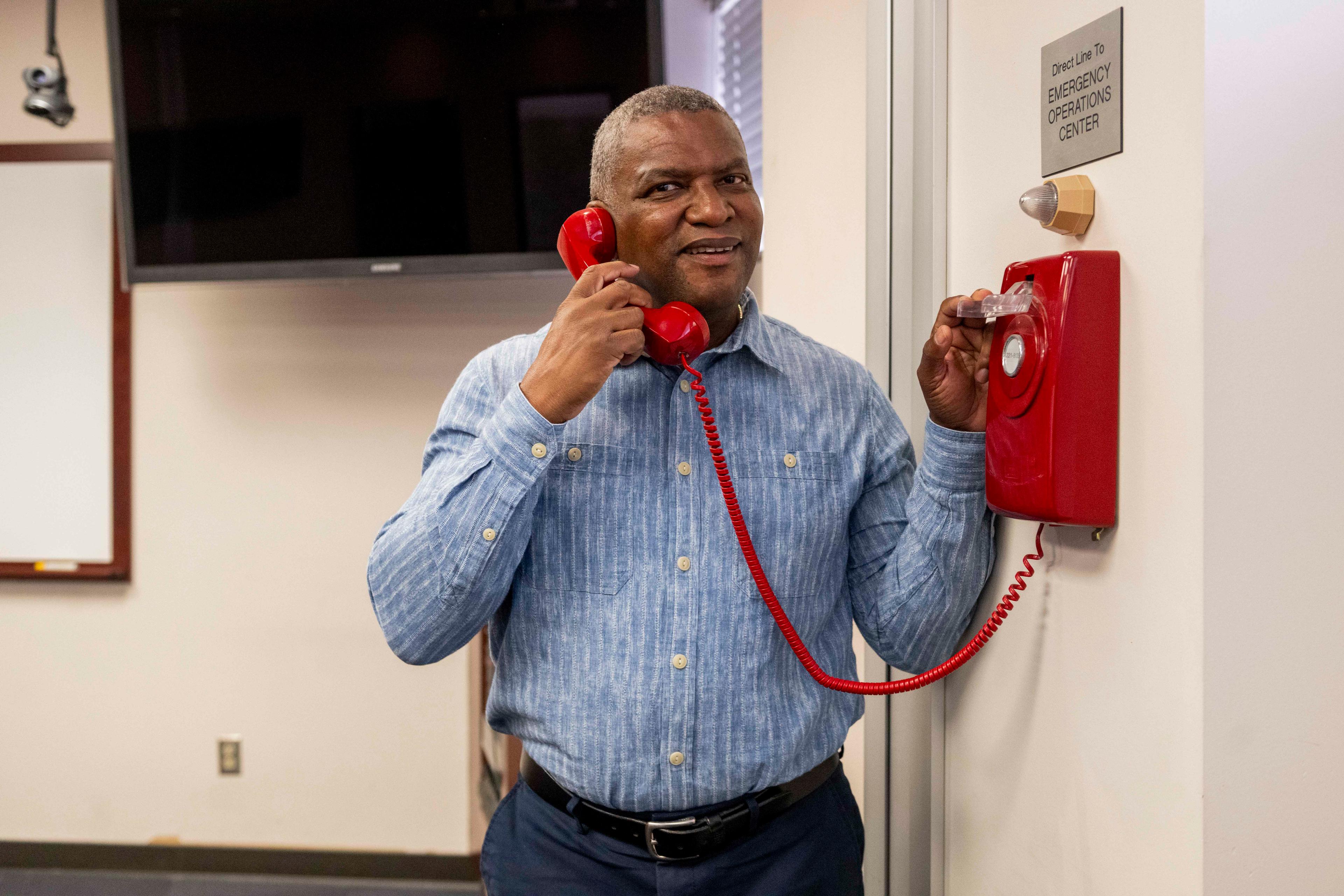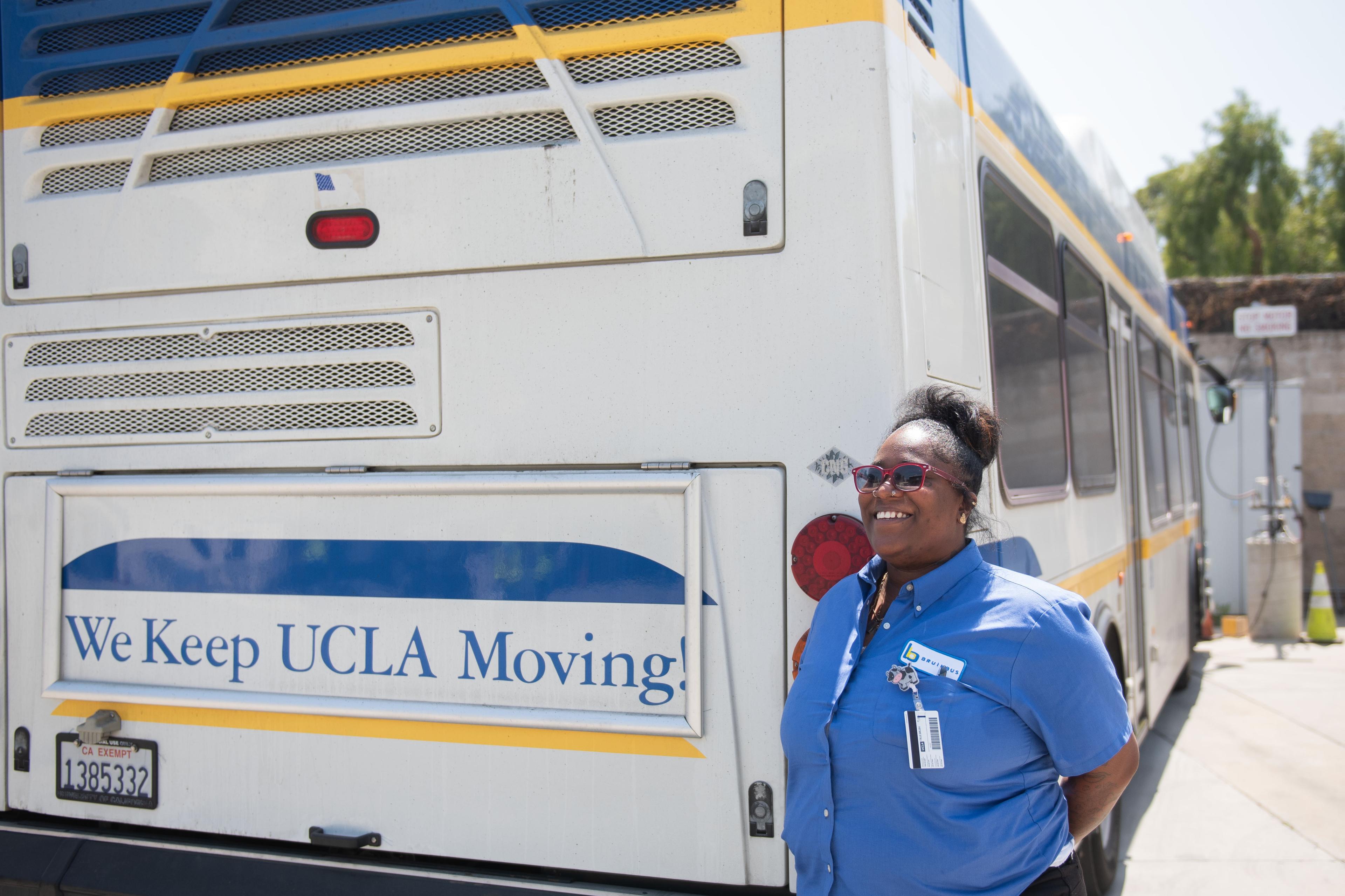
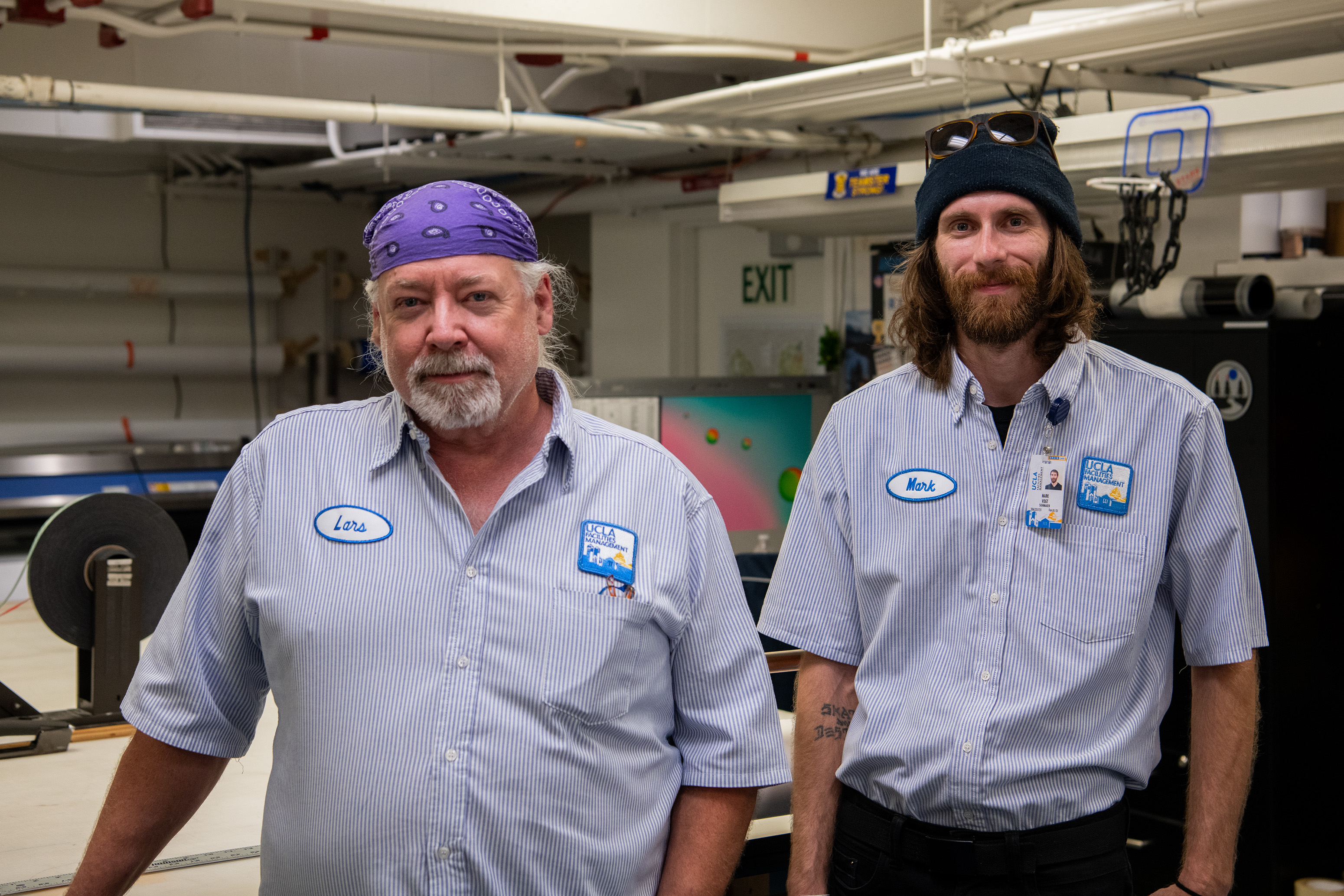
UCLA sign shop sign makers Lars Peterson and Mark Vogt are pictured. The sign shop makes all plaques and signs that direct students, faculty and visitors around campus. (Kai Dizon/Daily Bruin senior staff)
By Victor Simoes
May 26, 2026 at 8:47 p.m.
A diverse range of signs are scattered across UCLA’s 419-acre campus, from murals to traffic markers.
But behind the scenes, workers at UCLA’s sign shop spend weeks in the basement of the Facilities Management building creating the signs that guide students, faculty and visitors.
The sign shop receives standard and custom maintenance requests – such as for missing bathroom signs or UCLA vehicle wraps – from all university departments, said Daniel Zavala, the shop’s lead sign maker. The shop takes about 40 to 60 requests every month, he added.
Inside the shop, a framed picture of staff members from the sign, paint, mason and roofing shops hangs alongside a UCLA sports-themed printed mural. Most of the shop’s fabrication equipment sits in the basement, which the design studio overlooks from a balcony.
Shifts at the sign shop last from 6 a.m. to 2:30 p.m., and operations are split into design and production workflows, Zavala said.
Signmakers consult with clients about their vision – such as location and placement – and are responsible for completing a project from beginning to end, said Mark Vogt, a sign maker. Vogt added that he sees himself as more of a craftsman than a designer and prefers construction to design.
“A lot of shops on the outside, you pretty much get one design and it’s done,” Vogt said. “Here, we can go back and forth with the client.”
Vogt said compared to other sign shops he has worked for, UCLA has allowed him to refine his work and create higher-quality signs. He added that he enjoys the challenge of completing large projects because he gets to see his displayed works helping people daily.
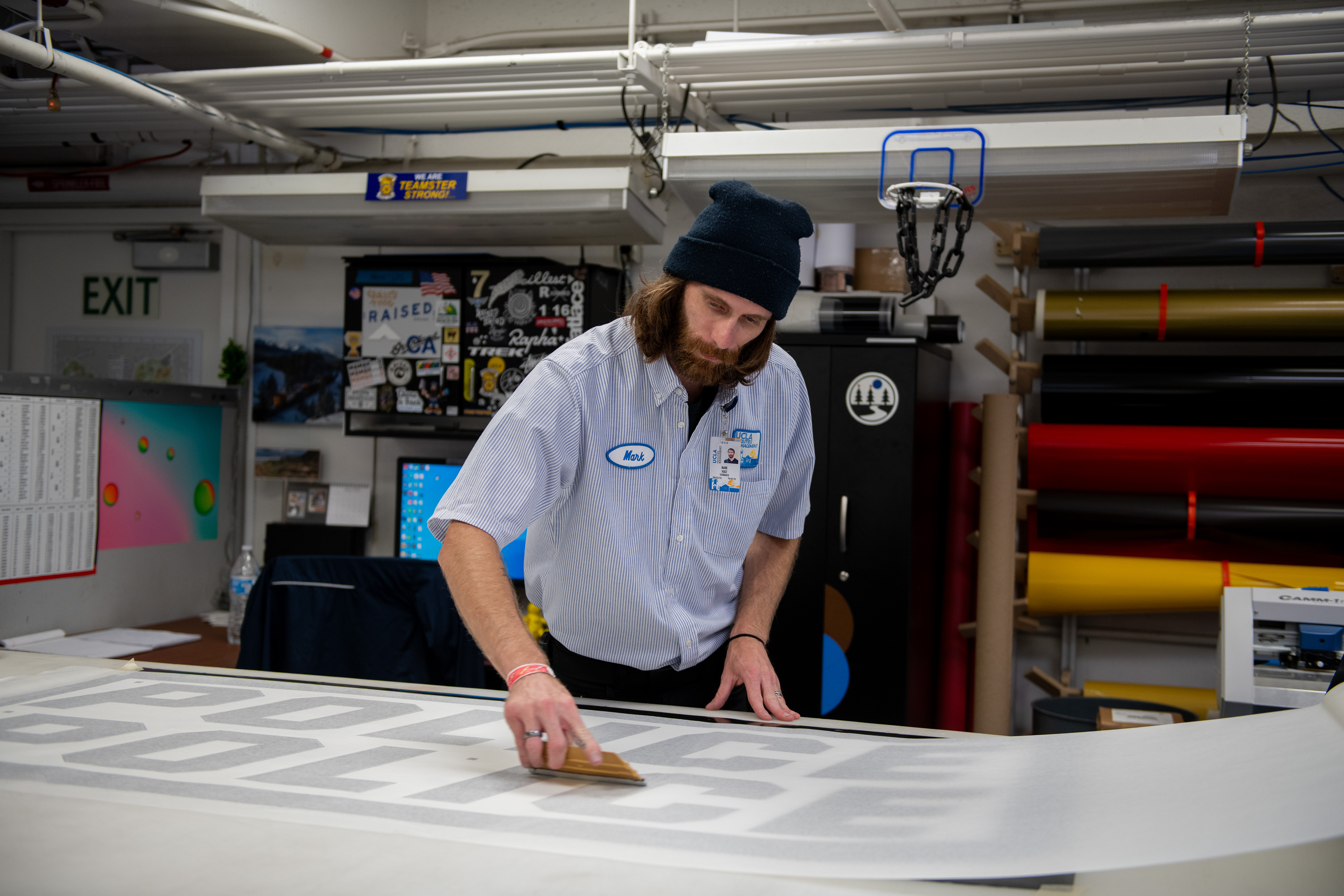
“Seeing it from nothing to something – just the actual aspect of creating – I really enjoy,” Vogt said.
UCLA’s signs come in white, blue and “Charles E. Young Brown” – a color designed and trademarked by UCLA’s campus architect, he added.
Zavala said the shop was mainly responsible for street signs and nameplates when he began working there 20 years ago. However, the university expanded it to include murals and vehicle wraps in the past seven years.
The shop’s 60-inch-wide format printer is responsible for most of the shop’s recent projects, Vogt said. The staff uses mechanical engraving machines to cut out letters and signage and a laser engraver for plaques, Zavala added.
Zavala said he works closely with the campus architect to follow UCLA-specific branding rules. He added that the shop must keep project costs under $50,000, per the Stull Act, which allows UC projects to circumvent open bids and use university employees.
About 10% of the shop’s workload is from routine maintenance, while the rest is specific requests from university departments, Zavala said. He added that of those requests, about 10% are creative requests, such as custom murals.
Zavala said one of his favorite creative projects was a sign requested by the psychology department, created by sign maker Lars Peterson. Peterson said the department’s original design required overlapping puzzle-piece-shaped panels, which created issues in weight, cutting and cost.
To solve this problem, Peterson used acrylic panels with colored vinyl instead of glass for the project, making the art less heavy and eliminating the need for a specialist glass cutter. Peterson also changed the puzzle piece shapes to standard rectangles, which worked better with the cutting radius of the machine, he said.
“This is a classic example of how it works – we get something from an architect or a designer, and then we have to make it workable,” Peterson said. “This is where it’s fun for me.”
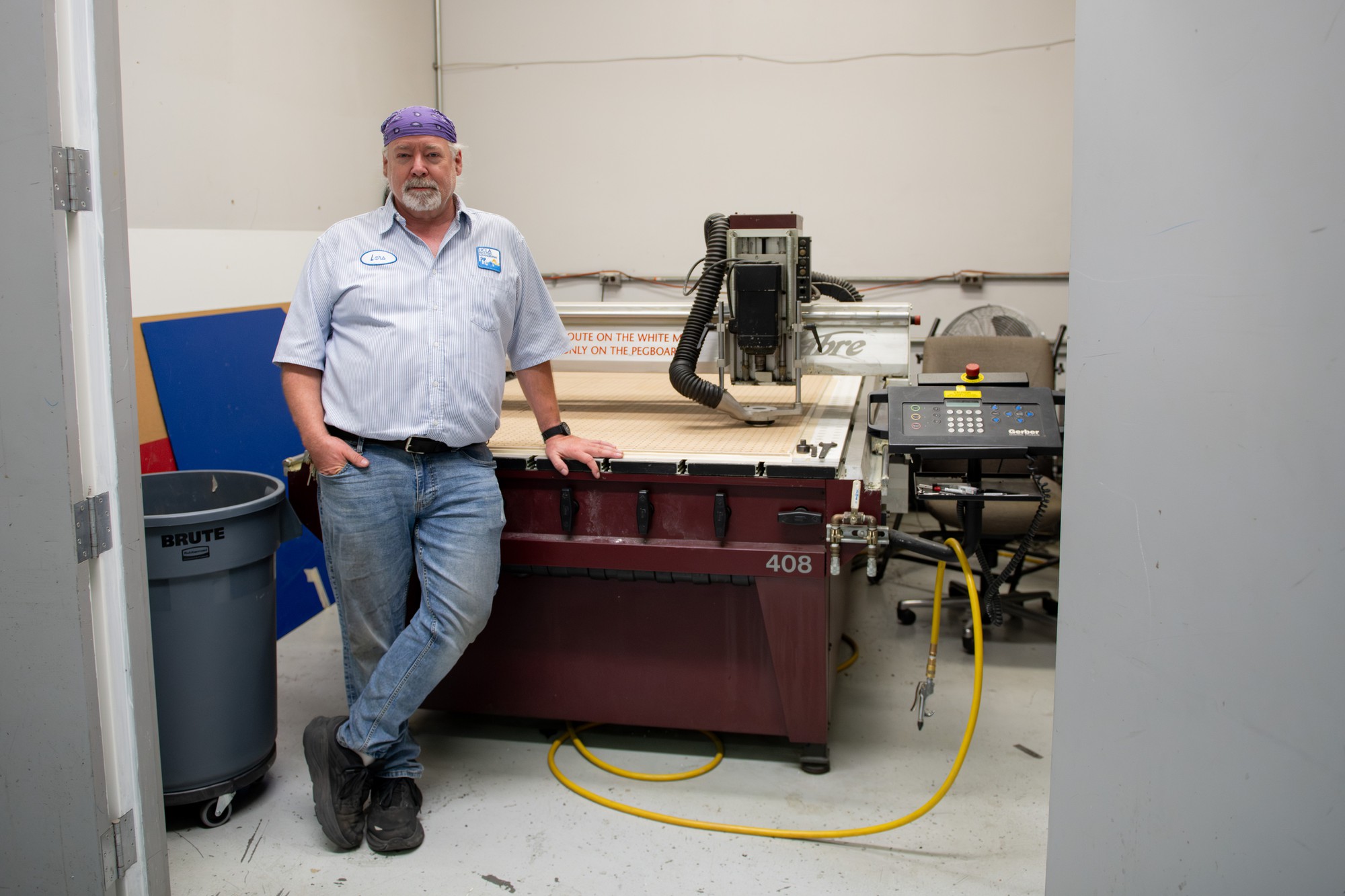
Peterson said he recently worked on updating the J.D. Morgan Center – the hub of UCLA’s athletic teams – with new evacuation maps.
The sign shop recently got a new storage room, which Zavala said he plans to use to centralize manufacturing, making it easier to navigate machines.
“We plan to keep expanding and try to take care of all the university needs before I retire,” he said. “I’ve been here 20 years, and I have 20 more years, so as long as I’m here, I plan to keep expanding and doing what I can with what we have and what my shop is capable of.”
Zavala, who was born at the Ronald Reagan UCLA Medical Center, said his job at the sign shop felt full circle.
He added that he and his coworkers see each other as family. The sign shop workers attend baseball games and go for runs together and have attended each other’s children’s baptisms outside of their shifts, Zavala said.
“Me and my guys have a sense of pride in what we do and what we put out,” Zavala said. “We like to give people something that we would want for ourselves, and we give that sense of pride that I’m giving you the work I would do for myself.”