
Carissa Liu started her freshman year at UCLA with her best friend already by her side.
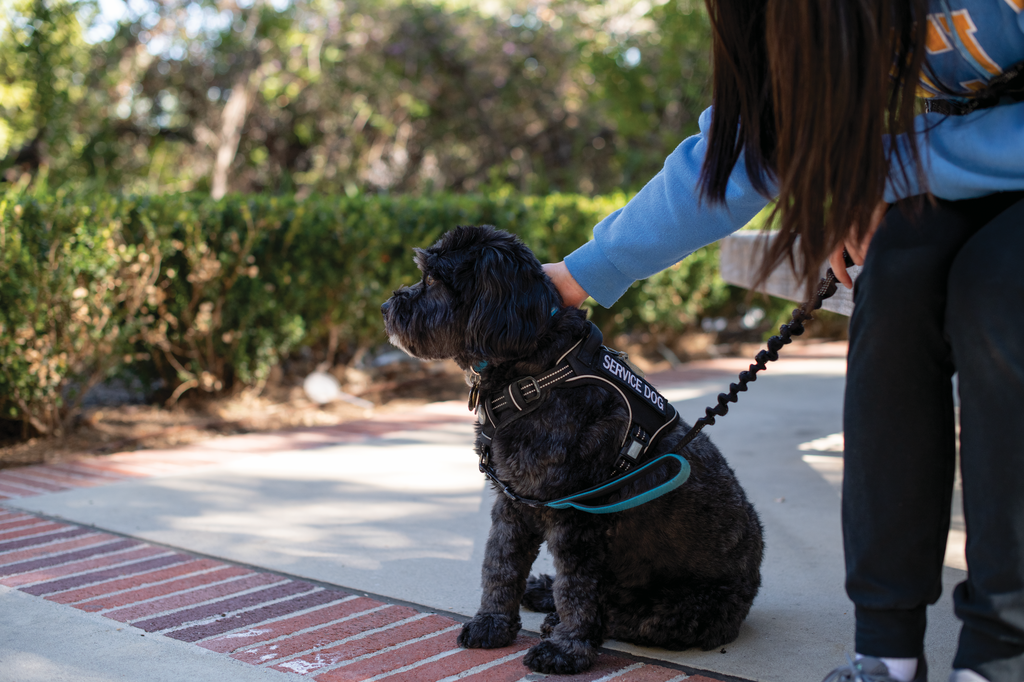
Coby is Liu’s service dog, an Australian shepherd-poodle mix who has been with her for over three years. After arriving on campus, their first order of business was training Coby to guide Liu to her new home on the Hill.
“If he senses that I’m not feeling well, he knows that over time my room has become the safe area that he goes back to,” said Liu, a first-year microbiology, immunology and molecular genetics student.
They share a single room in Hedrick Summit, where Coby has quickly gained many fans on their floor.
“My suitemates are really nice and let him run around in the halls. ... They love Coby,” Liu said. “They always stop by my room to say hi.”
Besides being a favorite among her dormmates, Coby helps Liu navigate campus with her medical condition, which requires her to be careful about overexerting herself.
UCLA policy defines a service animal as “any dog or miniature horse that is individually trained to do work or perform a task for an individual with a disability, including physical, sensory, psychiatric, intellectual, or other mental disability.”
However, there is no record of the number of service animals at UCLA, said Norma Kehdi, director of the Center for Accessible Education. According to Kehdi, service animals are not required to be registered through the CAE. But Kehdi said students in the dorms are highly encouraged to register their service animals so the CAE can provide students with resources, such as access to a disability specialist and classroom accommodations, as well as have a record of the animal’s presence for safety and emergency purposes.
Overall, Liu said she has found the atmosphere at UCLA to be welcoming to her and Coby.
“A lot of people also living on the Hill are either first-years or second-years being away from home for the first time, so when they see (Coby), they really miss their pets. I feel (it) creates a connection immediately,” Liu said.
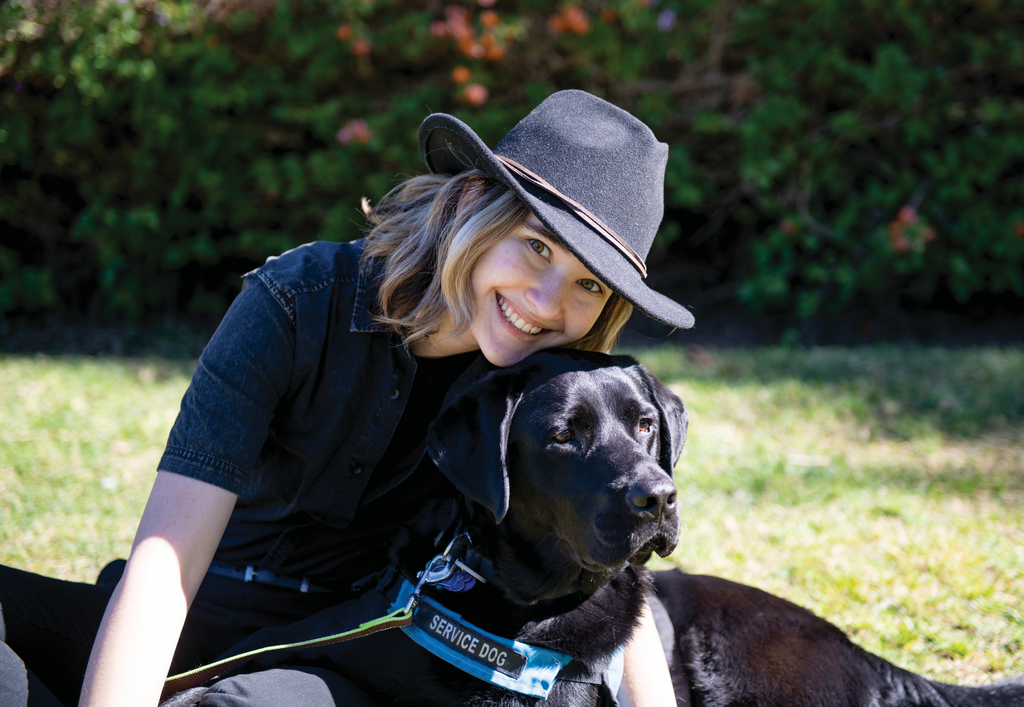
But for third-year education and social transformation and psychology student Kat Sharp, navigating campus with their service dog, a black Labrador named Scooter, has had its share of challenges. Some UCLA faculty and staff have been unaware of Sharp’s rights as a service-dog owner, they said.
During their freshman year, Sharp worked at the admissions department of the UCLA Anderson School of Management. When Sharp informed their supervisors about Scooter, Sharp said their workplace did not welcome him because another employee was allergic to dogs.
When Sharp pressed the issue with supervisors and human resources, Sharp said they felt they did not receive adequate help and eventually gave up following conversation after conversation with higher-ups.
“It just seemed like a losing battle,” Sharp said. “I didn’t have the time, energy or money to pursue it and also don’t have the resources now.”
According to an emailed statement from UCLA Environment, Health and Safety, individuals should be mindful of potential hazards their service animal may pose to others and that accommodations can be made for employees who have an allergic reaction to a service dog.
Sharp said the incident at the management school was not the only time Scooter’s presence was unwelcome on campus.
While Sharp was studying for finals at a UCLA library last quarter, they said an employee asked to see Scooter’s identification card. According to the Americans with Disabilities Act, however, service animal owners are not required to provide any form of identification for their animals. Upon hearing a group of employees discuss what to do when Sharp said they did not need to show an ID, Sharp printed out the specific ADA guidelines on service dog registration and handed it to the employee. Another library employee later admitted that they had received no training on how to address visitors with service dogs, Sharp said.
“It is really uncomfortable when you’re hanging out with your friends and someone asks what disability you have or why you need (a service dog),” Sharp said.
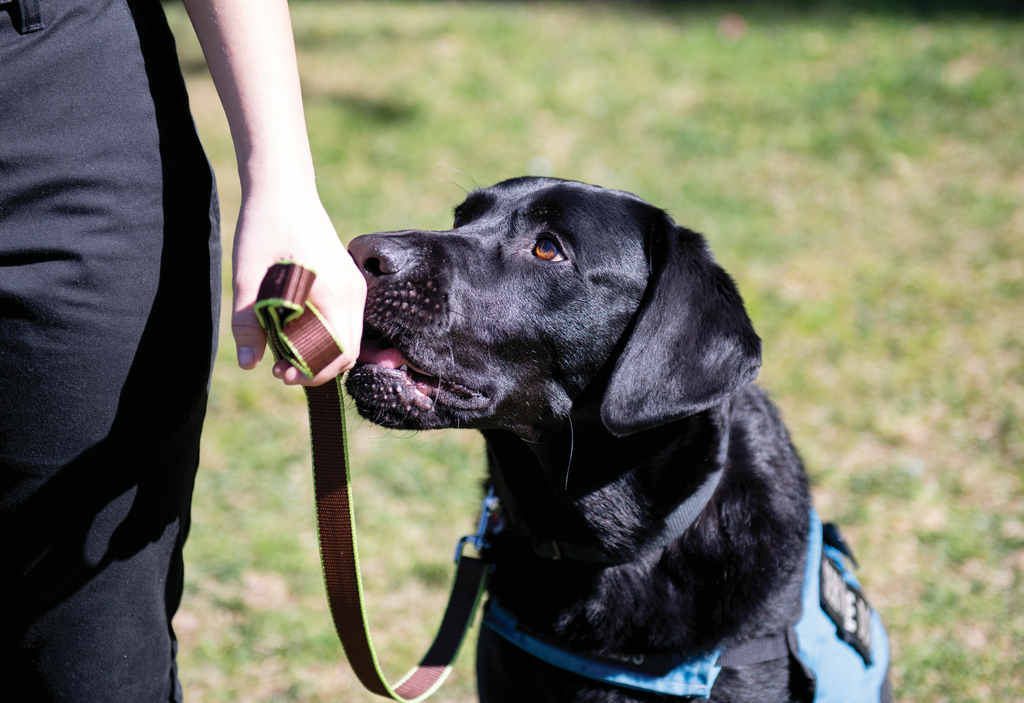
They added that such instances reflect the general lack of knowledge many people have about communicating with people who use service animals.
“It was not their fault per se,” Sharp said. “(The employees) were just ignorant, and in my opinion, that ignorance falls on UCLA.”
In response to this incident, UCLA spokesperson Katherine Alvarado said in an emailed statement that students should contact the CAE as soon as possible if they encounter any obstacles with their service dogs while on campus.
Sharp pointed to a lack of staff and faculty training at UCLA on proper conduct when interacting with service dogs and their owners.
The UCLA Committee on Disability, an advisory committee to Chancellor Gene Block, planned to implement a training module on disabilities for staff, faculty and students before the COVID-19 pandemic caused the committee to shift their focus to online instruction, said Laura Sencion-Mendoza, an academic counselor for the Academic Advancement Program who currently serves as the committee’s chair.
While there have been no updates on the training module, Sharp is still navigating day-to-day life with Scooter by their side. His presence benefits Sharp in ways people may not notice at first glance.
Not long ago, Sharp had a panic attack while walking home through Westwood to their apartment. They were sitting on the sidewalk overwhelmed and unable to move, they said. In order to calm Sharp, Scooter walked in a circle around them and put pressure on their chest until they could stand up. He guided Sharp back home, allowing them to keep their eyes closed so they did not have to take in additional stimulation.
“If I don’t have him with me and a situation comes up where I would need him, then (it can be) dangerous,” Sharp said. “He never causes an issue in my life, so I don’t see why I wouldn’t have him when all he does is help.”
Aside from dealing with uninformed staff, students with service animals have faced confusion about whether they need to register their animals with the CAE.
Both Liu and Sharp believed they were required to register their dogs even though there is no such rule. While the CAE housing accommodations application process webpage mentions that registering a service dog is optional though encouraged, this is not stated on the housing accommodations request form.
Although registration is voluntary, students who do so gain access to the CAE’s disability specialists, who can provide resources based on someone’s disability and advocate for accomodations, Kehdi said. But Sharp said they had difficulty connecting with a disability specialist.
“Interacting with CAE is a horrible experience,” Sharp said. “It’s incredibly hard to get a meeting with your disability specialist. I’ve met with mine a total of two times.”
Concerns about the CAE among the student body have led to recent protests by the Disabled Student Union, which has highlighted accessibility issues on campus. Members have sought to fill the ADA compliance officer position, which works with Student Affairs and the Office of Equity, Diversity and Inclusion to ensure campus policies fall in line with ADA guidelines. Vice Chancellor of Student Affairs Monroe Gorden Jr. is currently responsible for the job until the university finds a more permanent officer. Sharp learned about this vacancy last quarter after searching for resources to resolve an issue regarding discrimination from a professor. UCLA has since promised to hire a new ADA compliance officer.
While Liu did not mention trouble contacting disability specialists, she has faced challenges when maneuvering through crowded classrooms and dining facilities, requiring her to plan ahead of time how to best keep Coby and herself safe.
Recently, Liu said she was denied entry into Bruin Plate after an employee informed her of a supposed new rule that prohibits service dogs from entering the dining halls. A second employee, whom Liu said she believed to be a supervisor, came over and repeated the message.
In a joint statement, UCLA Housing and the CAE said service dogs are allowed to enter dining halls as long as the animal is under the control of their owner. Liu has since received an email from her disability specialist that this issue has been addressed with UCLA Dining Services.
Sharp said the university should be more aware of the needs of students with service dogs. On top of adequate training for university employees, they said administration could better address the everyday needs of people with service dogs by making small changes to campus facilities.
Creating more automatic doors could be beneficial for people juggling dog leashes and books, and designating more places on the Hill for service animals to use the bathroom would make UCLA’s residential spaces more accommodating, Sharp said.
Ultimately, there is still work to be done, they said, in order to make UCLA more accessible to students with service animals.
“I don’t feel like UCLA pays attention to it enough because there’s not enough people with service dogs here,” Sharp said. “Why aren’t there? Maybe it’s because it’s so damn hard to have one here.”