
Wiliam Andrews Clark was a cheater.
An industrialist in the late 19th century, Clark became known across the United States because of an election scandal. After securing a seat in the 1899 U.S. Senate, a Senate committee determined that he had bribed Montana state officials to get elected, declaring his election void.
Clark’s career and political aspirations survived the scandal – he would earn a legitimate Senate seat just two years later. But some of Clark’s contemporaries held him in contempt long after the incident.
“(Clark) is as rotten a human being as can be found anywhere under the flag; he is a shame to the American nation,” author Mark Twain wrote in a 1907 essay. “To my mind he is the most disgusting creature that the republic has produced.”
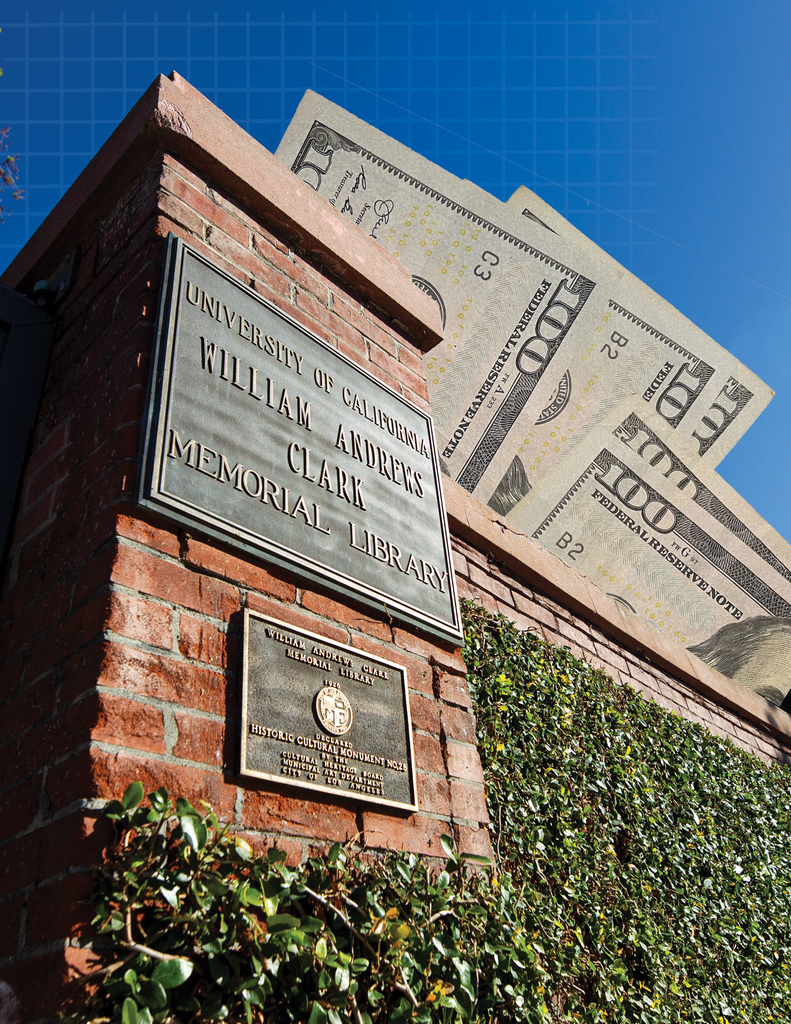
UCLA has a building named after this man – the William Andrews Clark Memorial Library.
Clark’s son built the library in Los Angeles’ West Adams neighborhood in 1926, deciding to name the building after his father. The library was acquired by the University of California in 1934 as per an agreement with Clark’s son. To this day, the library continues to memorialize the senator.
But does UCLA have a responsibility to rename a building that preserves such a legacy?
Over the past few years, the campus community has become part of a larger national movement to rename buildings honoring contentious historical figures. While renaming efforts already existed for decades, Americans renamed hundreds of buildings across the U.S. as a direct result of the surge of activism after the murder of George Floyd in May 2020.
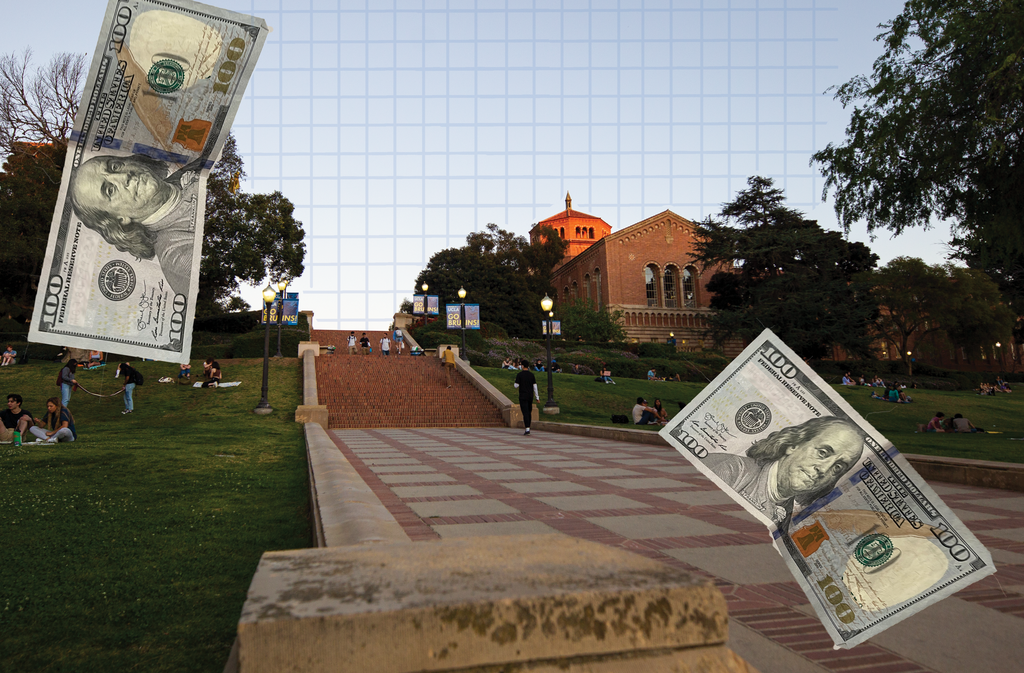
Students involved UCLA in this historical reckoning when a petition to rename Janss Steps gained over 2,000 signatures in July 2020. Activists argued that the Janss brothers, memorialized by the stairway, practiced racial discrimination as they developed Westwood with their real estate business. By late July 2020, the Undergraduate Students Association Council created a resolution to rename the stairway “Tongva Steps” and later revised it to “Kuruvungna Steps,” in honor of LA’s Indigenous population.
“More and more Americans are looking around their cities, their campuses and their environments, and they’re realizing that the people who are enshrined in these monuments do not necessarily reflect the diversity of the society that they live in,” said Eric Avila, a history, urban planning and Chicana/o and Central American studies professor.
Chancellor Gene Block commissioned the Campus Honorary Naming Advisory Committee in September 2020, announcing it as part of UCLA’s response to the influence of social justice movements during the summer. The policies created by the new committee, comprised of UCLA faculty, students and administrators, would ensure that building names on campus reflected the values and diversity of the university, Block said in a 2020 statement.
According to UCLA Policy 112, the UCLA chancellor and UC president have ultimate authority over any building name on campus, and UCLA administrators can rescind any name if it could compromise public trust or the university’s reputation.
So should UCLA use this authority to rename buildings honoring controversial historical figures?
One building community members have pushed to rename is the Ronald Reagan UCLA Medical Center. The former UCLA Medical Center adopted this name in 2000, after a $150 million donation from the politician’s friends and supporters – the largest the university had ever seen.
The decision was controversial when it was announced. Some critics highlighted Reagan’s policies attacking federal funding for health care. Others discussed the HIV/AIDS epidemic, which Reagan did not publicly recognize until 1985, four years after health officials became aware of the virus and at least 12,000 patients were killed.
Contemporary opponents of the name, including the Pediatric AIDS Coalition at UCLA, use many of these same arguments.
“The renaming of Reagan hospital at UCLA, which is an entity meant to save lives, is long overdue,” the coalition said in an emailed statement. “Reagan did not act to save lives during his presidency, instead he watched while people died and neglected to lift a finger as more lives were lost.”
Alonso Bautista, a local licensed therapist with expertise in HIV care, said he agrees with these students’ sentiments. In his formative years as a young gay man, he feared his own sexuality because of the heated discourse surrounding the HIV/AIDS crisis, Bautista said. He said he saw the Reagan administration’s inaction as a demonstration of how little it cared about him.
“It’s an ongoing erasure and silencing of a community,” Bautista said. “When I think of this type of silence, I think of it as being a violent attack against a community.”
The $150 million donation does not justify the memorialization of Reagan, Bautista said. If anything, the donation represents how wealthy benefactors are buying silence on these issues, celebrating Reagan without acknowledging his unfavorable actions, he added.
But Albert Carnesale, the former UCLA chancellor who oversaw the renaming of the hospital, said the decision was not political. Reagan was a successful public servant, Carnesale added, earning two terms as governor and two as president.
“People disagreed with some of his policies, that’s for sure – including some of the people that made the decision to name the hospital after him – but simply disagreeing with some of his policies was not adequate reason by itself,” Carnesale said. “A very popular and successful president did not at all seem inappropriate.”

However, Carnesale said UCLA would not name a building after just anyone who put forth money.
“If somebody wanted to name the political science department after Adolf Hitler and offered you $200 million to do that, the answer would be no,” Carnesale said. “A gift alone does not make for naming – you have to be happy with naming it after that person.”
The medical center underwent the same processes used for any other name associated with a gift, Carnesale said. Shortly after, the university named its medical school after David Geffen, a film executive and Democrat who was openly gay, he added.
Carnesale spent almost a decade approving building names as UCLA chancellor – his tenure would eventually earn him a building of his own. UCLA named Carnesale Commons in honor of Carnesale and his wife Robin Carnesale in 2013. But the naming was not without controversy. Members of the Afrikan Student Union held a protest objecting to the naming on the same day as the dedication ceremony, highlighting Carnesale’s alleged opposition to affirmative action.
Some UCLA history faculty share students’ misgivings about naming. But these historians believe the issue is indicative of larger societal trends, far removed from the decisions of any given administrator.
History professor Robin D.G. Kelley said he acknowledges that public universities are reliant on donors as a source of revenue and have grown even more so as public funding has decreased.
“For these public institutions to exist, they need private money,” Kelley said. “It’s the need for private money, the need for additional funds, that has opened the door for anyone willing to donate or any corporation to put their name on (a building) as a kind of advertising.”
Where public buildings once honored Founding Fathers such as George Washington, Thomas Jefferson or Alexander Hamilton, they now honor donors like Geffen, Kelley said. Private individuals – “big money,” as Kelley calls them – are a growing presence on university campuses, he added.
The university’s faculty appreciates the financial support this philanthropy provides, and donors’ desires to be recognized are understandable, said Tobias Higbie, a professor of history and labor studies. However, the community should be questioning whether this donor influence over naming is always positive, Higbie said. Naming is inherently political because the names chosen for UCLA’s campus help illuminate the values of the university, and granting donors these naming opportunities gives them political influence, he added.
So what about the aforementioned Clark Library, donated to the university and memorializing a politician?
The library is aware of Clark’s controversial legacy, including his election scandal, Clark library staff said in an emailed statement.
The scandal was just one contentious element of Clark’s legacy, Clark Library staff said. When he was 62, Clark’s second marriage to a 23-year-old woman was heavily publicized by contemporary newspapers, library director Bronwen Wilson said. Additionally, Clark’s mining practices contributed to the environmental degradation of the Western U.S., archive librarian Rebecca Fenning Marshall said.
But when library staff were asked about whether a UCLA building should honor someone like Clark, they said that the Campus Honorary Naming Advisory Committee would be better equipped to answer the question.
The committee is currently developing guidelines to evaluate honorific names on campus and determine whether those namesakes represent UCLA’s values, said Vice Chancellor for Strategic Communications Mary Osako, who is also chair of the Campus Honorary Naming Advisory Committee, in an emailed statement. The committee expects to share progress on these guidelines, as well as naming policies for new buildings in the spring.
Community members should have some influence over the naming process, Kelley and Higbie said. If that were the case, then building names on campus might look quite different.
“If students and activists and faculty are the ones deciding on what to name a building, they’re not going to go for the donor,” Kelley said. “(Students) are thinking more symbolically.”
Recommendations for new names from students often seek to represent overlooked groups. The PAC at UCLA said it recommends renaming the medical center after Henrietta Lacks, a Black woman whose cells were used in scientific research for decades without consent or compensation.
The Campus Honorary Naming Advisory Committee is striving to incorporate student input, holding eight hearing sessions with faculty, students and other members of the community throughout 2021, Osako said. The released policies will draw from this community guidance, Osako added.
The university should strive to contextualize the controversial legacies presented on campus, Higbie said. Using the campus’ public spaces to educate visitors about the university’s history through the use of plaques and other markers would be a welcome change, he added.
The desires of historians to see monuments and building names changed are not an attempt to erase history, Kelley said. The history surrounding the honored individual needs to be explored.
“It’s not about eliminating and making a nice history,” he said. “It’s about really understanding our past, our present and our future.”