
Entering the Ahmanson-Murphy Reading Room is like entering another world.
Most of the Charles E. Young Research Library is brightly lit by fluorescent bulbs. Clusters of students hunch in front of their laptop screens to work through endless hours of lectures and quizzes. Wired chargers crisscross over tables and the well-worn floors. Even in the quiet of the first-floor study pods, students whisper to one another while study groups occasionally erupt in bursts of laughter.
But past a pair of glass doors in the basement of YRL, the lighting dims, the hum of quiet chatter falls away, and rows upon rows of antique books line the shelves. The Ahmanson-Murphy Reading Room currently presents weathered but immaculately polished antique children’s books within locked bookshelves. Just beyond the receptionist desk – and a printing press chained to the ground – researchers from across the globe pore over centuries-old manuscripts.
Most students are unaware that special collections spaces, such as the reading room, exist across UCLA’s campus, providing unique research and learning opportunities to anyone who walks through their doors. Archival librarians are working to raise awareness for these spaces and recenter UCLA’s archives around the communities the collections serve.
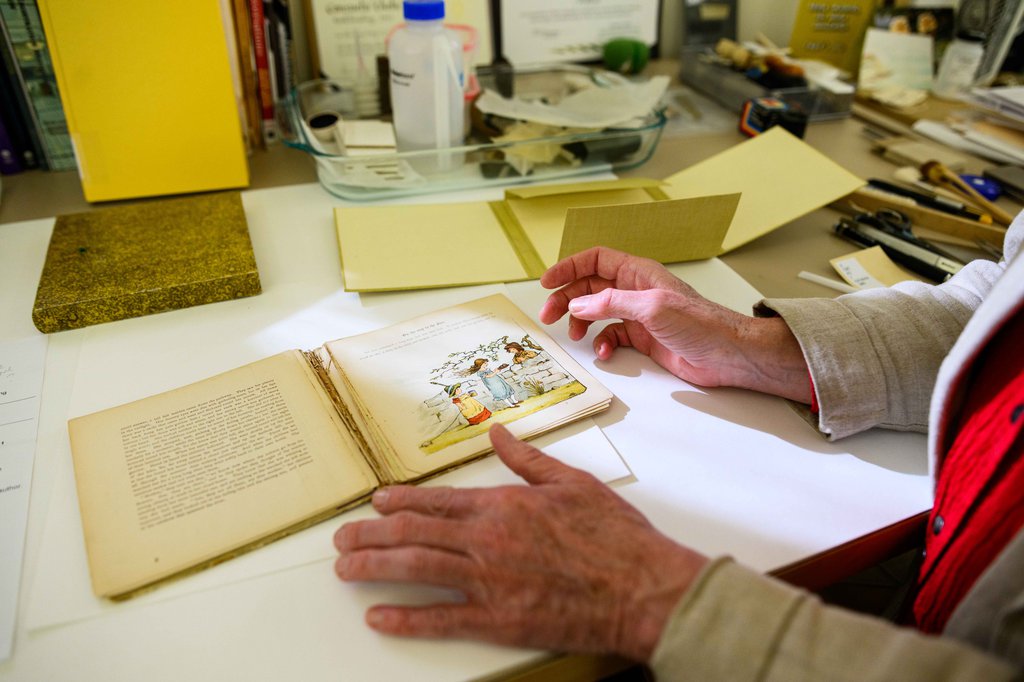
The UCLA Library Special Collections opened in the early 1950s and collects a wide variety of primary source materials, including rare books, photographs, digital files, audiovisual materials and oral histories. Although the collections are open to the public, none of the items can be checked out. Instead, visitors must submit a request to view items through the library website and then physically come to the reading room.
Today, LSC cares for around 18 million items, frequently loaning out its precious materials to leading museums. LSC’s staff see the stewardship of these items as part of UCLA’s duty to serve the community and preserve world cultures.
"We have a beautiful Armenian manuscript from 1300, ... and it needs, for its health, a new binding," said Consuela Metzger, who is the head of the UCLA Library Preservation & Conservation department. "The traditions of a binding for a gospel book – it’s not a dead tradition. It’s a living tradition, it’s still part of a culture. It’s not some arcane thing that nobody cares about."
However, few undergraduate Bruins seem to know about the collections.
According to Courtney "Jet" Jacobs, who is the head of public services, outreach and community engagement at LSC, students often don’t know there is a special collection on campus.
"It’s really kind of damning when you run into students on the quad, and they’re just like, ‘I didn’t even know we have a special collection,’" Jacobs said. "It doesn’t feel that great when you’re talking to a member of a community and they didn’t know that you steward the papers that document their experiences."
Jacobs said students frequently benefit from the LSC. Whether students are attending historic film screenings, participating in classroom activities based on collections materials, or stopping by a table on the quad handing out vintage buttons, the LSC’s influence on undergraduate student life is often hidden in plain sight.
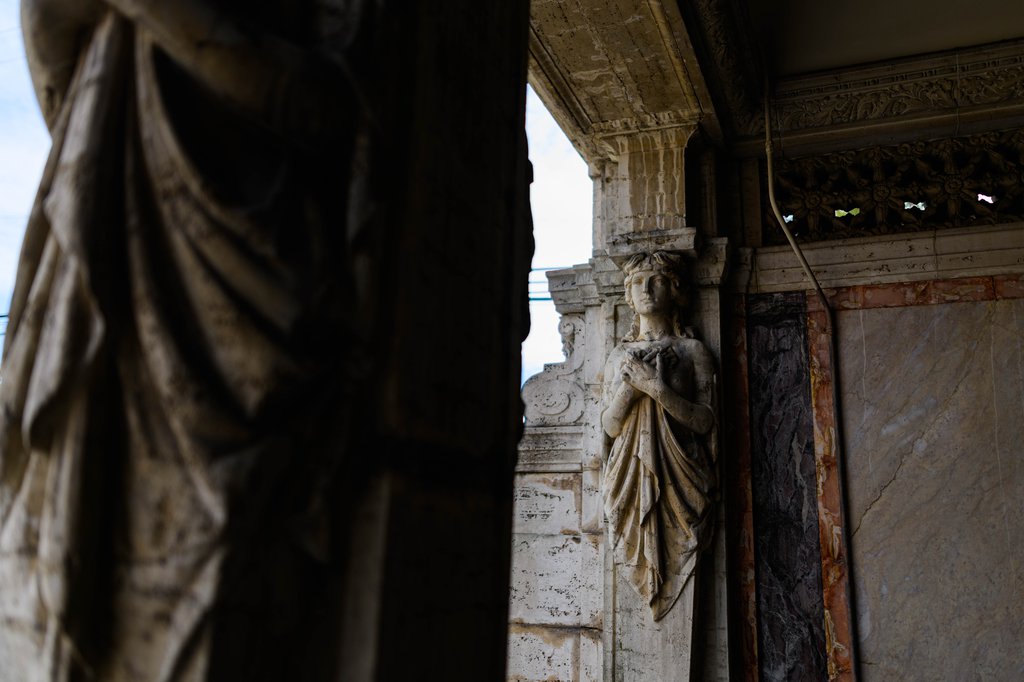
Third-year history student Stephanie Zager, who has been working at LSC since October 2022, said this lack of recognition comes from a perceived barrier to access.
"It is perceived as a private thing for researchers and professionals and grad students," Zager said.
Zager added that the process for requesting materials may limit engagement with the archives. She suggested that if the libraries could make more videos explaining how to request materials or simply get the word out about how easy it is to access special collections, people’s perceptions would change.
"A lot of people just want a quick Google search and call it a day," Zager said. "But there are beautiful books here. There are beautiful photographs and posters and just so many things that you can’t get on a Google search."
According to Kelly Besser, an archivist at LSC, the idea that UCLA’s archives are exclusive comes from the historical reality of archives as elitist spaces. In the last five to 10 years, the LSC’s and UCLA William Andrews Clark Memorial Library’s staff have begun to screen the new additions to their collections to ensure that they continue to reflect the diversity of LA.
Besser said that these efforts seek to bridge the divide between perceived academic elitism and the communities that UCLA serves.
"I think it’s also coming to a moment where … for so many years, archives and archivists have claimed neutrality, and what’s behind that is what Jet was speaking to – is white supremacy and bias," she said. "We’re trying to be more transparent and just real about what we’re collecting and who’s in the archive."
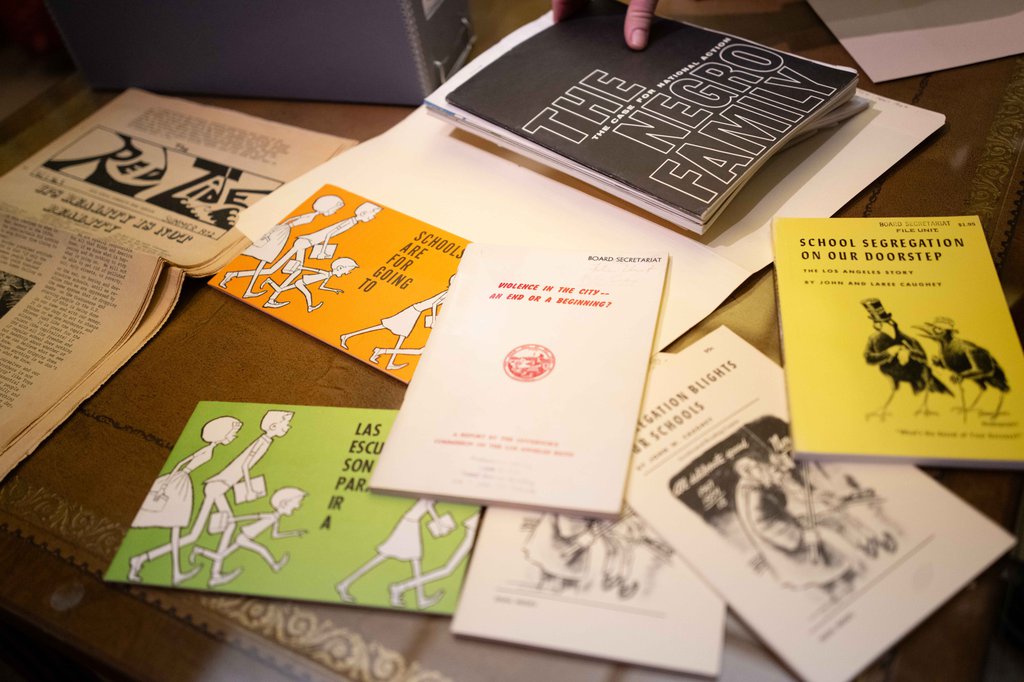
For example, LSC undertook a massive catalog project of the Los Angeles Unified School District’s records that finished in 2011. According to Jacobs, this acquisition demonstrates LSC’s recent emphasis on more community-driven historical records.
This highly used collection allows researchers to understand school segregation in LA and compare it to school segregation that occurred in other states such as Texas, as well as deepen cultural knowledge of the city, Jacobs explained. For instance, Besser noted that these primary documents show the internal departmental process of the Crawford v. Los Angeles Board of Education Supreme Court decision, which found that the LAUSD had not done enough to desegregate.
According to Besser, working with the LA community means changing the kinds of questions archivists consider when determining which cultural artifacts to acquire for collections.
"But also when we’re processing collections, we’re looking at the past, we’re situating ourselves in the present, but then we’re also trying to look to the future to figure out, ‘What do people want? How does this connect throughout time? And what’s going to be of interest?’ And we just have to guess there a little bit," she said.
Zager and Anna Chen, who is the head librarian at the Clark Library, added that LSC must also contend with questions about returning items to communities. Pointing out LSC’s Italian books and 11th-century Islamic manuscripts, Zager wondered if such collections belong in LA. Chen said libraries should consider concerns surrounding the origin of these items.
"Communities have reached out to those libraries and said, ‘I know you have this thing that is important to our culture, and we would like to have it back,’ and it’s important to be open to doing that," Chen said.
While UCLA’s campus houses several special collections, some rare materials are spread throughout communities in LA.
The Clark Library operates its own special collection distinct from the LSC site around 11 miles away from campus. The grounds are quiet and secluded behind tall brick walls. The building, completed in 1926, is ornate and dark. Inside, the walls are covered with paintings of William Andrews Clark Jr.’s former lover and Oscar Wilde.
Just as LSC on campus is working to shift the lens of its collections, the archivists at the Clark Library are taking the same steps. Chen said the archivists are currently purchasing materials written by women writers from the same period as Oscar Wilde and his circle to diversify their collection.
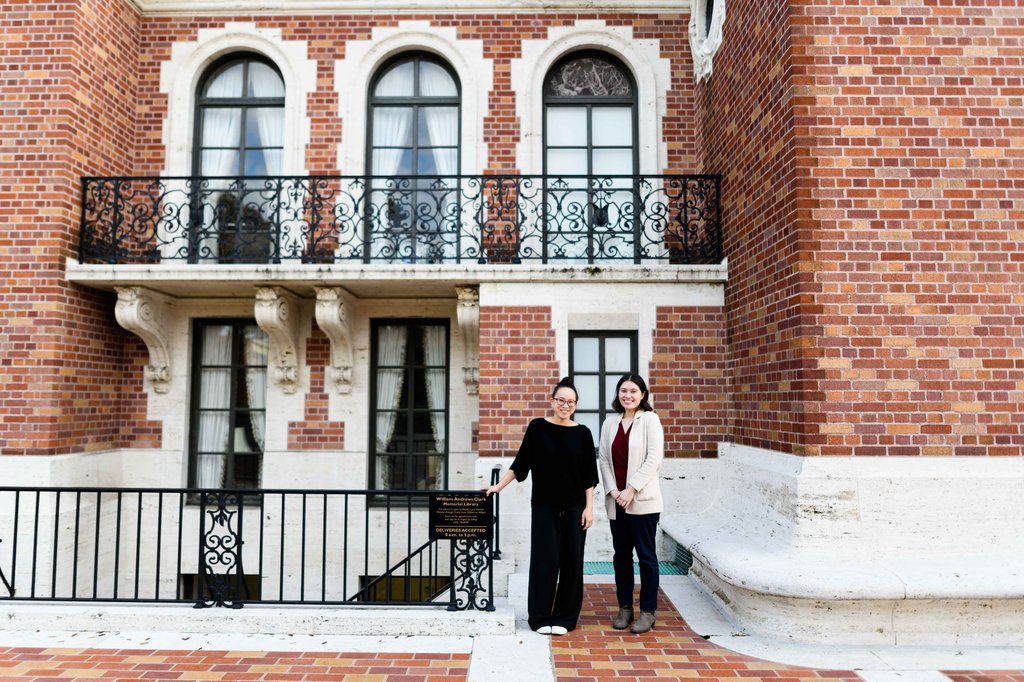
Moreover, because of its location, the Clark Library also faces unique community engagement challenges. While students work a floor above the Ahmanson-Murphy Reading Room, Clark Library is in the middle of a quiet residential neighborhood. Ikumi Crocoll, who is the instruction and engagement librarian at Clark Library, said instead of attracting a steady flow of students, the library’s stickers draw in curious onlookers while the grounds entice local dog walkers.
Crocoll said that students are often unaware of the classes and materials the Clark Library offers students and that the Clark Library can cover rideshare costs from campus. To remedy this issue, Chen said the Clark Library is beginning to recruit a digital collections librarian in the hope that expanding its digital collection will increase its accessibility. Besides digitizing its collection, Clark Library is also looking into collecting digital acquisitions that include items that have never been analog, such as Photoshop files, emails and Microsoft Word documents.
While efforts like the Clark Library’s digitization reflect the modernization of UCLA Special Collections’ services, Jacobs said that the underlying essence of this work is not changing at all.
"You can write a lot of great headlines about the changing nature of the library or the impending death of the library or the death of the book or whatever," Jacobs said. "But I just don’t think that a library’s role has ever changed – it’s to provide access to resources."
Metzger explained that LSC is used to adapting to the challenges of archival work.
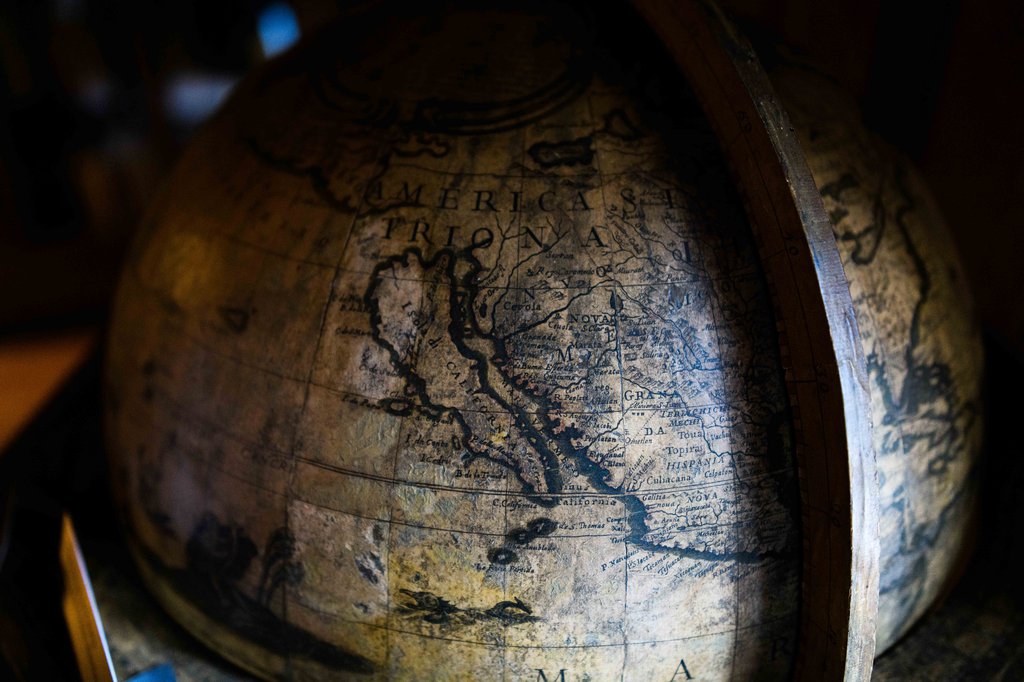
For example, the LSC team is developing solutions to maintain proper preservation conditions in the face of climate change. From keeping the books safe to air-conditioning the servers containing the digital archives, Metzger said LSC is changing with the times.
Throughout these changes, LSC’s librarians remain confident in the strength of what the archives can bring to the UCLA community. Now more than ever, they are inviting the public in.
"We are serving a Los Angeles archive," Besser said. "It’s one that we’re shaping more and more to look like the city and its communities, its cultures, its regions, its everything. We are a city archive that’s accessible to everyone."