
Tanya Ivanova-Sullivan experienced a life-changing redirection.
As a young musician in socialist Bulgaria, Ivanova-Sullivan aspired to be a professional musician. She applied to a highly competitive music conservatory in the country, with no interest in any other programs. But when she was rejected, she was forced to reevaluate.
While reflecting on her passion for translated American literature, she was reminded of her lifelong fascination with the world beyond the Soviet Bloc. After another rejection from Sofia University’s English department spurred further reevaluation, she was left with another choice: Bulgarian philology. She began her academic pursuits in Bulgaria, studying in the United States for her doctorate degree before eventually arriving at UCLA in 2023.
Now an associate professor in UCLA’s Department of Slavic, East European and Eurasian Languages and Cultures, Ivanova-Sullivan has not come to regret this path, sharing her linguistic passions with eager students.
"You have to be able to infect the young people with your passion, otherwise this thing is going to die with you," Ivanova-Sullivan said. "I'm so glad that I have a chance here at UCLA … to work with graduate students, because that’s the next generation who is going to continue exploring those topics that I’m interested in."
According to a 2023 Modern Language Association report, enrollments in languages other than English fell nearly 17% in institutions of higher learning across the United States between 2016 and 2021. The same reports found that this is far from the case at UCLA, where language programs are not only seeing high levels of interest from students, but are standing out in ways beyond enrollment trends – bolstered by the people who comprise them.
As language departments nationwide become sparser and less populated, the programs, people and philosophies of the Department of SEEELC stand out as a bright spot, showcasing a commitment to language instruction and cultural history. But amid geopolitical events reshaping their priorities, professors and students are adapting, fostering a more inclusive community in the evolving landscape of language and historical study.
Founded in 1948, the Department of SEEELC is one of the oldest Slavic departments in the country, offering instruction in seven languages from across Eastern Europe and Central Asia – Bosnian/Serbian/Croatian, Czech, Hungarian, Polish, Romanian, Russian and Ukrainian.
Many of the people behind the program hail from these regions, growing up in the Soviet Union or Eastern Bloc under socialist regimes. For many of them, not only is getting to explore their lifelong passions in the United States a rewarding experience, but teaching them is as well.
"The composition of our faculty is also unique, because we have specialists in every single field of Slavic studies," said Ivanova-Sullivan. "We have cinema, we have literature, culture, linguistics, pedagogy, everything your heart desires. And it's not just Russian, it's Slavic and Eastern European."

Senior lecturer Susan Kresin described how the SEEELC’s Russian for Russians program focuses primarily on career enhancement – a unique emphasis compared to other programs in the country. She said the support of Californinia’s strong heritage-speaking communities have empowered the program to provide high-level curricula, equipping students with professional-level language skills for future success.
Heritage students have the opportunity to work with tutors and specialists every week, as well as participate in departmental cultural events and activities. The department also provides opportunities for specialized study of Czech heritage, Kresin added – a language taught infrequently in Slavic departments nationwide.
"I have students consult with their families what they and their families want them to learn more about, whether it's writers or hockey players or musicians, whatever it might be that they themselves want to discover as part of their identity," Kresin said.
2023 graduate Elyse Ostroske said that her Polish heritage and interest and language learning inspired her to enroll in courses through the Department of SEEELC. Given the prominence of the Russian language in historical scientific developments, such as the creation of the periodic table, the microbiology, immunology and molecular genetics graduate found that her time studying Russian at UCLA has benefitted her career as a scientist.
"I think Russian language is oftentimes associated with current international relations and tensions with Russia," said Kurtis Yan, a political science and Russian studies alumnus. "But I think that having a connection to these other states as well has been an ... unexpected development throughout my time studying Russian, and so I've definitely found value in that."
After enrolling in First-Year Russian, Ostroske learned of a cornerstone of the Department of SEEELC: the Russian Flagship Program. A national, federally funded program by The Language Flagship initiative, the program provides university students studying Russian language with the opportunity to participate in a capstone year abroad in a Russian-speaking country, currently Kazakhstan.
Many students find community in the small, tight-knit cohorts developed over the multi-year Russian sequences at UCLA, explained Yan.
"I do think that a lot of the friends I made were people who were in the Russian department and people who did do Flagship or who are interested in Flagship," he said. "I think that that was something nice about it, was that there was a great sense of community within Russian for Russian students."
Now a graduate student at Georgetown University’s Walsh School of Foreign Service, Yan is honing his focus on Central Asian regions within international relations. His experience abroad in Kazakhstan significantly influenced his academic focus, strengthened by his advanced knowledge of Russian language and culture, he said.
He developed these Russian skills through instruction, but also his experiences around the city of Almaty, Kazakhstan with the cohort and Kazakhstani locals.
"We found this group to play basketball with weekly, and it was really fun," Yan said. "I felt like one of the best ways to learn the language was to kind of just do what you would want to do, and then you'd find ways to interact with Russian speakers, inherently in that regard.
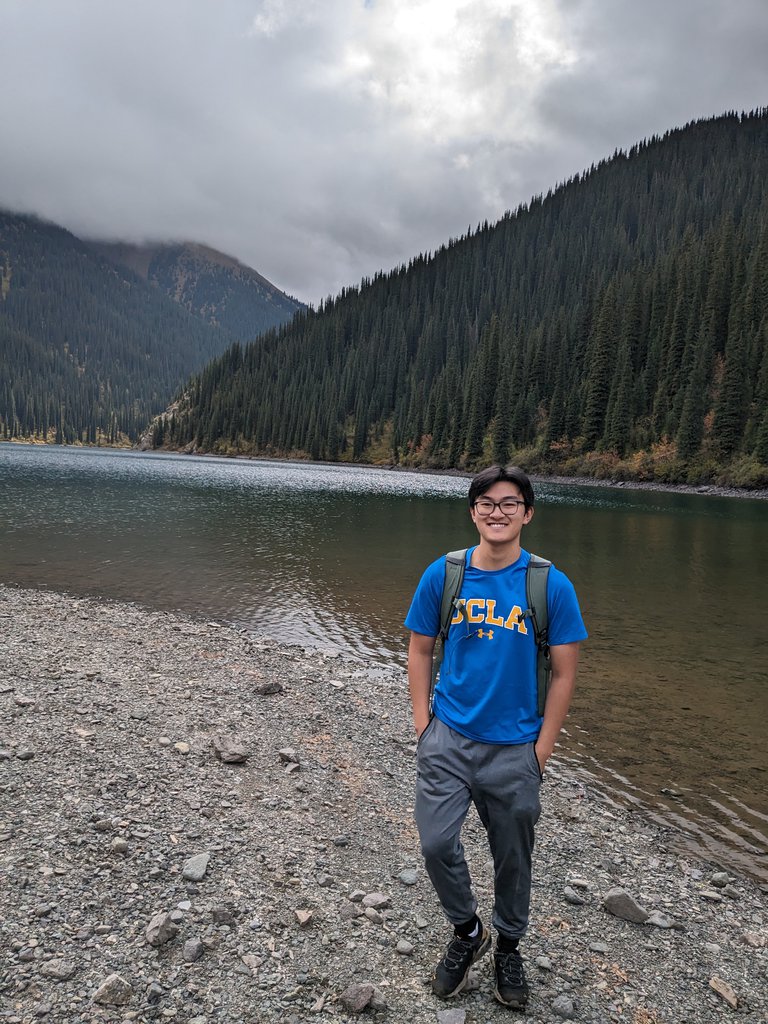
During the capstone year, Flagship Program students undertake a local internship in addition to their classes every day. For her internship in Kazakhstan, Ostroske chose to conduct research in her local university’s molecular genetics lab, where she had the opportunity to work on bacteriophage research abandoned by Western countries yet continued by former Soviet states.
"That information is locked, like a kind of language barrier, because most of it is old and hasn't been translated, but with the growing rise of antimicrobial resistance, phage therapy ... has really come back into scientists minds and where they see the future of science going."
However, unlike many past cohorts in the Flagship Program, Yan and Ostroske navigated their experience studying in Kazakhstan amid heightened geopolitical tensions. After the 2014 Russian annexation of Crimea, the Flagship Program halted trips to original host St. Petersburg and began sending students to Almaty within a matter of months, Kresin said.
Given that the decision was a quick one, it also came with novel cultural differences felt by Flagship students, she noted.
"After the annexation of Crimea, people were finding some limitations in internships, for example, in Petersburg," Kresin explained. "The reluctance to work with Americans that we were starting to find in the 2010s doesn't seem to exist in Kazakhstan. It's a country where Russian is willingly spoken, and where Americans are well received."
This decision exemplifies how politics, language and cultural education can greatly inform each other, a relationship that the Department of SEEELC emphasizes, said associate professor Vadim Shneyder. Against the backdrop of the current and historical Russian invasions, staying dedicated to fighting particular cultural narratives and expanding the topical course offerings of the department has become a critical priority, he said.
"One of our jobs as instructors is to complicate that, to show all the ways that cultural heritage does not lend itself to any kind of smooth, coherent story, and certainly not one that glorifies a particular state or a particular national narrative," he said. "So in that sense, our cultural education that we provide is very closely connected to political concerns."
Department chair and professor Igor Pilshchikov said the department has also strived to reduce the common gap within American universities between language study and cultural study. By using language instruction to understand primary texts in other languages, students in the department are better able to apply these skills in allied fields.
"When we talk about, say, poetry, which plays with nuances of being in rhymes, with paradigms, any translation will be just another poem which is a little bit similar to the original, but it's not the same poem," Pilshchikov explained. "It means that you cannot study it in translation. There are many other things that you would rather study, knowing the language of expression."
Recent political conflicts in Eastern Europe have also furthered a decentering from Russian language and culture in the department, Pilshchikov added. Historically, the department followed national trends among Slavic departments in which Russian was the primary focus of instruction, with other languages being satellites, he said. In wake of the current invasion of Ukraine, the department is striving to move away from this emphasis, resurrecting the instruction of languages like Ukrainian and Polish, he noted.
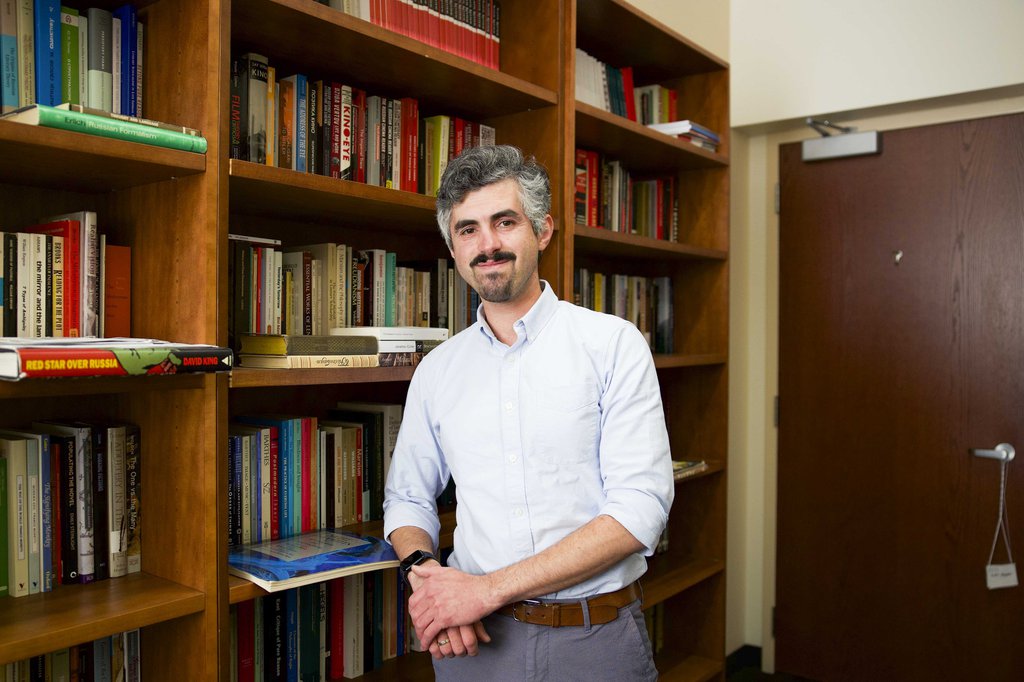
For Kresin, the current invasion has only enhanced her sense of importance of the department’s work. In Spring 2024, she taught a general education course on exploring Slavic, East European and Central Asian cultures through film. Kresin said that the emphasis she placed on divorcing eager students from their preconceived notions of Eastern Europe through the introduction of unencountered narratives remains a source of inspiration in her teaching.
"How do I open that door for students ... helping them explore their own identities, choosing films that will connect each week to a different country?" she said. "It has to be compelling, because that's that country's moment in the sun, right? So that enhanced sense of responsibility is daunting sometimes. But, it's also inspiring."
These trends in identity extend to burgeoning interests in departmental language and topical courses, Kresin said. While many students gravitate towards obtaining language minors in the department for their professional benefits, many students are instead interested in exploring their identity through the vector of language, Kresin noted – an interest the department is well equipped to satisfy.
This heightened interest in language and culture study within the SEEELC underscores an essential insight into not only why the UCLA community is so involved in learning language, but what they hope to glean from it: a way of understanding the world around them.
"What an education in our subjects, I think, helps people do is become more critical participants in the public discourse and the political process in the United States itself," Shneyder said. "For all of the students who take our courses, ... my hope is that they come away with a more nuanced, more complicated and a more humane understanding of the region and what’s happening in it."