
Balmy barroom concerts, nippy sidewalk busks, steady session work, topping jazz competitions, contracting with Blue Note, touring with Wynton Marsalis – what, exactly, makes for a life in jazz today?
For many of the most talented jazz musicians in the world, the Herbie Hancock Institute of Jazz Performance at UCLA offers something close to a daydream: two years, tuition-free, nothing but jazz.
"Their situation is rather unique. I don't know of another master’s jazz program where you get paid to go," said Salim Washington, professor and chair of the global jazz studies program. "Another thing is they're really a band. They're not a school in the traditional sense. They are a band. They work, they go out and they play."
The Thelonious Monk Institute of Jazz was founded as a nonprofit in 1986 and had, since 1995, partnered with a university to house a master of music program. The program graduated its 14th class of jazz musicians in June. Before UCLA, the institute’s graduate program was carouseled through the New England Conservatory, University of Southern California and Loyola University New Orleans.
In 2019, the organization was renamed to the Herbie Hancock Institute of Jazz, honoring the pianist’s longstanding commitment to jazz education and his role as the institute's chairman. Hancock's vision for the program underscores the importance of passing on the processes and traditions of jazz to new generations, said Daniel Seeff, the institute’s West Coast director.
The instructional format of the Institute of Jazz Performance models the improvisational nature of the music. Canadian drummer Anthony Fung graduated from the program in 2018. Fung, who is currently on tour with his jazz quartet, said he still performs original compositions he wrote under his institute mentors.
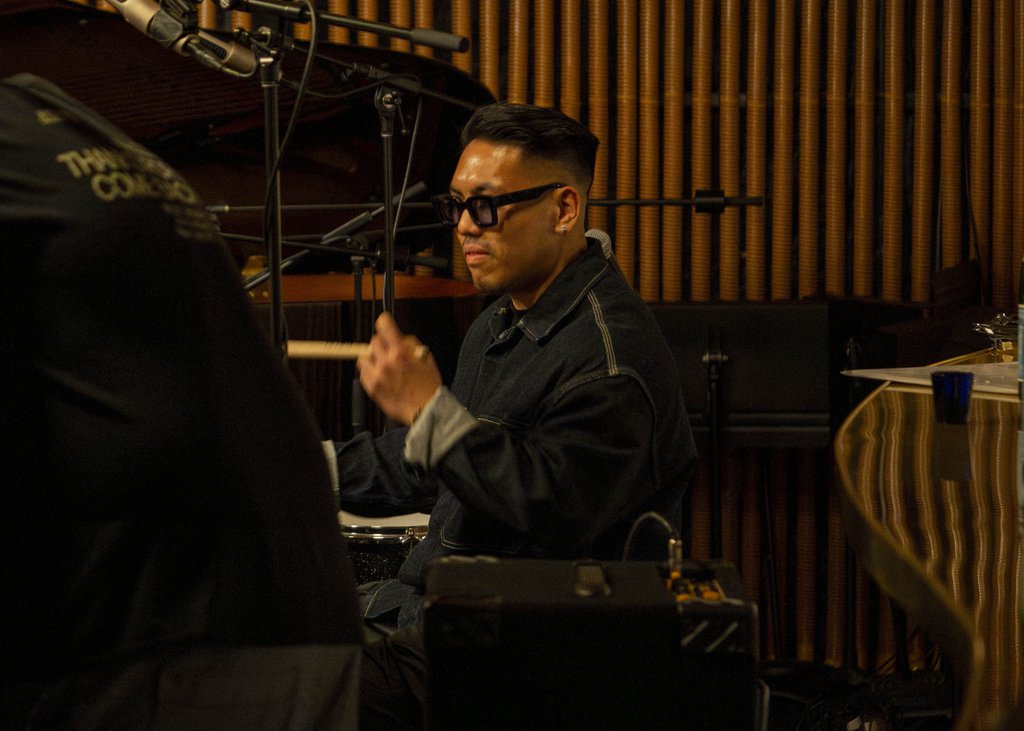
"I remember studying with Billy Childs," Fung said. "He'll be like, ‘Here's four notes on the whiteboard – compose a song with these four notes.’ ... Everybody write a ... eight-bar melody. Then, after about five minutes, ‘Now, pass that sheet around to the next person. Now you write the chords.’"
Much of the program’s curriculum consists of instruction of this kind – spontaneous, collective exercises. In addition, institute fellows receive private lessons on a monthly basis from jazz luminaries, who are brought in for up to a week to serve as artists in residence.
"These are the architects and creators of jazz," Seeff said. "The students of the program have grown up listening to them."
A small list of decorated jazz musicians form the instructional coterie of the institute. Vocalist Dianne Reeves, pianist-composer Danilo Pérez and guitarist-composer John Scofield are occasional instructors. Jimmy Heath and Wayne Shorter, monumental figures of 20th-century and modern jazz, were longtime teachers until their deaths in 2020 and 2023, respectively. Hancock contributes 14 Grammy awards to this group’s total count of 36.
Supported with the prestige of his mentors, Fung likened his institute credentials to being "put on a pedestal."
"It definitely gave me a head start," he said. "While I was a student at UCLA, I was playing gigs outside already. And people know, ‘Oh, this is the Monk guy.’"
Admission into the Institute of Jazz Performance is not easy. A new crop of musicians is auditioned into the institute every two years, based on candidates’ ability to play as a group.
The application process begins with the prospective musician submitting a recording of their primary instrument, which is reviewed by a committee. After the initial screening, applicants – now whittled down from several hundred to about 30 people – are given a repertoire to memorize, flown to the UCLA Herb Alpert School of Music and led into a room before Alpert, Hancock and other faculty. There, they are asked to perform.
"We'll put a group together with seven musicians that includes piano, bass, drums, horns, vocals, guitar, whatever we may have," Seeff said. "They come into the room, and we call one of the tunes – or three of the tunes – from the list that they've memorized. Then, throughout the course of the day, the panel will mix and match the bands."
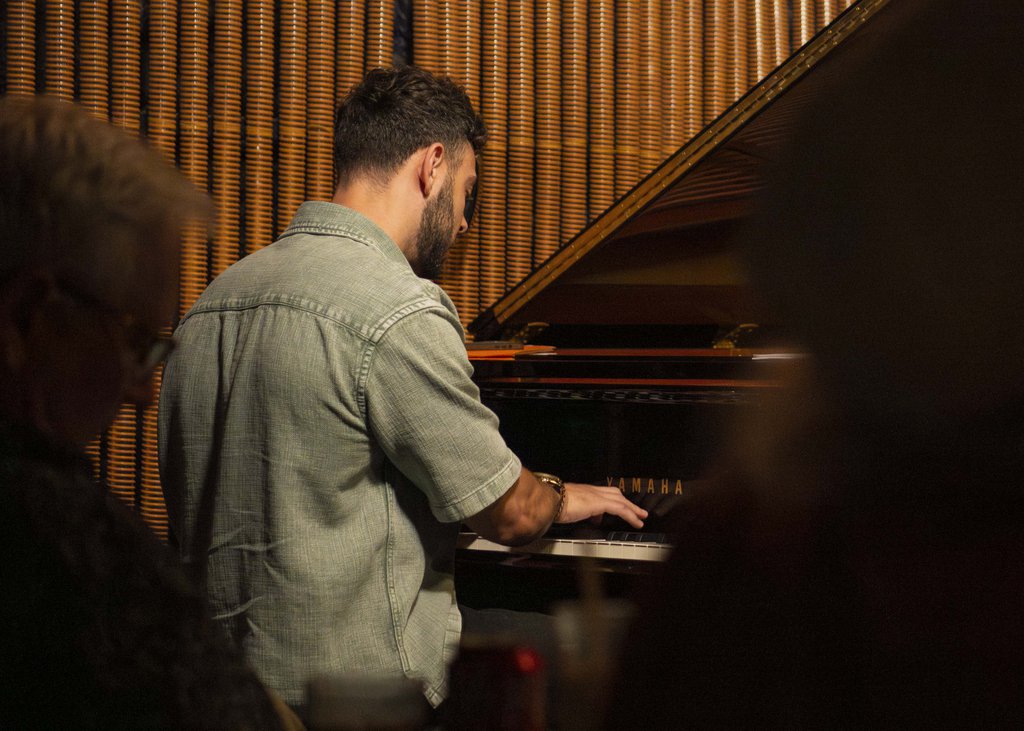
The shuffling of musicians ends when the best group of six to eight is formed.
Revealed in this model of band selection is jazz’s balancing act between the part and the whole. In putting together a band, the drums are no less important and are given the same attention as the saxophone, the piano or the trombone. Each instrument occupies a distinct role in what jazz musicians call in their offhanded, blase idiom, a "tune."
A listener may, when encountering each instrument individually, tell the difference between the rumble of the double-bass and trumpet’s brilliant whine, but, playing together they make one sound.
And sometimes, right in the middle of a tune, somebody will step forward, growing loud while, around them, others retreat to a murmur.
Formal jazz education is really nothing new. In 1957, enthusiasts of the music banded with working musicians to start the first school of jazz in Lenox, Massachusetts. Founded by jazz historian Marshall Stearns and directed by Modern Jazz Quartet pianist John Lewis, the school brought together leading jazz musicians and educators to mentor promising young artists.
"We’re at a funny point in jazz history. It used to be that – to become a jazz musician – you had to be vetted by other jazz musicians," Washington said. "You had to enter into a mentorship-mentee relationship, and then maybe you would join a big band so that you would be with people who play your same instrument."
The rise of college-level programs made it less necessary for those in search of a jazz career to move to a big city.
"If you can find that environment outside of school, then, obviously, you don't need to go to school to play," said Alden Hellmuth, an alto-saxophonist of the most recent institute cohort. "For a lot of people, they don't have access to those environments. They don't live in New York City. They don't have parents that are musicians."
Beyond receiving lessons themselves, the fellows are also encouraged to give private lessons to undergraduate music students.
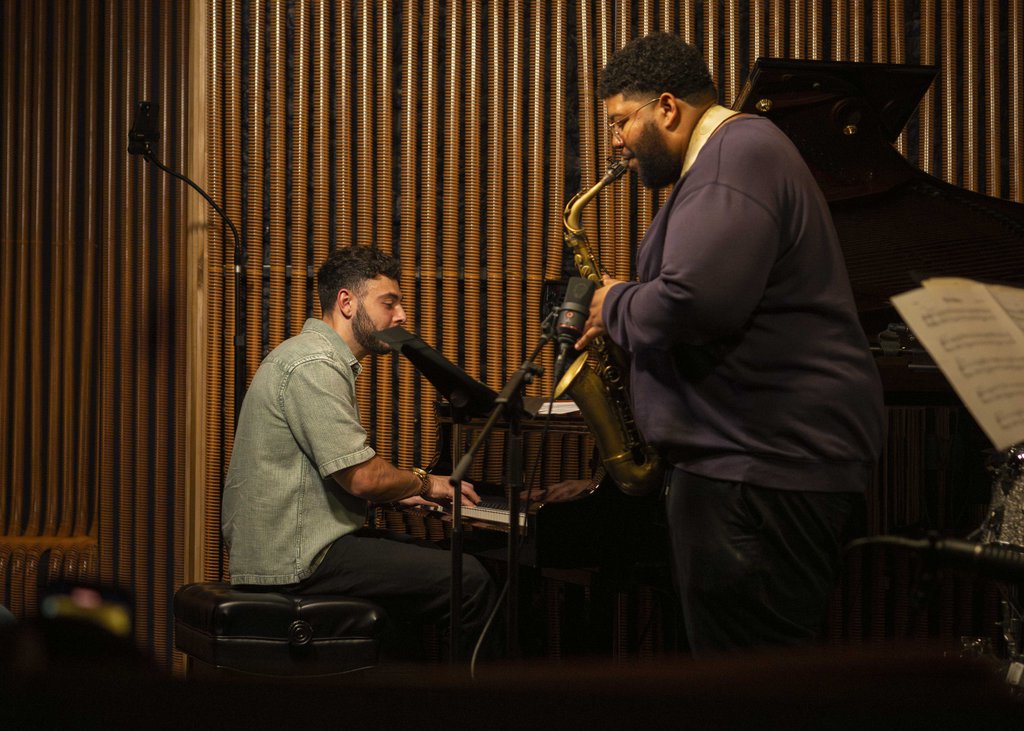
"I think a lot of us are here because we want to teach. We're getting our master’s in the hopes of teaching at a college someday," Hellmuth said. "Maybe not immediately," she added.
The fellows train, perform and gain teaching experience. The years they spent perfecting their craft have led them to a place of relative authority, and you’ll rarely find a working musician without students of their own. It’s an economic necessity – but also the only way to keep their tradition alive, Seeff said.
"When I started in ‘95, there was a more robust music industry where there were record labels. People were getting signed," said Seeff, who is also a jazz bassist and guitarist with session credits on albums by Eminem, Anderson .Paak and Kanye West, now known as Ye. "That was sort of a more ... reliable career, I hate to say, than it is now. A lot of jazz musicians now, even great, well-known ones that are touring, still have to depend on teaching as part of their income. So things have changed outside the institute, which has obligated the institute to adjust the program."
The Herbie Hancock Institute of Jazz Performance produces a small band of specialized performer-mentors in biannual cycles. Chaired by Washington, the undergraduate global jazz studies program seeks to produce a competent audience as the basis of a world jazz culture.
The former preserves the working jazz profession from an older time, and the latter attempts to produce an appreciative audience as the basis of a world jazz culture. This shared mission of excellence is what brings the world to jazz – and jazz to UCLA.
"We don't have a shortage of great performers. We do not," Washington said. "We have a shortage of good gigs for them. ... We have a shortage of people that know the difference between mediocrity and quality. We have a shortage of people that know the difference between quality and superb achievement."