
The first time I fainted was one of my favorite days.
I was at the Oakland Zoo for its annual "Celebrating Elephants" event – the best opportunity for elephant fanatics like me to be fully immersed in the realm of the world’s largest land animal. A chance to prep hay for the herd and take a behind-the-scenes tour of the elephant barn was more exciting than my birthday and Christmas combined.
But as the tour wrapped up, the world suddenly went dark. I collapsed on the concrete behind the elephant facility, dehydrated. I was graciously allowed to recuperate in the elephant keepers’ break room, sipping orange juice and watching tours pass through the barn. Everything appeared normal until an elephant manager asked, "Want to feed Osh?"
The 19-year-old African elephant bull towered over me, standing more than 11 feet tall and weighing about 15,000 pounds. I was a 9-year-old boy with a smile in desperate need of braces. Osh and I could not have been more different, but I felt an immediate connection between us.
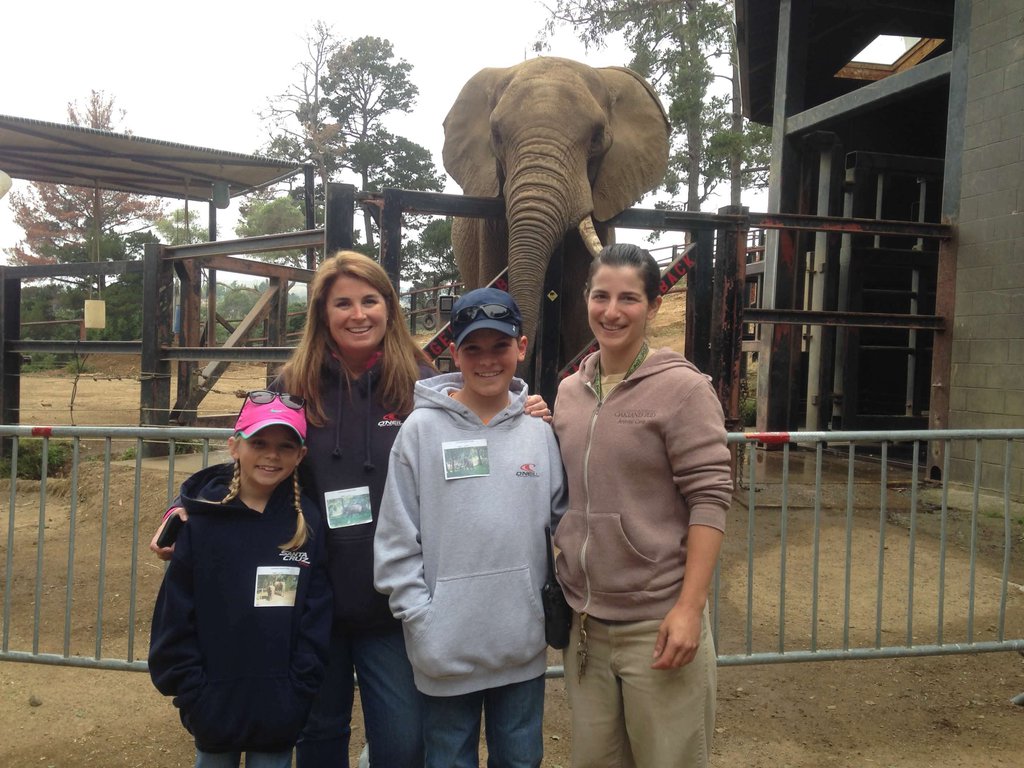
Osh’s ravenous trunk, stronger than the most high-powered vacuum imaginable, kept returning for more alfalfa pellets faster than I was able to grab a new handful. Despite his elephantine brawn, Osh was remarkably gentle and seemed to know how emotional I was feeling. At a time when elephants were my entire world, the opportunity to share a private moment with Osh felt spiritual, as if all the cosmic forces in the universe had aligned to ensure that I received the message: "Elephants will be your life’s passion."
But my obsession with elephants no longer holds the same rosy bliss it did 11 years ago.
Since arriving at UCLA, I have struggled to accept that elephants may no longer be my entire world. For years, I thought that my contribution to society would be through activism on behalf of wild and captive elephants. But whereas I once spent my waking hours educating people about elephant conservation, I have since shifted my focus to entertainment journalism – leaving only a few hours each day to explore my pachyderm passion. Left questioning my sense of purpose and direction, I have recently come to realize that my disparate passions – for both elephants and the arts – can still coexist and enrich my life in their own ways.
Elephants have always been a part of my life, even before I was born. My mom read Dr. Seuss’ "Horton Hatches the Egg" to me every day of her pregnancy, which she firmly believes shaped my innate fascination with elephants. She attests that my first word was "ant," in an attempt to say "elephant."
I quickly became hooked on any media related to elephants, from television specials to magazine spreads in National Geographic magazine. I checked out every elephant book in Sacramento County to read about these pachyderms and spent hours watching the elephant livestream from the San Diego Zoo Safari Park and The Elephant Sanctuary in Tennessee. Over the years, I amassed a vast collection of elephant prints and sculptures to cover every inch of open space in my room, filling the gaps with elephants I painted or crafted out of papier-mache.
But the most powerful piece of media was a BBC documentary series my mom picked up by chance when I was 3. "Echo of the Elephants" chronicles the life of an elephant family in Kenya’s Amboseli National Park between 1990 and 2004. Under the leadership of its matriarch Echo, the series displayed the family’s success and struggles through births, deaths, plentiful rains, extended droughts, run-ins with humans, encounters with hyenas and social interactions with hundreds of other elephants in Amboseli.
"Echo of the Elephants" was the catalyst for my deep appreciation of elephant social relationships, which I believe to be equally complex to those of humans. In one of the most impactful sequences, Echo and her daughter Enid split off from the rest of the family to stay with Echo’s newborn son, Ely, who had severe birth defects and took longer than normal to learn how to walk.
Echo’s refusal to give up on her son reminded me of the tireless support my mom gave to my passion for elephants. She drove me dozens of times to the Oakland Zoo so I could spend countless hours watching its herd – M’Dunda, Lisa, Donna and Osh – whose members I considered part of my family. Whereas some elephants would abandon a struggling calf, and some human parents would not readily encourage their child’s unusual interest, Echo and my mom each taught me about motherhood – particularly how similar such love and devotion can be between our two species.
My mom has made an equal impact on my love for music, the root of my passion for entertainment journalism. She DJed for countless dance parties in the living room as my sister and I crafted elaborate routines for Lady Gaga and Rihanna songs alongside nostalgic Marvin Gaye and Madonna throwbacks. On drives to the orthodontist or to visit my grandparents, our conversations were accompanied by a soundtrack of artists such as Adele, Carly Simon and Fleetwood Mac. The joy my mom radiated as she listened to and talked about all genres of music was infectious, without me even realizing it.
In high school, I began reading dozens of publications about music and listening to a new album every day, leading me to discover magical LPs that ranged from Erykah Badu’s "Baduizm" to Fiona Apple’s "Fetch The Bolt Cutters." In addition to the hours I dedicated to reading about elephants, I spent my free time devouring retrospective album analyses, watching music videos from past eras and sifting through online forums about upcoming releases.
But though those passions once coexisted, now as a Bruin it feels like music has eclipsed my elephant activism – leaving the latter to be put far on the metaphorical back burner. I spent time as the press and public relations manager for student-run record label Cherry Pop Records before becoming the music | fine arts editor at the Daily Bruin. Both of these roles have given me opportunities to attend thrilling shows and interview dynamic artists, inspiring my writing and my desire to help readers understand emotive, powerful music.
My responsibilities to write and edit stories about music leave me with little time to research elephants. As I feel this change, I wonder how my younger self would have viewed my life, and I feel immense guilt when remembering the ongoing devastation of elephant populations and habitats.
In fourth grade, I learned that on average, 96 elephants were being poached every day for their ivory, with their tusks being sold on black markets worldwide to be carved into jewelry and trinkets. With more than 35,000 elephants being slain every year, it was possible that the roughly 352,000 African elephants remaining in 2016 could become extinct in the wild within a generation. I was immediately motivated to help, encouraging the students at my elementary school to color elephant drawings for the Oakland Zoo’s "Celebrating Elephants" event.
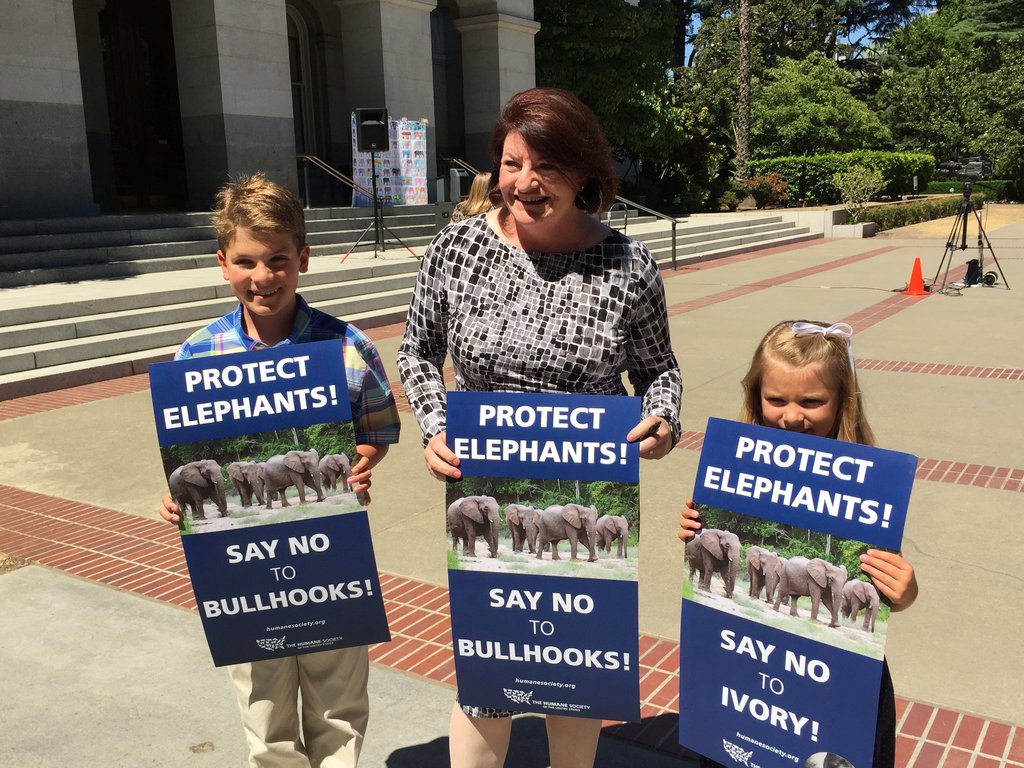
As I grew older, I also grew as an activist. In 2015, I met Rosemary Alles, the president and co-founder of the Global March for Elephants & Rhinos, who helped me visit Sacramento to meet with California legislators. I implored them to support California Assembly Bill 96, which became effective in 2016 and banned the trade of ivory and rhinoceros horns in California. Alles also invited me to be a leader of the 2,000-person March for Elephants and Rhino event in San Francisco in 2015, at which I felt honored to be able to speak about my love for elephants while encouraging conservation.
Now at UCLA, I have done nothing like my prior activism. The educational elephant Instagram page I created in 2020 has only had one post in the last three years, and I have not made an effort to inform my peers about the precarious plight facing elephants. If I do not make a conscious effort to advocate on behalf of elephants, who will? My niche passion lacks the public attention or resources to successfully push for change without the support of every possible individual, and my laissez-faire approach leaves elephant activists with one less ally to count on.
Simultaneously, the challenge of preventing the extinction of a species can often feel insurmountable and daunting. It is intimidating to consider that the battle to protect and conserve elephants could easily become a lifelong commitment without a tangible end, since new obstacles and threats to elephants’ future are sure to arise no matter how hard I work.
Today, all three species of elephants – African bush, also known as savanna, elephants; African forest elephants; and Asian elephants – are rapidly losing their habitats to the expansion of human settlements. When the migratory routes elephants have used for thousands of years are suddenly intersected by roads and agricultural developments, cases of human-wildlife conflict increase, and elephants may be killed. Climate change is also exacerbating droughts in ecosystems, with limited resources for megafauna such as elephants.
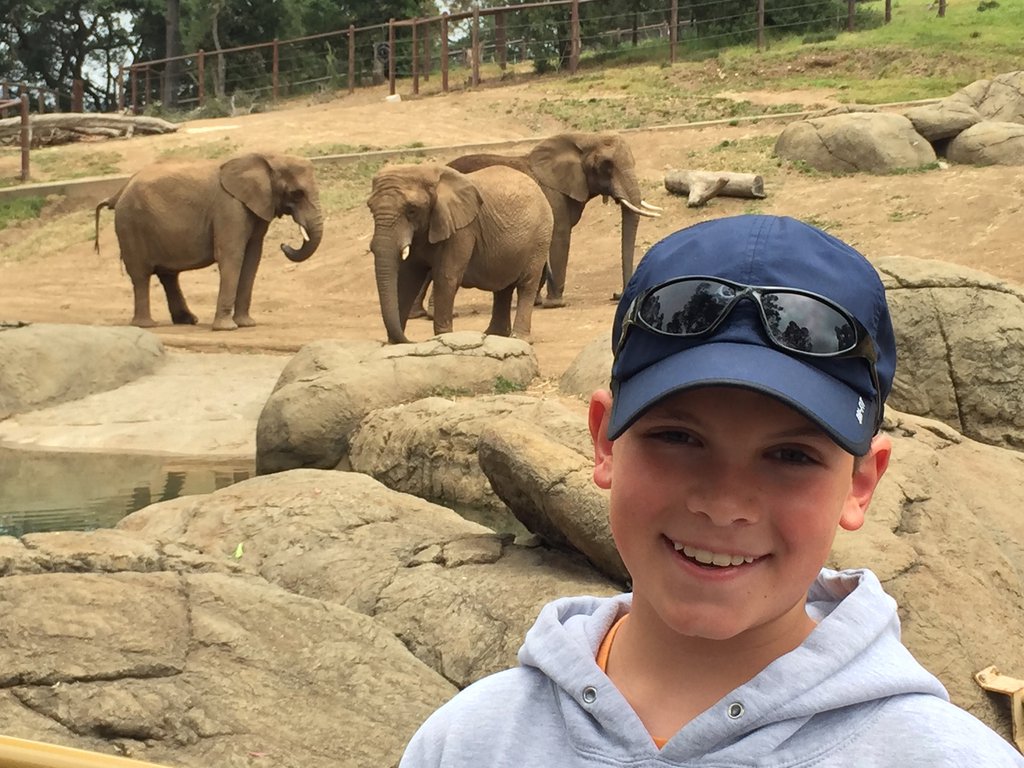
And I know their disappearance is more than just a tragedy to me. As they disappear from nutrient-deficient regions, elephants’ absence is acutely felt. These gentle giants are responsible for the seed dispersal and fertilization of dozens of plant species through their nutrient-rich dung. Likewise, elephants topple trees, which then creates pathways for smaller creatures, and often dig water holes other animals can use. Without them, the delicate balance of an ecosystem affecting hundreds of species could easily be thrown off from equilibrium.
But elephants are not just disappearing from the savannas and forests of Africa and Asia. They are also steadily vanishing from captive populations. In California, there are now only a handful of zoos – those in Escondido, Fresno, Los Angeles and San Diego – that still have elephants.
After the deaths of my beloved M’Dunda in 2019 and Lisa in 2023, Donna and Osh were both moved from the Oakland Zoo to The Elephant Sanctuary in Tennessee to live in a larger habitat with more elephant companions. Although I enthusiastically support the decision for Donna’s and Osh’s welfare, it was a haunting experience to see Osh for the last time this summer. Even if I can watch them via The Sanctuary’s elephant cam, Donna’s and Osh’s departures felt like losing a loved one, as another chapter of my love of elephants closed.
The day I found out Osh would be relocated, my phone was glued to the Oakland Zoo’s website, but my laptop was focused on writing captions for a Daily Bruin "Rising Artists" column. Even on summer vacation, I no longer had the time to dedicate myself fully to both of my passions. It feels like a zero-sum game in which I have to choose between my newfound interest in writing about music and my childhood dream of saving elephants.
But on a September trip to the San Diego Zoo with some of the friends I have made at the Daily Bruin, I realized the two sides of myself do not have to be completely separate.
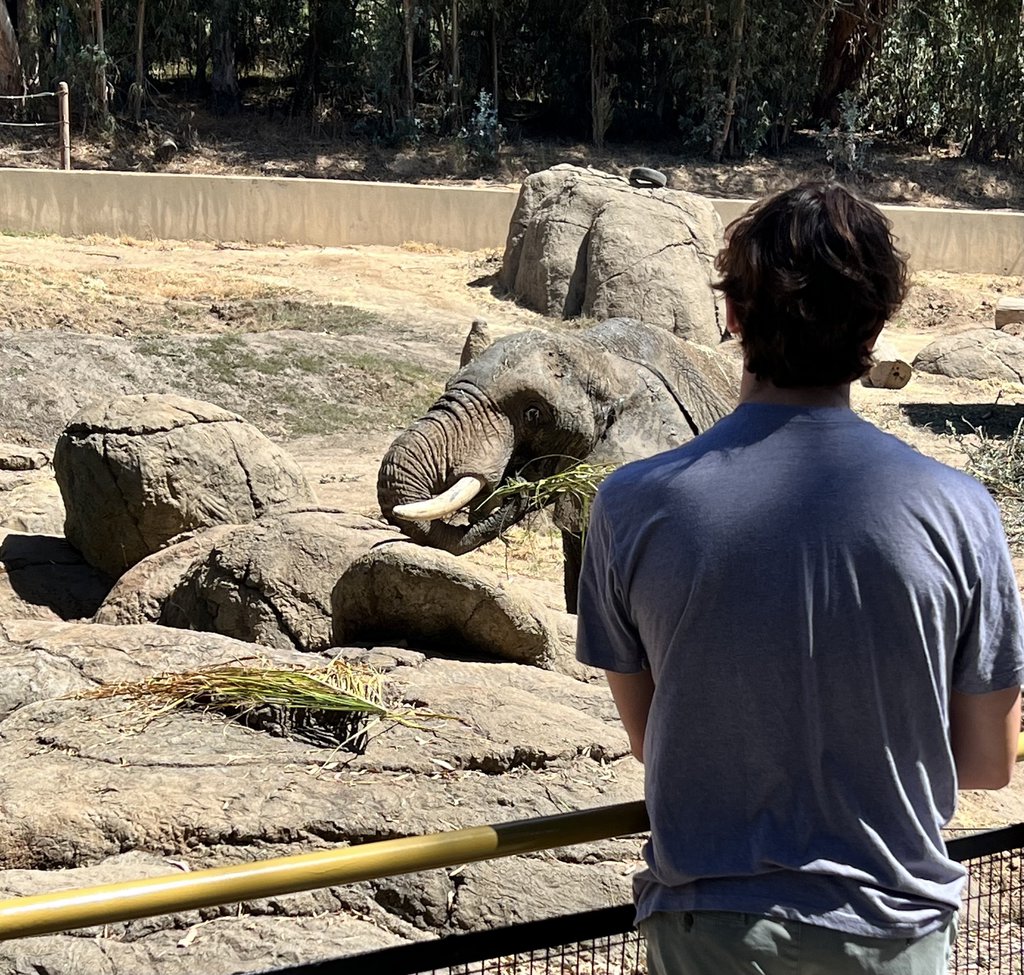
We meandered around the zoo for hours, finally approaching the elephant enclosure – the main event for everyone, it seemed. We spent more than an hour together at the exhibit as I spoke about elephant social dynamics, ecology and conservation efforts.
But the friends who were listening to me had all been made through my exploration of the arts. They did not see my depth of knowledge about elephants as contradicting my arts writing. And neither should I.
I am now exploring new ways to explore my passions as an activist, writer and student simultaneously. Perhaps I could take advantage of UCLA’s Undergraduate Student Initiated Education program to teach a course on elephant social behavior, or I could study abroad in Cape Town to take me closer to elephants in their natural habitat. Of course, my role at the Daily Bruin ensures that my interaction with music is here to stay. If I continue writing and sharing about both of my interests, hopefully I can create rewarding opportunities for myself and others to learn about elephants, even if it is sometimes in a casual way. Writing this piece has been a vital first step toward keeping both passions in my life.
Thankfully, I have not fainted many times since that unforgettable afternoon with Osh, but I have thought about my complicated and undying love for elephants every day since. Osh is the only elephant whose skin I have touched in my 20 years of life, but he and his species have left an indelible imprint on my soul that I know will always endure in some capacity.
They say an elephant never forgets. No matter what path I follow after I leave UCLA, I know I will never forget the impact elephants have had on me – and I am confident that they will remain integral to my identity as long as I live.