
Wilshire Boulevard has developed a reputation for its snaking traffic. Cars inch along the road during rush hour, passing by a slew of condominiums and office buildings. Tucked between these skyscrapers and the Westwood Branch Library lies a hidden gem.
This park, guarded by the shelter of the concrete buildings, remains quiet even in the din of Los Angeles’ honking car horns. In a city whose true citizens are automobiles, the space is an oasis of green grass where fountain water babbles and palm trees rustle in the occasional wind.
It is also a cemetery.
Pierce Brothers Westwood Village Memorial Park & Mortuary is just one part of Westwood’s death care ecosystem that exists right under UCLA students’ noses. As Bruins spend their college years reinventing their lives, the university and surrounding neighborhood support a robust community of individuals who help walk patients and families through their final days. And it is very much a community, too. To die takes a village.
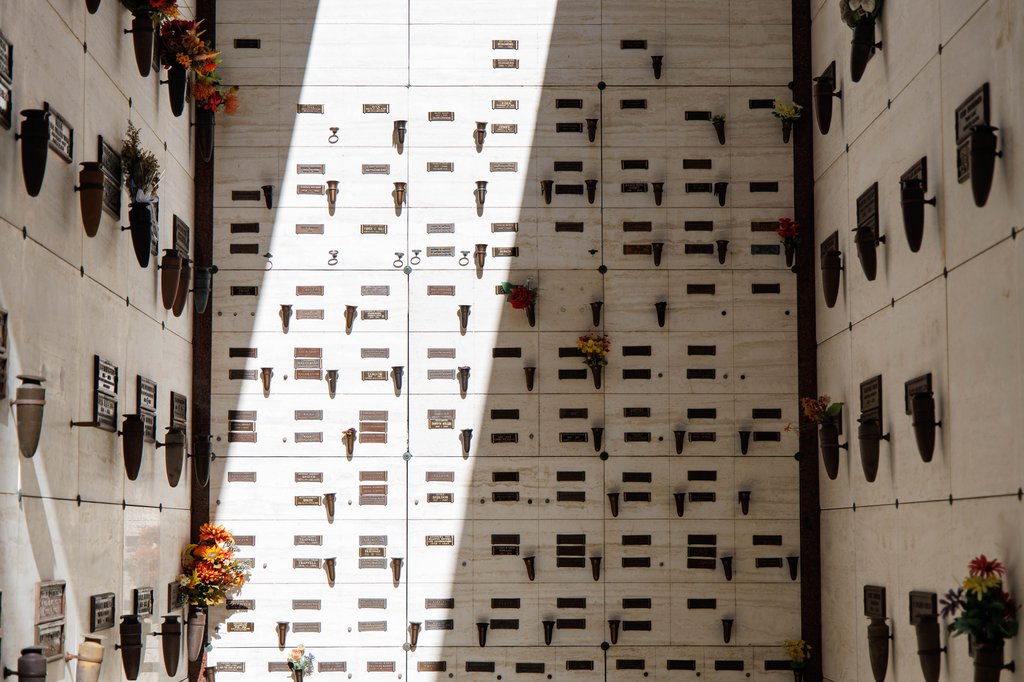
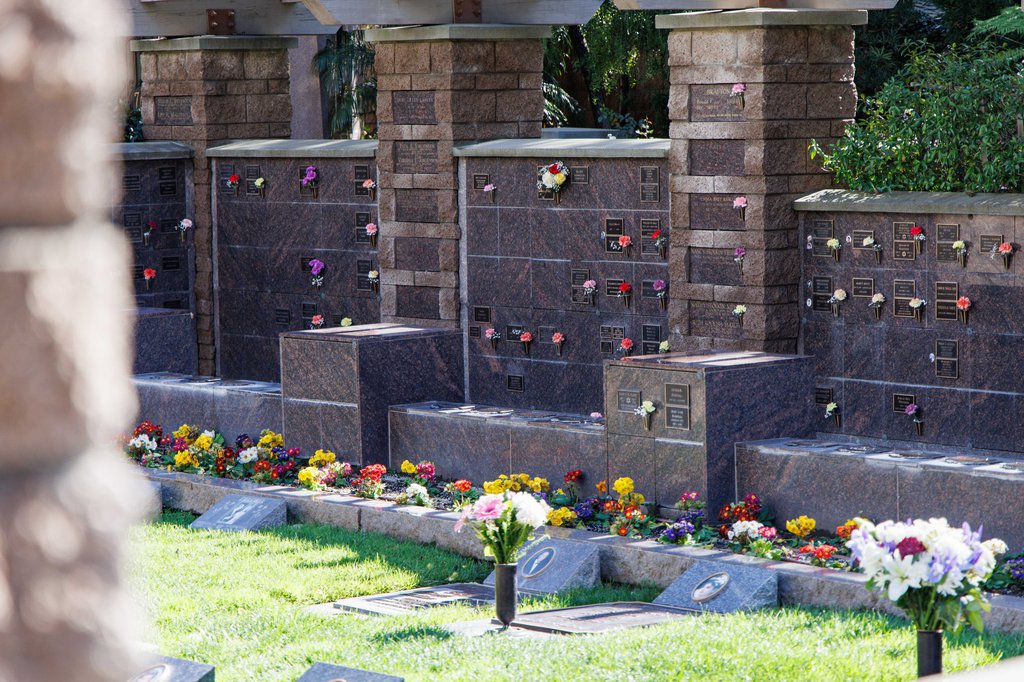
The neighborhood hugging the borders of UCLA features two cemeteries. Los Angeles National Cemetery, running along aptly named Veteran Avenue, is a final resting place for individuals who have served in the armed forces, as well as certain family members. Pierce Brothers, on the other hand, houses an eclectic group of celebrities and prominent citizens on its small, privately owned property across the street from the Hammer Museum.
Yes, there are graves at Pierce Brothers, but there is also bright grass dotted with flowers carpeting the lawn – almost as if the location were an extension of the highly manicured UCLA campus. The order of the name says it all: Before it’s a mortuary, it’s a park.
Perhaps this attention to detail in the landscaping is reflective of Charles Upton, the general manager of the site. Upton began his career in the construction industry, eventually translating his proficiency in heavy machinery to cemetery work as a backhoe operator at Eden Memorial Park. Even since becoming manager at Pierce Brothers in December, Upton still pitches in on the grounds work when needed.
As we walked the grounds, Upton stopped to pick up a stray bag of veggie chips that had blown into the park. He held onto it as we walked the few hundred feet to reach the lobby and he could safely deposit the plastic in the trash.
Even if you’re not looking at graves, Upton encourages community members to come visit the park just to, well, hang out and eat lunch.
"I think that’s what more and more cemeteries are trying to do, just let people know, ‘Hey, come see us,’" Upton said.
For Upton, his job provides what anyone could hope for in a world where the only certainties are death and taxes: security and stability. A career in funeral services also gives him the chance to help families who are navigating tremendous loss.
"Families are going through the toughest time in their life – usually that’s when you’re meeting them," Upton said. "To be able to take care of them through that situation is super rewarding."
But before families find themselves in the care of Upton and his team, they are often bounced through several end-of-life care providers in the medical system. Between the doctors, nurses and pharmacists that often help patients in their final days, social workers can be overlooked in the commotion of UCLA Health. Yet their desire to impact patients remains strong.
Professionals in social work handle the daunting task of promoting social wellbeing by helping people through challenging and unfamiliar situations. In the realm of palliative care, this duty often means talking with patients and families about next steps, allowing them to exercise choice in how the end of life should proceed.
Delia Cortez and Lindsay Waters are both palliative care social workers with UCLA Health. Cortez works at the UCLA Santa Monica Medical Center, and Waters works at the Ronald Reagan UCLA Medical Center.
Cortez and Waters emphasized the importance of patient agency in palliative social work. Cortez entered the field after working with patients in the intensive care unit who didn’t have the opportunity to exercise agency via conversations surrounding their deaths. On the other hand, Waters’ positive experiences with a social worker while her father was in hospice opened her eyes to the necessity of the job.
"I specifically wanted to go into palliative to be a part of those conversations," Waters said. "To help people make decisions based on what’s important to them and respect their autonomy, who they are as a person, and give them control in a time that usually they don’t have a lot of control."
Both Cortez and Waters find their days marked by collaboration. Morning meetings with their team – which includes physicians, nurses and chaplains, among a range of other specialists – set the stage for the day’s plan. But in health care, no plan can be perfectly laid.
"It could be the same consult on paper, but it’s constant improv," Cortez said.
For example, families and individuals may have different responses to hearing the words "death" and "dying." As social workers, Cortez said she and Waters listen to the verbiage their patients use and try to emulate it. Waters added that they often ask patients in what way they would like to hear information delivered and try to respond in such a manner.
"We aren’t afraid to go there and to have those conversations," Waters said. "People are worried about it anyways, so we allow them to share those concerns."
While Cortez and Waters find their work highly centered on patient interactions, there are others in the field whose work begins post-mortem.
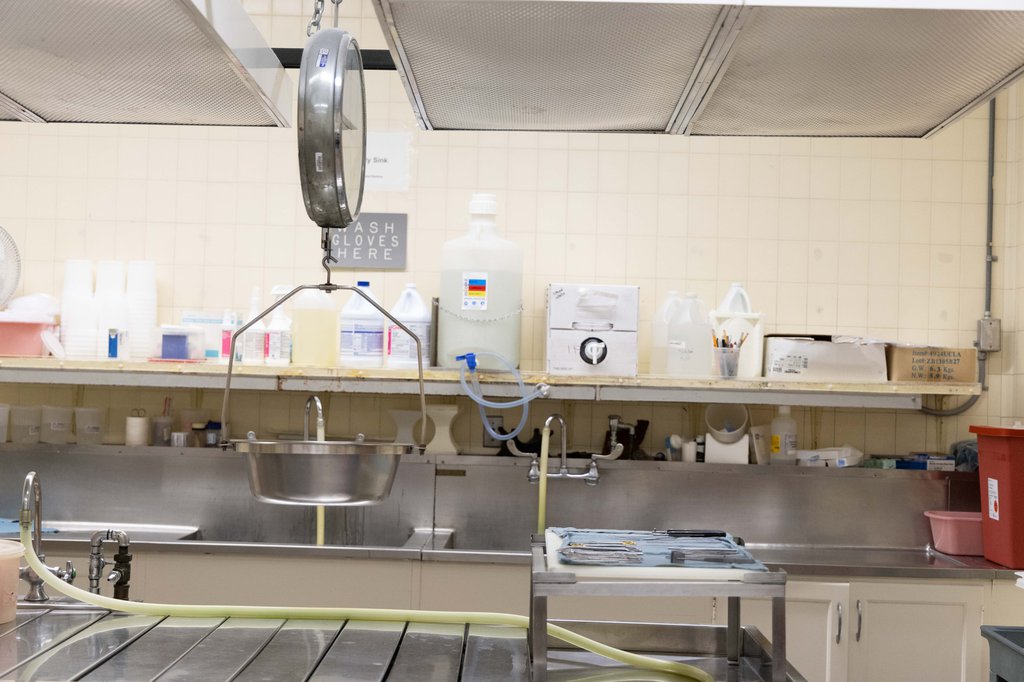
In a windowless lab in the Center for Health Sciences building, technicians, medical students and physicians perform autopsies on patients from the hospital or Westwood community. The walls are the color of sand, and the riser seats around the room are tall, silver and barely wide enough to sit on. As we walked through, Dr. Gregory Fishbein meticulously identified the rows of organs that sat in jars on carts and in cabinets.
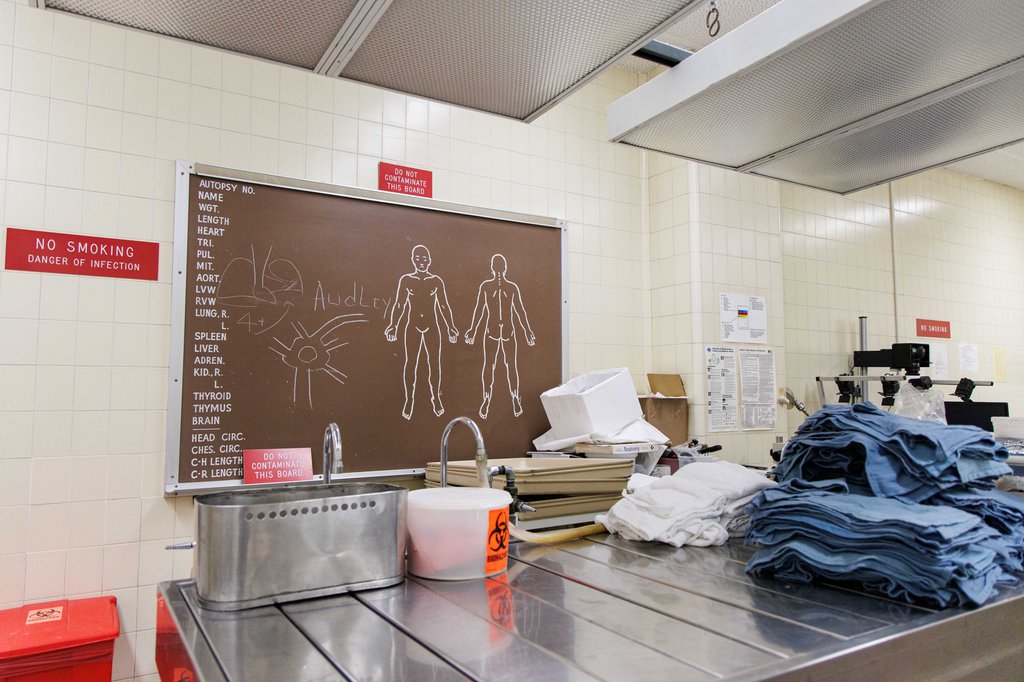
Fishbein, the chief of autopsy at UCLA Health, said he conducts autopsies for a variety of reasons. A family may request an autopsy to learn more about a genetic disease experienced by their loved one, or individual patients may request it before their death as a way of providing more information about their condition to workers in the medical field.
Fishbein does not conduct autopsies alone. Trainees and technicians play a crucial role in a process that can take several hours and sometimes days.
Keith Ellis, the hospital lab tech supervisor for decedent pathology – a branch of medicine that examines the bodies of the deceased – has worked at UCLA for over 30 years. His job requires administrative expertise to handle the decedents’ papers, as well as technical expertise to work with remains. Ellis said he appreciates the fact that he gets to work with the bodies; it is a dwindling opportunity for those who complete the paperwork and what originally drew him to UCLA.
Growing up, Ellis aspired to become a pathologist until he realized the years of studying required for the career. He instead decided to take the route of volunteering at the hospital, and his deep interest in the work kept him coming back everyday.
"People who worked here would go home, and I would be the only one here, " Ellis said. "So that’s how everyone got to know who I was."
At the time, volunteers were permitted to do some of the cutting, Ellis said. As he built his skillset, he eventually joined the staff ranks. Now, he works with bodies as part of his full-time job, cutting them up and putting them back together.
Despite the usefulness of the procedure, the autopsy is a dying art, Fishbein said. While UCLA pathologists still conduct around 200 autopsies each year, some schools of thought devalue the autopsy as an unnecessary procedure in comparison to the efficacy of medical imaging. But Fishbein and Ellis both pointed to the unique value of the autopsy.
"It’s honest, right?" Fishbein said. "You’re looking at the whole person and how they work and figuring out and trying to relate that back to how it can help people essentially. I think that it’s very meaningful."
As a research university, UCLA frequently shares the findings of its studies with the public. Before many Angelenos have arrived at work, medical students, residents and faculty gather for morning autopsy conferences that include case presentations. On occasion, UCLA Health outsiders attend these conferences, and some individuals interested in forensics have sat in on autopsies. Fishbein has even presented on autopsy science to high schoolers (though he does not provide full demonstrations to them).
"In the last couple of years, I’ve had several undergrads either cold call me or email me that they want to see an autopsy," Fishbein said.
But the hospital is not the only place where death can be explored by the community. As a board member of the West Los Angeles Chamber of Commerce, Upton invites local business owners to events such as a wine tasting at Pierce Brothers’ service space. And in honor of the passing of Marilyn Monroe – one of the most famous names who calls Pierce Brothers home – her fan club holds an annual service for her at Pierce Brothers each summer.
"If you can get past the creepiness of a cemetery, ... it’s just a place with really pretty flowers and some nice trees," Upton said.
Perhaps it is the distinctly un-cemetery atmosphere of the park that keeps the tourist buses coming. Despite being a hard location to find, Pierce Brothers remains a tourist attraction. Upton strikes a careful balance in this regard.
"We don’t do anything for the tourists," Upton said. "We don’t push them away, but we also don’t cater to them. While I like having people in here, I like getting our name recognition out there, and I want people to know about it, we do also have a lot of people that are buried here that are not celebrities."
Upton was candid that the price to rest forever at Pierce Brothers is not as accessible as a visit. Pierce Brothers’ customer base is far from the everyman, with some spots going for hundreds of thousands of dollars. Space is in high demand at the small cemetery, and not only from potential customers. Homeowners, businesses and other groups are all vying for land in LA – in fact, a 2002 proposal to expand the cemetery grounds was met with pushback by the Westwood community.
But even cemeteries that are for the average American can present cost challenges to families. In California, the average cost of a funeral with a cremation currently sits at $6,028, according to the National Funeral Directors Association. For a burial, it rises to $7,225.
The reality of this financial challenge is front and center for Cortez and Waters. They both agreed that in the United States, funeral assistance is hard to come by.
"As far as families who need resources, be it to cremate or bury someone, it’s very limited on what can be offered," Cortez said. "I think limited is generous."
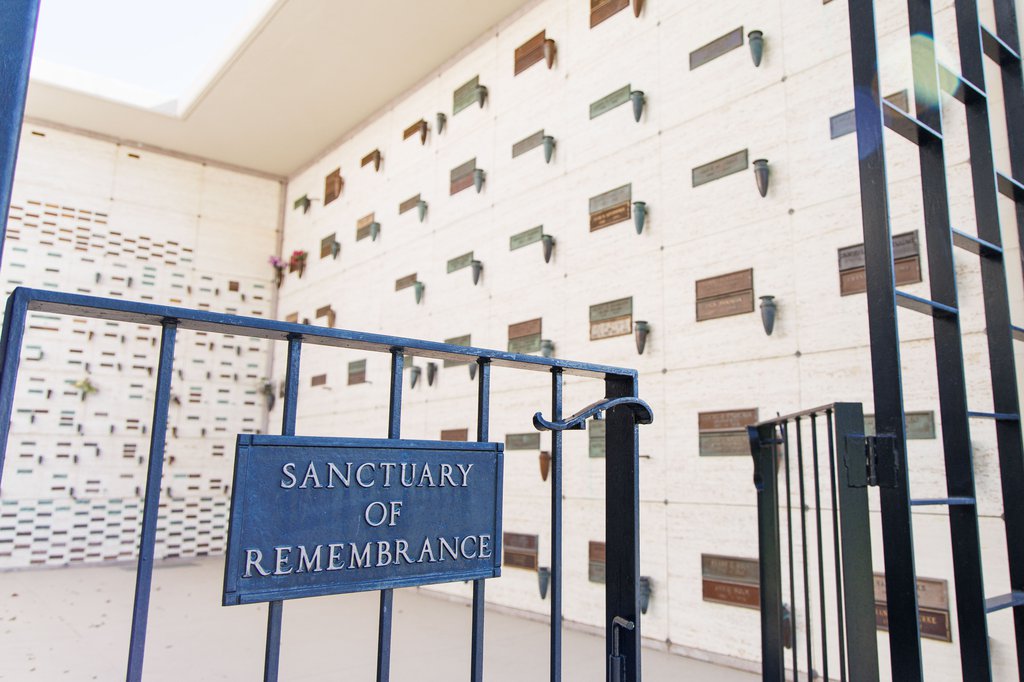
Although cremation is cheaper than a full burial, Waters pointed to the fact that some families may require a burial for religious or cultural reasons, putting further strain on the budget. In addition, Cortez said some families may want the burial to take place in another country closer to family, adding travel costs to the budget. With the cost of medical care in the U.S. already higher than many other nations, planning a funeral can add another financial strain amid expensive end-of-life care.
Yet Upton stresses the value of pre-planning a funeral. Many of the patrons who own plots in the now-pricey Pierce Brothers purchased that land before it was in demand, meaning the price was more reasonable. Upton said it can also lessen emotional stress, such as by reducing a grieving family’s responsibilities and preventing arguments about what the deceased would want in their service.
"Taking care of this stuff before you need it is a huge burden off your family," Upton said. "It’s a nice thing to do. It’s a polite thing to do, and it’s a loving thing to do."
As our time came to an end, Upton pondered about the circles of the Westwood community that he has yet to explore during his short time at Pierce Brothers. A recent art exhibit across the street reminded him of the other spaces that neighbor the park, he explained.
Perhaps it is the communities hidden in plain sight that warrant our exploration the most – even a cemetery.