
When Ken Wu first heard about the Milk Tea Alliance, he was apprehensive.
“The first thing I thought was, ... ‘Is this some kind of wacky way of promoting milk tea to the rest of the world?’” Wu said.
Although the Milk Tea Alliance earned its name from the popular beverage, the alliance has nothing to do with promoting milk tea. Instead, it is a transnational solidarity movement composed of people from Taiwan, Hong Kong, Thailand and Myanmar who are currently fighting against authoritarianism in their home countries.
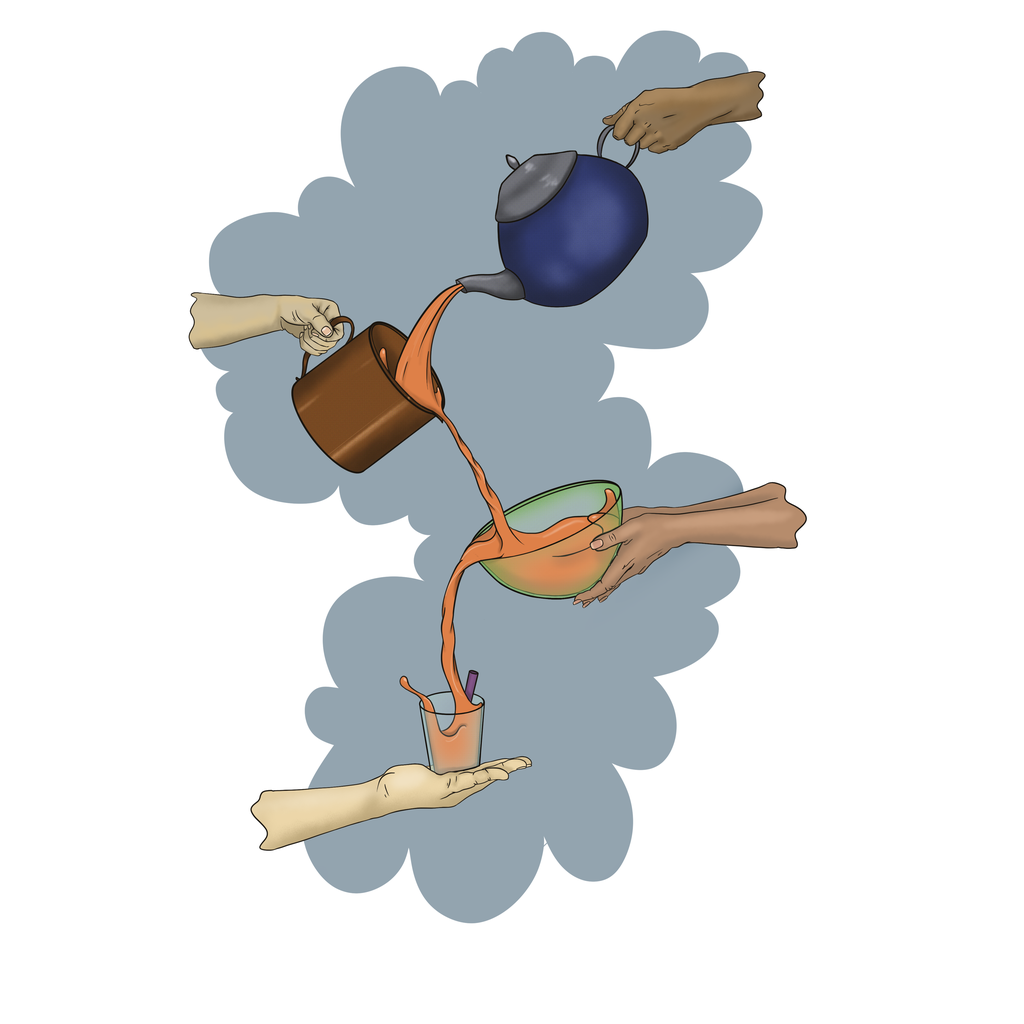
Citizens of these four nations also share some form of milk tea in their respective regions – from the creamy Hong Kong style milk tea to the thick and sweet Burmese laphet yay. Hence, milk tea has transformed from a cultural icon to a symbol of unity against authoritarianism and injustice.
Wu, a UCLA alumnus, grew interested in the movement after he learned more about the pro-democracy, youth-led nature of the Milk Tea Alliance. He was moved by the young activists’ awareness of politics and commitment to creating change, which led him to become involved in the movement.
According to Time magazine, The Milk Tea Alliance started on Twitter in April 2020 when several internet users accused Thai actor and singer Vachirawit Chivaaree, known professionally as Bright, of supporting political autonomy in Hong Kong after he liked a post referring to Hong Kong as a country. This prompted a Twitter feud between Chinese nationalists and netizens from Thailand, Taiwan and Hong Kong, who were defending Bright with a barrage of memes.
The Milk Tea Alliance’s online presence quickly grew. A year later, the Milk Tea Alliance hashtag has been used more than 11 million times to promote the movement and share information about on-the-ground protests.
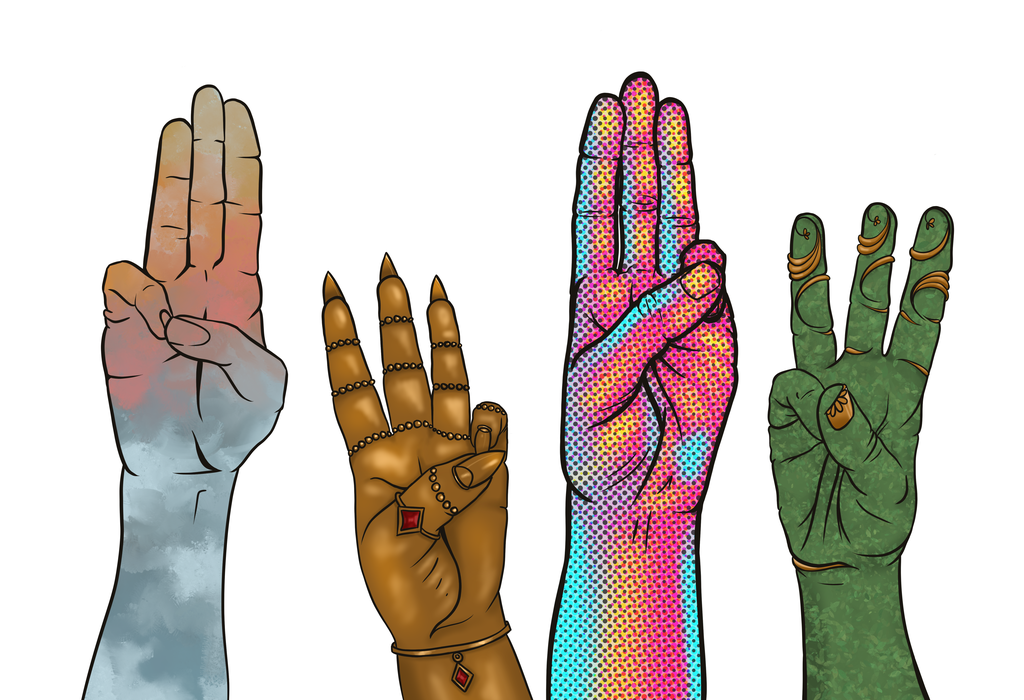
The movement has also incorporated various pop culture symbols, such as the three-finger salute from the movie “The Hunger Games.” According to The Atlantic, protesters use the gesture as a symbol of defiance and unity. Twitter released a milk tea emoji, which appears whenever the #MilkTeaAlliance hashtag is used, to celebrate the movement’s first anniversary in April.
The Milk Tea Alliance has also gained traction among high-ranking government officials. On Oct. 10, 2020, Taiwanese Vice President Lai Ching-te tweeted the Milk Tea Alliance hashtag to commemorate Taiwan National Day. His post has been retweeted more than 11,000 times.
Although the Milk Tea Alliance began as an online movement against the Chinese Communist Party, it has broken away from the initial anti-CCP sentiment to become an in-person, global movement opposing authoritarianism and inspiring protests in cities all over the world, said Pongkwan Sawasdipakdi, a Thai graduate student at the University of Southern California.
On May 8, United States-based activists from Thailand, Myanmar, Hong Kong and Taiwan organized LA’s first Milk Tea Alliance rally under the group name Milk Tea Alliance, Los Angeles.
During the rally, protesters carried the national flags of the four main Milk Tea Alliance nations as they marched around LA City Hall. The rally organizers also gave speeches to raise awareness about the issues concerning their countries.
“(People) were there on that particular day, on that particular spot, and we were all shouting the same message,” Wu said.
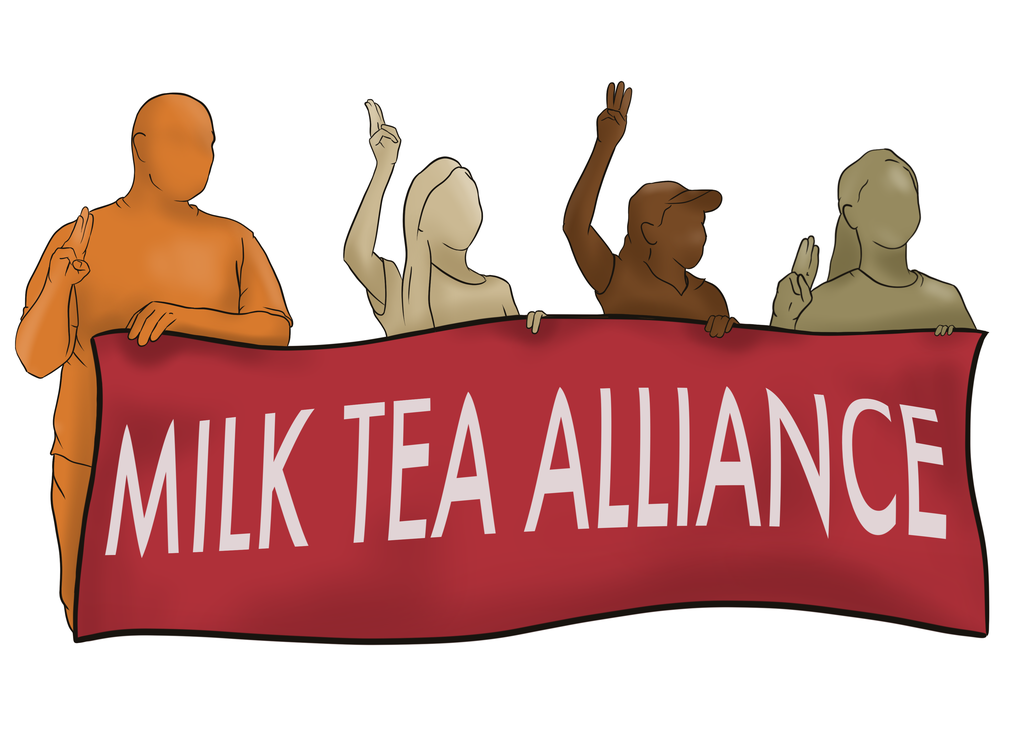
On the steps of city hall, the group carried a large red banner that read, “MILK TEA ALLIANCE TO END DICTATORSHIP” and “UNITY AGAINST TYRANNY” while participants did the three-finger salute. Free milk tea was also offered at the rally.
Student Activist A, who requested anonymity because of crackdowns against the families of activists in Myanmar, said although the group wants to equally represent their countries’ causes and struggles, the organizers agreed to focus the rally’s efforts on Myanmar. In February, the military junta overthrew the democratically elected government, leading to nationwide protests that the military suppressed with violence.
Nayzar Myint, a fourth-year philosophy student, said the Burmese community has been advocating to pass a piece of legislation called the Burma Unified through Rigorous Military Accountability Act of 2021 through the U.S. Congress. The BURMA Act would authorize the creation of sanctions against the Burmese military while also offering humanitarian aid to the country. The community has received support from Wu, who used his connections to speak to politicians to promote the bill and advocate for the democratic struggle in Myanmar.
Both Myint and Wu are currently serving as representatives for Milk Tea Alliance, Los Angeles. The group has eight representatives – two from Myanmar, three from Hong Kong, two from Thailand and one from Taiwan – reflecting the four main members of the Milk Tea Alliance.
Milk Tea Alliance, Los Angeles, began when Myint and Sawasdipakdi crossed paths in March during an online conference hosted by UC Berkeley’s Institute of East Asian Studies, where scholars and activists gathered to discuss strategies to resist the February military coup in Myanmar.
Sawasdipakdi bonded with Myint after they talked about building a coalition against dictatorships in their home countries. The coalition quickly expanded to include individuals from Taiwan and Hong Kong, who joined them to form Milk Tea Alliance, Los Angeles.
The group originally had no intention of using the name Milk Tea Alliance, but after seeing other U.S. cities hosting their own Milk Tea Alliance protests and rallies, they decided to adopt the name since they felt connected to the movement’s principles, Sawasdipakdi said.
Sawasdipakdi first heard about the Milk Tea Alliance when it became a trending hashtag on social media and has followed the movement ever since. Her involvement in pro-democracy activism, however, began when she was a university student in Bangkok 10 years ago, long before she joined Milk Tea Alliance, Los Angeles.
Over the past two years, she has been raising awareness in America after Thai police began launching violent crackdowns against protesters demanding the dissolution of Prime Minister Prayuth Chan-ocha’s government and a reform to the monarchy. She has observed in horror as police officers retaliated against protesters.
Despite the issues plaguing each individual region, Sawasdipakdi said the different communities in the alliance have shown support for one another by attending other countries’ individual rallies. All of them shared a similar pain, she said, which made them stand up for another.
Myint, for example, attended a recent protest in front of the Chinese Consulate to show solidarity with Hong Kong’s democratic movement as a member of the Burmese community.
“We are very focused right now on establishing contact between these different communities and to provide a channel of back and forth between ideas and resources,” he said.
Although the Milk Tea Alliance is more commonly known as a youth-centric movement, many older people supported the May rally as well as the movement at large. Long-established advocacy groups – such as the Formosan Association for Public Affairs and Hong Kong Forum, Los Angeles – have come out in support of Milk Tea Alliance, Los Angeles, even in its early stages.

In order to accommodate older protesters, Milk Tea Alliance, Los Angeles chose to march at City Hall so the length of the march would not be an issue.
Myint laughed as he recalled some of the funnier moments during the May rally. An anti-vaccine rally was happening at the same time, so the organizers had to relocate to the other side of city hall at the last minute. Some of the non-English-speaking participants, however, mistook the anti-vaccine rally as the Milk Tea Alliance protest, and organizers had to chase confused participants walking into the middle of the anti-vaccine rally.
Mishaps aside, the younger members of Milk Tea Alliance, Los Angeles, also received advice and support from more experienced activists in their communities.
Charles Lam, the Milk Tea Alliance, Los Angeles representative from Hong Kong and a mathematics professor at California State University, Bakersfield, sees himself as a support system for the young leaders of Milk Tea Alliance, Los Angeles, and uses his years of experience to offer advice.
But Lam still believes the younger generation should play a more dominant role in the Milk Tea Alliance. Both him and Wu aspire to serve in more of an advisory role to the budding activists that are currently shaping the movement.
“So I think this whole time, these young leaders, they’re the ones that really take matters into their own hands,” Wu said.
The two of them were more than happy to use the network of activists they’ve developed to reach out to people who might be interested in attending rallies like the one in May. Lam said he had advertised the movement to members of Hong Kong Forum, Los Angeles, and encouraged them to come to the May rally.
Myint recalled how he was initially unfamiliar with lobbying when he first joined the movement and has learned more about the practice from Sawasdipakdi, Lam and Wu, who have taken the time to teach him more about activism.
In addition to sharing their knowledge, the more experienced activists have also offered Myint emotional support and friendship.
Myint, who was elected as president of Milk Tea Alliance, Los Angeles, at the end of July, said he has questioned himself as he juggles his responsibilities as president and a full-time student. The support he has received has allowed him to continue moving forward as president, especially as the group planned their second rally for Oct. 16.
The second rally, which took place in Thai Town, was a candlelight vigil to grieve the lives lost to state violence in Thailand, Hong Kong, Taiwan and Myanmar.
“(State violence) is something that all the countries that are in the Milk Tea Alliance right now can relate to,” Myint said. “And this is going to be a great opportunity to raise awareness about the state violence that has happened in the past and is continuing to happen.”
The friendship and sense of community that he has received from other representatives is reflective of the kind of approach that Milk Tea Alliance, Los Angeles hopes to take, Myint said, as the group tries to unite their different communities.
“(The Milk Tea Alliance) is a platform for us to work out our differences and also to share our different platforms,” Wu said.
Student Activist A hopes that the Milk Tea Alliance will educate the American and international communities about the injustices that are happening in Thailand, Myanmar, Hong Kong and Taiwan and push them to take tangible actions to end dictatorship.
Lam, who has worked for years to start conversations about Hong Kong, also shares these sentiments. He believes their solidarity will attract more media attention and further push their cause.
Sawasdipakdi still remembers how curious passersby had stopped by during the May rally to talk to them after the event had attracted their attention. Sawasdipakdi hopes they can continue to raise awareness of what is happening in their countries.
After its initial rallies, Milk Tea Alliance, Los Angeles, is still in an explorative stage as it tries to expand membership, hold future events and further solidify its organization.
The group is currently writing its bylaws and is considering changing its name to be more inclusive of other nations fighting authoritarianism.
These four regions and their activists are fighting different struggles, but their solidarity against tyranny bands them together.
“It just (shows) that idea that even if our struggles are different, even if it looks different from a superficial level, at the very core, we are still fighting the same battle,” Student Activist A said.