
Instead of spending his weekend relaxing, Cody Trojan was applying to jobs.
After attending his daughter’s soccer practice, Trojan was finishing up a cover letter to Rochester Institute of Technology in New York, over 2,600 miles away from his current job at UCLA.
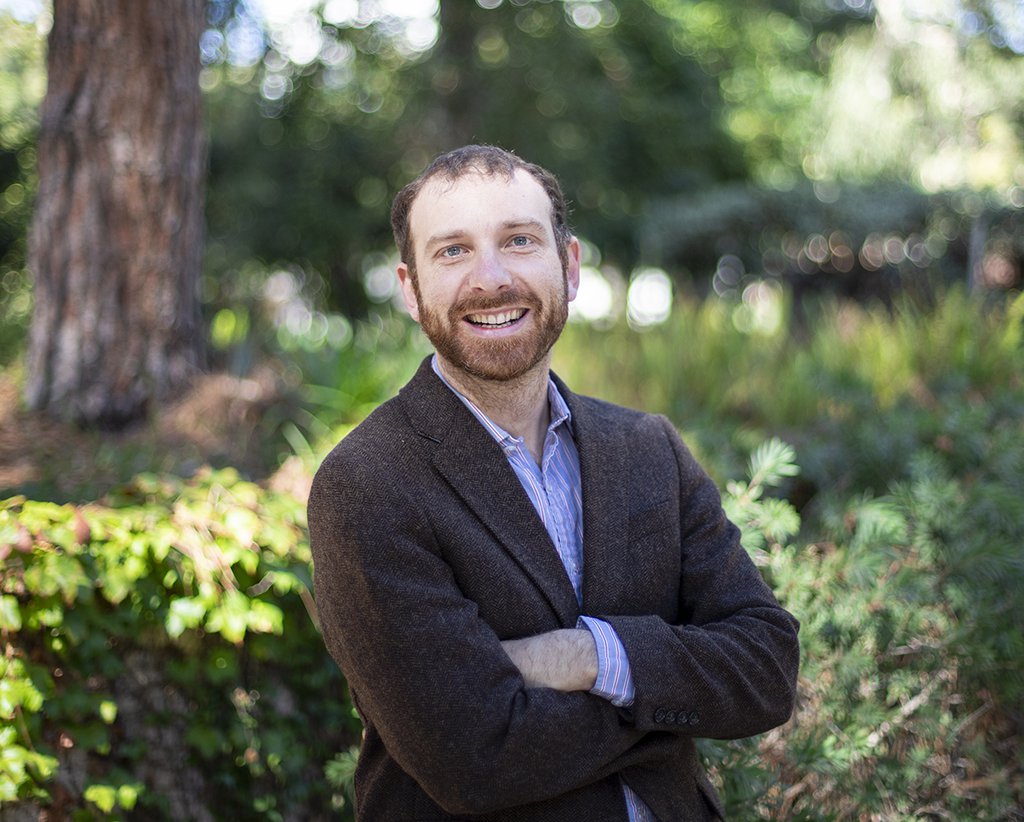
Trojan has been a political science lecturer at UCLA for two years. Because his contract expires every year, he must always have a backup plan. He is swallowed by a sense of constant uncertainty about finding stable employment, so he spends his free time applying for jobs. Each job application requires about 100 pages of documents – almost all unique to every listing, Trojan said.
Lecturers are also frequently hired only part-time, Trojan said, which adds to the general instability of the job. Many students take classes taught by lecturers because lecturers primarily teach undergraduate lower-division courses.
Professors, on the other hand, are tenure-track faculty, meaning they have greater job security and greater access to benefits, like health care and full retirement plans. Professors teach more upper-division courses, which are often smaller in size. Much of their work with the University, however, is associated with research.
According to the UC accountability report, about one in every five UC faculty members is a lecturer, and since 2011, lecturer hirings have increased by 41%. In 2020, UCLA employed 481 lecturers and 1,842 full-time tenure-track professors.
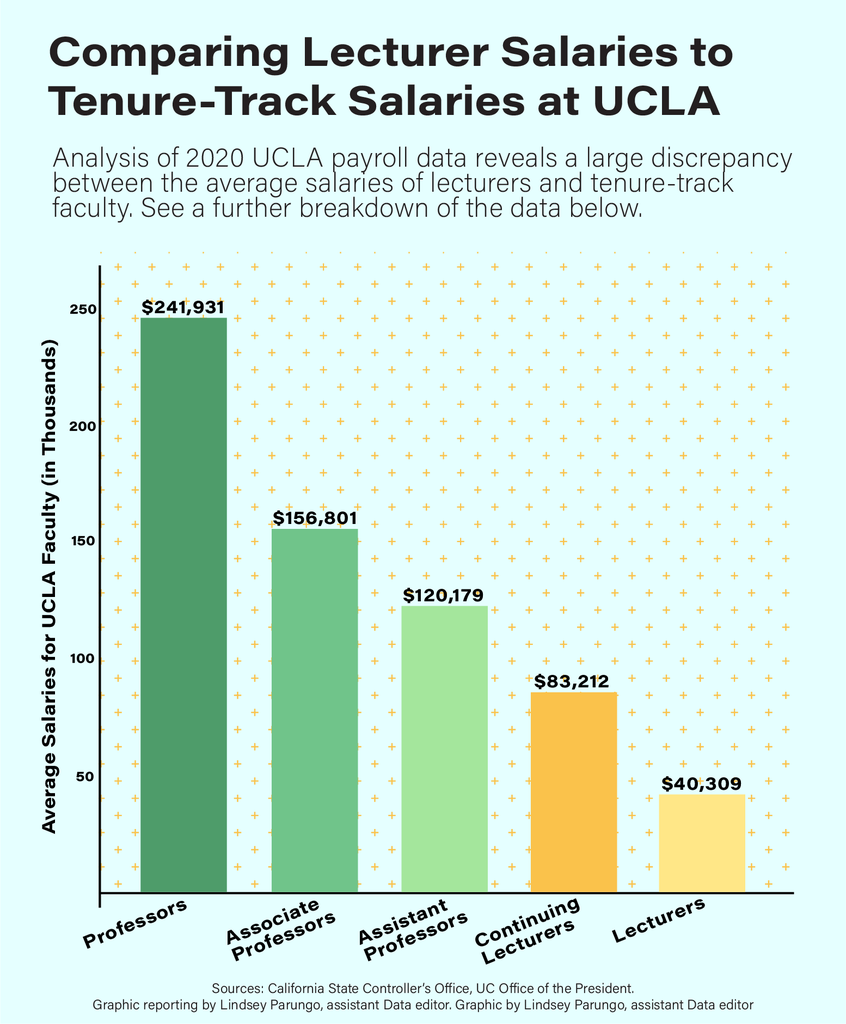
A Daily Bruin analysis of 2020 UC payroll data revealed that the average salary for lecturers at UCLA was $40,309, which stands in stark contrast to the $241,931 that tenured professors earned that year. According to the United States Department of Commerce, the per capita personal income in Los Angeles County was $65,094 in 2019.
Job instability and low pay mean that many lecturers, like Trojan, have to work multiple jobs just to make ends meet. In addition to teaching at UCLA, Trojan also lectures at Cal Poly Pomona. He wakes up early to beat traffic for his 7 a.m. class in Pomona, California, and once his class is over, he rushes to make it to his 12:30 p.m. class at UCLA, more than 40 miles away.
Trojan’s position at Cal Poly Pomona gives him a little more job security than his job at UCLA because the university has a basis of evaluation for rehiring lecturers, unlike the UC system. Still, Trojan commutes to work in hopes that he can one day find a more stable job to provide for his daughter.
Having and supporting a family is another obstacle for lecturers, Trojan said.
“If one wanted to defend the system, one would need to admit that you’re just not allowed to have children or families because it makes you a bad parent to be moving around all the time (and) constantly uprooting your family,” Trojan said.
Between teaching, Trojan also has to make time for grading, reading texts for class, preparing lectures and responding to his flooded email inbox. Letters of recommendation and mentoring students are also forms of unpaid labor – they’re not included in lecturers’ contracts, but lecturers find themselves working on these tasks frequently. Oftentimes, lecturers are writing these letters even when they are no longer employed by UCLA, Trojan said.
Dedicating time to finding employment is often strenuous and takes away time from teaching, said Rahul Neuman, a continuing lecturer in the music department.
“We have to reapply for (our) jobs, look for other jobs so that we can actually make a living wage, and then all that time is taken away from the time we can devote to students,” he said.
Continuous lecturer turnover decreases the quality of education UCLA can offer, linguistics lecturer Elise Bell said.
“Key core courses that are often taught by lecturers are usually starting from scratch every fall, which means every year there’s a new crop of students who come in hoping to get this strong baseline education, and it’s being taught by someone who’s never taught it before,” Bell said. “But if someone had been allowed to keep their job for another year, the level of education, the quality could have continued to improve.”
Neuman is lucky, though. He has worked at UCLA for 10 years, and after six years, lecturers are allowed to apply for continuing lectureship – a title that provides more job stability.
Continuing lecturers are rewarded with special privileges because of their experience. They do not have to regularly reapply for their jobs nor do they have to worry about their classes being taught by other lecturers, Neuman said. Most lecturers in the UC system, however, have an average career of two years before losing their employment or heading to a new job.
This low average stems from a churning problem – or rapid turnover in a workplace’s staff as old employees leave while newer employees are hired. According to a CalMatters report, about 25% of the 6,000 lecturers annually employed by the UC do not return the following year.
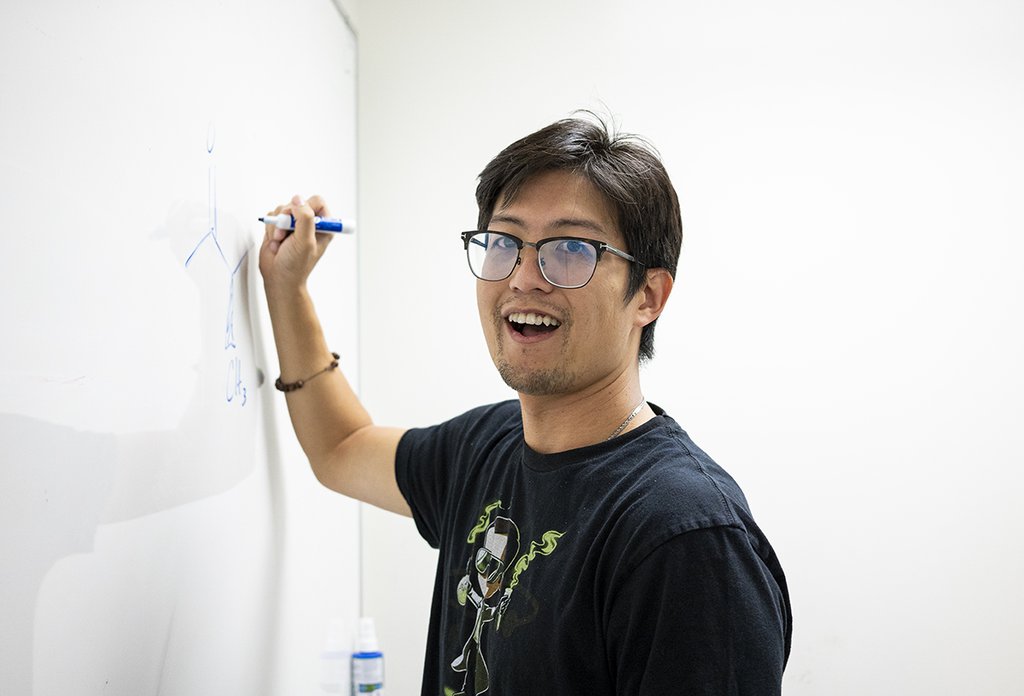
Hung Pham, an assistant adjunct professor of chemistry and former lecturer, said his workload as a lecturer averaged 60 to 80 hours a week. A lot of these hours consisted of preparing PowerPoint slides, creating midterms and finals and grading, Pham said.
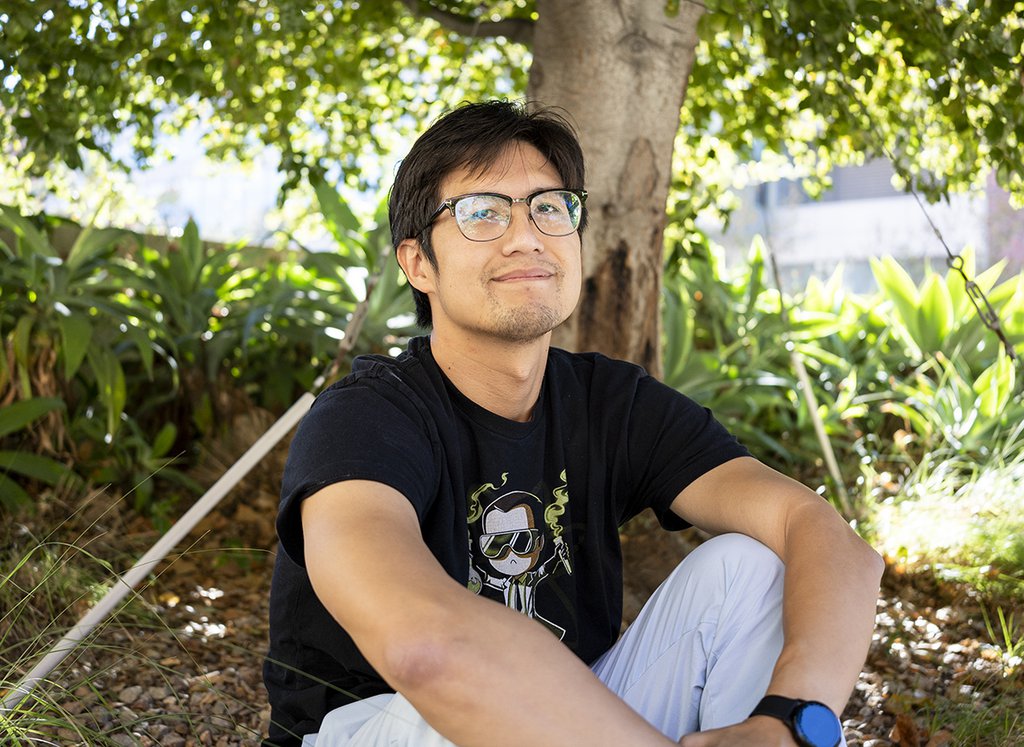
Because of the high cost of living in Los Angeles, Pham commutes from Orange County each day, starting his drive at 6:30 in the morning and not leaving campus until 5 p.m. Pham spends upward of four hours round trip in traffic. This commute, Pham said, is draining in and of itself.
“People think that it’s just a time thing to commute, but it’s also an energy sink, you know, sitting in the car for two hours and coming out and then having to learn or teach – it’s definitely not the easiest thing in the world,” Pham said.
Teaching on Zoom over the past year relieved Pham of his commuter stress, giving him more time to focus on his classes from the ease of his own home. Commuting, along with the job’s workload, are two of Pham’s biggest stressors.
Pham believes the university could help lecturers by providing them with more job guidance and by making teaching resources more accessible. With a large number of lecturers churning in and out, the structure of the institution feels hazy, Pham said.
“It really is a little bit cloudy on who gets hired for what, who’s teaching what every quarter, which rooms are we in and what times are we teaching – all of that is up in the air every quarter,” Pham said.
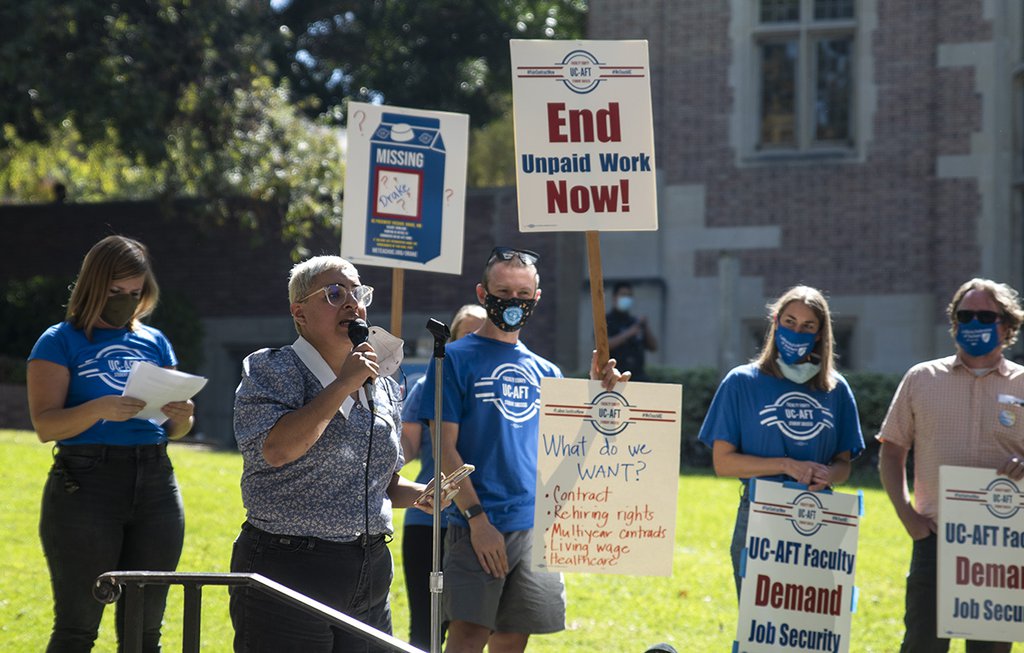
Protests have shaken UCLA’s campus in recent months, with lecturers demanding an end to many of the “cloudy” conditions that Pham described. University Council-American Federation of Teachers, the union that represents librarians and non-Senate faculty in the UC system, including lecturers, has been the driving force behind many of these calls to action.
The union held a picketing rally Oct. 13 and 14 on Bruin Walk to demand job security, more compensation and fewer employment tasks.
Caroline Luce, a labor studies lecturer and UC-AFT non-represented unit delegate, was eager to talk with students passing by the rally.
The purpose of the rally was to call for the negotiation of a new contract, Luce said, as the UC and UC-AFT have been renegotiating for the past two years and reached an impasse in June. The union wants to get the word out to students so they can learn about the conditions that roughly 30% of their teachers endure.
In November, UC-AFT members threatened to strike across the UC system to protest unfair labor practices. Prior to the planned protests, Neuman said the union hoped that their demonstrations would put pressure on the UC administration to reach a resolution.
Around 4 a.m. on Nov. 17, the UC and UC-AFT came to a tentative agreement and the strike was called off hours before picketing was to begin. The new contract addresses many of the issues the union has found with the University’s current policy, including job security and low pay. According to a UC-AFT press release, lecturers will begin receiving incremental pay increases until 2025, merit-based raises and a $1,500 signing bonus when the resolution is passed.
Lecturers will also no longer be hired on year-to-year contracts. After a lecturer’s first year at UCLA, they can apply for a multiyear contract. This change will go into effect July 1, and other changes will be implemented by the 2022-2023 school year, said UC-AFT President Mia McIver.
“I (feel) very happy and excited for this contract and what it means for me and what it means for all of us here in the union and what it means for all of us here in the UC system,” added Kevin Coffey, an earth, planetary and space sciences lecturer.
Coffey came to campus early on the day of the planned demonstration expecting to be on the picket lines but was met with relief upon hearing the union had reached a resolution that morning. Instead of protesting, he found himself celebrating with his colleagues as music played in the background.
Under the new agreement, lecturers will receive periodic performance reviews to determine if they can continue teaching at the University. Luce mentioned that other universities, such as the California State University system, the University of Michigan and many community colleges, already have employment evaluations in place to ensure more security for lecturers. At Cal Poly Pomona, for example, professors sit in and evaluate the classes that lecturers teach to decide if their contracts will be renewed, Trojan said.
Luce has watched many of her colleagues leave during the eight years she has worked at UCLA – one of whom left because she could not get enough classes to make a living for her young child and family.
“We deserve (protections) here, and we hope (to) become the model employer,” Luce added.
These lecturers’ love for teaching inspires them to continue advocating for better working conditions. They feel that there should be no choosing between financial security and their passion for their jobs.
Before earning the title of continuing lecturer, Neuman was afraid of losing the relationships he built with his music students when he got busy reapplying for his job every year. His stress was only amplified because he did not want to lose a job he loved so much.
Trojan said his work is a day-to-day struggle, but engaging with his students on questions about political theory reinvigorates him.
“It’s kind of a privilege to have your job to be teach(ing) what you’re into to people who want to hear about it,” he said.
But Trojan still often has doubts about choosing an uncertain career path. When he thinks about his family, he sometimes wonders if he should have picked a better paying job.
“It’s hard not to have regret, right? Because it’s about other people (and) not always about you,” Trojan said.