
After seven and half hours of detainment, Jodi Scofield stepped out of a hot bus and into a desolate Jackie Robinson Stadium. It was 2 a.m., and only UCLA’s signature blue and gold street signs looked familiar. Otherwise, she was completely disoriented.
“We ... didn’t realize that we were on UCLA property until we happened to see the colors,” Scofield said. “I remember looking up and seeing that street sign and going, ‘Am I at UCLA? Where am I?’”
Scofield, a graduate student, ended up at Jackie Robinson Stadium after being detained by LAPD on the afternoon of June 1. Scofield had attended a Black Lives Matter protest in downtown LA, intending to use her privilege as a white woman to shield protesters of color, she said. She soon found herself cornered by the LAPD and was subsequently handcuffed and sent on a bus to an undisclosed location.
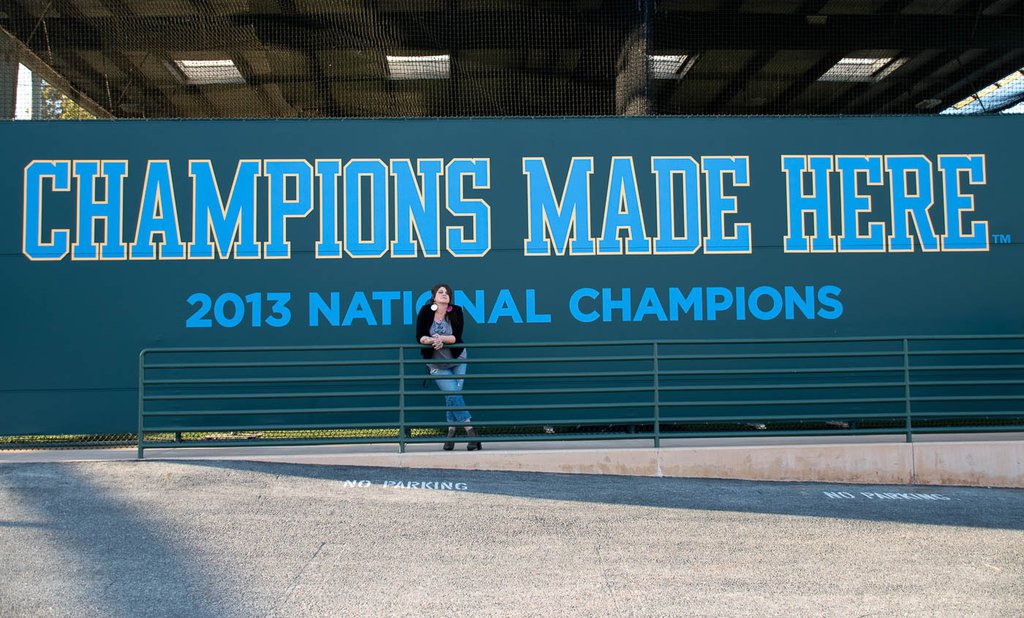
For almost eight hours, Scofield was then left to wait – and worry. As a masters student and mother, Scofield feared that, if arrested, she would not only be unable to continue her academic career, but would also have to explain her detainment to her child, who is seven years old and half Native American.
In addition to detainment, other students dealt with physical harm inflicted by police at the summer protests.
Joshua Abrams, a third-year public affairs student, attended Black Lives Matter protests in San Bernardino and Riverside in May and June. Police shot rubber bullets at him while he marched, he said. Though Abrams was angry, he was not surprised. This conflict was not the first time he had been targeted by the police.
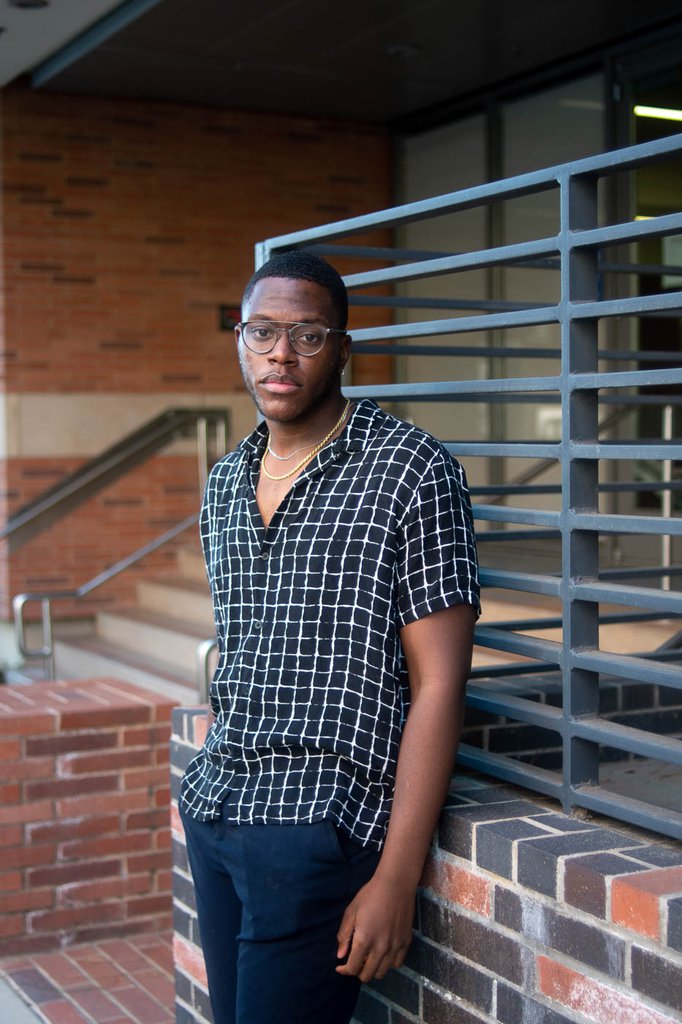
Abrams, who is Black, first encountered the police at age 16, when an officer approached him as he left his high school campus. At the time, Abrams did not understand why the officer stopped him to ask if he had gone into a nearby liquor store. Later, he found out that the police were looking for a white man and woman who had caused a disruption in the store.
“That was my first instance when a cop was supposed to be looking for a white male in a hoodie, but ... targeted a 6-foot-1 Black kid on a skateboard,” Abrams reflected.
Abrams encountered the police once more in high school and an additional time when he was a freshman in college. Abrams felt the police were targeting him, especially when they pulled him over for a relatively minor issue: not having a license plate light in Newport Beach. Abrams said he was never aware a car had a license plate light, much less that not having one was an offense.
Abrams said he believed the police officers who previously stopped him likely assumed that, because he is Black, he was doing something illegal.
“I was so mad at the time, I was like, ‘They’re not supposed to be doing this, they’re not supposed to be doing this,’” Abrams said. “But, you see, Black kids like me on the news, they’re getting shot for aggressiveness and disobeying the officers.”
Alicia Virani sees experiences like those of Abrams and Scofield as signs that the law enforcement system needs to change. Virani, the director of the UCLA School of Law’s criminal justice program, has seen firsthand how the criminal legal system has negatively impacted a family member who struggled with substance abuse.
Virani, who is South Asian, said she strongly supports divesting from police forces and reinvesting in traditionally underserved communities. Over the summer, this idea became popularized under the phrase “Defund the police.”
Calls for defunding the police have taken different forms throughout the country. In November, LA County voters approved Measure J, which allocates 10% of the county’s locally generated, unrestricted funding to social services supporting communities affected by racism. The money cannot be spent on prisons, jails or law enforcement agencies, according to the Los Angeles Times[a]. The People’s Budget LA has also called for greater cuts in the LAPD’s budget in favor of greater investments in universal aid and crisis management.
At the university level, Virani hopes to invest more money in Black scholarship, Black faculty and student counseling services. After learning about LAPD’s use of Jackie Robinson Stadium to detain protesters over the summer, Virani joined the UCLA faculty’s Divest/Invest Collective, which advocates for the removal of police forces from all UC campuses.
“UCLA is a small city in and of itself,” Virani said. “If we can show that there's another way for us to both define safety and then to really uphold safety ... rather than relying on law enforcement, I think it would be an incredible way of showing the rest of the country that this is possible.”
While many students and professors called for fundamental and external changes to police forces, UCLA chief of police Tony Lee saw the summer protests as an opportunity to create positive change from within the UCPD.
Lee, who is Asian American, is currently working to have Counseling and Psychological Services respond to mental-health-related issues, rather than police forces. He also hopes to develop a public safety ambassador program to address low-level incidents, such as vandalism or stolen property, that do not require uniformed officers.
Lee said his dedication to student safety stems from his role as both an officer and father of two former UCLA students.
“One of the things I looked at, and this is the parental hat that I wear, is that I’m sending my children to UCLA, and I want to make sure that they’re safe, that they’re going to be learning in a very safe environment,” Lee said.
Lee said he was infuriated after learning about the death of George Floyd and supported people’s rights to protest peacefully in response. But he also felt hurt when he saw students’ strong pushback against UCPD. While he has previously encountered public opposition to policing, Lee said the most recent calls for change have been the strongest he has ever seen.
Lee was disappointed when he saw a banner over Ackerman Union this summer with the abbreviation, “ACAB,” which stands for “All cops are bastards.” Lee found the banner especially disheartening because he knows that many of his officers are UCLA graduates and take pride in protecting the community.
On the other hand, Scofield sees a pressing need to address how local police forces undermine UCLA’s claims of creating a diverse, welcoming community.
“As students, I understand we have a different set of ways that we approach equity, but at the end of the day, no one should have to feel unsafe ever on our campus,” Scofield said.
Following her detainment at Jackie Robinson Stadium, Scofield was furious.
“Standing there, being forced to stand there, being held captive by the state, that experience should never happen,” Scofield said.
Scofield’s strong support for the abolition of the police goes beyond the events of the summer. At the age of 14, Scofield witnessed the death of her brother, who was half-Black, at the hands of the police in Washington, D.C. Watching her brother as she was unable to help him shaped Scofield’s stance against the police.
“There was no reason for his death, outside of his race,” Scofield said. “There was no reason for (the police) to leave him lying there for as long as they did, to bleed out, essentially.”
Abrams said he feels unsure about abolishing the police altogether. However, he supports reappropriating some funding away from police forces to underserved communities, particularly to support education instead.
Abrams also wants people to look beyond the deaths and incarceration of Black individuals and understand the institutional problems underlying police forces.
“People are looking at the condition, but they’re not looking at the roots,” Abrams said. “The roots are the unconscious bias that police have.”
Abrams’ calls for action not only stem from his personal experiences with the police, but also from his memories of Alton Sterling. Sterling, a Black man, was shot in 2016 by two Baton Rouge police officers while selling CDs outside of a convenience store. Officers claimed Sterling was reaching for a handgun in his pocket when they began shooting.
Abrams remembers buying a CD from Sterling — Lil Wayne’s “I Am Not a Human Being” — around 2010. Although Abrams was in California when he learned of Sterling’s death, the news of the shooting reinforced his understanding of the racial biases in police forces.
“It always hits home, every time you see a Black person (who) gets shot or killed,” Abrams said. “But knowing that you might work face-to-face with the person and you interact with the person, that’s when it’s like, wow, you know this is real.”
While Abrams and Scofield’s views on police forces have been informed by personal experiences, they have both faced opposing arguments from their peers.
Scofield, who is also in a graduate program at California State University, Los Angeles, noticed her peers at UCLA and Cal State LA diverge in their ideal approach to policing.
While her classmates at Cal State LA strongly support abolishing the police, her UCLA peers tend to favor diversifying and reforming existing law enforcement systems. Scofield does not always agree with her UCLA peers’ pushback against abolition, but she also recognizes the importance of speaking mindfully and considering the impact of her words on people of color.
.1-57f2f935dbd80a042e052f749be51389.jpg)
“When you speak a rhetoric that is anti-police, kind of anti-institution, especially if you're white ... your words carry weight,” Scofield said. “They are going to incense or upset the police or the institution, and the folks who will feel that burden will be the folks of color.”
Abrams also faced challenges to his views on the need for racial justice and reform. Some of his friends made excuses for the recent deaths of Black people at the hands of the police. Enraged by their dismissive attitudes, Abrams said those who opposed the 2020 protests could not understand what it is like to be a Black man in America. He said protesting felt akin to fighting back against a bully after being punched again and again.
“You’re crying, you’re yelling, nobody’s saying anything,” Abrams said. “So you fight back. ... You act crazy. And you want something done.”
Tyler Chute recognizes and understands calls for change, he said. However, he had a hard time hearing strong rhetoric broadly condemning police officers over the summer. Chute, a second-year political science student, is the son of a police commander in the Pasadena Police Department.
“When I hear things like all cops are bad, it’s hard when I understand the intention behind it, but my dad is also part of that community, and I know he’s someone that has always supported the proper administration of justice,” Chute said.
At the same time, Chute, who is white, voiced his full support for the Black Lives Matter movement and believes some police units acted with excessive force against protesters over the summer. To show solidarity with the movement, he delivered water to protesters in his hometown over the summer.
However, neither Chute nor Lee support the abolition of the police. Lee said he does not support defunding the UCPD, citing significant increases in crime in cities that have cut their police budgets. He also said that, despite the growing UCLA population, the size of the UCPD has remained the same, and that cuts in funding would only exacerbate the challenges of recruiting officers and maintaining services.
Chute supports providing more funding to mental health and rehabilitation services to lessen the burdens and demands placed on police officers. He also hopes to create his own change within the justice system by pursuing a career in the field of law.
“As someone that’s been on both sides of the issue, it's just hard to pick. It’s not such a black and white issue,” Chute said. “You hear both sides, but it's trying to find something that meets in the middle, that gets the most positive results for everybody involved.”
Although Virani favors defunding the police, she also wants to find a solution that can support all community members. She said defunding the police includes not only shrinking police departments but also committing to a just transition.
A just transition, Virani explained, includes helping officers relocate to new careers, thus ensuring they are not without jobs and their families are not left unstable. She also said it is important to recognize the trauma that members of law enforcement have experienced, while also discussing how transitions away from police forces can realistically happen.
“I would hope that as people learn more, ... we really see that there are other ways of doing things,” Virani said. “I hope that students who are within families that have law enforcement don’t get mired in inactivity or in guilt ... but that they really choose to take action.”
Scofield has also learned to navigate opposing views and experiences that contradict her own ideas about law enforcement. Rather than feeling discouraged, Scofield sees conversations with her peers as an integral learning opportunity.
“The biggest growing experience I've had over the summer is really ... being conscious in what you say and how you say it and representing your own ideals and separating yourselves from organizations or people around you,” Scofield said.