
After the death of George Floyd, as student organizers took to the streets to protest systemic racism, I was stuck at home writing a final essay about the plight of the Black community – an irony that did not elude me.
As I saw scenes of despairing protesters blurred by tear gas all over the country, the academic obligations that were so important just a few weeks before seemed to pale in comparison to the reality of the current social environment.
I remember reflecting at the time on how machinelike our institutions are. They were stuck on autopilot – spinning, whirring, crunching, moving and continually pushing us, not knowing when to stop. Our university was among these institutions – there were still essays to write, books to read and exams to take.
Many UCLA students pleaded with faculty to modify or cancel finals. Students who spent their days squaring off with police and dodging rubber bullets asked for extensions on their assignments. Others stressed how increasing social pressures ate away at their mental health and affected their ability to focus. Class GroupMe chats overflowed with student concerns about deadlines they could not meet. Petitions circulated on social media with students banding together to apply pressure on our university.
“I think it is ridiculous to maintain an attitude that it’s business as usual in a situation (like that),” said Mary Corey, a UCLA history lecturer. “I just felt like it was an unprecedented time and I had to listen to what they said.”
As a former UCLA student activist herself, Corey said she sympathized with the stressors of student organizers.
“I encouraged my students to participate, and once they started participating, it started to have an enormous impact on them,” Corey said. “Some were traumatized by it. Some were shot with nonlethal bullets. Some had scabs on their face.”
The twin pressures of protesting racial injustice and approaching finals put UCLA student organizers under tremendous stress.
Madelyn Romberg, a third-year atmospheric and oceanic sciences and history student, was among these organizers that flooded the streets to protest police brutality.
I met Romberg through the grassroots political organization Flip the West, and we recently had a Zoom conversation in which she recalled joining a peaceful Black Lives Matter demonstration in Westwood on June 1.
Student protesters chanted on a street corner on Wilshire Boulevard, only a few short blocks from UCLA. But as it neared the countywide 6 p.m. curfew, the National Guard was dispatched to displace the protesters, she said. The students decided to relocate and walked toward Beverly Hills, where they saw the side streets were blocked with armed officers. The noticeably panicked protest coordinators told students to disband.
Romberg dropped her poster, swung around and was met with the National Guard and Beverly Hills Police Department officers. She turned to leave the other way and was met with a wall of armed LAPD officers. The students were barricaded in and left with no way out, Romberg said.
Over their megaphones, the LAPD officers instructed them to get on the ground with their hands up. In response, Romberg and other white allies ran to the front to act as a protective shield for students of color, kneeling down before the LAPD officers. Soon, the BHPD officers announced they had determined the protest to be unlawful. They instructed the students to stand up and disband immediately, a command directly contradicting the request from the LAPD officers.
As students stood up, the LAPD officers drew their weapons, instructing the students to get back on their hands and knees. As they knelt with firearms pointed at them, students were baffled and panicked, Romberg remembered.
Romberg was soon arrested and zip tied to another student by an LAPD officer. The students were loaded onto a community transportation bus and brought to UCLA-leased Jackie Robinson Stadium, named after a Black icon – an irony that stood out to Romberg.
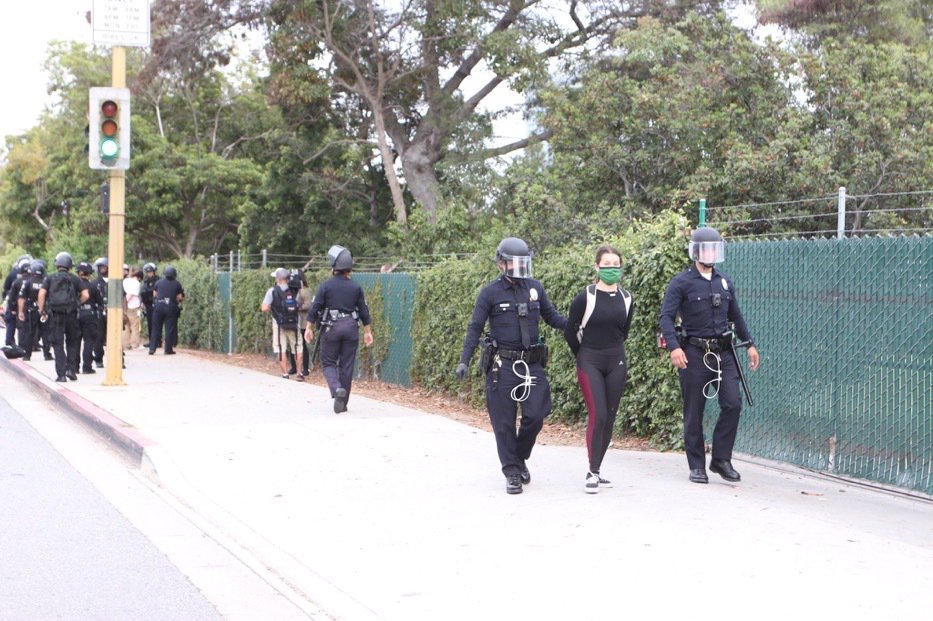
Amid all of this, Romberg described her schoolwork as hardly her priority.
“I actually had a girl on the bus get my phone out of my backpack,” she said. “I was still handcuffed so I was holding (the phone) and (another girl) was using her finger, and we had another girl moving her hand on my phone emailing my professors.”
Romberg said she stopped meeting her deadlines because she went to as many protests as she could. And when she was not at a protest, she was driving people to protests.
“I threw my work to the wind,” Romberg said. “I was like, that is not my priority right now. ... My F is not going to kill me, but the issues at hand right now are killing people and they’re killing innocent people.”
Nothing took precedence over human lives, simple as that, she said.
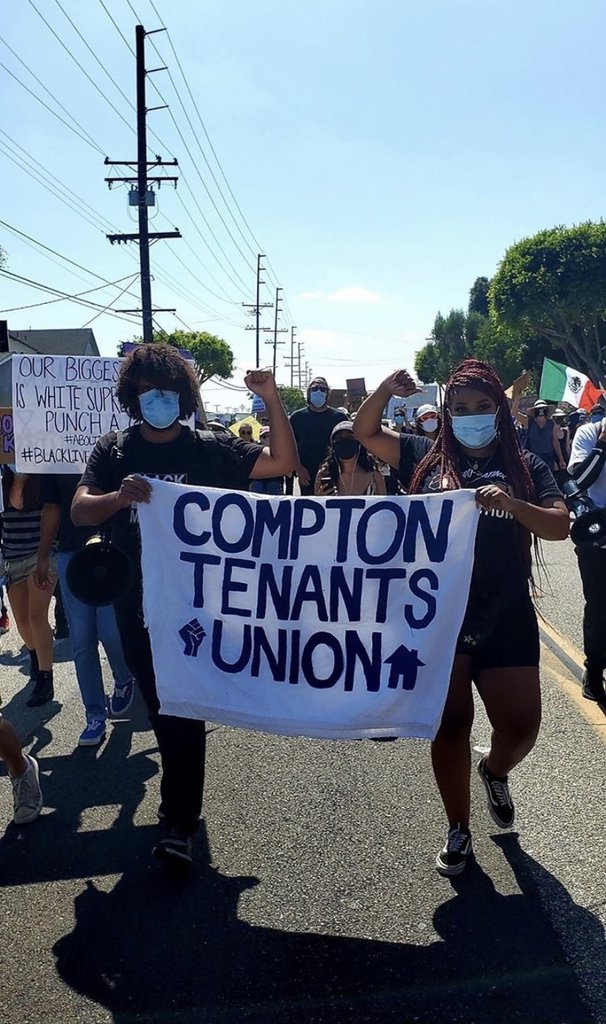
De Anna Pittman, a fourth-year African American studies and political science student, said she decided to fight back against the encroaching gentrification in her hometown of Compton by advocating for tenant rights to protect the residents of her city.
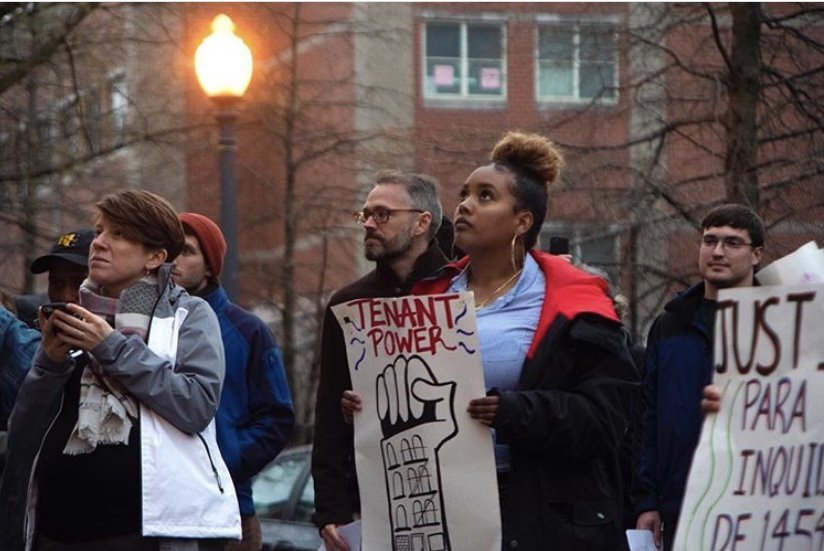
In May, she became a founding member of the Compton Tenants Union to fight for housing justice as the pandemic put more renters at risk of being evicted.
She used social media platforms to challenge local leaders to address homelessness and housing injustice, such as the homeless population being criminalized for using outdoor tents while people in New York were allowed to dine in them, and inaction in addressing potholes and gas leaks affecting residents in her city.
Pittman also joined the youth-centered organization Compton Rising, through which she helped bring a community fridge to her hometown during the pandemic. She joined demonstrations to defund police, who were viewed as a constant threat to the community, in Compton, especially after they shot 18-year-old Salvadoran American Andrés Guardado in her city.
At one protest, she described how she marched with hundreds of fellow Compton residents to the sheriff’s station. At the end of the peaceful demonstration, police started firing tear gas and rubber bullets at the demonstrators.
“The scene was so chaotic,” she said. “It felt like a war zone.”
Even with impending deadlines, lectures to go to and finals week approaching, Pittman felt that Compton was in a state of emergency, and it was the time to act.
Though the organizations she joined and protests she attended monopolized a lot of her time, Pittman described how, as a Black woman, it was most important for her to spend her time serving her community. When protests began at the end of spring quarter, Pittman was taking classes in the African American studies department and felt thankful that many of her professors were sympathetic to the cause and gave many students extensions.
“All this work that we’ve been able to do would not have been possible if the school year and the pandemic didn’t happen,” Pittman said. “I can’t be in two places at once. But because of online learning, I tend to be at home, and should I need to show up to an illegal eviction or a protest or something, I can do that.”
Kara Asuncion, a second-year public affairs student, also became involved with activism after schools were moved online during the pandemic. Her local school board in Tracy, California, imposed a hybrid model on schools in the Tracy Unified School District without providing the necessary guidance and infrastructure.
“Our school board did not bother to talk to parents or teachers or students to gauge how they felt,” she said. “They just did not give (teachers) time to prepare.”
Asuncion challenged the school board by helping organize small protests outside of the Tracy Unified School District office, which caught the attention of local parents and teachers who joined the movement, helped create a Change.org petition and sent out emails to the school board pushing it to reconsider.
After about a week of applying pressure, Asuncion eventually got the school board to reverse its decision.
As she advocated for her local schools, her own schoolwork began to feel trivial, she said.
“During spring quarter, I wasn’t even very active with social justice issues because, at the end of the day, you still have to prioritize your mental health, and honestly school (was) so pointless, but (I) just had to go through the motions,” she said. “I think prioritizing your mental health is still important. ... You can’t be there trying to make a change if you’re burnt out.”
Corey – an ally herself, having participated in civil rights demonstrations since age 18 – understood student stories like Romberg’s, Pittman’s and Asuncion’s and took these into account in her class plan.
“I was also too distracted to think that it was important to write a paper,” she said. “We were participating in a historical moment. ... It was a teaching moment, (and) it was a moment I’ve been waiting a lifetime for.”
Corey would have been in the streets too had there not been a pandemic, she added.
“I didn’t get to go, and it was very painful for me not to be there,” she said. “Had there not been a pandemic, you would have seen tens of thousands of people from my generation.”
Corey modified finals to alleviate the pressure on students and created an option for student activists to write about their experiences in place of the final paper.
“(Reading those accounts from students) was a way for me to participate because I couldn’t physically go out there,” she said.
Like Corey, many UCLA professors modified their finals or made them optional.
“I definitely would have failed my classes if they still made me take a full-on final,” Romberg said. “Those last two weeks of classes, I was not there. I was at a protest or driving people.”
In June, following the death of George Floyd, I remember anxiously attempting to write my research paper as I watched Washington, D.C., protesters squaring off with police on TV. These protesters, virtually all of them donning face masks, reminded me of a message I had heard a couple days before: America was fighting two diseases – COVID-19 and racism.
As I watched events unfold on TV, I was writing about the past. My paper was about the marginalization of African American women throughout American history. But it was difficult to concentrate as this significant moment in Black history passed me by.
I was frustrated. It felt like the moment I would gather my thoughts and attempt to type a few sentences, I was interrupted by the scenes unfolding on the newscast. I would try to read research articles, get all the way through and realize that I didn’t retain anything at all. The solution was to turn the television off, but that felt too much like turning my back on the very issues I was writing about.
As someone with a preexisting medical condition, joining the protests during a pandemic was not an option for me. But I wanted to spend all my energy getting involved. I would participate in the ways I could, but I was always worried I wasn’t doing enough. When I sat before my computer screen that day, more than ever, I could not shake the feeling that I wasn’t.
When I last talked to Corey, she helped me understand the value in what I was doing.
“Academics are intellectuals, ... and they help to articulate a narrative that other people can respond to,” she said. “Being an intellectual who is an activist is just a fact of life. ... There is a fight to be fought, and you use your intellection to add to that.”
I considered that, at a time when my own community was under attack, perhaps writing about the plight of African Americans was not a betrayal or loss. As a Black woman myself, I was participating in the articulation of our narrative, and there is value in that.
There is value in academia and scholarship. There is value in knowledge because it is a weapon for fixing our system. In some ways, writing about the Black community, even in an academic setting, was activism in itself.
But there are also times when the academic machine needs to be powered down. During a crisis, student activists put down their essays and their exams and immediately reacted. There are times when people may feel compelled to turn away from books and take to the streets, and there is value in that too.