
One year ago, Jeffrey Dymond feared for the future of his doctoral degree. Struggling to access the archives he needed for his dissertation on the Italian Renaissance, his limited research prospects weighed him down.
"There were a few things that I was not able to access because of the restrictions imposed," he said. "So I had to make do with a more limited amount of resources that were available online."
But shortly after Dymond graduated in June 2021, he flew 5,913 miles to Switzerland, ready to continue his research at the University of Zurich.
Dymond’s journey, like those of many other graduate students, was not simple. For the past two years, limited travel, online databases and ongoing uncertainty have characterized graduate education at UCLA – a time in a student’s life that usually teems with the opportunity to explore the world beyond Westwood. In spring 2021, amid continued travel restrictions and concerns about the COVID-19 pandemic, PRIME spoke with three graduate students forced to stay home despite the global nature of their work. Over a year later, PRIME caught up with these same researchers to find out how they trudged on, obstacles and all.
Early last spring, Ashlyn Ford acutely felt the loss of her study abroad opportunity. Ford, a graduate student in ecology and evolutionary biology, initially anticipated traveling to the white sand beaches of Moorea, Tahiti for her research but could not make the trip in 2020 because of COVID-19 travel restrictions. As she juggled working as a teaching assistant online while studying for qualifying exams, Ford grappled with the uncertainty of whether she would complete her doctoral degree on time.
"I felt I was behind compared to some of my other colleagues," she said.
But as COVID-19 case counts fell, Ford’s prospects looked brighter. In summer 2021, she boarded an eight-hour flight to Tahiti – a trip that proved critical for her degree progress.
As part of her research, Ford dove into the Tahitian waters with the goal of finding a single coral disease on which she would base her entire dissertation. There was no guarantee she would find the disease in Moorea at all, she said, which only heightened the stakes of the long-delayed trip. She spent her first few days in the field anxiously swimming along the shoreline, hoping that everything would soon fall into place after over a year of lost potential research. Eventually, she found the diseased coral she was hunting for and celebrated her relief with ice cream.
"It (the trip) gave me a sense of reassurance that I'll be able to finish my dissertation – that I'll be able to get the data I need to do that," Ford said.
Now, Ford looks forward to conducting additional research in Moorea as well as in the crystal clear waters of the Caribbean as she continues to advance her academic career.
But for other students, travel has remained a deferred dream. Phil Hoffman, a graduate history student, intended to study at the American University of Beirut before the pandemic. However, amid the shelter-in-place orders of spring 2020, he turned to online databases and digitized archives in order to continue his research on popular media in the Middle East. As he works toward completing his Ph.D. in 2025, Hoffman said he anticipates his continued reliance on these same tools, especially considering how much he has already been able to accomplish digitally.
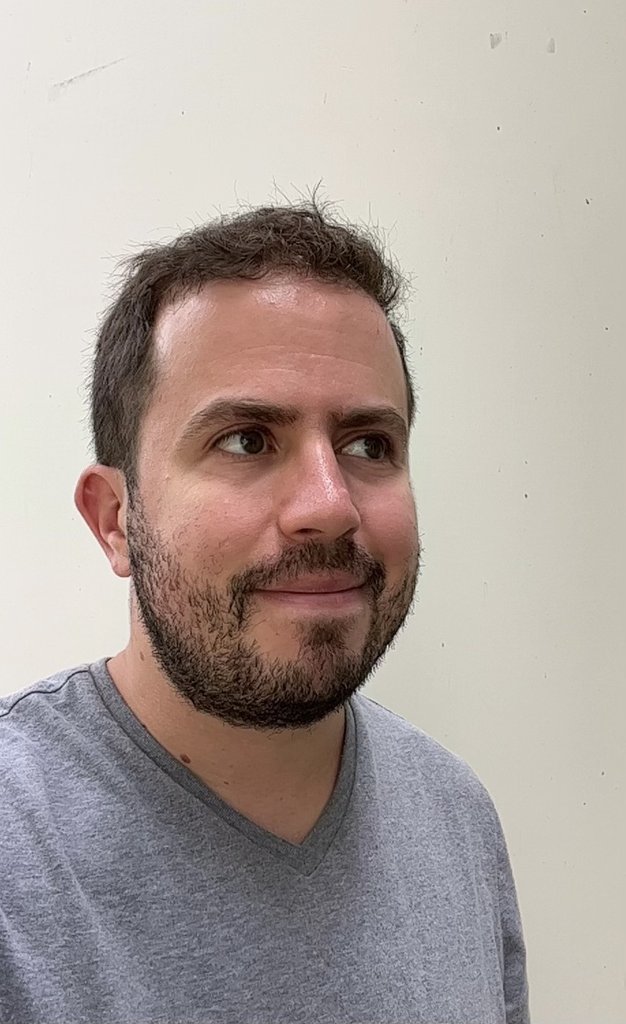
"It's hard to kind of see what the gaps in your research are when you don't have access to those full archives. So I don't want to minimize that," he said. "But I was still able to do a fair amount of stuff."
Although mundane compared to international travels and firsthand field experiences, UCLA’s digitized archives became an indispensable resource for many researchers. For Dymond, the HathiTrust service emerged as a silver lining during an otherwise anxiety-inducing time.
Yet, despite the conveniences of online research, Dymond still felt a travel-sized hole in his UCLA experience. Prior to the COVID-19 pandemic, he had hoped to attend an exchange program at the Scuola Normale Superiore in Italy. In spring 2021, the opportunity seemed to still be in the cards for Dymond. But this year, he revealed things hadn’t gone as planned.
After the pandemic pushed back the program’s start date on several occasions, Dymond said he came to the heart-wrenching realization that he would receive his diploma without traveling for the last several years. While he traveled to Switzerland after graduation for his work, Dymond said he felt robbed of the true graduate student experience.
"It's really important to find a way to meet other scholars who work in other countries and network with them," he said. "I think that was a real loss from the perspective of long-term research capacity and long-term career prospects."
Compounding this loss, solitary research and long meetings over Zoom led Dymond to graduate without fundamental student-teacher interactions, losing an integral part of his UCLA experience. Dymond longed for not only in-person courses, he said, but for the casual conversations with professors that would occur after class.
"That's disappointing because I would have otherwise had the opportunity to benefit from that knowledge," Dymond said. "That was taken away."
Even as travel opportunities become available again, students continue to face the consequences of the pandemic on their careers in academia. Ford said she would have spent part of the past school year attending national and international conferences had the pandemic not impeded her plans.
"As a scientist, that's kind of important because that's how you network with people – you learn about other people in your fields," she said.
In 2020, Hoffman received the Graduate Summer Research Mentorship grant, which enables UCLA graduate students in the social sciences, arts, humanities and other fields of study to present their research at a professional conference. But with rising case counts and safety concerns, he chose to defer his use of the grant. After waiting several months, he finally presented his research on public figures in the Syrian media to the Middle East Studies Association of North America in November 2021. Despite Hoffman’s rocky journey to candidacy, he remains positive about what he has accomplished during his time at UCLA thus far.
"I don’t mean to say the last few years have been all sunshine and roses, but I think in retrospect, things could have gone a lot worse," Hoffman said.
Yet amid unexpected bouts of time at home, graduate students found new ways to channel their energy. Although the COVID-19 pandemic prevented her from attending international conferences, Ford still connected with others by joining the Black in Marine Science organization. Through the organization, Ford said she found valuable mentors who could help her navigate her remaining time in school as well as life after UCLA.
Beyond support from local groups, she even found familial support, as her father purchased her a scuba set to support her research studies. Despite her hesitancy to accept her father’s generosity, Ford said her dad was insistent on supporting her research, knowing that his daughter had felt burdened by the lack of departmental funding offered to students in her program.
With more time at home in the midst of the pandemic, Ford was able to focus on hobbies that were particularly meaningful to her. She participated in a task force addressing issues of racial equality in the ecology and evolutionary biology department, helping to create new support systems for students of color.
"Once these issues are resolved, I feel … people of color, Ph.D. students (and) master students will more likely stay in the program," Ford said.
Other students took the extra time at home to consider their lives outside of academia. Hoffman in particular said he used his downtime to reflect on his priorities and reconnect with old friends.
"COVID forced me to slow down a lot, and I'm just looking forward to building relationships and enjoying life," he said.
Prior to the pandemic, Hoffman constantly crossed the globe, conducting research in countries from Turkey to Jordan. Though he has found comfort in spending time with his loved ones in New Jersey, Hoffman said COVID-19 restrictions forced him to reckon with his identity as a traveler.
"It is hard. You have to kind of look in the mirror and be, ‘Who am I if not the person … who travels all the time for work, for fun, for research?’" he said.
For Dymond, extra time at home finally lent itself to travel, as he relocated to Zurich to begin work for one of the few jobs available in a pandemic-stricken market. All things considered, Dymond conceded his graduate experience was less than ideal.
"It (the pandemic) definitely sort of affected my experience … with the result that it just was not as beneficial," he said. "Yeah, I guess I didn't get as much out of it as I could have gotten."