
It was 7:54 p.m. on a brisk Saturday night. According to the iPhone Weather app, the air outside hung at 48 degrees – practically subzero temperatures for Los Angeles. But the cold was no deterrent for the Creamy Boys food truck. For the team inside, it was triple-digit temperatures, and customers were in dire need of something sweet and refreshing. It was positively perfect ice cream weather.
Creamy Boys Ice Cream is the midpoint between an Instagrammable snack spot and a friendly neighborhood ice cream man. The truck serves up real fruit ice cream, a staple sweet in New Zealand made with only a vanilla base and frozen fruit. Its bright pink lights first catch people’s eyes, but Creamy Boys’ pastel swirls of icy sweetness reel people – including many UCLA students – in for a taste.
Since fall 2021, any niche craving has been only one food truck away for students living on the Hill. Food trucks were first introduced to UCLA to counter staffing shortages in the dining halls after students’ return to campus, and they have since become a fan favorite. On a typical day, eight to nine different food trucks will call UCLA home for one of three meal shifts.
Among the array of food truck options at UCLA, Creamy Boys stands alone. Even when temperatures drop and nights stretch into midnight snack territory, a devoted fan base flocks to the truck in droves of more than 200 students per shift.
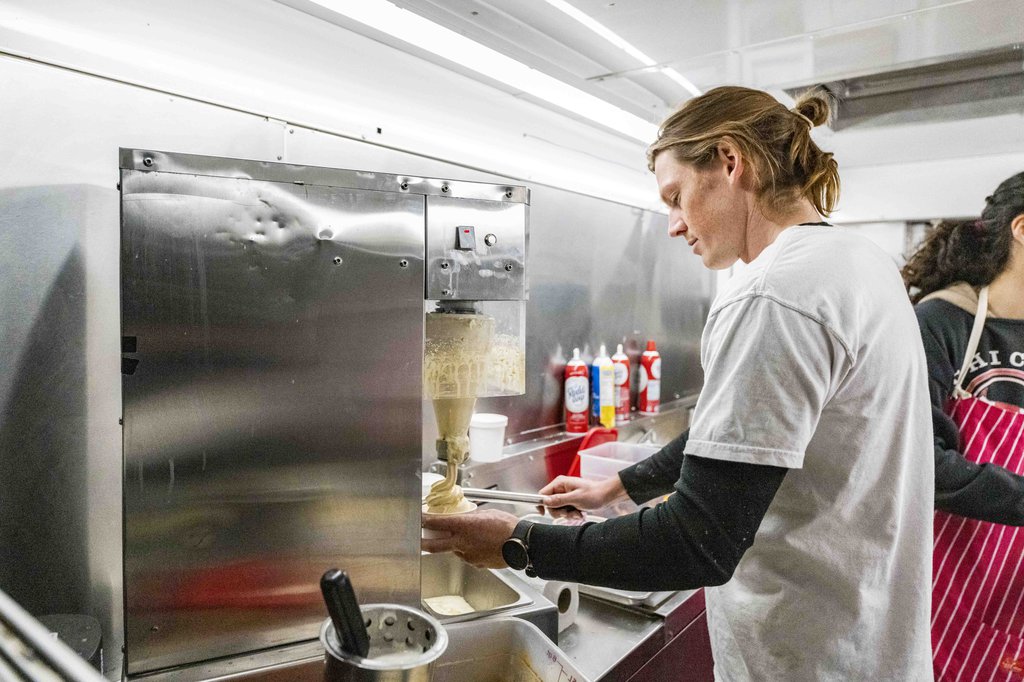
The inside of the Creamy Boys truck resembles a hybrid between a garage band studio and a mechanized conveyor belt. Despite the trailer’s cramped conditions, each team member seamlessly assumed their unique role in the ice-cream-making process. Standing center stage in a cheerful blue-striped apron, Duncan Parsons conducted the controlled chaos of Creamy Boys with each pull of the ice cream machine’s lever.
Hailing from an apple orchard in New Zealand, the owner and operator of Creamy Boys grew up in fields of strawberries, peaches and plums. During hot summer days growing up, Parsons cooled off with real fruit ice cream on his walks home from work. Parsons said he now associates ice cream with childhood nostalgia, reminiscing on time spent with his friends.
"Our life was really about eating fruit from trees," Parsons said.
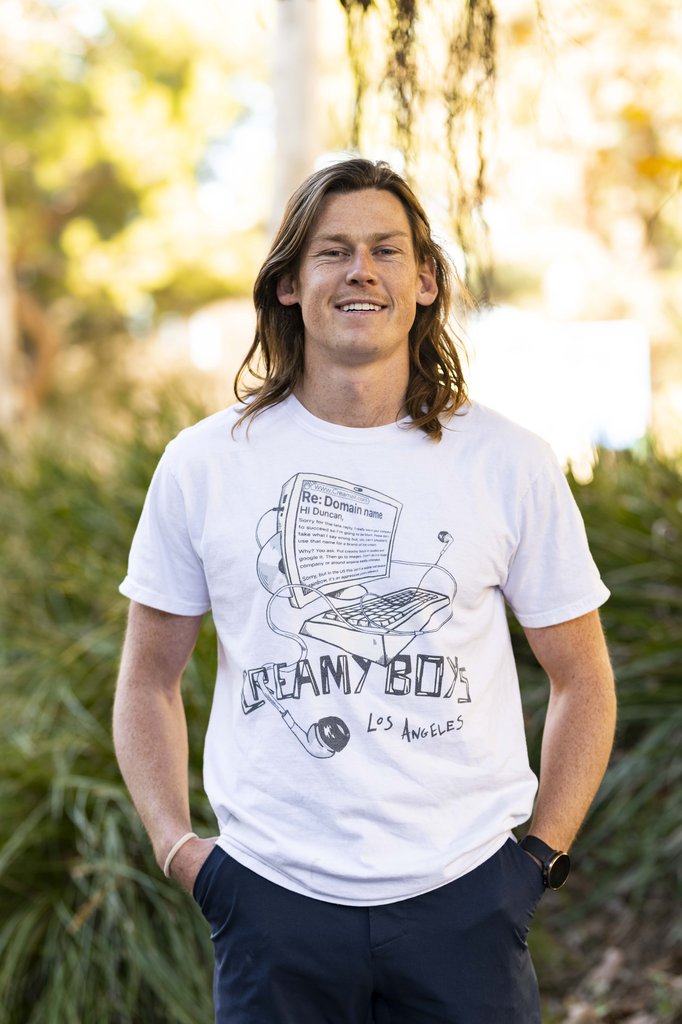
This philosophy of incorporating fresh fruit into everyday food remained with Parsons throughout his undergraduate studies at Duke University. After graduation, Parsons moved to LA, enticed by the lively food truck scene and sunny weather – perfect for ice cream. Embarking on a new passion project, Parsons turned to an old friend for support.
Like Parsons, Joe Wedd grew up in the orchards of New Zealand. When the opportunity arose to start an ice cream truck, Wedd knew it was too sweet to pass up. He signed on as the special projects and operations manager of the burgeoning business.
Working with a food truck builder from Long Beach, the friends’ shared dream of running an ice cream truck came to fruition. By April 2021, Creamy Boys was on the road.
Nearly two years later, the truck is making a prolonged pitstop at UCLA. Although ice cream is usually reserved for the sweltering heat of summer afternoons, Creamy Boys has found its footing in the cold night of the 8 p.m. to midnight extended dinner shift.
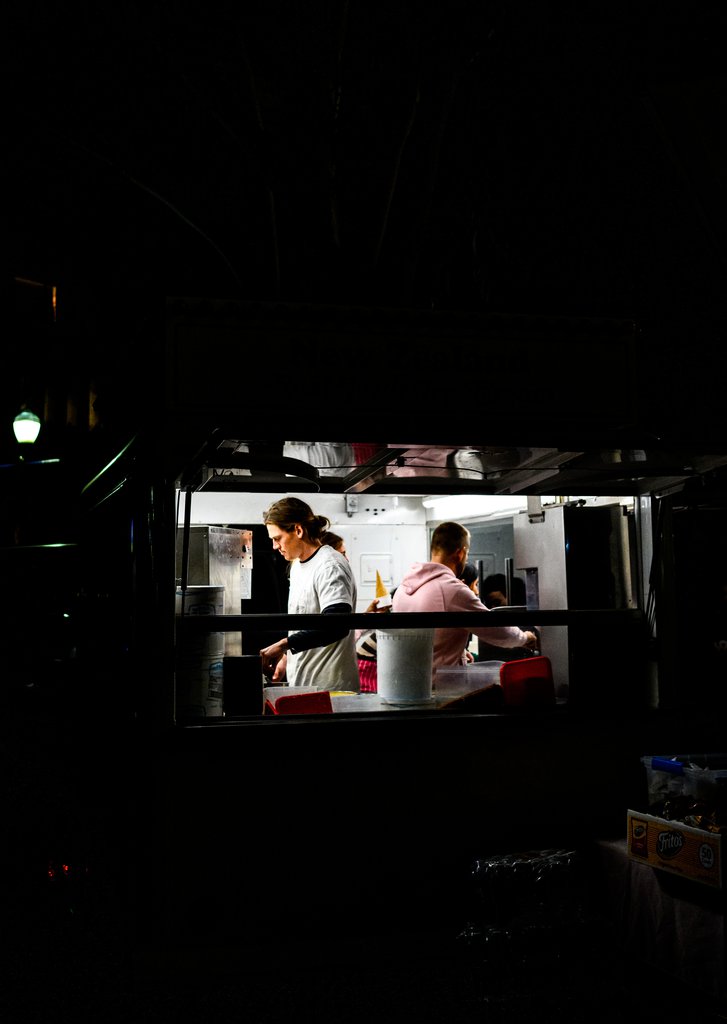
Among the courageous souls stopping by Creamy Boys on this chilly January evening was Alysa Phattanaphibul. The first-year materials engineering student was the first in line, claiming her spot long before the truck’s neon lights snapped on. Grabbing a late-night soft serve at Creamy Boys isn’t just about satisfying her sweet tooth – for Phattanaphibul, it’s an opportunity to bond with friends.
Phattanaphibul recalled how one night, ice cream helped to relieve some of her sadness. After snagging some soft serve, she ate with her roommates on their dorm floor.
"I was crying, and I was really sad," Phattanaphibul said. "We found out Creamy Boys was here, and my roommates were just trying to lift my spirits."
Phattanaphibul, who had stopped by Creamy Boys with her roommate, continued recounting stories until reaching the front window. While Wedd scribbled her name onto the bottom of her bowl, Phattanaphibul dropped a small blue slip as payment into a jar. As the jar accumulated more slips, it became clear Creamy Boys was having a busy night.
Despite their resemblance to Monopoly money, these meal vouchers signal a food truck’s success. At the front desk of any of UCLA’s main residential halls, students can redeem one meal swipe for one food truck meal voucher. These vouchers can be exchanged at any food truck on campus for one of the meals on their UCLA-specific menus.
According to an emailed statement from UCLA Dining Services, each individual meal voucher is valued at $9 – the cost of producing one meal for one person. Per the statement, this cost was calculated by dividing the annual cost of food and labor by the number of meals served each year. At Creamy Boys, this translates to a cup of soft serve with a choice of topping and chips and/or cookies.
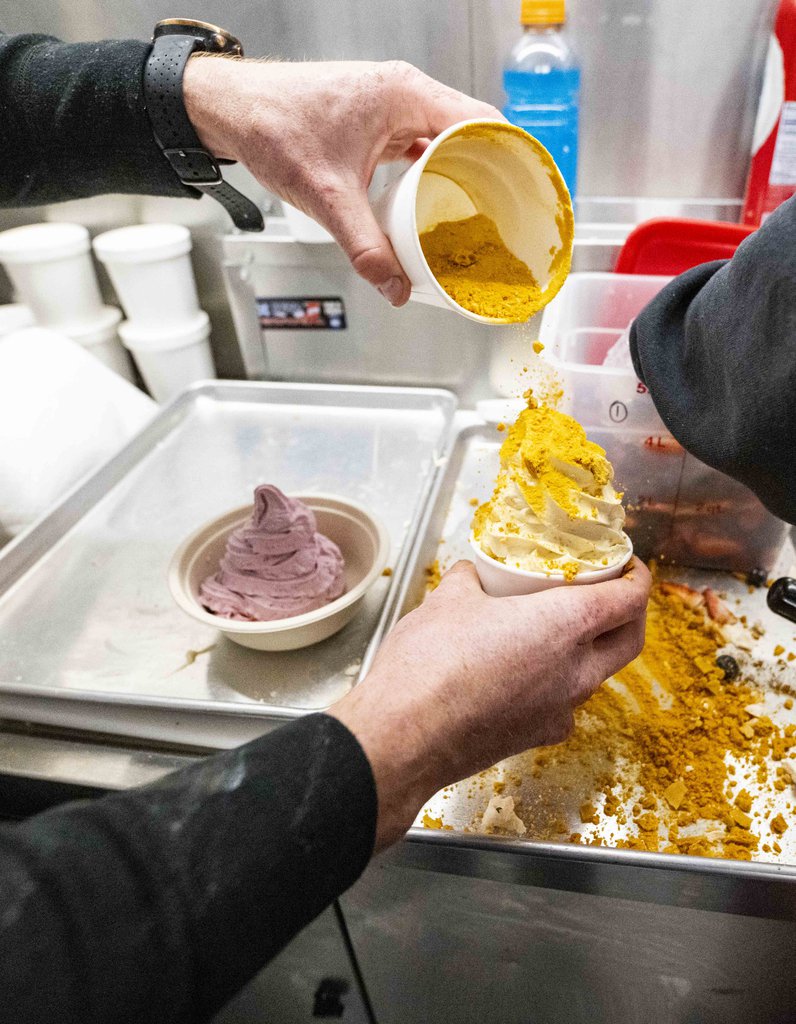
After a shift, vendors like Creamy Boys exchange the vouchers with UCLA Dining, which then reimburses the food trucks and produces an invoice for payment, according to another emailed statement from the department.
"It’s nice because it’s simple and accessible for students, and it’s straightforward for us," Parsons said.
Although Creamy Boys now has a steady stream of student customers, the truck has traveled a long and winding road to serving UCLA – traversing the tumult of a global pandemic.
According to Parsons, one of the most difficult obstacles Creamy Boys faced during the height of the COVID-19 pandemic was finding a consistent consumer base. Lockdown mandates canceled many community events, typically a prime spot for food trucks. Even when these events resumed, Parsons said the constant changes in COVID-19 safety protocols made planning for the future a nearly impossible feat.
After searching for a loyal pool of ice cream fanatics at LA night markets and movie sets, Creamy Boys arrived at UCLA in December 2021. Wedd anticipated a gradual ease into serving the campus, expecting fewer than 100 customers on the first night. But that inaugural shift far surpassed his initial expectations. A mass of 350 students showed up, ready for a post-study treat.
"We actually ran out," Wedd said. "We were giving out stickers, just being like, ‘Sorry guys.’"
As word of real fruit ice cream and pavlova – the truck’s signature New Zealand-style meringue dessert – spread, the truck developed a cultlike following. Now, students even begin chanting for Creamy Boys as the truck drives in, Parsons said.
Following the challenge of developing its customer base, the UCLA community provided Creamy Boys with constant business. While food trucks scarcely encounter repeat customers because of the lack of a consistent storefront, serving UCLA on a regular basis drew frequent attendees to the truck.
Student life has since bounced back from lockdown days. Not far removed from his own time as a student, Parsons said the lively energy of a college campus is one of his favorite aspects of serving the UCLA community. He noted that the connections he has forged with students have allowed him to fulfill his mission of fostering a sense of community.
"We’re not just giving, say, ice cream with pavlova ... but also some entertainment and a brand they actually care about," Parsons said.
While Creamy Boys has enjoyed success serving the Hill’s residents, the food trucks haven’t been a welcome presence for everyone.
Creamy Boys’ stability stemmed from UCLA Dining’s instability during the return to in-person instruction in fall 2021. In response to labor shortages in the dining halls on the Hill, the university brought in independent food trucks as students returned to on-campus housing. Although UCLA has since lifted many pandemic restrictions, UCLA Dining said in the emailed statement that food trucks have continued serving students because of persisting workforce shortages.
Since the return of students to the Hill, relations between UCLA Dining and the American Federation of State, County and Municipal Employees Local 3299 – the labor union representing UCLA Dining employees – have been underscored by tension. At the center of conflicts is the outsourcing of dining labor to non-University of California employed workers. The addition of food trucks has only complicated this debate further; in fall 2021, protests against the university’s response to staffing shortages were held just outside dining halls.
Todd Stenhouse, a spokesperson for AFSCME Local 3299, said the presence of food trucks at UCLA appears to be a form of outsourcing. According to Stenhouse, Article V of the union’s contract with the University restricts how many UC jobs can be outsourced. UCLA is relying on a third-party vendor system to perform tasks that dining workers would usually do, Stenhouse said.
"If the University says, ‘We have a need, it can’t be met by our current workforce,’ their first step is to confer with their bargaining unit (the union) about that need," Stenhouse said. "That has not happened in this case."
According to an emailed statement from UCLA spokesperson Bill Kisliuk, the university has worked with AFSCME Local 3299 since October 2021 to address shortages within the UCLA Housing and Hospitality Services departments. The collective bargaining agreement between the university and AFSCME Local 3299 allows UCLA to contract out dining services if there is an insufficient quantity of employees, Kisliuk added in the statement.
With staffing challenges remaining unresolved, food trucks are here to stay for the time being. Even as the clock neared midnight and the temperature approached a bitterly cold 45 degrees, a handful of students groggily placed orders just minutes before the end of the Saturday night shift. It was a long night for the team at Creamy Boys, but Wedd took the final few names with the same sunny demeanor as he used with the very first order.
"It’s really cool to see the places ice cream might get you to," Wedd said.
As the team began cleaning up the food truck for the night, they finally took a moment to relax. Styrofoam containers of takeout food in hand, they spoke freely without the constant carousel of names, ice cream flavors and toppings.
Despite four hours of soft-served mayhem, Parsons appeared as laidback as always, his pink hoodie no longer covered by his apron. He leaned against the side of the trailer with an air of contentment.
"My vision starting the ice cream truck was: This will be fun. This would be a cool thing to do," Parsons said. "Why wouldn’t you want to be an ice cream man? And that’s what we stay true to."