
It wasn’t long before I realized this story didn’t want to be told.
As the crowd grew at the Delta Sigma Theta Sorority centennial celebration, I searched for audience members willing to share the secrets of the Divine Nine. Amid the throngs of people, I could spot alumni catching up like there was no tomorrow and children witnessing their mothers’ legacies. It reminded me of a Black family cookout, with aunties cackling at gossip and dancing their little two-step to "Wipe Me Down" by Boosie Badazz. With such a joyous attitude in the air, certainly someone would speak with me.
But everywhere I went, attendees turned down my interview requests. One even warned me to stop looking into the matter. As my questions garnered scoffs, shrugs, polite "nos" and even dirty looks, I left the event with one key takeaway: The secrets of the Divine Nine did not want to be revealed.
For decades, conversations surrounding the Divine Nine’s membership intake process have sparked hushed whispers and apprehensive looks. Few even know how to express interest in joining the highly coveted group of Black fraternities and sororities. With no distinguished start or end date, the membership intake process can take months on end. I was determined to find out why.
Prior to the early 1900s, only white Greek organizations existed on college campuses, leaving many Black students feeling racially isolated. It wasn’t until Alpha Phi Alpha Fraternity was formed at Cornell University in 1906 that there was a surge of Black fraternities and sororities all over the East Coast. Twenty-four years later in 1930, the National Pan-Hellenic Council was formed to govern these organizations. Its purpose was to foster Black brotherhood and sisterhood through the Divine Nine groups under its jurisdiction.
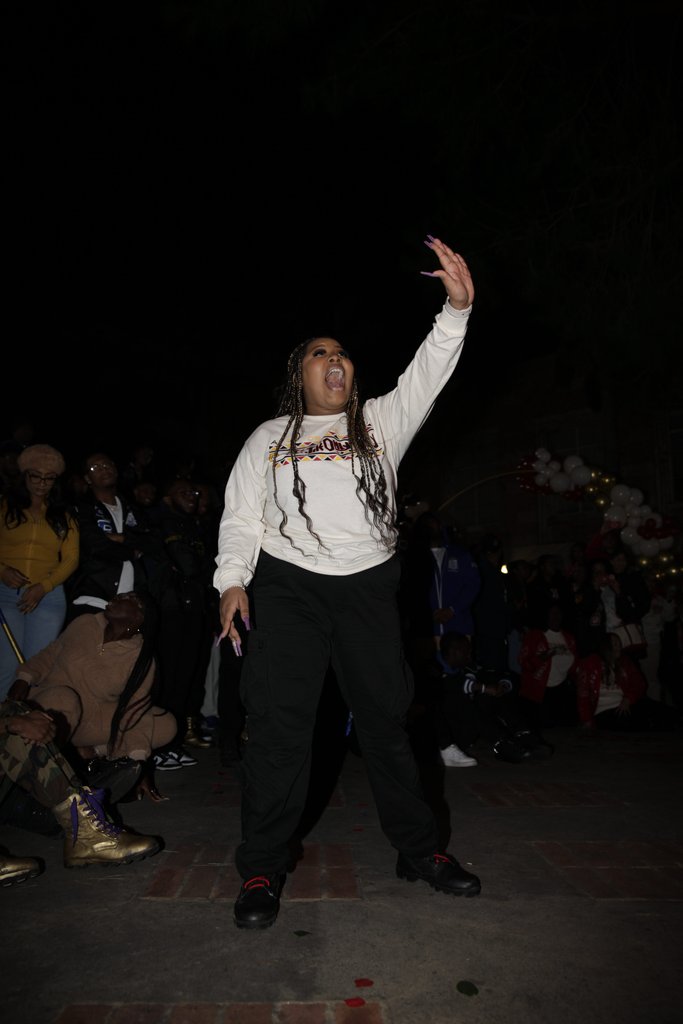
In 1923, the Delta Sigma Theta Sorority came to UCLA with the establishment of its Pi Chapter. According to Lindsey Goldstein, the director of the UCLA Office of Fraternity and Sorority Life, it was the first national Greek organization at UCLA of its kind. Since then, UCLA has added five more NPHC organizations that are currently active: Alpha Phi Alpha Fraternity, Kappa Alpha Psi Fraternity, Omega Psi Phi Fraternity, Phi Beta Sigma Fraternity and Zeta Phi Beta Sorority.
When I think of Greek life recruitment, I’m immediately reminded of the stereotypical rush week. At the beginning of the school year, sororities and fraternities invite students to their houses in order to preview each organization, extending invitations for new members by the end of the week. This process has long been a staple of mainstream, white-centric college culture. In August 2021, TikTok exploded with videos of blonde-haired sorority hopefuls dancing in expensive dresses purchased for the sole purpose of impressing potential future sisters. The trend, dubbed "Bama Rush TikTok" as a homage to the popularity of Greek life at the University of Alabama, followed young women as they partook in all the highs and lows of rush week.
I quickly realized that the NPHC membership intake process was nothing like the rush week I had seen so much about online. Organizations in the NPHC don’t heavily publicize intake events, which can make the process difficult to begin. It’s also worth mentioning that the NPHC doesn’t have a global TikTok trend to help promote its fraternities and sororities.
Furthermore, prospective NPHC members must prove that they’re in it for the long run. Once joined, members dedicate a lifelong commitment. They often join alumni chapters after college, continuing community service initiatives and offering a support system for other NPHC members.
Marcel Martin, a second-year cognitive science student and fall initiate of the Gamma Xi Chapter of Alpha Phi Alpha, finds it beautiful how members still embrace their organization after college.
"They really rep it to the day they die," he said.
According to JP Peters, the associate director of the FSL office at UCLA, each NPHC organization has its own unique membership intake process, with some similarities across the board. Students looking to join any NPHC organization must typically attend an informational event and retrieve an application for the fraternity or sorority of their choice. Then they must submit this application along with a letter of recommendation to the organization in order to secure an interview. If accepted, newly minted members must pay a one-time fee.
Jerica Watson, a fourth-year African American studies student and the president of the Nu Lambda Chapter of Zeta Phi Beta, said the NPHC intake process differs from others partially because of a lack of resources. Without traditional sorority and fraternity houses, NPHC organizations are not able to invite students to preview their organization in the same fashion as others.
The lack of housing among the NPHC organizations reflects systemic racism, Watson said. She explained that the relatively small amount of generational wealth within the Black community – an average net worth of about 70% less than non-Black households – has likely limited alumni’s ability to fund housing in expensive neighborhoods such as Westwood. While houses are a goal for the NPHC, Watson said the NPHC prioritizes serving communities in need and putting forth action toward local community service projects rather than simply donating money.
"Even if we’re not in the same Civil Rights Movement era, we still have a disproportionate amount of Black people in poverty, a disproportionate amount of Black people uneducated," she said. "We take those initiatives very seriously so that we can advance our people."
At the same time, fewer students are interested in membership in NPHC organizations than in other Greek life groups because of the small Black student population at UCLA. For reference, the Black student population only makes up 5% of UCLA’s total undergraduate student population, according to a UCLA report. While other organizations use rush weeks to quickly evaluate large numbers of interested students, NPHC organizations focus on deeply familiarizing themselves with a smaller group of prospective members, Goldstein said.
Martin shared that the membership intake process is especially selective in order to protect the prestigious image of NPHC groups.
"You can’t just let anybody into such an illustrious organization that upholds itself on academic excellency, brotherhood, scholarship, community service and advocacy," he said.
Watson agreed, explaining that the intensive process helps her find the most dedicated potential members. To prove their commitment, applicants are expected to attend events ranging from community service activities to yard shows, she said. Without a specific period of time designated for intake, students often express their interest for months – and sometimes quarters – on end, she added.
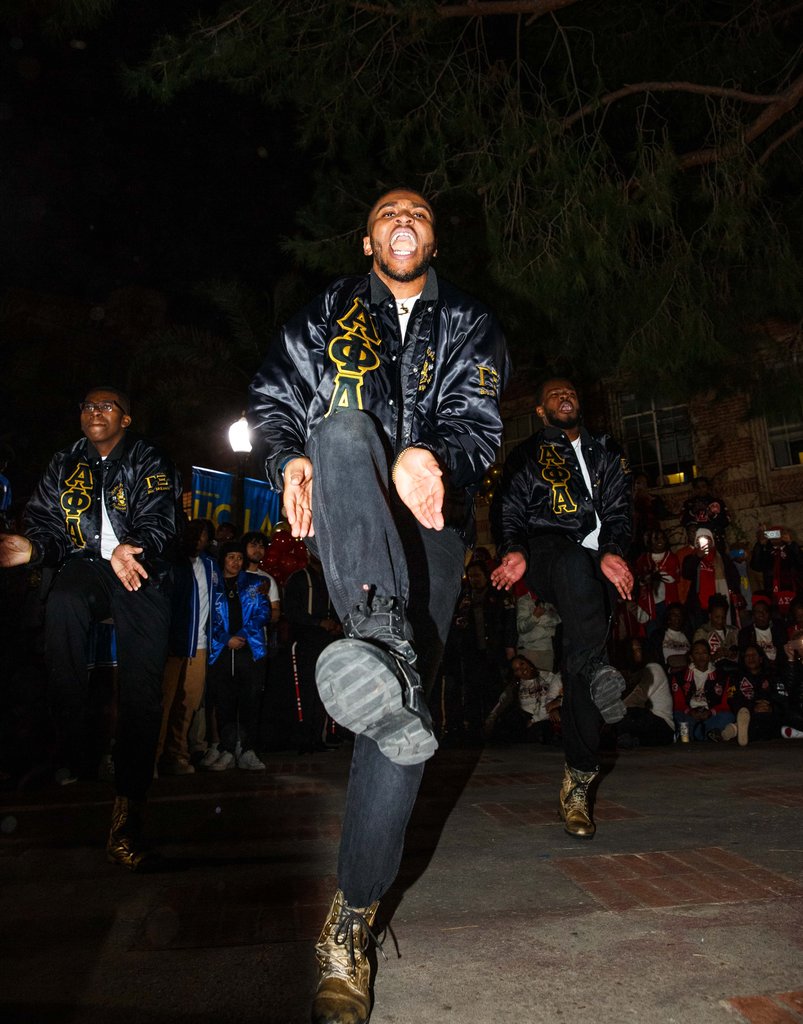
"We essentially want to observe who is interested in our organization, who comes around and who wants to learn about our history," Watson said.
With such a long process, it can be challenging for students to keep up their morale. For Watson, the rigorous procedure led to her own rejection by the sorority.
"I could have easily taken that rejection and have been like, ‘They’re weird. I don’t want to be in this organization,’" she said. "Or I could have been like, ‘You know what, they’re right. I’m taking accountability for that, and next year, I’m going to go harder.’"
But for others, the secrecy surrounding the membership intake process is too much to bear. Student A, a first-year psychobiology student who wanted to remain anonymous because of their interest in joining the NPHC at a later time, recalled attending an informational event in October.
"It’s always been known to be very secret," Student A said. "You kind of sell yourself to them. ...We thought that they (NPHC members) would be talking to us, but you have to put the effort in and put yourself out there."
Student A had been attending intake events with a friend, but eventually, they postponed any efforts to join despite their desire for Black community. Although they felt like the NPHC was one of the few places where they could find the community they desired, the process was ultimately too strenuous.
For Student A, it was surprising that they had to market themself to the NPHC organizations since other recruitment processes often have them reaching out to prospective students first. To add on, Student A said they didn’t feel like they clicked with any sororities and that intake expectations were not communicated with transparency.
"You don’t really know how to even go about it, and no one really tells you," Student A said.
Although the membership intake process may be intimidating for some, NPHC members feel a strong moral and social obligation to honor the history of their establishment and protect its legacy. James Smooth, a second-year psychobiology student and the president of the Nu Delta Chapter of Phi Beta Sigma Fraternity, emphasized the need for exclusivity in legacies.
"There’s some honor that’s sacred to us," Smooth said. "We don’t just offer that to anybody."
Smooth recalled his first intake event before joining Phi Beta Sigma. He realized that his fraternity was the right place for him after a day of handing out essential items such as clothing, water and food to people experiencing homelessness on Skid Row.
Martin agreed that the process was encouraging. As a first-generation student, he didn’t know much about fraternities beyond the stereotypes of white-centered parties that involved alcohol. However, he found that the initiation process at Alpha Phi Alpha consisted of engaging workshops on risk management, financial responsibility and academic expectations held by the organization. Although he struggled to balance the demands of joining a fraternity alongside his job and schoolwork, he added that he received support from his future brothers to help him push through.
"Iron sharpens iron – you’re being hardened into a better person," he said.
But similar to other Greek life organizations, the NPHC has faced scrutiny from critics of Greek culture. Lawrence Ross, a UCLA alumnus and lifelong member of Alpha Phi Alpha, is the author of "The Divine Nine: The History of African American Fraternities and Sororities." Published in 2000, this book celebrates the history of Black fraternities and sororities. He is also a lecturer, with his popular "Blackballed" lecture opening up conversations about racism on campus. Following his extensive research on the NPHC, Ross acknowledged that hazing still runs rampant in the membership intake process nationwide.
Ross said he is unsure of how to address the NPHC’s history of hazing throughout the nation, which has led to violence and even deaths within organizations. In order to effectively curb hazing, he believes the entire culture of the NPHC must have a revolutionary change. Expelling those who commit hazing is necessary, he argues, and there needs to be a no-tolerance rule for hazing within the NPHC.
"I pray because I don’t want to see anybody else hurt," Ross said. "That, at some point in time, we’re going to figure it out. We haven’t come to that point."
UCLA’s FSL office understands that hazing is an unfortunate reality in fraternity and sorority culture, Goldstein said. The staff is working to mitigate hazing and establish a safe environment for all members, students and faculty involved, according to UCLA’s Individual and Student Group Conduct Codes.
At UCLA, members of the NPHC are already taking it upon themselves to create safer environments. While hazing is a pressing issue within the NPHC’s history, new generations of members are working to rectify a future for pledges and members alike.
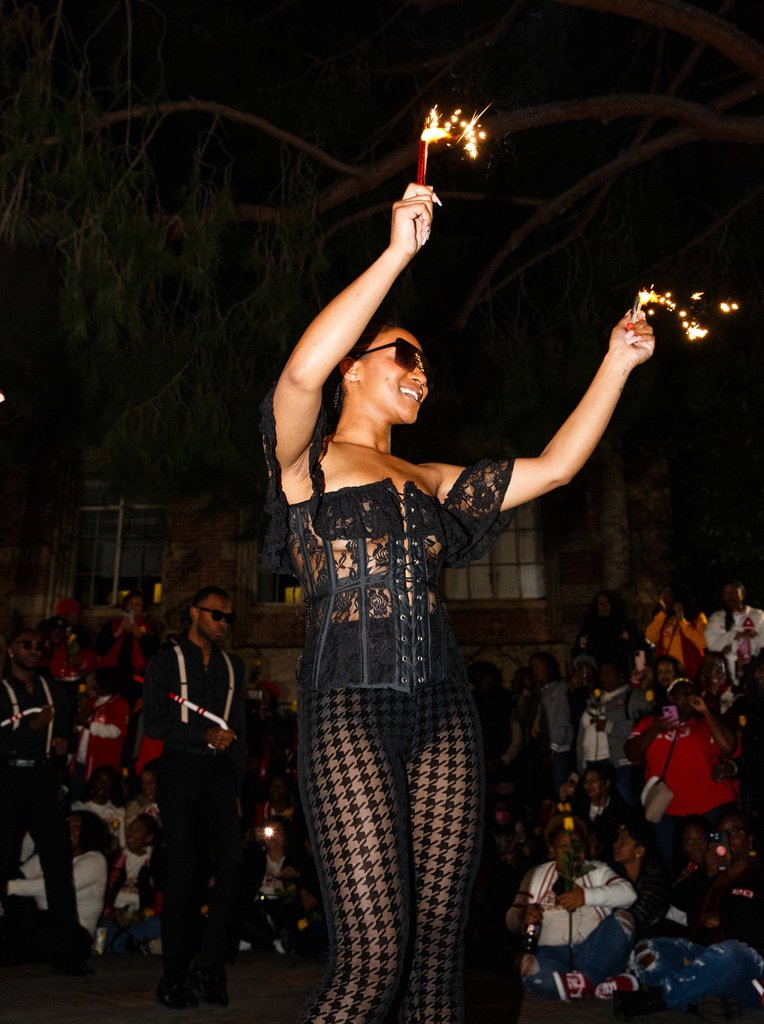
Watson said the NPHC organizations at UCLA avoid hosting parties with alcohol and drugs out of concern for both police presence – with police brutality disproportionately affecting the Black community – and hazing crimes. Rather than throwing parties, the NPHC heavily emphasizes community service, she added.
Smooth added that the purpose of Phi Beta Sigma is to help shape its members into better men through their community service initiative – not with alcohol.
"Making someone drink a gallon of alcohol is not making them a better human," Smooth said.
Along with implementing a stricter stance on hazing, NPHC organizations are also working to increase accessibility for students. UCLA NPHC President Debrina Collins, a fifth-year African American studies and sociology transfer student and treasurer of Delta Sigma Theta, wants to make the membership intake process easier to navigate.
"We would love to see more people be interested in D9 organizations, and we hope to be more accessible to people," Collins said. "We are going to continue to just be advocates in Black spaces and try and forge the path for Black students."
In partnership with the FSL office, the NPHC installed plaques near Kerckhoff Hall to recognize the original founders of Delta Sigma Theta Sorority and Kappa Alpha Psi Fraternity for recently achieving their centennials. In addition, FSL and the NPHC will install wooden plaques in the Black Bruin Resource Center, Goldstein said. These plaques will feature a QR Code for students to scan and learn more about the organization. To increase awareness about the intake process, the NPHC is also working to hold an informational panel where students can ask questions to members in a public space, Collins said.
For years, the membership intake process of the NPHC has been hidden in the shadows. The organizations operated in secret to protect their legacies. After receiving repeated "nos" to many interview requests at the Delta Sigma Theta centennial – something my social anxiety didn’t like – I was starting to think I was in over my head. But as I looked among the crowd, I saw a familiar face. Smooth came over and gave me a hug, thanking me for coming to the event. He asked how I was feeling.
"Nervous," I said. "How are you?"
"Cold," he replied, shivering in his shorts emblazoned with the Phi Beta Sigma logo. He then told me I shouldn’t be nervous – I had a place here. This story should be heard, he said, and the legacy of the Divine Nine uncovered.