
“The line can’t be this long,” I thought, staring in dismay at the coiling queue outside of UCLA’s supposedly quick-service restaurant, Rendezvous West.
It was my first day living in the dorms, and I was eager to try out a meal from UCLA’s legendary residential restaurants – the best college food in the country, as proudly advertised around campus. However, my excitement for sampling Rendezvous’s vegan burrito bowls was quickly dampened by the sight of scores of students lined up in front of me.
Our sprawling line snaked through Rieber Court and extended beyond my vision into the packed restaurant. Hungry newcomers joined us by the minute. For the following half hour, I halfheartedly fanned my masked face with my BruinCard and fantasized about the moment when I would step through the door and order.
Over the next few weeks, news about staffing shortages at the dining halls spread throughout campus – reflecting a nationwide employment crisis within the restaurant industry. A chorus of complaints from Bruins about the heat, boredom and inconvenient wait times constituted my soundtrack every time I picked up a meal.
But rarely did this frustrated chorus voiced outside dining hall doors acknowledge the hard work of the restaurant staff inside. What conversations were workers holding beyond the cash register?
On Oct. 21, after breakfast but before the pre-lunch line could stack up, I met with two staff members at Bruin Plate – one of UCLA’s busy dining halls, which has remained open this year. Food service worker Avelina Salcedo and assistant cook Marco Pacheco joined me in a private dining room after their busy morning of preparing purple potatoes and over-easy eggs.
Both Salcedo and Pacheco began working for UCLA Dining in B Plate’s nascent days. Around nine years ago, Salcedo applied for a position at B Plate upon a friend’s suggestion and was intrigued by the restaurant’s unique emphasis on fresh and healthy dining. A year later, Pacheco joined the team when the principal of his culinary school put in a good word for him.
The challenge of serving large quantities of food to a lot of students initially attracted Pacheco to his position, and the stability of a university job is what motivated both staff members to stay. UCLA’s residential restaurants shoulder the massive burden of feeding the 14,500 students housed on campus, serving an average of 30,000 meals each day. This task has been made particularly difficult because of UCLA Dining’s staffing shortage this fall.
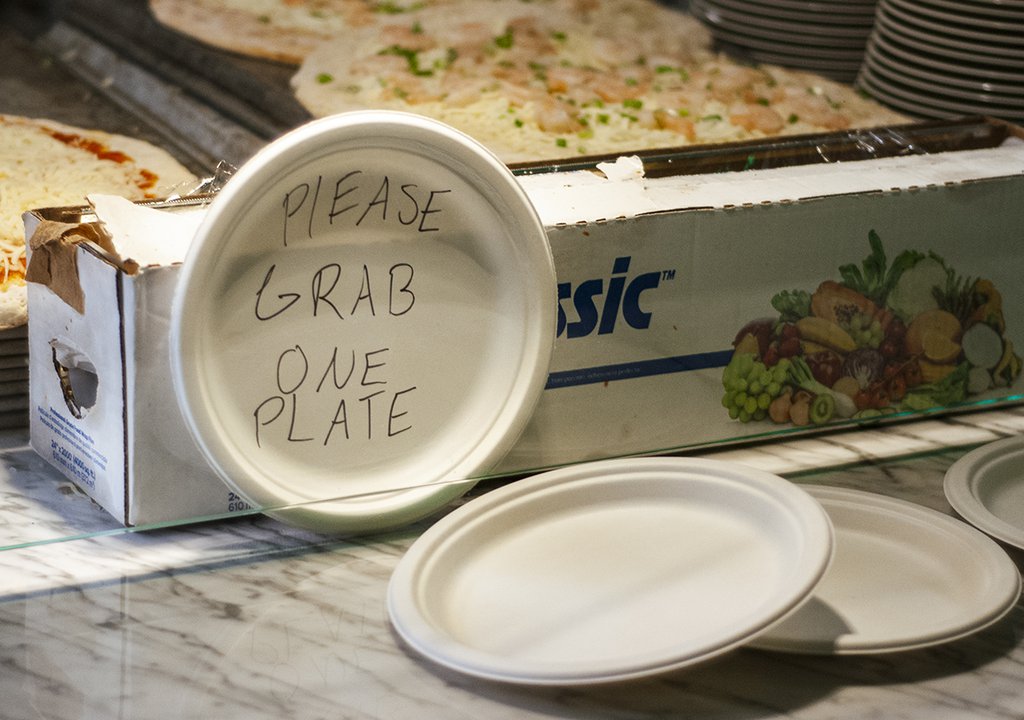
UCLA spokesperson Katherine Alvarado said UCLA Dining typically employs 692 career workers and 400 student workers annually. As of Nov. 1, only 491 career positions and 104 student positions were filled. The department was still attempting to fill nearly half of its total positions, Alvarado said in a written statement.
UCLA Dining’s labor shortage has forced popular eateries, such as Café 1919 and De Neve Late Night, into indefinite closure, despite the opening of two new dorm buildings that house 1,800 students. Campus catering has also been temporarily suspended, with employees relocating to support the dining halls. In an attempt to alleviate the extensive lines caused by the shutdowns, the department has invited local food trucks on campus to feed students.
Bruins waiting in the long lines often remind Salcedo and Pacheco of their own children, who are also of college age.
“I treat the kids here like my son, ... so I want to give the best to them,” Salcedo said.
When they claim to treat Bruins as their own, Salcedo and Pacheco are not exaggerating. In 2017, Salcedo brought a student to her family’s Thanksgiving dinner because he could not visit his family in Mexico during the holiday season. Though he has long since graduated and moved back to Mexico, Salcedo still looks back on the dinner fondly.
Pacheco also distinctly remembers the times he has experienced heart-to-hearts with students throughout the years. For example, he once stumbled upon a freshman sobbing in an elevator during move-in day. When the student expressed embarrassment for crying in front of him, Pacheco validated the student’s emotions and quickly offered his support.
“He said, ‘I’ve never been away from home. My parents just left,’” Pacheco said tearfully. “(That gave) me an idea of how you guys may feel sometimes, and that’s why we have to be a part of your lives as a parent can be.”
Pacheco also recalled the moment when a student recognized him walking away from the commencement venue last graduation.
“When I was coming back with my hat and with a mask, this student recognized me, and she even called me by my name,” Pacheco said. “She said, ‘I remember you, you used to make my omelets!’... And that, to me, was impactful.”
Salcedo and Pacheco say these positive experiences offset the challenges of working for UCLA Dining.
Pacheco, for example, wakes up at 4:30 a.m. each morning in order to arrive on time for his approximately 10-hour shift. And while Salcedo’s commute to work takes 30 minutes, traffic increases the drive to two hours on the way back home.
Salcedo has also encountered students who don’t acknowledge her presence.
“I always have a smile for everybody, no matter what,” Salcedo said. “Some students, when they come and grab their plate, some don’t say even, ‘Good morning.’”
For every downside to their positions at B Plate, however, Salcedo and Pacheco were quick to identify positive counterpoints. I have to assume that the presence of Rebecca Kendall, the UCLA Housing and Hospitality Editorial and Communications Manager, played a part in their enthusiasm. She remained seated near us for our entire conversation.

Kendall’s presence at the interview followed weeks of difficulties trying to speak directly with UCLA Dining. Administrators at UCLA Dining repeatedly referred me to UCLA Media Relations rather than agreeing to an interview. Furthermore, dining hall workers at several residential restaurants expressed a hesitancy to speak with me, stating I needed managerial approval.
Throughout my conversation with Salcedo and Pacheco, it was impossible for me to forget the dire worker shortage backdropping their labor. Evidence of the tensions between UCLA Dining and the union that represents its workers surrounded our talk that Thursday morning.
The hiring crunch’s effect on service workers has stoked controversy with the American Federation of State, County and Municipal Employees Local 3299, the union that represents more than 29,000 UC service and patient care technical workers, including Salcedo and Pacheco. The union objects to what they consider the outsourcing of labor to private contractors.
Just two hours after I arrived at B Plate, protesters outside the dining hall’s entrance demonstrated against UCLA’s handling of the shortage.
AFSCME intern and fourth-year labor studies student Bry Gonzalez attended the protest at B Plate.
“You’ve probably seen how long the lines are for dining halls,” Gonzalez said, as fellow protesters chanted behind her. “That’s because they’re incredibly understaffed right now, … and they’re also not hiring enough full-time workers.”
Alvarado said UCLA Dining has struggled to hire new workers because there simply isn’t a sufficient pool of willing applicants.
“One particular challenge is that the number of people applying for these opportunities, as well as jobs across myriad sectors, is far below what it was pre-pandemic,” she said.
According to Tobias Higbie, a professor of history and labor studies, workers’ increased demands are creating what appears to be labor shortages when, in actuality, more workers are looking for new jobs than prior to the pandemic. He noted that recent studies by Microsoft and LinkedIn have documented a spike in people considering and actively pursuing new careers.
“There’s a dynamic relationship between how many folks you can hire and what you’re paying,” Higbie said. “Sometimes the shortages that employers experience are actually because they are not paying a wage high enough to attract people.”
Gaspar Rivera-Salgado, the project director at the UCLA Labor Center, added that the rebounding pandemic economy has created a unique atmosphere in which service industry workers, including some AFSCME Local 3299 members, can rethink their relationships with their employers.
Workers nationwide have been emboldened by the tight labor market to demand more of their employers, Rivera-Salgado told me, citing recent worker movements such as strikes at Amazon warehouses.
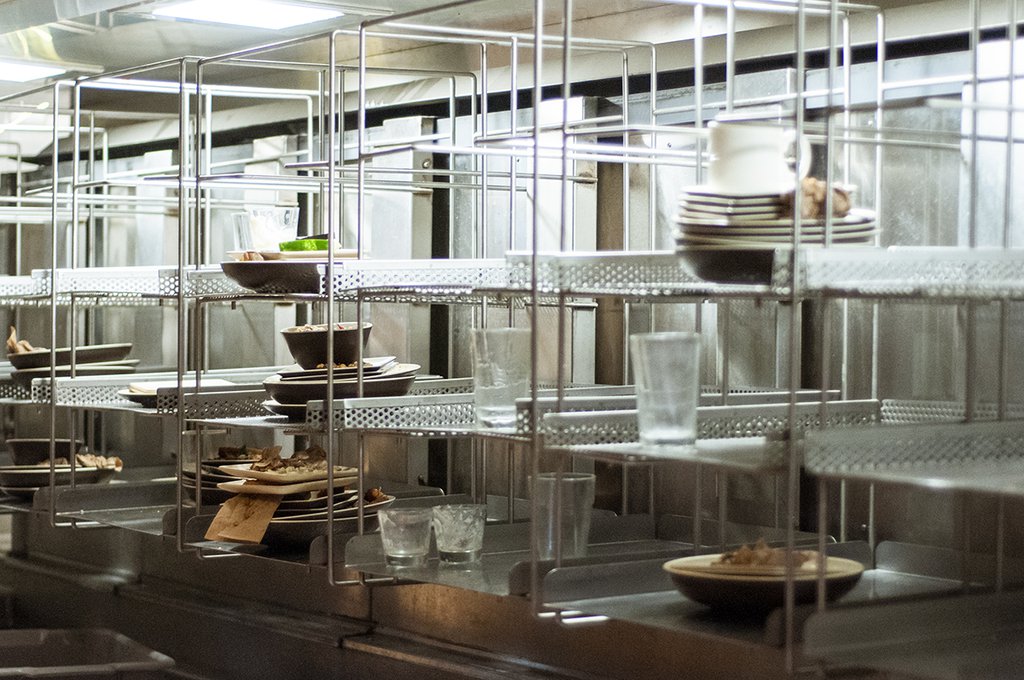
“I think that for the first time, low-wage workers and workers in general have the upper hand in terms of choosing their job and working conditions,” Rivera-Salgado added.
Rivera-Salgado explained to me that employers and government officials alike are scrambling to adjust to the labor market’s inverse of power, and the restaurant industry is a particularly difficult hiring market to adapt to the post-pandemic world. While employers in other sectors of the economy make their positions appealing by offering flexible hours and remote work, restaurant employers like UCLA Dining still require staff members’ physical presence during shifts.
Rivera-Salgado says this quandary necessitates innovation from UCLA. In addition to increasing wages, the university might need to offer career paths with more opportunities for growth, he explained.
Gonzalez asserts that the UCLA administration is avoiding solutions to the dining hall staff shortage.
“There are people in the union who are looking to work, but they don’t want to hire union workers,” Gonzalez said.
Following a B Plate breakfast one busy Thursday morning, I spoke with AFSCME Local 3299’s spokesperson, Todd Stenhouse, on the phone. Stenhouse said UCLA administration’s hesitance to hire union members is due to the university’s desire to fill vacant positions with outsourced workers from private contractors. He said the university can pay these workers lower wages and give them fewer benefits – such as health insurance, pensions, sick time and vacation time – than career UC employees.
UCLA’s inclination to outsource workers poses a major problem for AFSCME 3299, which won a contract in 2020 barring the practice in most circumstances, Stenhouse said.
The agreement states, “Contracting out should be used sparingly and treated as an option of last resort to address temporary needs, not as a means to replace employees with contractors.” The document goes on to clarify that contracting can only occur in an emergency situation where university operations cannot continue without outsourced workers.
Gonzalez believes the university is manipulating the emergency provision of the union’s agreement.
“They use that as their loophole,” she said. “So they’ve started to bring in contracted workers, which they’re not supposed to be doing, which is like a direct violation of AFSCME’s contract.”
UCLA Dining has outsourced workers across the university, Gonzalez alleged, while not responding to students applying for jobs through the administration’s standard hiring process.
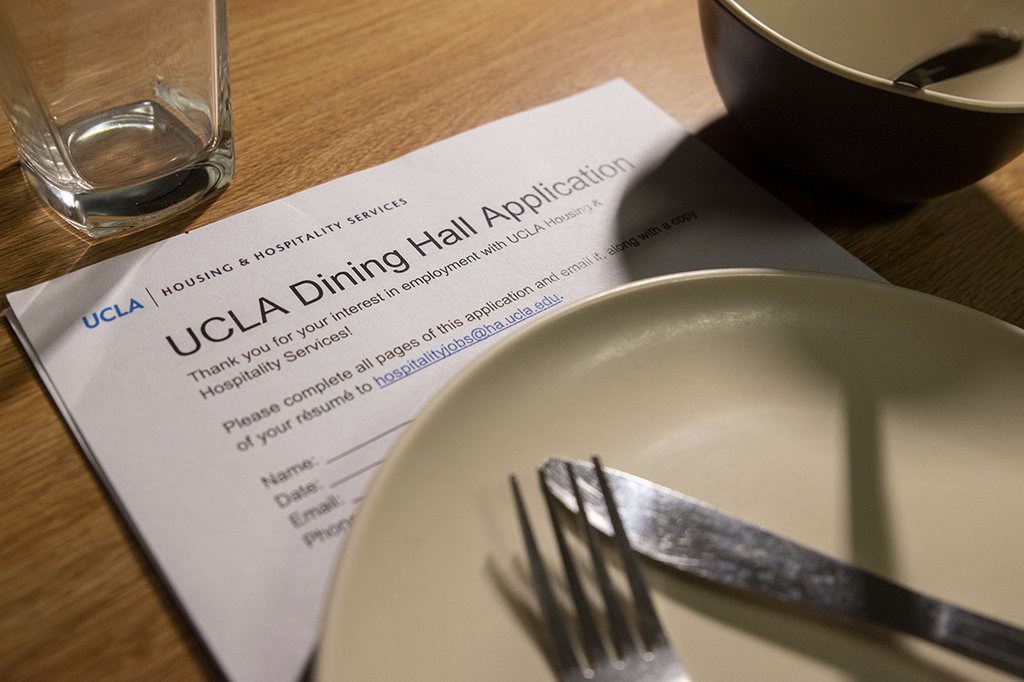
Stenhouse emphasized that the union is also speaking out against UCLA’s management of the service staff shortage because of the burdens the labor crunch places on current employees. When organizations are short staffed, workplace dangers heighten, he explained, which puts employees such as Pacheco and Salcedo at risk.
Addressing staff shortages through outsourcing depresses the labor standards for all workers, as contractors accept lower pay than union members have collectively bargained for, Stenhouse added.
“(Outsourcing) is how you create more poverty,” Stenhouse said. “That is how you create more insecurity, and last time I checked, the UC was not about either of those. In fact, to the contrary, as a leading employer in California, the UC should be about uplifting standards.”
Despite the union’s allegations, Alvarado said UCLA Dining is hiring, onboarding and training new staff members as fast as possible.
Although solutions for UCLA Dining’s labor shortage remain unclear, Higbie said through simple acts of respect, students can support the current dining hall employees who are picking up the slack.
Oftentimes the modern service industry renders its employees invisible by separating them as much as possible from customers, Higbie said. I couldn’t help but think about the students who don’t greet Salcedo at B Plate.
“That’s why workers live very far away from their workplaces, it’s because their employers don’t want to see them after hours,” he added.
Higbie further explained that the cost of living in Southern California plays a role in alienating restaurant workers from the customers they serve. According to Higbie, “There isn’t a lot that students can do about that, but what you can do is you can make an effort (of) seeing those workers and recognizing that they’re, you know, fellow human beings.”
Salcedo and Pacheco agree that when students reach out to them and recognize their efforts at B Plate, it makes their jobs worthwhile.
Hearing Salcedo and Pacheco share the stories about working at B Plate put my many hours of waiting in dining hall lines in perspective. As we said our goodbyes, they made me agree to say “Hi” the next time I dine at B Plate and promised to make my portions extra generous.
Contributing reports from Abigail Siatkowski, PRIME content editor.