
I swiped my BruinCard with the bar code facing toward me, then flipped it in the other direction. Standing on my toes, I struggled to get the vending machine to recognize my card, well aware of the line forming behind me. Finally, my dad stepped in.
With the push of a button, the machine finally spit out the coveted good – a COVID-19 testing kit.
Soon, the vending machine for COVID-19 self-testing kits outside of Pauley Pavilion became a weekly detour on my trips to campus, albeit with fewer attempts to swipe my BruinCard. My weekly access to two free testing kits rarely went unused as I religiously tested myself after attending everything from sporting events to theater performances.
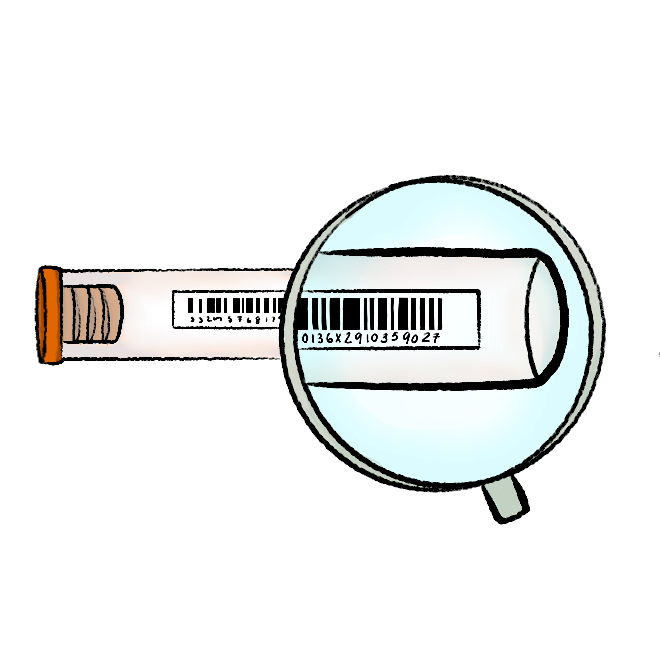
After a few weeks, the self-testing process became muscle memory. I’d swipe my BruinCard and receive a plastic-wrapped testing kit from the vending machine. Back in my apartment, I’d scan the bar code on the test tube to register my test before spitting into a plastic funnel to fill the plastic tube halfway. I’d then unwrap the free peppermint included in the kit, my reward for completing another self-test. On the way to class, I’d drop off my test tube in a collection bin and await a text message with my results.
In fact, the spit self-test became so commonplace that it became hard for me to remember a time when COVID-19 tests were scarce, and people were discouraged from getting tested unless they were symptomatic. So how exactly did UCLA go from having limited testing options to a seeming abundance of them?
UCLA’s COVID-19 vending machines were first introduced to campus in July, according to a university press release. Summer courses were still online and Westwood was relatively empty. By the end of September, the machines began to play a central role in meeting the student demand for tests in the midst of traveling, moving in and participating in week zero festivities. Between Sept. 20 and 25 alone, UCLA processed over 28,000 COVID-19 tests, according to an emailed statement from Chaitali Mukherjee, the executive director of the UCLA Arthur Ashe Student Health and Wellness Center.
Although UCLA no longer requires vaccinated individuals to test weekly, the university incentivizes students to regularly get tested by providing a $2 credit on their BruinCards.
But there’s more to the vending machines than just spit tests and results. To better understand how UCLA went from testing very few students in winter last year to processing tens of thousands of COVID-19 tests a day now, I needed to go back to the start of the pandemic.
In March 2020, Valerie Arboleda saw two things: unused genetic sequencers in UCLA’s labs and a dire need for COVID-19 tests. Arboleda, an assistant professor of pathology and laboratory medicine, said she recognized that in order to eventually reopen campus, asymptomatic individuals needed access to testing to minimize outbreaks.
While clinical labs and hospitals were overwhelmed with processing tests at the time, Arboleda saw the potential to develop a new COVID-19 test – one that would later be stocked in campus vending machines under the name SwabSeq.
Over 300 miles away in the San Francisco Bay Area, Sri Kosuri was doing some brainstorming of his own. Kosuri, the co-founder and CEO of the biotechnology company Octant, said he and a few other colleagues began working in Octant’s lab in March 2020 to see if they could use preexisting technology for measuring RNA to determine the presence of COVID-19 in nasal samples.
By April, Kosuri, who is also currently on leave as an associate professor in the chemistry and biochemistry department, was working to develop a new COVID-19 test with Arboleda and other UCLA researchers whom he knew from his professorship.
During our conversation, Kosuri also brought up a discrepancy: Despite its name, the SwabSeq saliva tests in the vending machines use test tubes rather than nasal swabs. Although Kosuri and his colleagues initially used nasal swabs in earlier versions of the test, they pivoted to saliva out of necessity. Supply chains were backed up, and swabs were nearly impossible to purchase at the beginning of the pandemic, Kosuri said.
The technology was named early on in the development process, Kosuri said. He and his colleagues at Octant thought the name SwabSeq was a humorous reference to pirates and how they “swab the deck” – and it stuck.
Creating the SwabSeq saliva tests was relatively simple, said Eleazar Eskin, chair of the computational medicine department. The technology adds unique molecular bar codes to students’ saliva samples. Samples are then mixed together in large batches, which allows researchers to run multiple samples under a genetic sequencer to identify traces of the COVID-19 virus, Eskin said. Because each sample has its own molecular bar code, labs can trace back results to individual test-takers, Eskin added.
At the time of SwabSeq’s development, researchers were unsure if saliva analysis was a viable method for COVID-19 testing, Kosuri said. However, he and his fellow researchers soon found that using saliva had several benefits: Not only was it easier to decontaminate positive samples, but it also allowed for a cheaper processing of tests.
“When this whole (thing) first started, everyone was like, ‘No, you can’t test saliva. It’s terrible,’” Kosuri said. “Turns out, it was better.”
By April, while the rest of the nation was facing a testing shortage, the research team already had preliminary data supporting SwabSeq’s efficacy.
“We had been building this thing at Octant and knew it was working,” Kosuri said. “We knew you could do it with a small group of people, and we didn’t need these huge labor pools that a lot of the other tests needed.”
Over 1 1/2 years later, SwabSeq’s operations on the eighth floor of the Center for the Health Sciences remain minimal. While UCLA processes up to 20,000 tests a day, only 10 to 15 staff members work in the lab, Arboleda said. Much of SwabSeq’s testing process, such as uncapping individual test tubes, can be done through automation, Arboleda added.
The low levels of labor required by SwabSeq as well as the genetic sequencers’ ability to process thousands of samples at a time later enabled UCLA to scale-up its testing efforts at a low cost, Eskin added.
While the technology behind the test was developed relatively quickly, researchers still faced challenges navigating the pandemic’s impact on production lines and laboratories. Eskin and Kosuri, for example, found themselves scrambling to order a million funnels and borrowing a testing machine from a nearby facility in the dark of the night.
At the same time, there were uncertainties about how the team would implement SwabSeq at UCLA and beyond.
In fall 2020, Arboleda was unsure which universities would use SwabSeq. UCLA received its current testing supply from a different vendor, and UC Santa Barbara was actually the main consumer of the SwabSeq product. Arboleda added it was not until December that the UCLA Health workers finally began using SwabSeq Saliva Tests – eight months after the tests were developed on campus. The vending machines UCLA students have come to know well were still not in existence yet.
It was not until this summer that the vending machines arrived on campus. According to Mukherjee, UCLA drew inspiration from UC San Diego, which was the first University of California school to move on-campus testing efforts to vending machines in January.
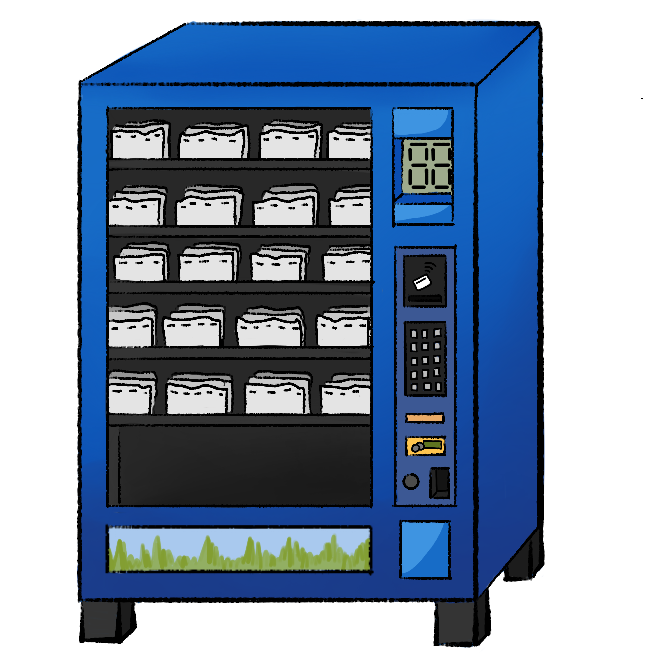
The transition to vending machines did not come without its challenges, Mukherjee said.
I gasped in surprise when I learned the peppermints I had come to enjoy after taking the COVID-19 tests were not meant as a sweet treat for students but were instead intended to increase the kits’ weights and help them properly dispense from the machines.
Of course, I was not the only one making use of the COVID-19 tests and complimentary mints. As the school year continued, many students came to regularly rely on the vending machines as well.
Giana Wang, a fourth-year psychology student, said she tests twice a week as part of an agreement with her roommate. Because she strongly dislikes using nasal swabs, Wang said she appreciates being able to test her saliva instead.
Charlotte Levittan, a third-year psychology student, said she tests three times a week in order to participate in the UCLA Chorale, a biweekly in-person course at the UCLA Herb Alpert School of Music. She added that the machines are a convenient way to fulfill her weekly testing requirements.
“Before (UCLA) had the vending machines, if I wanted to get a test, I’d have to maybe drive somewhere, figure it out through the Ashe Center,” Levittan said. “It just seemed really complicated before, but the vending machines definitely make it easier.”
However, Levittan wishes the university had included more vending machines on campus, as she sometimes has to walk out of her way to secure a test.
While the machines generally make testing more accessible, they also create some challenges, Arboleda said. In the medical field, there are always extra checks to ensure the accuracy of procedures. With the vending machines, this extra layer of precision is lost, Arboleda said. Individuals do not always take the test correctly, sometimes neglecting to fill up the test tubes with a sufficient amount of saliva.
Test-takers are also liable to incorrectly input the bar code numbers of their test tubes into the registration website, later preventing lab workers from matching test results back to individuals – including positive ones.
But Arboleda said this level of error is the cost of providing widespread testing.
While the vending machines will never reach the landmark status of Royce Hall or Powell Library, it is likely they will remain a fixture on campus for a while.
Kosuri said he believes surveillance testing is the only way to help campuses return to normalcy for now as navigating the COVID-19 pandemic becomes a part of daily life. He added that although the early months of the pandemic required hard work from him and his colleagues, he is proud to see how their efforts have played out.
“It was one of these things that a small group of people can actually go do. ... You’re told on stuff like this, ‘This will never work, leave it to professionals,’” Kosuri said. “It was really fulfilling to see that ... you can actually make a difference.”
As for me, I now have a greater appreciation for small, plastic funnels, individually wrapped mints and vending machines. Whenever I correctly swipe my BruinCard to receive another testing kit, I can’t help but take some pride in knowing the story of the spit test.