
Stepping into Yates Gym, Anna Glenn immediately burst into tears.
After three years of early mornings on the mat, Glenn, a UCLA gymnastics alumnus, hit a breaking point during her senior year. All she wanted was to leave behind her long, tumultuous relationship with injuries and medically retire.
“I walked into the gym, and I was like, ‘I don’t want to be here. I hate being here,’” Glenn said. “‘I can’t handle even stepping foot into this gym.’”
As high-profile athletes – including Olympians Naomi Osaka and Simone Biles – have sparked conversations about the need to prioritize mental health in sports, UCLA student-athletes are working to open the discussion on campus. Incidents such as the recent death by suicide of Katie Meyer, the goalkeeper and captain of Stanford’s women’s soccer team, highlight that athletes’ mental health needs to be discussed.
“We are seeing a growing number of professional athletes speak about their own struggles and become mental health advocates. We are striving to build a community where taking care of one’s emotional health is a priority and approached as something that everyone is invested in,” said Melinda Kirschner, the director of student-athlete mental health programming with UCLA Counseling and Psychological Services, in an emailed statement.
Back-to-back injuries ruined Glenn’s chance to compete her freshman year, which she said took a toll on her mental health. It was during this period that she first experienced depression and reached out to CAPS for therapy, Glenn said. Though working with CAPS helped her begin to accept her injuries, she said recurring health issues throughout her junior and senior years weighed heavily on her.
Glenn said her ongoing injuries could be attributed in part to the perfectionist mindset she adopted at a young age. Her coach was a stickler for details, Glenn said, and instilled this attitude in her. Repetitive motion during practice eventually took a toll on Glenn.
“Whenever something wasn’t perfect, then I would get so frustrated, and I would keep doing it over and over and over again until I got it right,” she said. “That, I think, eventually led up to some of the injuries that I ended up having.”
Later in her junior and senior years, as new and old injuries accumulated, Glenn said she felt immense disappointment as she watched her teammates from the sidelines, longing to fulfill her competitive potential. Her perfectionism made it difficult to accept that her college career had veered so far off course, she added.
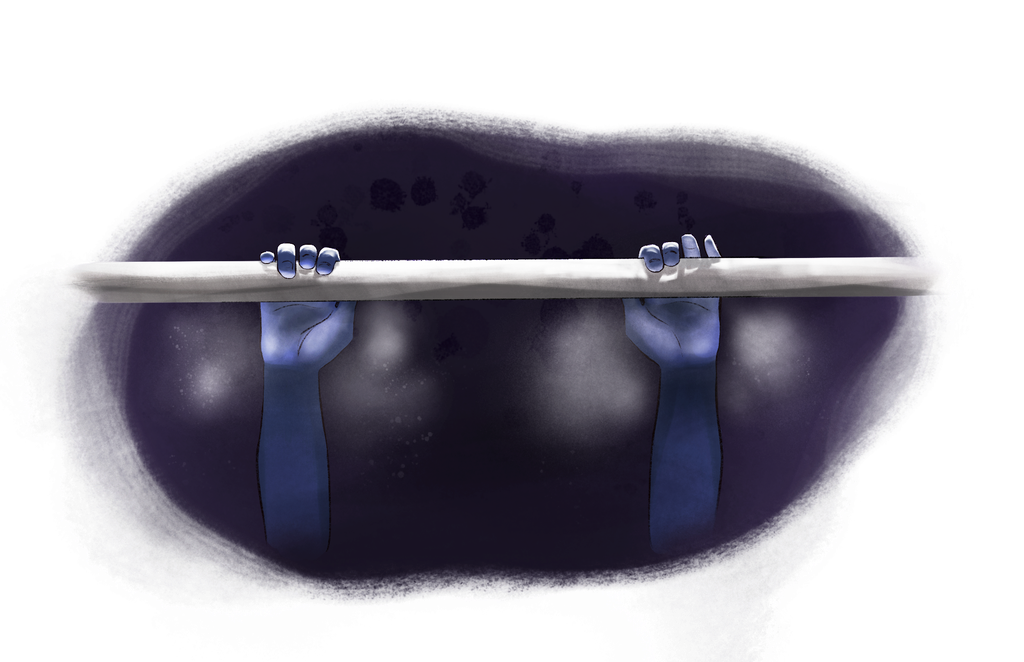
Kirschner said perfectionism and performance-related pressure are two of the key stressors faced by college athletes. Josh Woods, an alumnus who played for UCLA football from 2015 to 2019, agreed. Now a linebacker for the BC Lions, Woods compared life as a UCLA student-athlete to living under a microscope.
“Any little slip-up or mistake, ... a coach can see that as a weakness,” Woods said.
For Woods, perfectionism exacerbated the intense external pressure associated with the fame of UCLA Athletics. As a member of the football team, he said every game required him to perform in front of thousands of fans – a burden most of his classmates didn’t shoulder.
“They (non-student-athletes) are not going to take their midterms and finals in the middle of the Rose Bowl in front of 40, 50,000, 60,000 people,” Woods said. “And every time that they get a question wrong, they’re not getting booed.”
And yet, as a high-level collegiate athlete pursuing a professional career, Woods had to learn to tune out the noise – a feat made difficult by scathing criticism on social media and the discouraging manner in which people spoke about his team, he said.
But the pressure athletes face extends far beyond performance on the field.
For Lanea Tuiasosopo, a former UCLA rowing athlete who served as the team’s captain during her senior year, a typical day started at 5 a.m. and included a mix of long practices, rehabilitation work, weight training and classes. As a walk-on athlete without any previous rowing experience, her first two quarters were dominated by her determination to learn the sport.
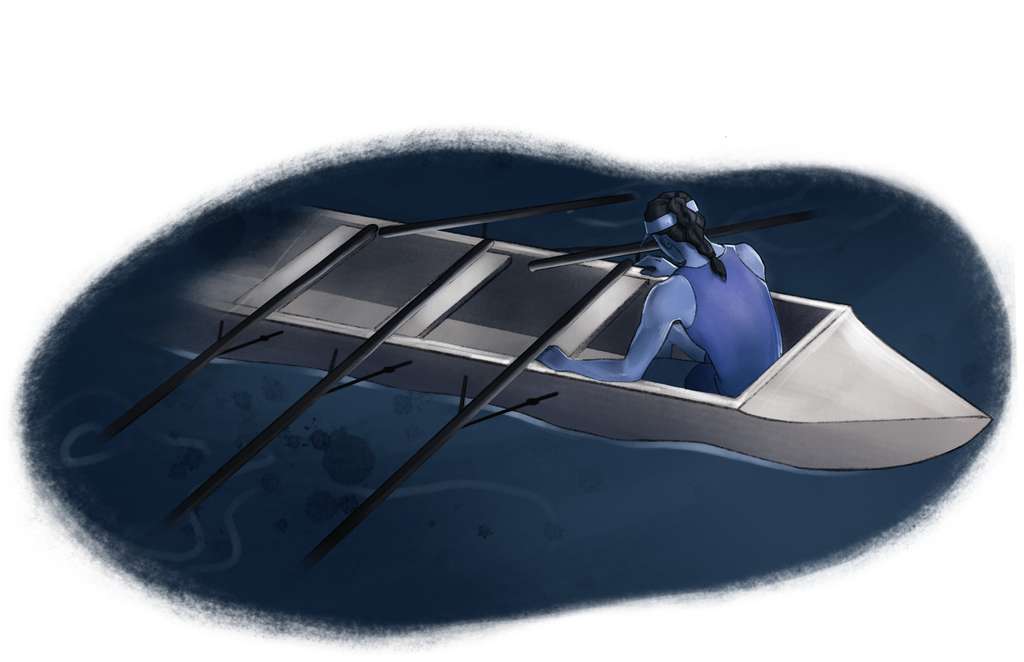
“I don’t think I had much of a personal life,” Tuiasosopo said. “I was just trying to get through school, make sure my grades were top-notch and then get through practice every day without having a breakdown.”
She said over time, as her comfort with the sport increased, she began adjusting to both the fitness level needed for rowing and the academic rigor of the quarter system. Tuiasosopo added that she learned to take full advantage of short 15-minute breaks and appreciate the busy schedule for always giving her something to look forward to.
For Glenn, accepting the limits gymnastics placed on her social life was difficult. As one of the few members of her team who joined organizations outside of athletics, Glenn was involved with the Association of Chinese Americans – but not to the extent she wished to be. Oftentimes, her gymnastics schedule prevented her from attending ACA events, she said, and in those moments, she remembers wishing she wasn’t a student-athlete.
“There were days when I was just like, ‘I don’t want to do my sport anymore because I want to socialize,’” she said. “Having to sacrifice those things and having to sacrifice the college experience a little bit was tough.”
But just like other students, UCLA’s student-athletes face emotional traumas outside of their lives in sports. Women’s tennis junior Abbey Forbes said the busy lifestyle of her freshman year actually provided her with an escape from worries at home – her younger brother Luke had been diagnosed with cancer the summer before her first year at UCLA.
When the COVID-19 pandemic forced her to isolate at home, Forbes said the buildup of her neglected sadness all came crashing down.
“I, at one point, just let go and said, ‘I can’t handle this by myself anymore,’” Forbes said. “‘I have to speak up. I have to talk to a counselor because this is all too much for me.’”
When she reached out, UCLA Athletics put her in contact with a therapist from CAPS. Forbes said she has not needed to seek help besides CAPS because her therapist works to be flexible with her schedule and outside services are so costly. Besides counseling, she’s also learned to lean heavily on her teammates.
“(Women’s tennis juniors) Sasha (Vagramov) and Caroline (Goldberg) were like my two arms,” Forbes said. “They were on me, helping me, they were giving me things to do. ... If I didn’t have those two with me, I guarantee you that I wouldn’t be the person that I am today, and I wouldn’t have the view on life that I do today.”
Forbes said Vagramov’s naturally adventurous personality helped push her to explore Los Angeles during the isolation of the pandemic. She found people to relate to in both Vagramov and Goldberg – people to confide in and vent to. Forbes added that by sharing experiences with one another, the three of them were able to accept their emotions.
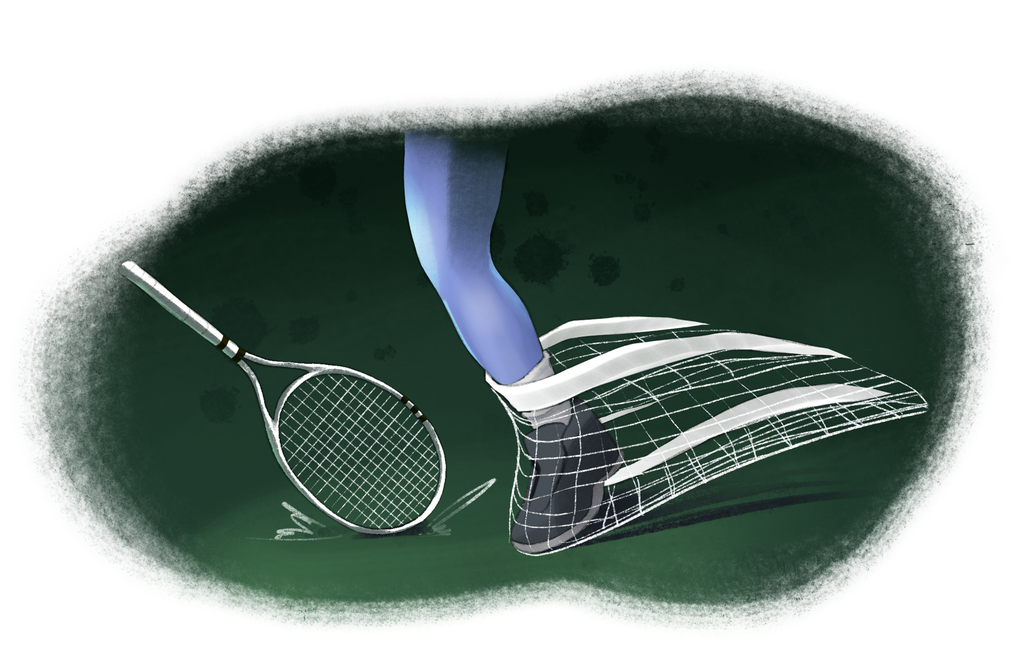
Opening the discussion about mental health is particularly important for athletes because they are taught that they should be able to grind through even the toughest conditions, Forbes said.
“It’s very difficult for us to open up and say, ‘Hey, I’m actually struggling with something,’” she added.
Similar to Forbes, Tuiasosopo discovered support in her community and therapy after she lost a teammate to suicide in fall 2018. As a team leader, she said she struggled with feelings of guilt and responsibility in the wake of the tragedy, struggling to accept that no one held blame for the incident.
As she learned to confront her emotions, Tuiasosopo found a friend in Woods, who had recently been in the same position. For Woods, the death of one of his high school teammates by suicide completely changed his perspective on mental health. He found himself becoming an advocate and supporting other athletes during their times of mental crisis. For Tuiasosopo specifically, he devoted special attention to reminding her of her relationship with God.
Tuiasosopo also received both group and one-on-one therapy from CAPS during this period. And though Tuiasosopo’s experience was largely positive, Woods said CAPS failed to provide the support he needed.
Woods first sought help during his freshman year because of ongoing difficulty in the academic transition from high school to college, as he struggled to maintain focus in the classroom and adopt healthy time management skills. In seeking support, he said he wanted to feel genuinely cared for, but his experience with CAPS did not meet this standard.
“It felt like they were trying to tell me what’s wrong with me and not have a genuine discussion,” he said.
Instead of continuing with CAPS, Woods turned to his friends, family and church community in athletics.
“I wasn’t alone through anything,” he said. “Just having people there to understand you and hear you and actually care makes things a lot easier than dealing with it yourself.”
But Woods said many players opt not to seek help out of fear of judgment from coaches and physical trainers. To mitigate the long-term damage of this pattern, he suggested every team have a mental health specialist on staff that the players can turn to. Over at CAPS, Kirschner said her team, alongside UCLA Athletics, is working to build a specialized program to address the mental health of student-athletes, based on recommendations from the NCAA.
“We want to continue to reduce the stigma around utilization of mental health services and build mental health programming into the comprehensive health plan offered to support student-athletes during their time at UCLA,” Kirschner added.
Recognizing the need for greater support within the athletic community, Tuiasosopo and her former UCLA rowing teammate Lauren O’Donohue co-founded an annual Resilience Run in honor of their late teammate. With support for the movement continually pouring in, the two decided to officialize it into a nonprofit organization, now known as Resilience Rally. Tuiasosopo said her involvement in the movement has allowed her to let go of the guilt that had followed her.
“In a lot of ways, it’s been healing because in carving out a space for other people to talk about these issues, I’ve been able to talk about it myself,” Tuiasosopo said. “I can talk about these things openly and cry and laugh and feel a whole scale of emotions and know that I’m accepted and loved.”
Focusing specifically on campus programs, Tuiasosopo emphasized the need for preemptive work rather than reactionary movements, promoting investment in better resources and a need to rethink the immense pressure placed on student-athletes. She added that with the proper support, they can learn to address their mental health while simultaneously continuing to love their sport and appreciate the joys of being a student-athlete.
“For me, in this field, I’m sad that I’m constantly reminded of why what we’re doing is important,” Tuiasosopo said. “I live for the day when I’m like, ‘Oh, this isn’t really that urgent anymore.’”