
Inside the chamber of the Supreme Court of the United States sit 24 columns of Italian marble standing beneath a 44-foot ceiling. A winged mahogany bench occupies the front of the room, seating nine justices tasked with interpreting the nation’s Constitution. To the typical onlooker, it’s grand, inspiring or perhaps elitist.
For Ahilan Arulanantham, it’s another day at work.
The School of Law professor argued before the Supreme Court last November in a two-hour event roughly 10 years in the making. The case at hand, Federal Bureau of Investigation v. Fazaga, questions the U.S. government’s treatment of Muslims. It’s not an easy case to comprehend, much less argue, but Arulanantham was up to the challenge after decades of social justice work.
As former senior counsel for the American Civil Liberties Union of Southern California, Arulanantham represented three Muslim plaintiffs who claim the FBI illegally spied on their community in Orange County. On the other side of the bench, government officials moved to dismiss the case based on the state secrets privilege, arguing that their defense required evidence that could undermine national security. The Supreme Court faced the task of determining if the Foreign Intelligence Surveillance Act, which establishes procedures for overseeing government surveillance, could override the state secrets privilege.
The case began in 2006 when the FBI hired an informant who recorded the conversations of worshippers at the Islamic Center of Irvine – a story of eerie familiarity to Muslims like myself. But Arulanantham’s journey with human rights law began much earlier.
To a great extent, family inspired his choice of career.
When Arulanantham was 10 years old, Sri Lanka erupted into civil war, he explained in a 2021 talk at the School of Law. As people of Tamil descent, many of his family members were forced to flee their homes in response to racial violence in the country. Throughout the course of the war, Arulanantham’s parents opened their California home to relatives, friends and even strangers, sometimes housing over a dozen refugees at a time. As Arulanantham watched the war upend three generations of people, on some level, he decided to dedicate himself to a career in human rights and immigration law.
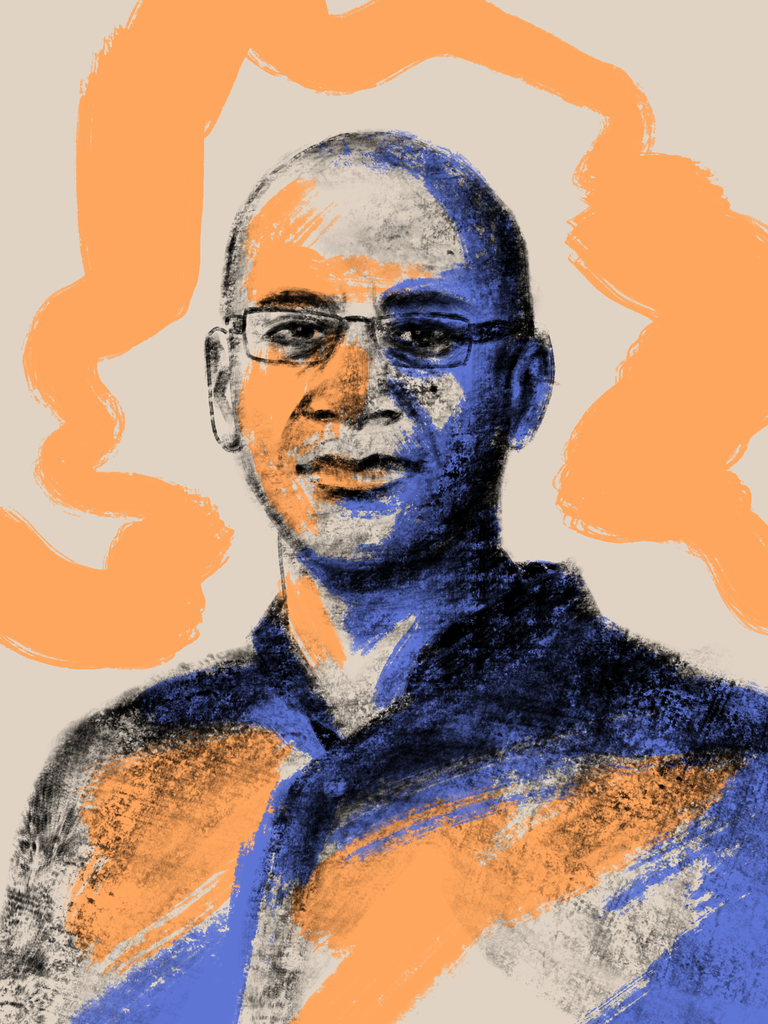
"That gave me this very profound sense of what it’s like to be an immigrant, to be a refugee," Arulanantham told me in January.
But well beyond his early years, Arulanantham continued to witness and experience injustice in the world. He entered the legal scene around the time of the 9/11 attacks, an undoubtedly hard time to be a brown person in America.
In the months following 9/11, federal law enforcement authorities arrested hundreds of people suspected of terrorism. In his talk at the School of Law, Arulanantham described how the government’s policies conflated religion and race, resulting in the widespread detainment of those who were perceived as Muslim.
Arulanantham saw firsthand when the National Guard was deployed in southern Manhattan, he explained to me. As soldiers occupied street after street, he couldn’t help but feel nervous when they looked in his direction.
During this time, Arulanantham worked as a junior attorney and fellow for the ACLU, providing legal assistance to immigrants who were arrested on immigration charges and wrongfully detained in connection to the 9/11 attacks. These individuals hailed from across the world, citing Pakistan, India, Bangladesh, North Africa, Indonesia and the Caribbean as their places of origin. Some were undocumented. Some were of lawful status. But regardless of their ethnic and legal differences, they shared one commonality.
"Not a single one of them had anything to do with the 9/11 attacks," Arulanantham said.
With a light chuckle, Arulanantham recalled the South Asian cab drivers who put American flags on their cars in an effort to avoid racial discrimination. In that moment, I almost laughed too. If not comedic, there’s definitely some irony in waving the banner of freedom to protect yourself from a hate crime. And oftentimes, humor helps people cope with the darker side of history.
"It was really a striking, formative experience for me just to see such an explicit racist enforcement policy arise and this kind of collective guilt be imposed on this set of immigrants," Arulanantham said.
In the subsequent years, Arulanantham went on to litigate several cases that sought to expand the rights of immigrants in the U.S. In Franco-Gonzalez v. Holder, he successfully argued for the right to legal counsel for mentally disabled immigrants who cannot represent themselves in deportation hearings. In Jennings v. Rodriguez, he argued for the right to individualized bond hearings for immigrants. Although the U.S. Court of Appeals ruled in favor of Arulanantham’s client, SCOTUS overturned this decision.
Most recently, FBI v. Fazaga has consumed his time and efforts. As someone born and raised in New York, I grew up hearing about the NYPD surveillance program that infiltrated masjids across the state and beyond. The story that sparked FBI v. Fazaga didn’t seem all that different. "Same deal, opposite coast," I remember thinking to myself.
In my community, it’s well known that government informants often lack originality in how they disguise themselves and carry out their mission. This tale as old as 2002 typically starts with the informant publically converting to Islam and ends with them asking unsolicited questions about "holy war," sounding an alarm of suspicion for those around them. The NYPD formalized this strategy after 9/11 in "create and capture," a tactic in which informants initiate conversations with their Muslim targets and capture their replies in a recording.
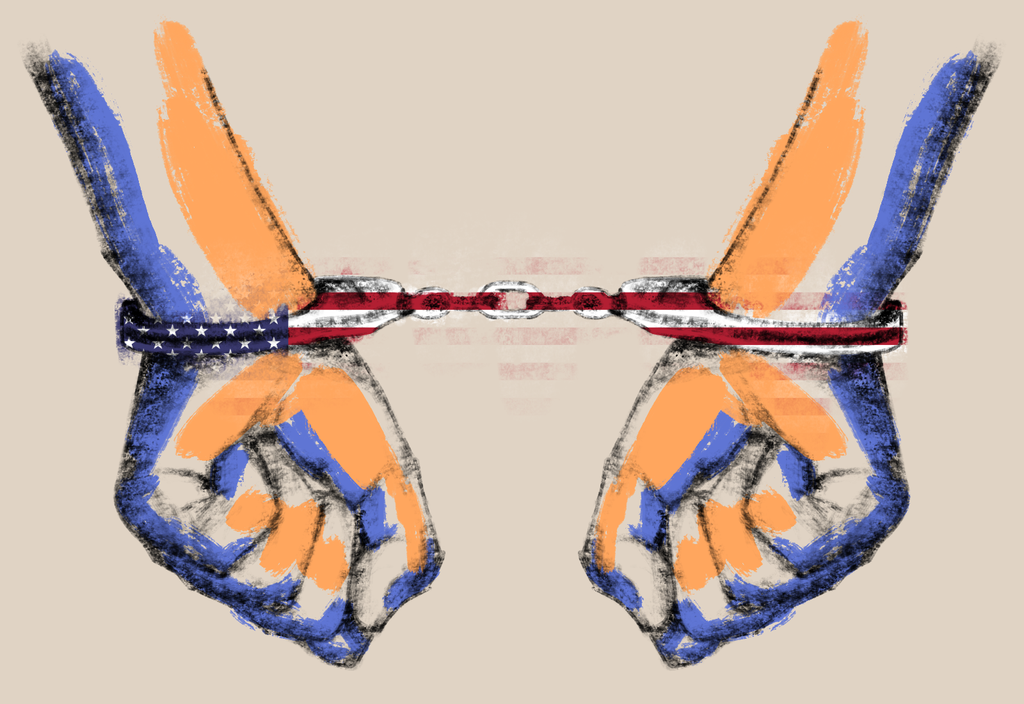
The federal informant at the center of FBI v. Fazaga asked questions about "jihad" to mosque-goers in Orange County and installed devices to secretly record their responses. For the past decade, Arulanantham has worked side by side with these plaintiffs to hold the government accountable for its actions.
In the time leading up to the Supreme Court hearing, Arulanantham tirelessly analyzed legal briefs, engrossed in a rhythm of researching, writing and editing. Before presenting a case in the highest court of law, he also participated in moot court exercises with UCLA law professors and rehearsed his oral argument in front of an audience of students.
During the hearing, something unexpected happened, Arulanantham said. Neil Gorsuch, one of the conservative justices on the bench, seemed to really grasp the point of view of Arulanantham's clients – from both legal and historical angles. In those moments, Arulanantham thought perhaps the issue of overseeing government surveillance could surpass the left-right divide. But he couldn't entertain this thought until the ruling came out.
The Supreme Court decided 9-0 in March that the Foreign Intelligence Surveillance Act doesn’t override the state secrets privilege in FBI v. Fazaga. While the ruling may appear to be a loss, Arulanantham considers the decision a partial victory: When the government moved for a dismissal of the religious discrimination claims, one aspect of the suit, SCOTUS refused to dismiss the claim and returned the case back to the U.S. Court of Appeals.
"I feel pleased with the narrow ruling in FBI v. Fazaga," Arulanantham tweeted after the decision came out. "SCOTUS explicitly leaves open several paths to victory for us, including on our religion claims."
Although Arulanantham has devoted over a decade to FBI v. Fazaga, his passion for teaching also took root during this time.
When working for the ACLU of Southern California, Arulanantham often invited School of Law professor Hiroshi Motomura to offer guest lectures to ACLU summer students. It was during these visits – and subsequent lunches in Los Angeles’ Little Tokyo – that the pair began imagining the creation of a center dedicated to immigration law.
"We had all of these discussions which kind of gave birth to the idea and planted the seed in my mind," Arulanantham said.
In Arulanantham’s vision, immigration law wouldn’t only be examined in terms of federal policy, but also in terms of policies set by states, locales and academic institutions.
"I want to really change the way people think about immigration law and policy," he added.
As a stepping stone, Motomura said he established a human rights policy clinic in 2016. A monetary gift from a School of Law alumnus was the final step in transforming the pair’s vision into reality. By 2021, Arulanantham and Motomura had become the co-directors of the newly established UCLA Center for Immigration Law and Policy.
Just as its founders envisioned years ago in Little Tokyo, CILP sits at the intersection of immigration law scholarship and practice. In addition to authoring publications on immigration law, CILP hosts conferences to converse with prominent scholars and offers training opportunities for legislators. CILP’s influence also extends well beyond UCLA’s campus: The center filed a brief that called upon Congress to consider the racist origins of a U.S. law that criminalized illegal reentry into the country, disproportionately affecting Mexican immigrants.
Much like the center, Arulanantham has a diverse skill set in both legal theory and litigation, Motomura explained.
"This is like a seven-footer who can play point guard," he said. "This is like a drummer who can also play the guitar."
Despite Arulanantham’s extensive work in academia, he remains committed to the immigration issues that first pulled him into the courtroom.
In Ramos v. Wolf, originally filed as Ramos v. Nielsen, Arulanantham challenged the Trump administration’s termination of Temporary Protected Status for immigrants from a number of countries. The TPS program allows people of certain nationalities to temporarily remain in the U.S. because of unsafe conditions in their home countries, such as armed conflict or natural disasters. Revoking TPS was one bullet point on the former president’s agenda to curtail immigration.
Crista Ramos, the lead plaintiff in Ramos v. Wolf, filed the lawsuit to protect her mother from being deported to El Salvador. When the lawsuit began, she was only 14 years old and was apprehensive to share her family’s story with the public. But she soon found mentorship in Arulanantham, whose words helped her become more comfortable speaking to the media and advocating for other TPS families.
From supporting Ramos throughout the college admissions process to attending a march in support of TPS families, Arulanantham has created bonds of trust with his clients that extend beyond the courtroom. For Ramos, Arulanantham is more than just her lawyer; he is also a confidant who has listened to and quelled the fears she and her family have faced over the past four years.
The Department of Homeland Security announced last year that TPS recipients from El Salvador, Haiti, Nicaragua and Sudan will retain their status through Dec. 31, 2022. But the fight isn’t over: Arulanantham told Ramos her case could continue for a long time and he would continue to advocate for her family in the proceedings to come.
As cases like Ramos v. Wolf can stretch on for years, Arulanantham spends much of his time looking to the future. But he also finds fulfillment in what the present day can offer.
Outside of the courtroom, Arulanantham spends time with his daughter and his wife, a civil rights lawyer. Last semester, Arulanantham and his wife both worked from home which allowed him to spend more time with her.
Arulanantham has many roles – a lawyer, a husband and a father, to name a few. But perhaps most unexpectedly, he also finds joy in his role as a musician. Although he began playing the piano at a young age, he fell out of practice with the instrument after high school. But on the heels of 9/11 – one of the most intense periods of his work life – his mother purchased him a keyboard, he said. Despite his insistence that he would never have time for music, he began to play immediately.
"My piano really came back after having been gone for such a long period of my life," Arulanantham said.
But unlike the piano, Arulanantham rarely finds success right at his fingertips. As he reflected on his career and the hardships of social justice work, he turned to Frederick Douglass, one of the most prominent activists in American history.
"If there is no struggle, there is no progress," Arulanantham said, quoting Douglass. "Power concedes nothing without a demand. It never has and it never will."