
Harry Davids brought a hefty binder to each of our meetings. He would pull out documents one by one, such as pictures of his mother, his mother’s home and his family’s department store in Amsterdam. He also shared photos of apartments and towns across the Netherlands where he hid from 1942 until the end of World War II – separated from his birth family and housed by the Dutch Resistance.
Davids described how a neighbor, suspicious that Davids’ host family was part of the Dutch Resistance, allegedly alerted the Schutzstaffel, or SS, the elite guard of the Nazi regime. When the SS arrived to investigate the family, they interrogated every apartment resident and took everyone away. But the family’s niece happened to be visiting that day – meaning there was not enough room in their car. She was left behind – along with Davids – and told to stay put.
Members of the Dutch Resistance, a network dedicated to rescuing Jewish children, witnessed the investigation and rescued Davids – tying up the niece and instructing her to tell the SS that someone had overpowered her. Davids was moved to Dokkum, a town in northern Friesland, where another family cared for him from the brink of deathly illness.
Born in 1942, Davids was only 2 months old when he was separated from his parents and taken to live with his first hiding family. He has pieced this history together through documents and now shares his story with students like me. Sitting across the table from Davids, looking him in the eye, and hearing his every stutter and inflection while recounting how he was saved was an experience I will never forget.
When I first joined Bearing Witness two years ago, I expected to hear stories set in the past. I did not expect to hear how survivors continue to face denial and a widespread lack of awareness about the Holocaust to this day.
"There’s a lot of denial, and I think we have to counteract to that," said Lya Frank, a Holocaust survivor. "There are still a few survivors, and we’re the only ones that can now tell them what personally happened to us."
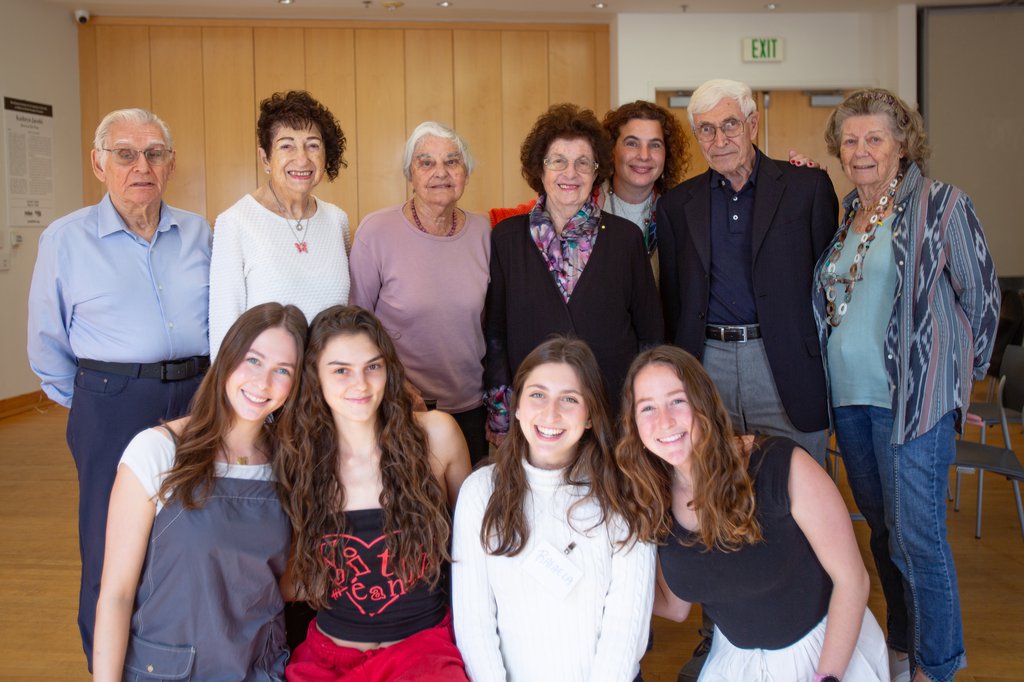
Since 2007, Bearing Witness has invited Holocaust survivors to Hillel at UCLA every winter quarter to engage in conversation with students. The organization encourages intergenerational dialogue and the preservation of survivors’ testimonies. As the Holocaust becomes more distant and the last generation of survivors ages, some have turned to new technologies and methods to meet an urgent need to preserve their memories.
Participants can join Bearing Witness either by signing up through the self-titled organization or the UCLA course German 19: "Eyewitness Testimony of Holocaust Survivors." In the course, students meet with Holocaust survivors every other week, with alternate weeks offering learning opportunities related to Holocaust education such as guest speakers, discussions about memory and history and a trip to the Holocaust Museum LA.
Todd Presner, a professor and chair of the Department of European Languages and Transcultural Studies at UCLA, has been involved in the Bearing Witness program for the past 15 years. He created the Fiat Lux course around the existing Bearing Witness program, believing it would be a valuable opportunity for students to engage with Holocaust survivors and an opportunity for students studying the Holocaust to receive additional guidance and historical context.
The class offers 20 spots for students, connecting mainly first-years with a handful of Holocaust survivors.
"Some of your first-year classes are going to be large lectures. This is anything but that," Presner said. "This is the most small, intimate experience you could imagine, right? Sitting around a table, talking to a survivor over lunch."
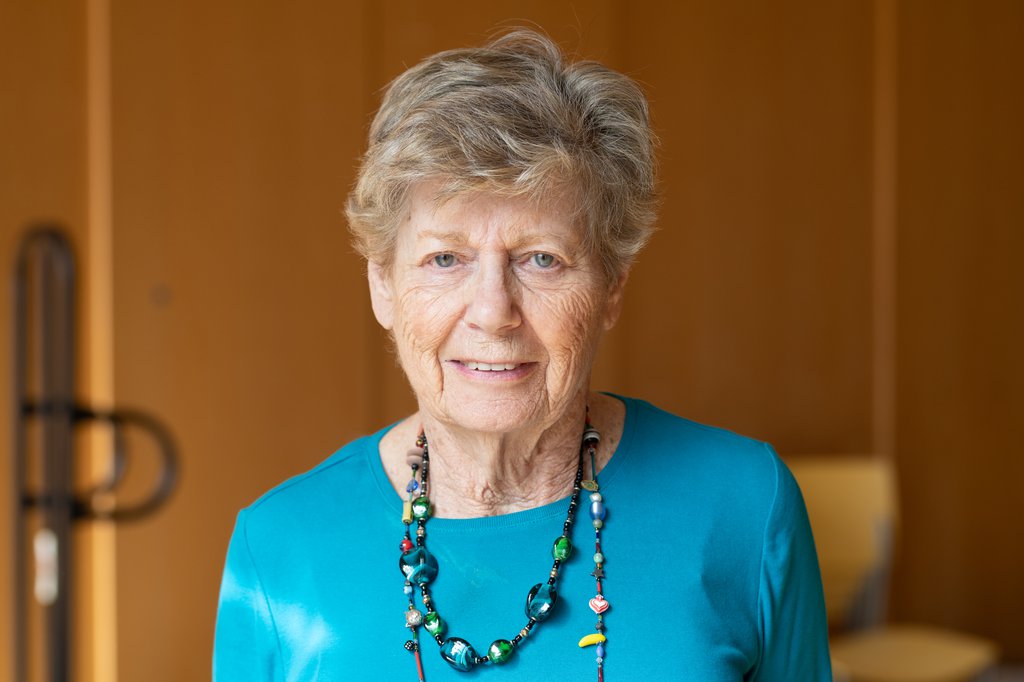
On my first day of the program last year, I stepped into the spacious third-floor room at Hillel, filled with tables and lively conversation, and nervously scanned the room looking for my assigned Holocaust survivor. When I sat down, Carol immediately introduced herself to me and began asking questions to get to know our group of five students. Her warmth immediately put me at ease, and our group began learning from her even before our first session officially started.
Although the Holocaust may at times feel general and even abstract, it becomes more concrete when speaking to individual survivors, Presner said.
At the same time, there's a kind of reassurance that students care to listen to what the survivors have to say – reassurance that history will not be forgotten.
"For survivors, I think that’s really something that maybe brings a certain amount of peace to something that’s just profoundly a deeply, deeply traumatizing event that they’ve had to live their entire life with," Presner said.
Just as students look forward to developing meaningful relationships with the survivors, the survivors look forward to getting to know the students throughout the program. For the survivors, their legacy often rests in how their stories and memories about the history of the Holocaust will go forward when they're no longer here to "bear witness."
Frank is one of the handful of Holocaust survivors currently in Bearing Witness. She said she joined because she was interested in the opportunity to share her experiences with UCLA students, who can then share it with their family and friends.
"We get all kinds of questions, depending on what they (students) hear and what they think and what they feel. For the students, I hope they listen," Frank said. "Some of them even make notes, and I hope they share what they've heard."
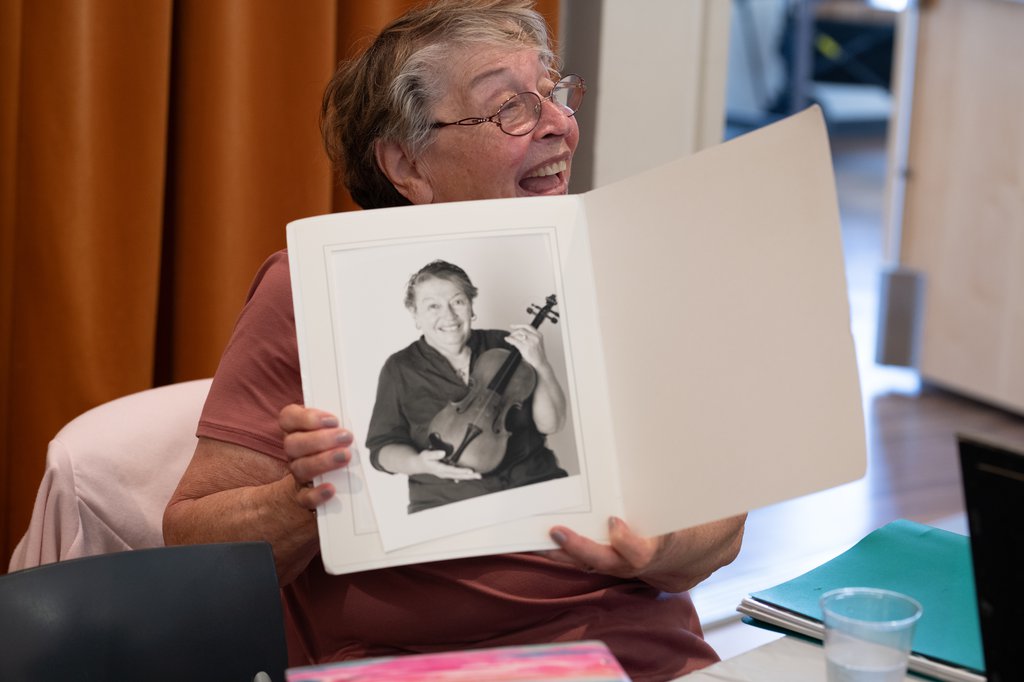
Gabriella Karin, a Holocaust survivor from Czechoslovakia, noted how the program’s unique structure – how students meet with Holocaust survivors multiple times – allows participants to build deeper connections.
"It's a small group, and the students are really interested," Karin said. "When I am speaking in the museum, I am speaking an hour, people ask questions, I give answers, and I don’t see them anymore. During Bearing Witness, I see them every two weeks, four times. So it's different – you get much closer to people."
By centering the voices of survivors, Bearing Witness aims to make a vast historical tragedy more tangible.
The Holocaust impacted tens of millions of people affected by displacement from many different countries. And yet, in Bearing Witness, this story is told by a single individual, Presner said.
Bearing Witness’ board members similarly explained how this program personalizes the often detached way students learn about the Holocaust. Instead of learning about the Holocaust through textbooks, the Bearing Witness program allows students to interact face-to-face with Holocaust survivors.
"What the Nazis wanted to do was actually remove the humanity out of the Jewish people," said Rafaela Levy, a fourth-year economics student and the current president of Bearing Witness. "And I think this program, in a way, puts some of the humanity back into the stories."
For Sophia Toubian, an information studies doctoral student and graduate student researcher on the AI and Cultural Heritage Research Team, attending a Bearing Witness event at Hillel allowed her to reconnect to her Jewish heritage by engaging with survivors. Having grown up hearing about the Holocaust so frequently, Toubian said that she began to feel desensitized to her ancestors and their history.
Listening to Holocaust survivors share their stories face-to-face, rather than through watching a video or reading an article, reminded her of the people behind the historical events she had learned about.
"Your parents talk about something in a very historicized way, as opposed to really paying attention to the fact that it’s real people, ... human beings who exist outside of this lens of ‘Holocaust survivor," Toubian said.
Liza Shlimovich, a fourth-year political science student, felt a similar connection to her personal background. She said the reason she knows her family’s history is because of stories from her grandfather.
"The way that these stories are kept alive is by word of mouth and by telling your family, and your family tells their friends," Shlimovich said. "I recognize the importance of survivor testimony and sharing it with others and keeping these stories alive."
In-person testimony is just one form Holocaust testimony can take, with some survivors choosing to document their experiences through art.
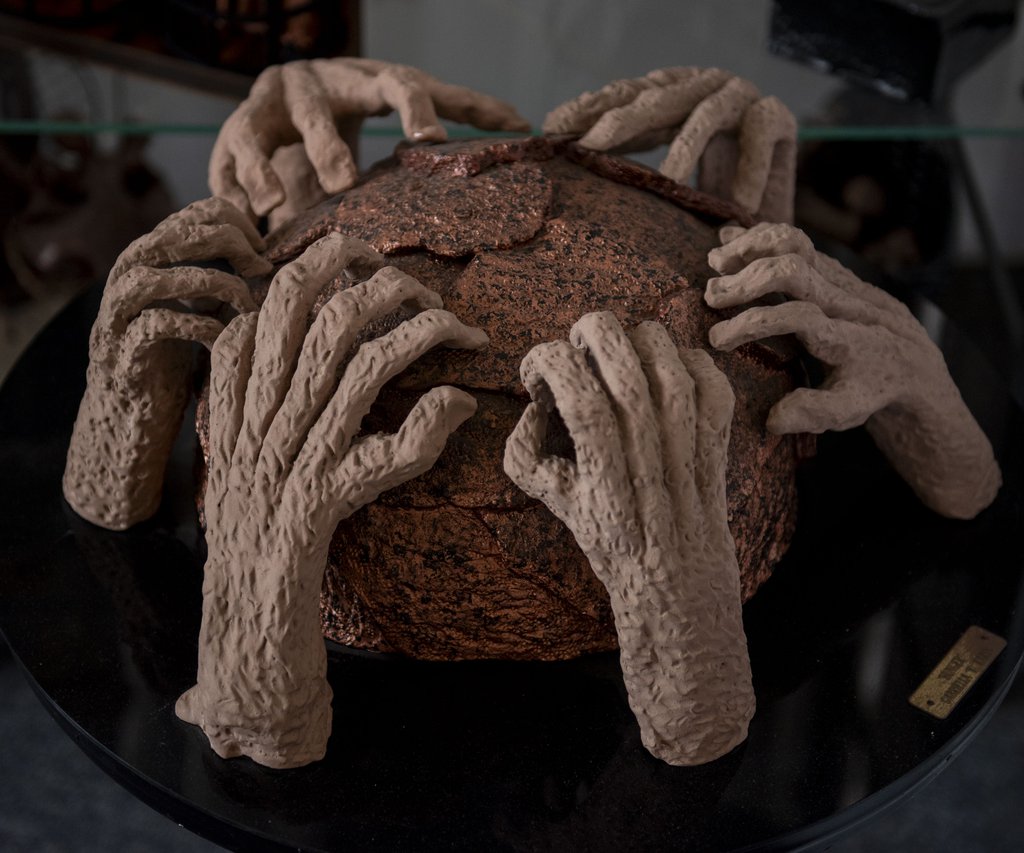
In Karin’s home, every hallway, wall and shelf is filled with the sculptures that she has made since retirement, many of which are handcrafted in the backyard artist's studio built by her husband. Butterflies, Karin’s favorite symbol, appear throughout her art, representing a journey of transformation and hope for the future.
When I arrived for the interview, she gave us an hourlong tour of her home, which she said houses the largest personal collection of sculptures about the Holocaust in the world. She thoughtfully described the meaning and personal experiences behind each piece. One piece, displayed in the hallway leading to her bedroom, shows a face crying four large tears. Within each tear, Karin illustrates a different part of her experience during the Holocaust. In one tear, Karin is hiding among the nuns in a covenant. In another, an SS officer is pulling her by the hair before she is saved by her uncle.
At first, she simply wanted to document the past. But after witnessing the rise of Holocaust denial – especially learning about the London trial over the book "Denying the Holocaust: The Growing Assault on Truth and Memory" – the focus of her art changed.
"I find it’s important to tell the truth, and then you always say the same thing. The truth doesn’t change," Karin said.
Some survivors have faced Holocaust denial in their everyday lives. When Carol Roth was walking on the beach with her husband, she saw a blimp that said, "The Holocaust never happened." Roth, a Holocaust survivor from Belgium, was on the verge of tears recalling this moment, questioning how anyone could deny something that she, and millions of other people, experienced.
According to a 2024 study by the Conference on Jewish Material Claims Against Germany, an estimated 38,400 Holocaust survivors live in the United States, representing approximately 16% of the global Holocaust survivor population. As time passes, there will be fewer and fewer survivors, and the current form of Bearing Witness will soon not be available to future generations.
With the future of testimony at a turning point, Bearing Witness and other Holocaust remembrance organizations are embracing new approaches to preservation and education.
During the reflection sessions this year, the program invited children and grandchildren of Holocaust survivors to share about their families’ experiences during the Holocaust and their personal experiences growing up as the descendants of survivors. The children and grandchildren also discussed the trauma and PTSD they carry, passed on from their relatives.
"I was so touched by how deeply connected the grandchildren were to their grandparents’ Holocaust survivor testimonies," said Shlimovich. "As heartbreaking as it is, we have very few years left with them, and once they do eventually pass away, we have their children and grandchildren to honor their stories."
Others have turned to technology to preserve Holocaust testimony. One initiative, called Dimensions in Testimony, records a Holocaust survivor answering as many as 2,000 questions in a studio with over 100 cameras to create an interactive, holographic-like reproduction. When the hologram is displayed, the device uses a machine learning algorithm to play appropriate clips in response to user questions.
"It makes the testimonies accessible in new ways," Presner said. "Having them locked away in an archive is never a good thing. You want to make them accessible and used in new settings, for students, for the general public and sometimes through possibly AI-driven tools."
Presner is the director of the UCLA Holocaust Research Lab, which is currently examining data from the U.S. Holocaust Memorial Museum to identify the most common questions people ask that direct them to the museum’s online encyclopedia. It then looks at how the encyclopedia’s answers compare to answers from artificial intelligence models such as ChatGPT, looking for discrepancies in areas such as accuracy and readability.
For Presner, this approach raises ethical questions, as the technology can fabricate new answers to fill in missing information. There are now multiple AI technologies that source publicly available information to allow people to "speak" to a historical figure, including Anne Frank. He questions whether it has already gone too far by allowing AI to extrapolate answers from a set of training data, such as a set of Holocaust testimonies, or to make up new answers entirely.
"What kind of histories are OK to fabulate a little bit, and what kind of histories do we need to keep intact?" Toubian said.
Even with these advanced technological capabilities, the experience of communicating with a digital representation of a survivor pales in comparison to the personal connections you build in Bearing Witness, said Hesed Finkelman, a first-year cognitive science student.
"When you're viewing something through a screen, you don't feel that same emotion, and you don't feel that same connection that you would with a real-life survivor sitting in front of you," Finkelman said. "When I did Bearing Witness, it was moving being able to sit in front of the survivor and have them talk to you and just see their mannerisms. ... You see them as a whole person."
In this increasingly digital paradigm, the Bearing Witness board remains committed to providing access to in-person survivor testimonies.
The leaders of Bearing Witness also pride themselves on the program’s ability to unite many different aspects of campus. This past year, over 22% of attendees in Bearing Witness were non-Jewish. The program also received an increased number of students who applied to be on the leadership board for next school year.
"It shows the sense of urgency. The program is ... shifting," Levy said. "I read all the applications, and a lot of them said, ‘I want to give back. I want others to have the experience that I had.’"
I felt that same urgency after going through the program. Since most of the Holocaust survivors alive today were young children or babies during the Holocaust, each passing year brings the world closer to losing firsthand testimonies. As we witness the last generation of Holocaust survivors, the preservation of memory becomes even more important.
Through Bearing Witness, I learned not only about the survivor’s experiences during the Holocaust but also about their life today and the wisdom they carry forward. Week after week, I was inspired by their bravery, resilience after unimaginable loss and commitment to peace.
Levy explained how once a student learns of the survivor’s experiences during the Holocaust, it is now the student’s responsibility to continue sharing their story.
"I think it’s really our duty," Levy said. "It’s also a gift."