
Editor’s note: This article contains mentions of eating disorders that may be upsetting for some readers.
"Describe the most significant challenge you have faced and the steps you have taken to overcome this challenge. How has this challenge affected your academic achievement?"
I sat at my desk, pensively staring at the large white space below the UC personal insight question on my computer screen.
Thoughts crammed and collided in my mind. The question, alongside the application’s other three prompts, felt like the deciding factor to my admission or rejection to my top schools. Rather than being greeted with answers, I found myself being confronted with more questions: What challenges in my life helped shape me? What constitutes a challenge in my life? Is "trauma" a challenge? Do I even have trauma to talk about?
Being a transfer student, I have undergone the college application process twice. The personal insight questions stayed mostly the same – aside from one transfer-specific prompt – and so did my challenge to break through the noise of thousands of applicants like me. I needed to stand out with a unique, personalized story.
But as I look back and compare my two application experiences, I question why I jumped to discussing trauma in my freshman application as a way to get into my applied schools. Maybe it was because I was younger or less mature – or perhaps I believed overcoming a difficult experience would prove how deserving I was for admission.
Regardless of the answer, the recent social discourse around "trauma-dumping," specifically in the context of college admissions, suggests that the feelings and thoughts I had when working on my applications were more common than I expected.
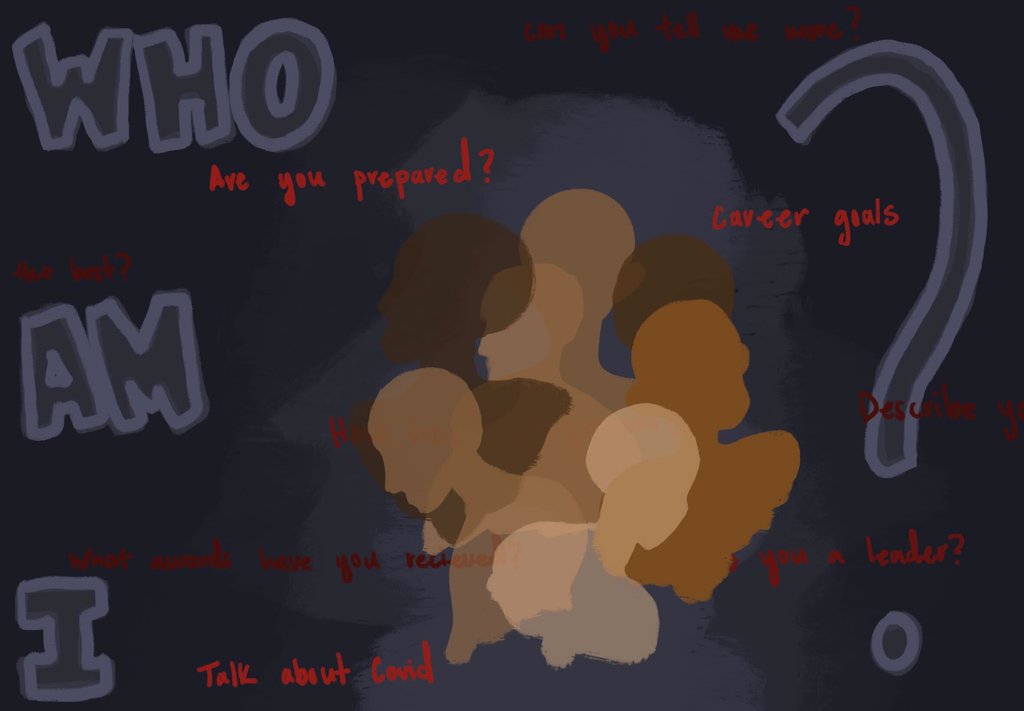
The strategy of discussing trauma in college applications – particularly oversharing it – has garnered increasing attention as students seek new methods of boosting their admission chances. From speaking with students and professionals, I found that trauma-dumping, despite its recent social prominence, may limit academic and personal growth opportunities rather than expand them.
The act of trauma-dumping is commonly understood as oversharing difficult or traumatic experiences to a listener without regarding how the information may affect them. The term rose to prominence in 2021 and since has been used to describe exchanges between friends, romantic partners, coworkers – even strangers. However, it has evolved to become a seemingly viable approach for college applications.
Lauren Ng, assistant professor of psychology at UCLA, said the word "trauma" has undergone various redefinitions and interpretations away from its traditional meaning. The American Psychiatric Association’s definition of trauma, she said, emphasizes the experience of threats or injury to an individual that they may have felt or witnessed personally. The definition, however, excludes nuanced experiences of high stress that can be traumatic for individuals facing them, she added.
Though trauma is unique and varied among individuals, Ng said it is more common for people to conceal their experiences than to share them.
"It's far more common for someone to withhold information ... than it is the reverse, where someone shares maybe too much or shares in an inappropriate way," Ng said. "I think that can be a tension between what the person feels comfortable with and maybe their beliefs that, ‘If I don't disclose certain information, I might be doing myself a disservice.’"
At the same time, colleges and universities are becoming more competitive, a trend kickstarted by the COVID-19 pandemic during the 2020-2021 application cycle. According to Forbes, the Common Application, used by over 1,000 schools, reported a 7% increase in college applications this January compared to the same time last year. While the UC system saw a 1% decrease in first-year applicants during the 2025-2026 application cycle, the number of transfer applicants jumped by nearly 2%.
With more applicants, students are pursuing different approaches to be noticed – and that often means turning to deep, personal experiences. Tina Yong, a recent graduate of the University of British Columbia, said she felt expected to share her hardships when initially applying to universities. Because of that expectation, she did not consider other life experiences for her essay and instead defaulted to talking about her personal trauma.
The idea of writing about a traumatic experience for a chance at university admittance, Yong added, was echoed in online websites and admission experts she found as she applied.
"I definitely relied a lot on what I thought other people were writing their college essays about. ... I noted that a lot of them had been writing about their stories as immigrants, as well as other difficult experiences they had in their lives," Yong said. "The overwhelming advice was to use whatever difficult experience I might have had and make that a centerpiece of my personal statement in order to create interest and to prove that I was a worthy candidate for the university."
Vick Garcia, a counseling intern at Orange Coast College, said social media is a source of pressure to overshare in application essays. However, he emphasized that essays are only one part of the application, with other factors also considered.
"People frame, ‘This is the essay that got me into Harvard,’ and not really recognizing that there's, of course, other components," he said. "Although the essay is a huge thing – is something, sometimes, that is very memorable for us – it's not the all-take-all."
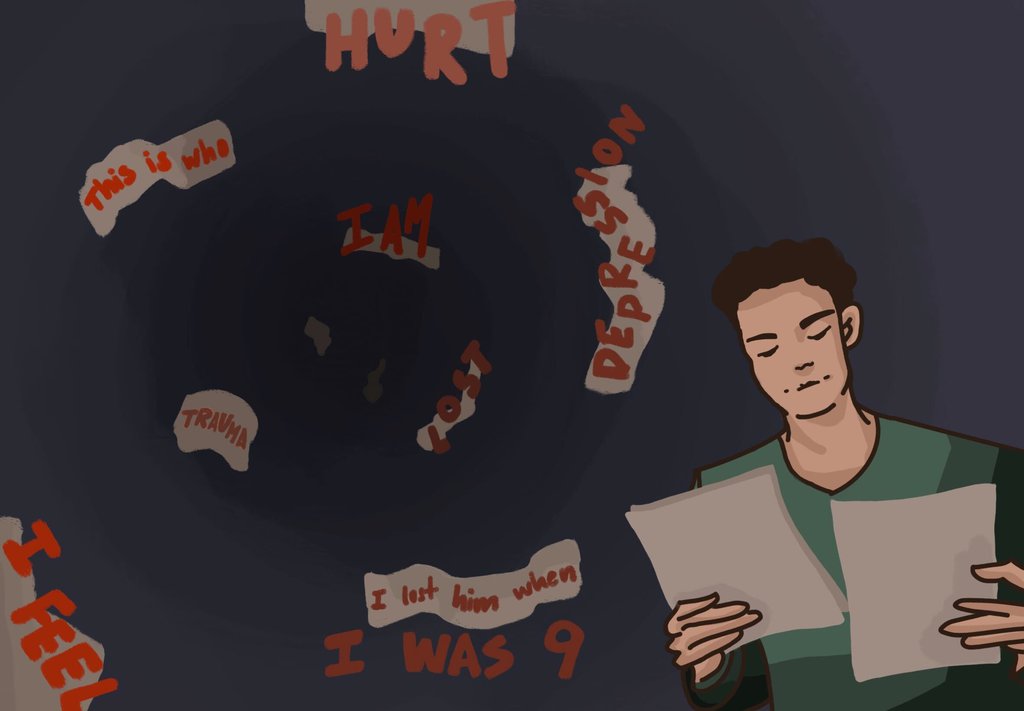
Alan Tai, a fourth-year student from Monta Vista High School and rising first-year student at Northwestern University, said he and his peers felt they were at a disadvantage if they did not talk about their hardships in their application essays. He believes that as more universities remove their requirements for standardized tests and letters of recommendation, there is increased importance to the essay and pressure on students to make it as impactful as it can be. Oftentimes, that means students turn to sharing difficult experiences to reach application readers as fast and provoking as possible.
The essay prompts themselves can also induce pressure onto prospective students, said Yvette Martínez-Vu, a graduate school coach and consultant at her company Grad School Femtoring. College applicants, she added, often feel obligated to share information about themselves that they may not be ready to relay or fully consent to. Applicants also feel they must prove how they have surpassed their hardships, which can be harmful to their understanding of their values and experiences.
She finds that asking about challenges can cause students to feel their stories are not enough if they do not follow a "rags to riches" trope – especially applicants from underrepresented communities.
"There's this common trope that comes up – especially for first-gen students ... to share something about my background that proves that I came from the bottom and now I'm going to the top." Martínez-Vu said. "Those are some of the factors that make students feel pressured to, again, overshare information that they absolutely don't even have to share."
The pressure to stand out can sometimes lead to inauthenticity in applicants’ essays. Yong said she felt her story of how she immigrated to Canada from China became transactional after repeated use. The constant repackaging to make her story palatable and sellable diluted the authenticity of her experience despite it being true. By clinging to her hardship narrative, she delayed her process of self-discovery while at university.
Like Yong, fourth-year psychology student Emi Sakai said she tried to portray herself in her application as capable and persevering after initially writing a response to a UC personal insight question on her eating disorder. However, she ultimately decided not to use the story, concerned it would distort how readers perceived her and undermine her progress in recovery.
Sakai added that peers would ask for her help to create a "sob story" for their applications to gain enough pity for admission into their desired schools. While some application essays may feel artificial to provoke pity, Sakai sympathizes with applicants who feel pressured to overshare and frame a personal struggle to justify their hard work in high school – like she initially did.
"I feel like all those pressures – I guess societal pressures – would induce one to overshare because they're willing to pull any strings to get into the schools," Sakai said. "And so I do feel bad, in a way, for people who have that pressure of having to get in through oversharing – but I think it's a very real thing that's happening and will continue to happen as college gets harder and harder to get into."
Many applicants who overshare traumatic experiences believe – as I once did – that it increases their chances of college admission. But Eileen Swoboda, managing director and college admissions consultant at her company ThinkYes | College Admissions Consulting, said dumping trauma into application essays actually hurts and hinders college acceptance and admittance ambitions.
Swoboda emphasized that college admission officers seek students who can become a positive, strong member of the community and take advantage of the academic, professional and social opportunities that they offer. She advised that if admission officers believe applicants have not processed the hardships they discuss in their essays, they will not choose those students for admission.
Dorothy Chin, a research psychologist at the Wyatt Center at UCLA, said another consequence of trauma-dumping in college applications is the applicant retraumatizing themselves through their written words. Feeling obligated to relay hardships and, consequently, oversharing such information can make it difficult to reconcile with their traumatic experiences and inhibit an applicant’s personal growth.
"When you're doing that, it's not really an authentic telling, in a way, of your experience in order to achieve some reconciliation with it or growth – a personal growth from it. But it's for a different purpose," she said. "It could retraumatize the person by telling it over and over again without maybe delving into the authentic experience of it."
Recent changes around diversity in colleges and universities are influencing students’ decisions to potentially overshare in applications. Programs and policies under diversity, equity and inclusion have been denounced as discriminatory practices by the Trump administration and Republican politicians. And in 2023, the Supreme Court ruled against the use of race as a factor in college admissions, ending race-based affirmative action in higher education institutions across the country.
Garcia said threats to DEI and the dismantling of affirmative action may fuel fear among prospective students around admission and whether sharing difficult hardships on applications remains possible. He believes that applicants from underrepresented communities may hesitate to share their experiences to avoid speculation that their background was the reason they were accepted.
For Tai, he said applying to universities during these recent conversations around diversity had a substantial impact on his essays.
"I come from a very privileged background, living in the Bay Area as an Asian male. Diversity isn't the first thing that came to my mind when I'm thinking about myself as an applicant, but when writing those essays, it's something that was really important for me to convey," Tai said. "The essays are really where you get to show how you stand out and how you're a diverse applicant."
From college competitiveness to shifts on diversity, trauma-dumping may seem like the default answer in application essays. However, nontraumatic topics and experiences are worth exploring, Sakai said. Instead of her UC personal insight draft discussing her eating disorder, she submitted one about arising challenges from being an older sister and belonging to an immigrant family. Those experiences, she said, better reflected her values and growth as an individual than the trauma she went through in the past.
Sakai added that she would have regretted submitting an essay about her eating disorder and would always wonder if that story was the reason she got accepted into UCLA.
"I decided to ... go for something that I'm still working on, so that I have space to grow," she said. "I'm really actually happy for myself that, reading it back, I didn't write about that (the eating disorder) because I can still resonate with who she was two years ago, and I like that I can see how my mindset and perspective has changed since I submitted it."
As I spoke with application advisors and professionals, they advised students to only share what they are comfortable with telling – and others knowing about them. Swoboda suggests that relaying traumatic experiences should provide context to an applicant’s story – not serve as the overall narrative – and be limited to a small portion of the essay. Garcia advised that students should consider writing about topics that they do not initially believe are worthy as they may find there is merit to those particular stories.
Without knowing it, I had applied the principle discussed in my conversations – focusing on stories that showed reflection and growth – when writing my transfer application. I was willing and proud to share my story of rediscovery after switching majors from biology to English, as it reflected my new interests and the person I was becoming.
Most students will never know what part of their application became the deciding factor for their admission or rejection. But for others like Sakai, it’s enough knowing that the steps and experiences behind their applications are representations of who they are.
"I feel that trauma is not what makes up one person. It could be a part of it, but you're not necessarily your trauma," Sakai said.