
The April sun shines down on an afternoon in Venice. Just off the main road, a quiet, shaded street offers some reprieve. A shiplap fence stands mightily with two spray-painted rabbits sprawled across it. Next to the rabbits, in the same bright white spray paint, a thought bubble reads, "Muck Rock."
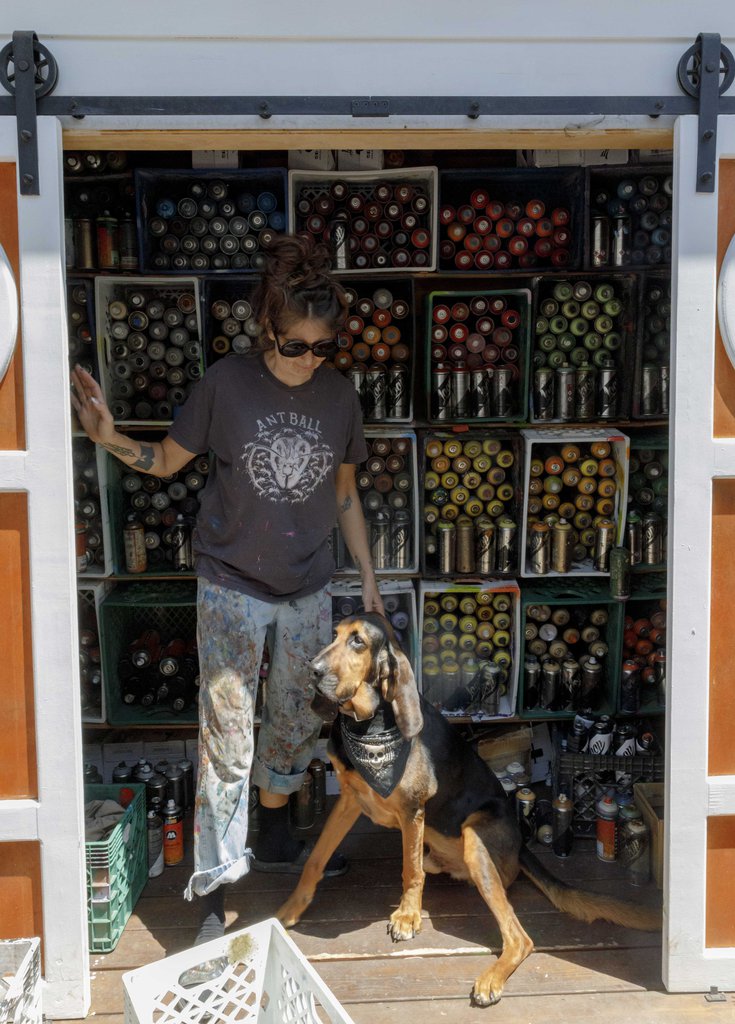
This is the home studio belonging to Jules Muck, a muralist known as Muckrock. Her sister and a droopy-eyed bloodhound met me at the gate as Muck trailed behind a few steps, the paint stains on her worn jeans illuminated in the sun. The studio itself takes up about half of the house – a large room with bright windows, a vaulted ceiling and bright, eccentric paintings lining the walls – but the building otherwise disguises itself amongst the rest of the residential neighborhood.
As Muck escorted me through the space, I recognized on her canvases many of the same motifs that appear in her street art throughout Los Angeles – cigarettes, body parts, cartoon characters and fantasy-like distortions of humans. These images have begun to define her Venice neighborhood, where dozens of her murals cover everything from storefronts to garages to back-alley walls.
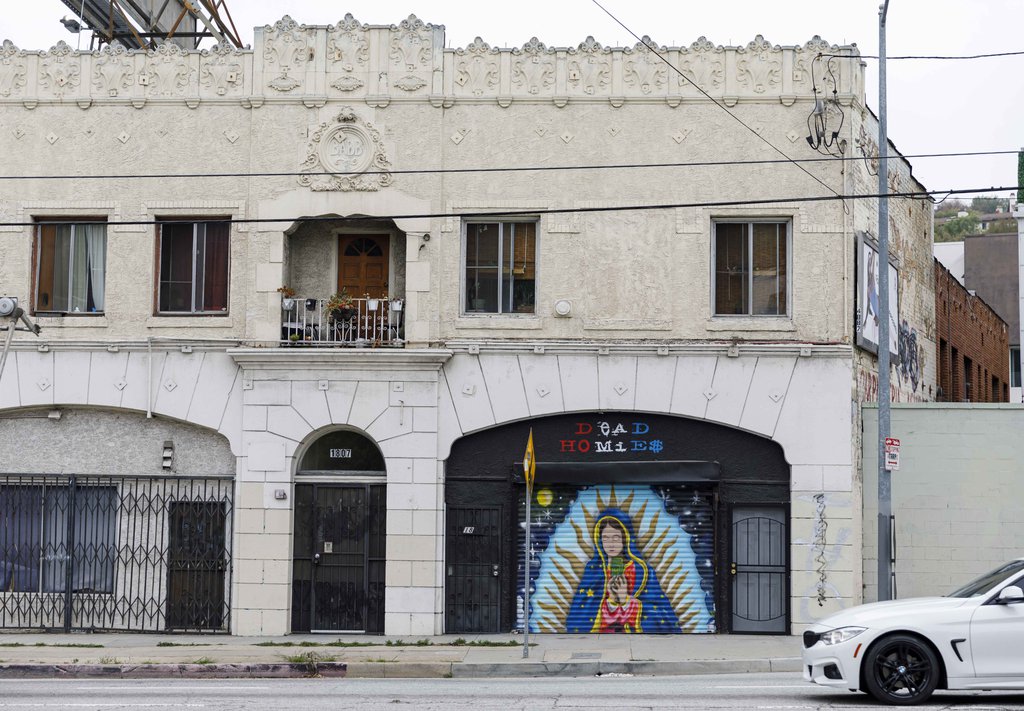
"I will do everything and anything for Venice," Muck said.
Muck is far from the only person creating these artistic forms of community expression in LA. Countless professional and amateur artists apply their unique sense of style to the city’s public areas. To these artists and communities, a mural is so much more than paint on a wall – it is a form of storytelling between an artist and the viewer.
Thought of as the oldest form of human-made visual art, murals can serve a variety of purposes: advertising, beautifying a space, conveying a political message or celebrating a moment in history. LA’s murals have, for decades, conveyed the struggles of equal rights movements, particularly the Chicano Movement of the 1960s, and told the stories of major contemporary events such as the 1984 LA Olympics. These art pieces have been tools of advocacy, commentary and self-expression.
"A mural is public art, so it’s always a collaboration between me and the environment that I’m in," Muck said.
Despite a robust history of mural culture, LA has not always promoted artistic freedom on its streets. In an effort to limit the number of obtrusive advertisements dominating walls across the region, the city voted in 2002 to ban all new murals. Even with consistent protests from art activists, the ban stayed in place until 2013, becoming an 11-year-long period coined the "dark ages."
This era can still be felt from the ban’s irreversible damage. Out of the 2,500 murals throughout LA when the ban took effect, the city had painted over several hundred by the end of the moratorium. Since the LA City Council lifted the ban, however, street artists have been resurrected in full force, now allowed to flourish their artwork in a way they had not since the start of the new millennium.
"By really dealing with the language around public artwork in the city of LA, that moratorium eventually ended," said Davida Persaud, a lecturer in the UCLA Department of World Arts and Cultures/Dance. "We’re in this kind of exciting moment in Los Angeles right now where we're seeing the production of more murals."
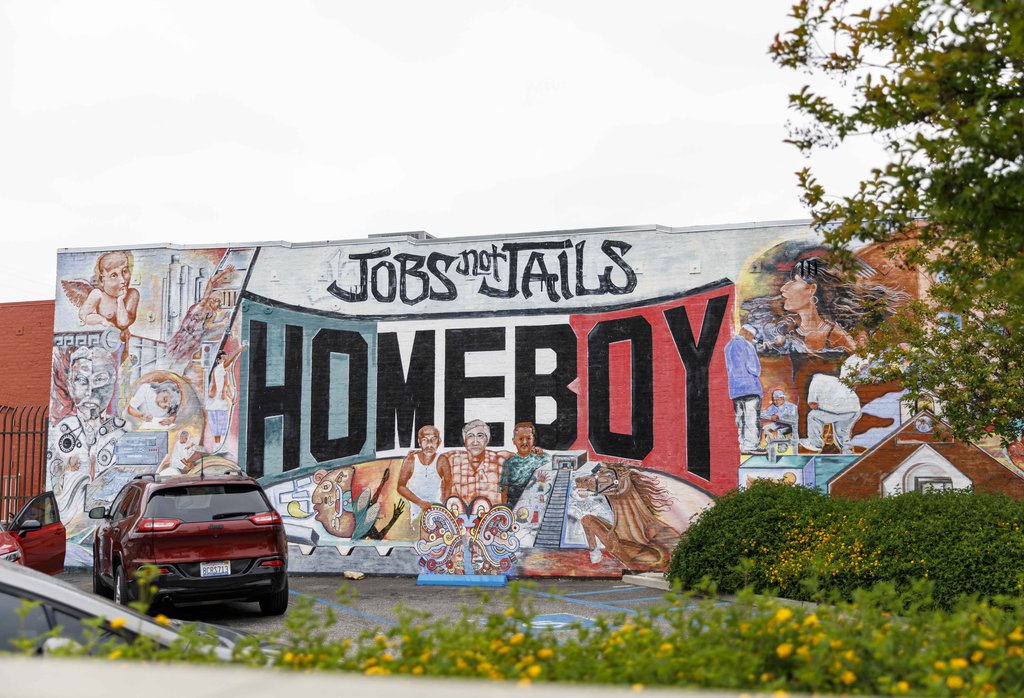
A community mural does more than just beautify a space: It speaks for the people, whether it reflects those who live nearby or those represented within the art itself. Persaud, who is also the chief operating officer of sustainable art materials company MuralColors, said community muralism means the community is actively engaged in creating the artwork, not just consuming it.
"The role of murals is to communicate directly with the community outside of the usual spaces like a gallery or a museum, and it takes art directly into the community," said Douglas Miles, a San Carlos Apache-Akimel O’odham artist and activist. "It's so community driven, and its impact is more immediate."
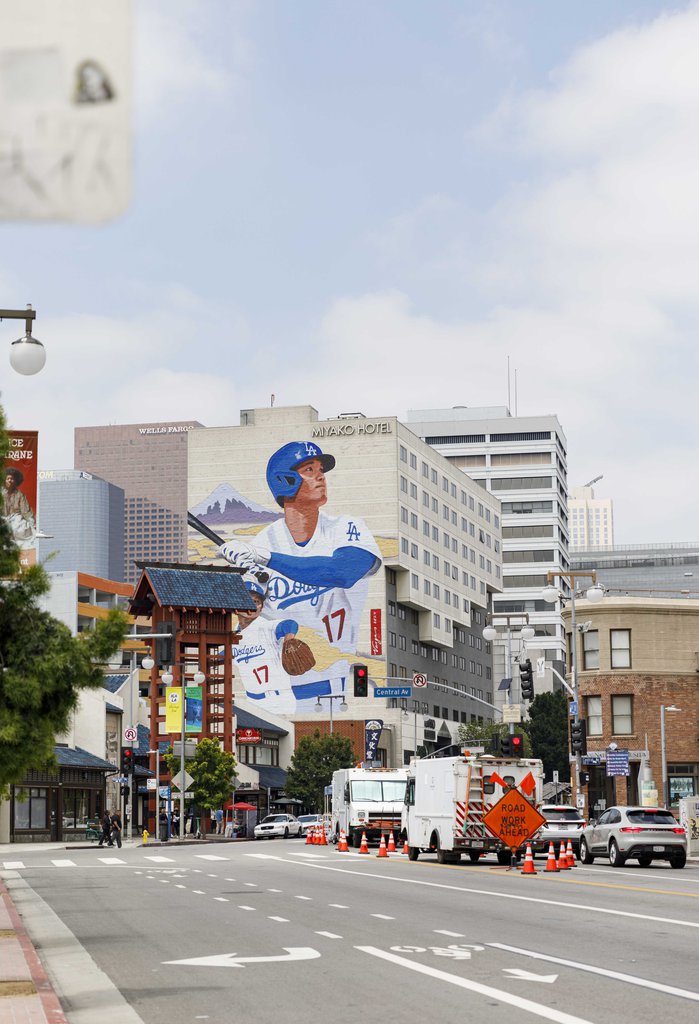
On a drive through Little Tokyo, I see a mural of Shohei Ohtani standing prominently against the city skyline, a depiction of the star Dodgers player gazing upward after a hit. As I weave through the alleyways in Echo Park, I see colors bursting off of murals on every block. The quiet streets of Boyle Heights celebrate Mexican American culture on their walls, many of the murals chipping and fading with age. In North Hollywood, I stroll down the half-mile-long Great Wall of LA, taking in the city’s political and cultural history captured in the expansive work – everything from prehistoric California landscapes to the birth of rock and roll. Each of these small communities creates the fabric of the vast, diverse landscape of LA’s culture.
But regardless of the content of the artwork, Persaud explained, most community muralists have one goal: to connect with their community through the piece they create.
"Hopefully there is some sort of thought toward how that piece, if it is a community mural, is in direct conversation or reflection with the community that will be right outside of its doors," Persaud said.
A community might not be just a neighborhood or a group of people. One common site for a mural is a school campus, including UCLA.
The Black Bruin Resource Center sits nestled into a back hallway of Kerckhoff Hall’s first floor, offering programs, guidance and a space for Black and African diasporic members of the UCLA community. When you walk in, your eye is immediately drawn to a mural spanning the entire back wall. The image depicts Black historical figures – smiling, singing, engaged in sports – positioned around a table in conversation with one another.
In 2021, UCLA opened a contest for anyone to submit a design for the mural focused on the theme of Black history at UCLA. After talking through ideas with her family, UCLA alumnus Maia Hadaway, then a student, designed "A Seat at the Table," an 18-by-7-foot mural that celebrated both current and historical figures with accomplishments in science, athletics, the arts and various other fields.
One of Hadaway’s priorities was to emphasize that the present is part of a living history and that today’s generation has the opportunity to shape it. She described people’s tendency to separate themselves from the past’s significant figures without recognizing their own potential to make an impact.
"It’s so hard to fathom someone of our age doing something that MLK did," she said. "No, he was at that place before, too. And I just wanted to instill that drive in people now, and especially for a college setting where people are growing, people are transitioning into adulthood."
Much of her feedback since creating the mural has been positive, but several UCLA students reached out to her indicating their frustration that she did not include them in the mural. For Hadaway, a community mural represents so much more than just the specific individuals portrayed on the wall.
"My whole thing was that this whole mural was to incorporate you," she said. "It was for you to see yourself in it. And I think that's something I'm actually working on now in my art practice – to show people that, again, you can relate to someone who does not look just like you."
This idea of building connection through art in academic spaces extends beyond universities. Miles has painted murals at several K-12 schools in his Apache community in Arizona. These murals create lasting legacies for students, shaping how they see themselves and their community.
"It’s very rare when we see this type of Apache representation in this kind of art," Miles recalled a student saying after he completed a mural at their school.
Similarly, even though Persaud’s classes do not focus exclusively on murals, she often shares examples of murals in her lectures. She noted how impactful it is for students – even those outside of the arts – to resonate with a work of public art, especially when the artwork responds to the world around them or traces back to a collective experience.
Despite that desire for personal connection, Persaud noted that this connection does not require directly seeing oneself represented in the mural.
"Even artworks that are really, really specific to a unique lived experience can still have this appeal to students from diverse backgrounds because it’s beginning to pull upon a real, relatable human experience or a struggle that we’ve seen across communities," Persaud said.
Even though physical community is a central aspect of many murals, artists often move between cities or travel internationally to create new public art. Muck, for example, has commissioned murals across the United States, as well as in parts of Mexico, Europe and Asia. And although Miles paints primarily within his Apache community, he too has journeyed up to LA to collaborate with other muralists and make his mark on a new place.
But no matter where Miles is, his community is always top of mind.
"I’m just going to paint an Apache character and write Apache on it as … a nod to history,’" he said.
An artist’s motivation to create a mural, however, might not always be centered around artistic expression or representing a community. Often, it’s financial.
Hadaway said the primary reason she will choose to paint a mural instead of a traditional canvas painting is if a company reaches out to her directly and provides her a commission. But because of its large number of aspiring artists, LA is not always the most lucrative space for muralists.
"In LA, I mean, it’s not a great place to make money as an artist because there’s so many freaking artists," Muck said. "If you don’t have a name, they don’t know that you’re charging money because you can do better."
Otherwise, Hadaway tends to produce more of her works on canvas, due in part to the unique finished feel of paintings.
Sometimes these mediums overlap. The mural project she is currently working on for a reparations-focused organization in Chicago consists of three large paintings that will be hung side by side. Hadaway described this as the best of both worlds for her art style – she can create on a larger scale while still capturing the feeling of her paintings.
While making a living as a muralist is not always easily attainable, the LA art scene offers a unique environment for such a diversity of artists to gain inspiration from each other and from their surroundings. Hadaway discussed how much LA-specific pride is clear in Angeleno artists.
Ultimately, these murals capture something underlying about the human experience – something that bridges beyond one neighborhood, one city or one group of people. Art can resonate with us no matter our backgrounds and, as a result, broaden existing communities.
"I really do commend LA for making this space, making this community feel special," she said. "Their pride is beautiful."