
I get asked every once in a while, by peers or supervisors or curious reporters new to the Daily Bruin, what spring 2024 was like. The answer is: There isn’t much I can remember at all.
Spring, this year, is the end of my career at The Bruin – and full-time journalism, for now. But just over one year ago was the weeklong Palestine solidarity encampment at UCLA. I remember the encampment in concepts: a 24-hour watch and constantly following rallies with press pass and camera in tow; hearing people yell obscenities and chase my coworkers around. I remember April 30, 2024 – fireworks, tear gas and colleagues assaulted. And May 1 to 2, 2024 – law enforcement officers with less-than-lethal munitions and hundreds of people arrested.
I am a student journalist. I reported on all of these things – even in the moments I could barely breathe – in articles whose details I memorized by heart, down to the exact times at which police arrived or ambulances left. That was the responsibility I had then and the responsibility I still carry now.
Since then, I have never talked in any real public-facing manner about what happened in those seven days. It seems like an irony in a profession where the job is to keep a record. We run to tell the stories of others but never our own. We cover others’ trauma – but we were there, too.
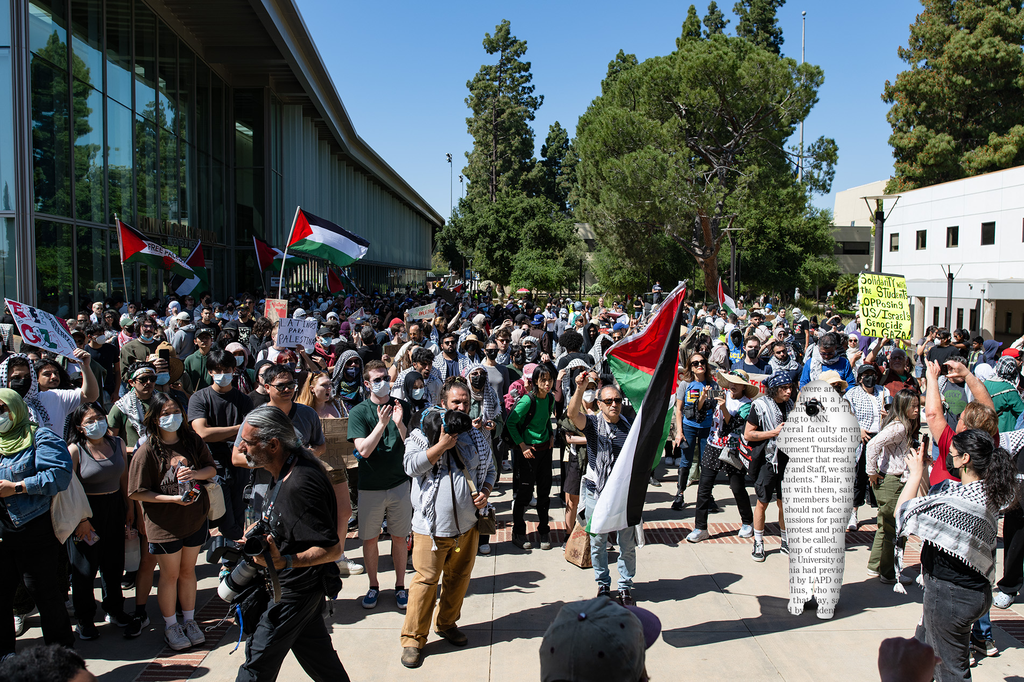
I am not the first student journalist to experience something traumatic, and I most likely will not be the last. I am also certainly not the only person – between protesters, security and more – who witnessed violence those nights.
But I came to realize, through speaking to other student journalists who covered pro-Palestine encampments across the nation, that almost none of us got to talk about it. We didn’t – and still don’t – have formal spaces to talk through those experiences that range from sun poisoning to burnout and even arrest. Some of us have difficulties covering protests or hard news at all, while others found more meaning in their work. But all of us are irrevocably different people because of it, in ways that we lack the space to acknowledge.
At the end of the day, we were students thrown into the same protests national outlets sent their most seasoned journalists to.
"This isn't our full-time job. Nor should it be, I think, expected to be. But I did find myself prioritizing this coverage over classwork and probably health," said Sam Parker, former managing editor at the Daily Wildcat at the University of Arizona. "In the moment, it feels like this is the most important thing. And I'm proud of the coverage we did, and I'm glad I was there for it – and I don't regret it."
All the student journalists I spoke to shared that mindset – that covering the encampments was some of the most important work they could ever do. Many journalists pursue the career out of a sense of moral obligation, said Lea Didion, a psychologist who is part of the Journalist Trauma Support Network.
For some, the obligation came from the desire to counter a common narrative. Taylor Parise, an alumnus of Santa Monica College who reported at its newspaper, the Corsair, covered the police sweep of the Palestine solidarity encampment at UCLA from the inside – her first time ever covering a major protest. Parise said she wanted to combat misconceptions from mass media outlets that were primarily covering the events from outside the barricades.
At other schools, student journalists were the only ones who could report these stories. After an attempted encampment at the University of Southern California on April 24, 2024, that resulted in 93 arrests, the campus was closed to visitors, said Nicholas Corral, an associate managing editor and then-assistant news editor at the Daily Trojan. That meant only reporters from the university’s two student media outlets – one of which was the Daily Trojan – could report what was going on inside the gates, Corral said.
Particularly as a then-editor in chief, Mercy Sosa – a rising seventh-year journalism student of California State University, Sacramento – said she felt she had the responsibility to keep going with coverage, despite the pressure of final exams looming.
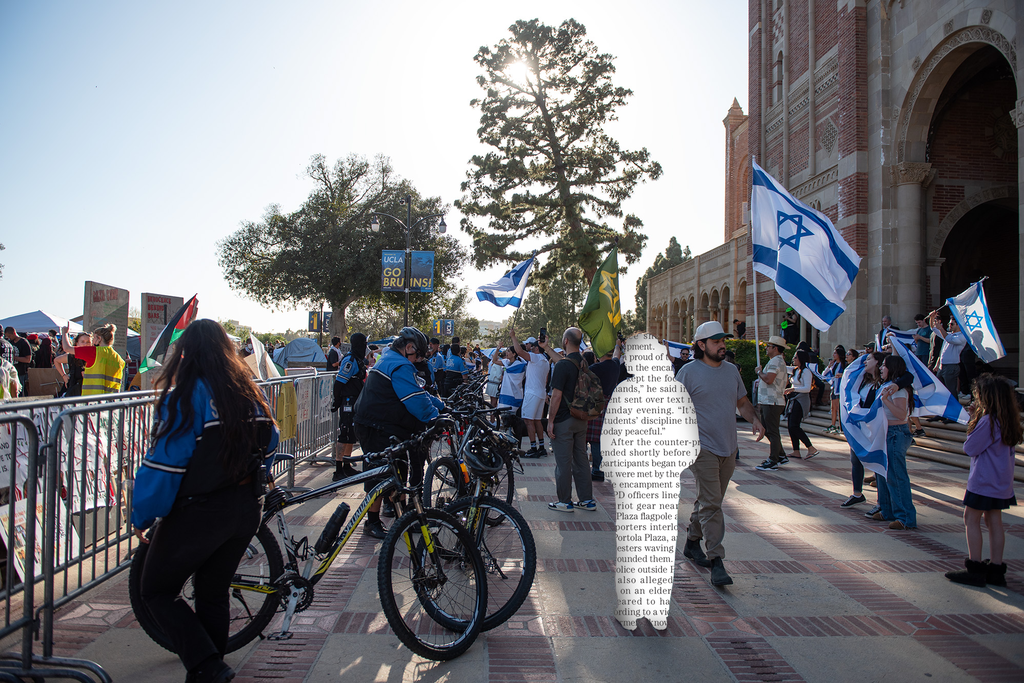
These obligations, however, had their physical and mental drawbacks.
"When we're caught up in one of the most important events on campus’s history, it's hard to take that in when you've never done that before and evaluate your mental health," said Andrew Miller, a managing editor last spring at the Indiana Daily Student at Indiana University Bloomington.
This intense work and stress across days and sometimes months – in Miller’s case, 100 days – led to issues of newsroom burnout. Burnout occurs when the body’s resources are depleted, which can lead to mental consequences such as fatigue and poor concentration but also physical effects including chronic tension and pain, Didion said.
Significant protest activity took place during Miller’s finals week, but the rising fourth-year history and journalism student at IU Bloomington recalled putting a 30-page paper on the back burner for reporting shifts through the night. Daily Trojan reporters – who were also taking finals throughout the height of the protests – had trouble limiting themselves to assigned shifts and schedules, often showing up unscheduled because they wanted to help, said Corral, a rising third-year journalism student at USC. For then-news editor Parker, being the main reporter covering the protests meant she was on alert for a full month – adrenaline so high that it made it difficult to fall asleep.
But burnout is one thing; trauma is another. Witnessing violence – even without directly experiencing physical harm – can lead to trauma, Didion said. Therapist Heather Herz, another member of the Journalist Trauma Support Network, added that journalists, who may be unaware of what a situation might bring, often do not have a choice in witnessing it.
Ninety-five percent of last year’s pro-Palestine encampments did not involve any protester violence, according to a report from Princeton University’s Bridging Divides Initiative. But violence on the part of police did occur. Law enforcement was involved in around 260 demonstrations and detained more than 3,000 people, employing less-than-lethal force in at least 24 schools – including UCLA – and allegedly deploying snipers at five, according to the same report.
However, such "less-than-lethal" force, which according to the United States Department of Justice can include batons and tasers, has far from negligible effects – and can potentially be lethal if improperly deployed, medical experts said.
Journalists – by virtue of being there – also had to contend with violence, even if they were not the intended targets. Parker, though not hit, faced police indiscriminately firing tear gas and rubber bullets. Dilan Gohill, the Stanford Daily’s then-student activism beat reporter, was arrested and zip-tied alongside a dozen pro-Palestine protesters who blockaded themselves in the university president’s office.
Parker, who is also a recent graduate of the University of Arizona, said she had never seen so many police before. Officers told all press members they could be arrested if they crossed a boundary, but Parker said she felt compelled to report from as close as she could – meaning her team had to decide if it was willing to risk arrest.
Parise’s team decided it was.
"We had established we wanted to stay until the very end," Parise said. "And it was terrifying."
In the immediate aftermath, Parise recalled much of it was about getting the work done and the article out. After the work was done, the exhaustion kicked in.
I remember sleeping for no more than three hours after the police sweep. One of my fellow editors was asleep for almost a full day. But it went significantly further than that for Gohill. After spending 15 hours in jail without food or water while being harassed and threatened with rape, he learned that he had been temporarily banned from campus. He said he was unable to return to his dorm and had all of his belongings from that day confiscated.
Much of those first two weeks after the arrest are absent in his memory, he said. His best friend from home had come to visit but had arrived the day of his arrest, and when they went out to lunch later on, Gohill – a second-year undeclared student at Stanford who describes himself as normally very lively – said he was "a shell of a person."
"It's (the arrest) at the forefront of your mind, always," he said. "I was constantly thinking about it. I was constantly associating things with it."
The question of mental health eventually came up in the Daily Bruin, too. We had a session with a professional from UCLA Counseling and Psychological Services, but though they tried, I left the hour feeling even more lost.
And after that, there was nothing – no meetings, no talk. In the worst moments, I wondered if it was something unique to our paper or some internal fault. But all of the student journalists I interviewed said they never had formal spaces to collectively process. Some had meetings about what they learned professionally, while for others it came up in the occasional one-on-one conversation – but never as a full staff. Sosa said an ideal space would include someone more experienced in journalists’ mental health to guide the conversation; Corral and Gohill both said they eventually sought out professional help.
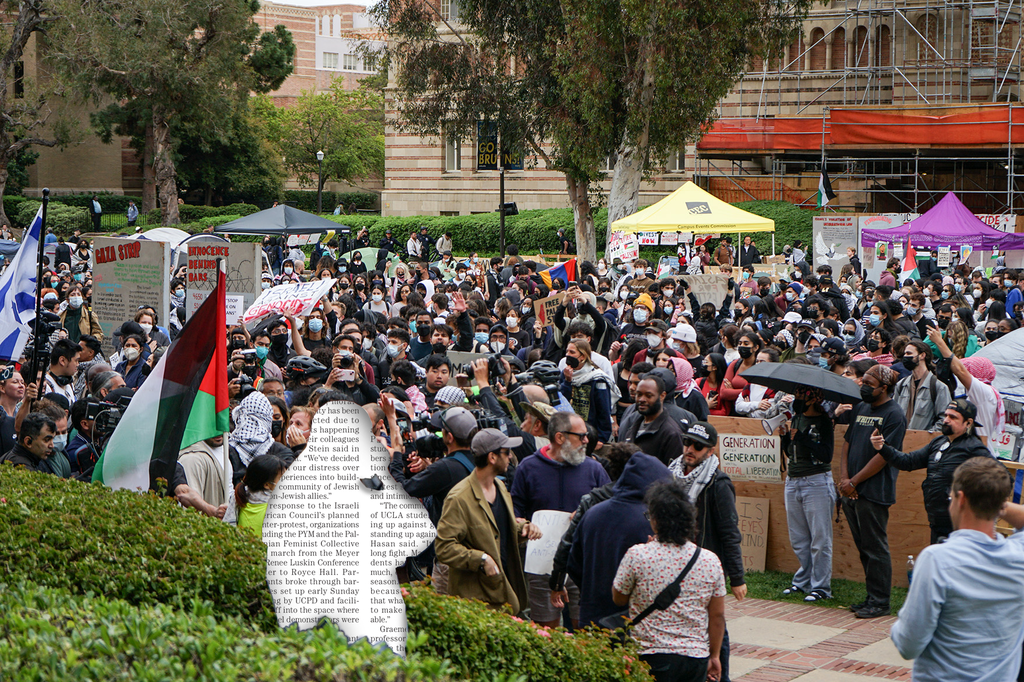
But journalists can be resistant or unaccustomed to the idea of therapy – being asked questions instead of asking them, Herz said. Young people, additionally, are accustomed to the idea of having to just deal with things, she added.
Another obstacle to asking for help might be a culture of perceived shame around having trauma, Didion said. She added that even people who mean well might make comments that minimize others’ experiences.
"It could either be directly like, ‘Why aren't you over this yet?’ Or, ‘So and so also reported on this, and they seem fine,’ or, ‘Oh yeah, I got through that, and I didn't need meds,’" Didion said. "(The) ‘pull yourself up by your bootstraps’ sort of mentality that is so rampant in this culture just causes most people to feel ashamed and isolated and small."
While Corral didn’t feel there was necessarily a stigma in his newsroom against talking, he said there was the attitude that there was no need to go through details. Particularly in a smaller newsroom, Sosa said, reporters had conversations about coverage but never about the emotional aspects of what they had seen.
Not everyone has a safe enough space to talk, Didion acknowledged, but she added that not talking can have long-term effects on emotional, memory and physiological systems.
"Something might happen, and someone has a difficult time. And it persists, or it gets worse," Herz said. "Those are the folks who really need it to be addressed."
I may not be qualified to evaluate if issues persisted for me or not, but I know I am certainly not the person I was a year ago. Neither is the Daily Bruin newsroom the same newsroom. Miller, who was most recently the Indiana Daily Student’s news editor, said he feels the staff at his paper have grown closer because of those shared experiences. I think I’d say the same, too.
All of us are also different journalists. I spent months not looking at any other outlets’ coverage of protests, and the first time I covered another one myself, the sheer level of noise led me to almost black out. Parker said she felt overwhelmed while covering a campaign rally for then-candidate Donald Trump. Corral chose to take a total break from news coverage, shifting to copy editing instead.
"It was just too much, too serious," Corral said. "I wanted something more processed."
Parise, on the other hand – who is now a rising sixth-year journalism student at CSU Northridge and a reporter at its newspaper, the Daily Sundial – said she became significantly more interested in understanding campus climates and covering protests. She and her team, despite now all being at different institutions, send each other tips about upcoming protests. While they have talked about their experiences at UCLA before, she conceded that they don’t often talk about the emotional aspects of it.
"It's possible I don't need to process it, and it's possible that I never will process it," Parise said. "What it did for me, as I look back on it, and I'm like – now I feel a lot more confident that I'm capable of anything."
Both Didion and Herz said they use specific forms of therapy – such as eye movement desensitization and reprocessing – to help journalists work through these memories. Didion also said she encourages people to improve preemptive mental health breaks by fully unplugging.
But some of these issues of burnout and mental health, she added, are institutional ones. Didion said people in positions of power must talk about the help they received and how it benefited them to create a culture where mental health care is normalized.
I embarked on this story in an attempt to open those kinds of conversations. People have certainly tried to report on student journalists already – Parise, who was interviewed by the Los Angeles Times, said it was initially uncomfortable to tell her own story instead of someone else’s. Gohill, who is now the Stanford Daily’s campus life desk editor, also found it difficult to suddenly be in the public eye.
But perhaps, Corral said, journalists have a responsibility to advocate for themselves in the ways they know how: telling stories.
"By telling stories about ourselves, we recognize the issues that are widespread in journalism," Corral said. "Having a reporter who's able to talk about what they saw in a somewhat emotional sense can have a meaningful impact on what people understand about the situation."
Story or no story, there are things we have learned – whether that is to keep a go bag or to be more aware of our surroundings. We know to write phone numbers on reporters’ arms in the event of arrest. We’ve bought press vests and gas masks to prepare for the worst.
If there’s anything I have learned, it’s – as Parker noted – that we, too, are allowed to have emotions about the very emotional things we cover.
"The onus of all of this coverage – and these major world events – does not rest on the shoulders of one student journalist," she said. "You are allowed to take a break, and the world will not suffer because you chose to."
I don’t think I ever took a proper break. I began this story being told by some people that I should write it and others that I shouldn’t. I thought I was ready – and then I opened images of the protests, and I began to cry.
Perhaps I haven’t processed much, if any, of it. But talking to each other, even through the confined box of a 45-minute Zoom meeting, might have been the start. We say part of our job is to comfort the afflicted, and sometimes, that’s ourselves. That work starts before the byline – and most importantly, beyond it.
To recognize that is a matter, then, of institutional change. To the next student journalists: We are taught to hold power to account. I hope we can begin from the inside.