
Each day of high school, I’d lace on my shoes, don a helmet and roll my bicycle out of my carport for a crisp morning commute. My route took me down a greenbelt and across a bike bridge, merging with the paths of dozens of students. Some peeled off to Willett Elementary; others powered on toward UC Davis. But the Davis Senior High Blue Devils and I hit the brakes at Oak Avenue to lock our bikes at rows of quickly filling racks. We lived in Davis, California – nobody looked twice at a cyclist.
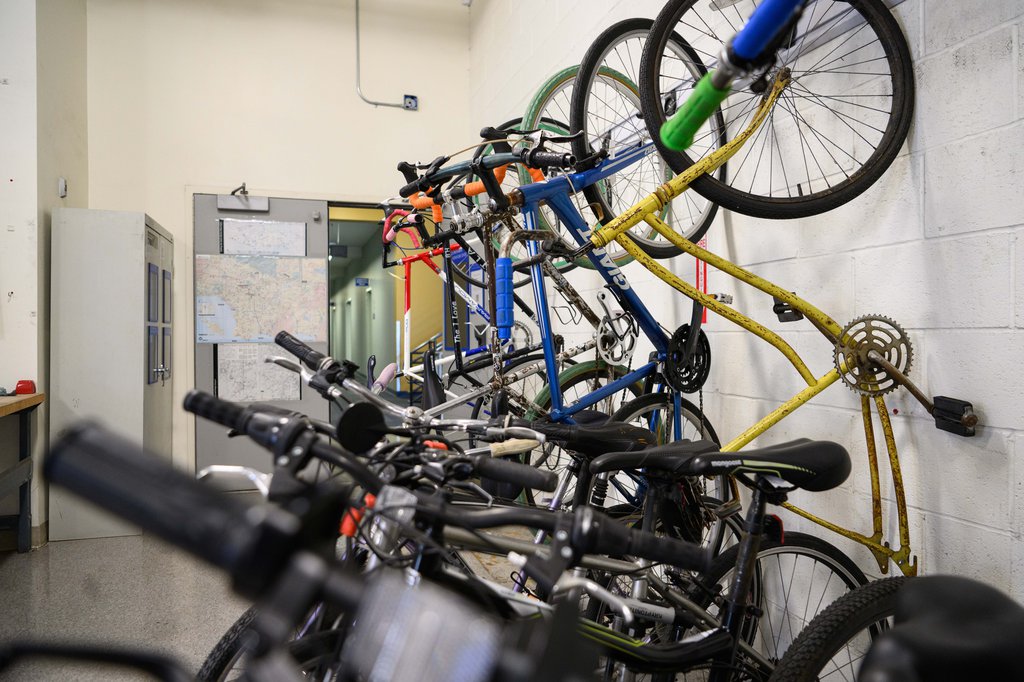
In 2021, I crammed my bike into the family van alongside my entire life’s possessions for UCLA move-in day. I was ready to wheel my biking habits into a new era of education. But today, my bike sits collecting dust in the corner of my Westwood apartment garage. Daunting hills, zooming automobiles and a seemingly lacking cycling community keep my feet on the ground and my bike chain slowly rusting.
Students and professors alike have found that the UCLA campus and Westwood feel unsafe, inaccessible and unwelcoming to bikers. But with a bit of snooping, I found a cycling community bubbling beneath the motor-biased face of the university, ready to support any local cyclist.
To unearth this community, I first turned to fellow Davisite-Bruin mashup Owen Yancher. A former UC Davis undergraduate and former UCLA graduate student studying coaching and leadership, Yancher understands the Davis-curated itch to ride.
"If you are a person that did not bike at UC Davis, that would be very strange," Yancher said.
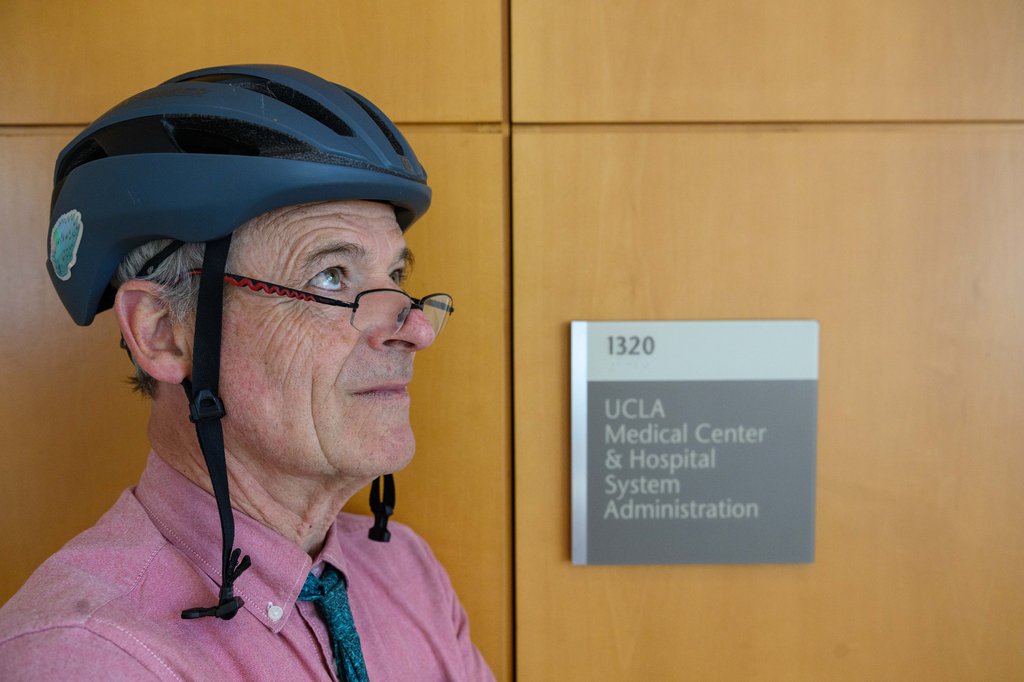
When he initially settled in Westwood’s Weyburn Terrace, Yancher tried biking to school for the first week of class at UCLA. When he passed the bike counter in front of Ronald Reagan UCLA Medical Center, he said he laughed at its puny value. While Davis counters boast values over 1,000 before morning classes, the UCLA one failed to exceed double digits – even at midday. Yancher said this disparity is a reflection of cyclists’ inferior experience navigating Westwood’s streets.
"Not only is it hilly, and that’s hard, but you’re also risking your life every single time you go in any of the thoroughfares," he said.
As a freshman, I would sometimes bike from the Hill to Westwood for a part-time job at Corner Bakery Cafe. The high-velocity roll down the slopes was exhilarating, but I also felt unseen by automobiles, and, on the notorious climb back to Hedrick Hall, I could barely power myself home.
A 2019 study conducted by the University of Colorado Denver found that bike infrastructure, especially protected bike lanes, was positively associated with increased road safety and fewer fatalities. Over the last decade, Westwood neighborhood associations and Los Angeles City Councilman Paul Koretz have opposed numerous bike lane proposals in favor of turn lanes and parking space. Without such accommodations, not only might Westwood drivers not expect a cyclist, but the study suggests it is more likely for an accident to occur. Just a helmet and horn stand no chance against formidable headlights, tires and a revving engine.
Moreover, a study published in the British Medical Journal found that a minimal cyclist presence can also increase the likelihood of a cyclist being struck by a motorist. According to the 2022 UCLA State of the Commute report, only 1.3% of employees, 2.4% of off-campus students and 1.2% of on-campus students use a bicycle for transportation.
"He (My roommate) brought me in one day, and he’s like, ‘You need to stop biking, it’s too dangerous,’" Yancher said. "And I actually agreed with him, and I stopped biking."
My first year traversing the rolling hills of campus by foot, I saw little sign of a bicycling community. Junior Linnea Jackson, a third-year biochemistry student, enjoys biking for exercise and a quicker commute to class. But it also took her a bit of time to discover her fellow cyclists.
"When I came here, I assumed it was just an all driving city," Jackson said.
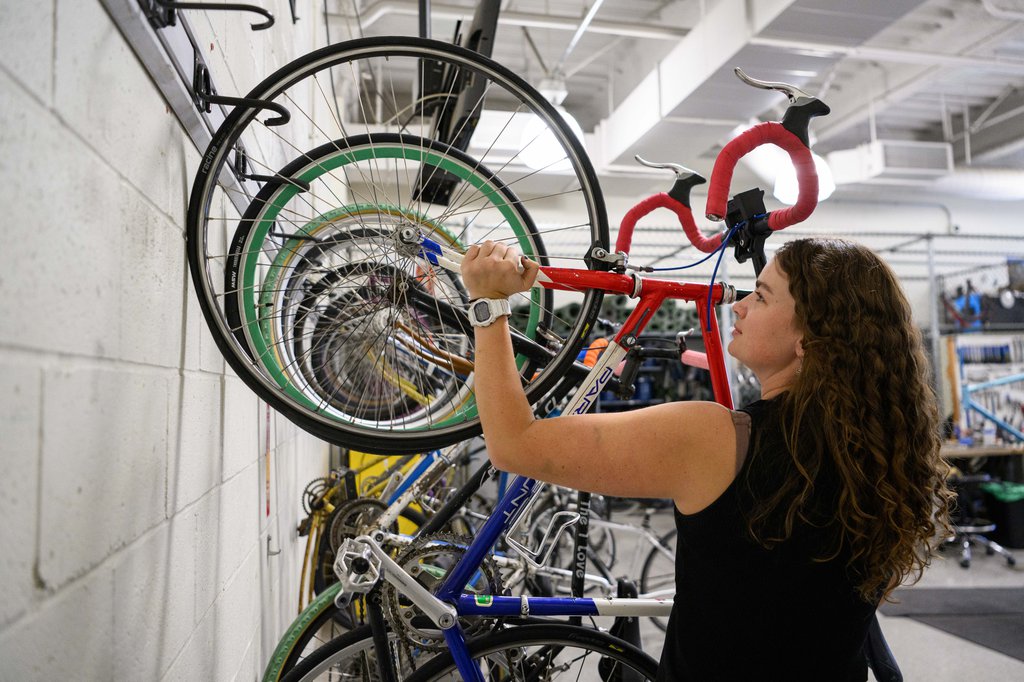
I once felt the same way. Just last spring, an email pinged into my school inbox with the words "UCLA" and "Bike Week." My hilly campus had a dedicated week for bicycle awareness? I immediately opened the message. To my pleasant surprise, I found information about mobile bike service hours, a bike luncheon and other bike-related events. It was my first encounter with a clear, public acknowledgement of a cycling community at UCLA.
On my way home from organic chemistry that day, I took a quick peek at one of the mobile service tents. The friendly repair mechanic detailed his availability and assured me I could bring my bicycle by for a free tune up. For the rest of my trek up the Hill, that whiff of Davis lingered like a stubborn perfume. I needed to continue uncovering UCLA’s bike culture.
Past initiatives, such as the Bike Week hosted by UCLA Transportation last May, have made strides to improve bicycle accessibility and awareness on campus. For example, in 2014, the UCLA Bicycle Academy, an organization focused on improving conditions for bicyclists and pedestrians at UCLA, submitted a letter with 68 signatories to Chancellor Gene Block. The letter called for bike lane expansion and the creation of a campus group focused on bicycle accessibility.
Five years after the Academy’s submission, UCLA improved from a silver to gold rating for bicycle accessibility. The designation was awarded by the League of American Bicyclists, a coalition advocating for bicycle infrastructure and awareness nationwide, after UCLA increased bike lane visibility and protection, improved bike locker infrastructure on campus and introduced programs such as "Earn-A-Bike," which offers a free $900 bicycle package to employees and graduate students in exchange for their parking permit. More recently, in April this year, the North Westwood Neighborhood Council and the Undergraduate Students Association Council, alongside the nonprofit group Streets for All, initiated a campaign that includes protecting the Wilshire Boulevard bike lane.
Such efforts place LA biking infrastructure in a better spot than it was 10 years ago, said Nate Woiwode, supervisor and coordinator of the UCLA Bike Shop, a bike mechanic shop located at the northwest corner of John Wooden Center. But, he added, Westwood could still improve bicycle infrastructure to encourage ridership and decrease traffic volume.
Michael Cahn, secretary of the UCLA Bicycle Academy, bikes to campus from his home in Santa Monica. Just before our chat, he had paid an early morning visit to the Santa Monica Farmers Market – on bike.
"It brings always a smile on my face to be out on the road and move yourself with your own power and look at all these people who are imprisoned in their exoskeleton cars," he said. "And, you know what? I get a lot of smiles back from other people."
Cahn, also a transport history lecturer in the history department at UCLA, said LA’ driving culture stems from a larger political history – not just a lack of infrastructure. More specifically, the land use pattern of single family homes in LA makes it difficult to implement public transportation or bicycle infrastructure, Cahn said. These homes are often built with garages and situated at lengthy distances from public centers, which encourages driving.
Cahn also said the concept of white flight, the migration of white homeowners from city centers with more racially diverse populations, contributes to a more expansive network of homes in Los Angeles.
"They (Policy decisions) have destroyed our cities, and they have destroyed other modes of transportation," Cahn said.
My family’s carport in Davis is small, creaky and mostly exposed to the elements – definitely not automobile-curated. Although Davis has a relative abundance of single family homes, its 10 square miles and balanced distribution of city centers, along with architectural trends like open yards and small garages, make biking a common and casual activity. I did not get a driver’s license until I turned 19 – nor did I feel pressured to.
As a freshman, however, I once went for a slow evening run through the Bel-Air neighborhood north of UCLA campus. Unlike my hometown, I noticed the neighborhood lacks sidewalks or any sort of painted lanes. Private homes with clearly visible gates and garages wind deep, deep into the hills.
Fostering a larger biking community in LA starts at the level of local politics, Cahn said.
"Your question was, ‘What shall we do? Tell me what to do.’ And I say, ‘I want the power structure to be changed and for the voice of the cyclist to be heard better,’" Cahn said.
In his transportation history course, Cahn said he assigns students advocacy projects to teach that transportation issues need to be seen in the context of land use issues driven by city planning. The UCLA Bicycle Academy communicates with UC Regents and Westwood Neighborhood Council to give cyclists a voice in city politics, he added.
Cahn helped create the Academy in 2008 because he felt that university administration and city council members did not show much interest in improving cyclist safety and accessibility.
"Sometimes I think I’ve been struggling for 10 years, and no difference at all has been made," Cahn said. "Sometimes I think it just takes 10 years to get anything done."
He added that people can be threatened by sustainable modes of transportation that may feel foreign to them. But linger around the bike racks long enough or listen for the spin of pedals, and you’ll find that a bike community on campus does exist – and is growing.
After a two-year hiatus due to the pandemic, the UCLA Bike Shop officially reopened this fall with Woiwode at its helm. Woiwode and his small staff team complete about 10 to 15 repairs a day.
"It (The biking community) is definitely bigger than I originally thought," said Jackson, who is also an employee at the bike shop and a member of the UCLA Cycling Team.
Walking into the UCLA Bike Shop in mid-October, the soft scent of rubber whisked me back to my hometown bike depot. The large garage door was rolled open to reveal a small warehouse with bright fluorescent lights and high ceilings. Various bikes hung from racks and tools lined the walls. Woiwode stood behind a counter flyered with bike route maps and helpful tips. Woiwode’s own pink mountain bike was propped proudly against a workbench.
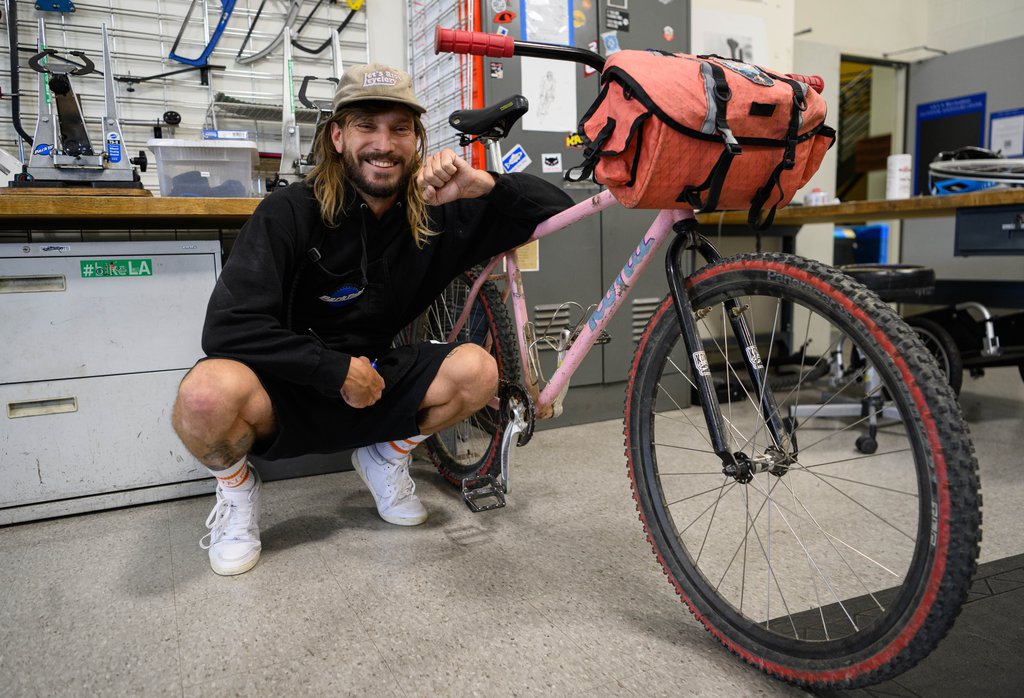
Aside from affordable repairs, students, faculty members and local residents can visit the shop for help designing a safe biking commute or to attend an educational workshop offered through the UCLA Recreation platform. The shop sometimes hosts group rides that travel a short distance and finish with a coffee on campus, Woiwode said. He added that he hopes that by offering bicycle education and resources, cycling popularity and accessibility will improve.
"When you think of LA, you think of it as a huge driving city," Jackson said. "But once you really spend a few minutes to do the research and look at the safe bike paths, you can get around a lot."
It seems I need to do a bit more research – at times, I’ve found myself temporarily chaining my bike to random fences and poles in a pinch. However, Woiwode finds the UCLA campus infrastructure sufficient and embraces the commute.
"I wish the hills were steeper, and there was more of them, and they were twice as tall, because it would make everybody here buff," he said with a laugh.
I can’t say pedaling my bike up an almost vertical grade, legs straining, is my favorite pastime. But I can say I get a good workout in. Sometimes, freshman year, I’d show up to sorority chapter meetings glistening with sweat after a brisk ride, earning a few raised eyebrows. But the important fact still stood: My travel time from the Hill to Hilgard Avenue was halved.
Jackson encourages beginners to try out bicycling, insisting that the community is welcoming and willing to help. She said beginners can purchase bicycles at the bike shop or other locations in the area and also invites riders to join the UCLA cycling club. She is a part of the club’s roughly 10-person mountain biking group and said the club also hosts a larger, road biking group.
"They’re all a great group of people that are just super excited to get out in nature and ride," she said.
I think I am starting to get a taste of the cyclist I want to be. Although I’ve traveled halfway across the state of California, there seems to be a little piece of my cycle-centered hometown in LA – especially on UCLA campus.
Maybe it’s time to scrape the rust off my bike, pump its tires and get biking.
Contributing reports from Rachel Rothschild, PRIME contributor.